
Government and Community Signage Case Studies: How Australian Councils, Halls and Public Facilities Sign Their Sites
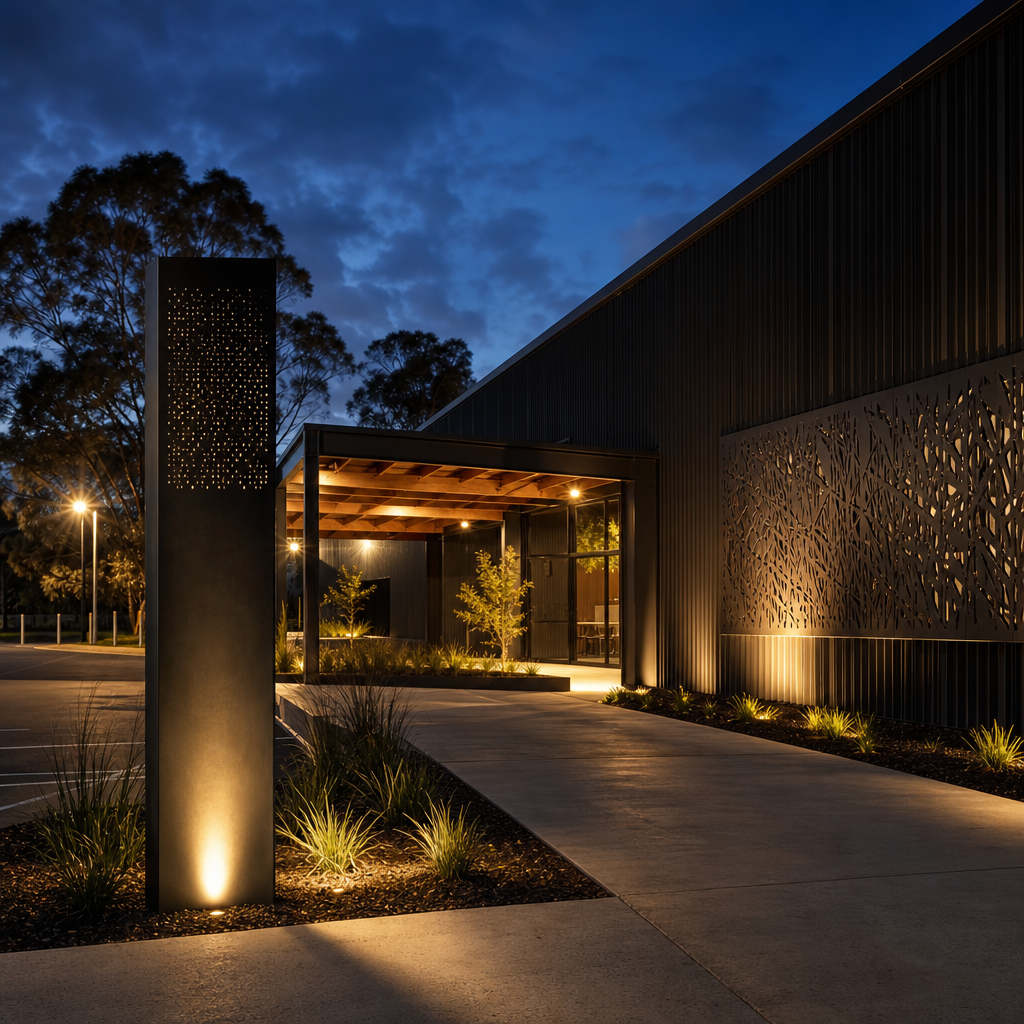
Direct answer: Government and community signage projects typically move through five stages: site survey, design and material selection, permit and stakeholder approval, staged installation around public access hours, and a maintenance plan. Real projects span council halls, sporting reserves, community transport fleets and civic precincts, using laser cut lettering, pylon signs, illuminated features and vehicle wraps built for years of public use.
Signing a shopfront is one thing. Signing a council-owned library, a sporting reserve or a fleet of community transport vans is another matter entirely. Public and not-for-profit signage projects answer to committees, funding bodies, accessibility law and ratepayers, not just a shop owner's taste. Every material choice and every approval step needs to be defensible on paper.
This article walks through how these projects actually get specified and delivered, using composite case study vignettes drawn from the type of work signage manufacturers genuinely produce for the public and community sector: building identification, pylon and monument signs, laser cut and CNC cut lettering and panels, illuminated feature signage, vehicle wraps and large-format printed panels. None of the examples below describe a specific named client; they illustrate how a typical project of that type is scoped and run.
Key Takeaways
- Public signage needs a documented paper trail: quotes, drawings, engineering sign-off and approvals, not just a finished product.
- Materials carry more weight than styling. Outdoor exposure, low maintenance budgets and long replacement cycles favour powder coated aluminium and acrylic over cheaper substrates.
- Wayfinding and building identification signage in public facilities is shaped by accessibility requirements under AS 1428.1, not just branding preference.
- Installation is almost always staged outside normal opening hours to avoid disrupting staff, members or the public.
- Council and reserve-land approvals, not manufacturing, are usually the biggest variable in how long a project takes from enquiry to install.
- Laser cutting, CNC cutting, pylon fabrication and vehicle wraps each solve a different problem across councils, clubs and community fleets, and are often combined on one project.
Ready to make your business impossible to miss?
Design, manufacture and installation, all under one roof in Warana.
Get a Free QuoteSummary Table: Signage Solutions by Facility Type
| Facility Type | Typical Signage Solution | Key Specification Driver | Primary Constraint |
|---|---|---|---|
| Community hall or library | Laser cut building lettering, internal directory panels | Accessibility compliance, facade material and fixing method | Approvals plus installation timed around opening hours |
| Sporting club, reserve or aquatic centre | Pylon or monument sign, large-format printed sponsor and wayfinding panels | Wind load engineering, UV and (near pools) chlorine exposure | Reserve land approval, changeable sponsor panels |
| Community service fleet | Vehicle wraps across vans and utes | Brand consistency, vehicle downtime | Staging installs vehicle by vehicle to keep the fleet operating |
| Civic precinct refresh | Illuminated feature signage, CNC cut architectural elements | Heritage overlays, electrical certification | Coordinating multiple contractors and trades on site |
Why Public and Community Signage Is a Different Brief
A council or committee spending public or member funds has to justify every line item, which means signage decisions need documentation, not just design instinct. Accountability, accessibility, longevity and tender paperwork shape the brief before a single material is chosen.
Accountability is the first difference. A retail client can approve a sign on the spot. A council facilities officer usually needs a written quote, a scaled drawing, and often a second quote for comparison, because the spend has to survive an audit or a councillor's question on notice. Community organisations spending grant money face the same pressure from their funding body.
Accessibility is the second. Building identification and wayfinding signage in a public facility isn't optional styling, it's governed by AS 1428.1 (Design for access and mobility) and, more broadly, obligations under the Disability Discrimination Act 1992 (Cth). That affects letter height, contrast, tactile elements on some signage, and mounting height, well before anyone discusses colour or font.
Longevity is the third. A council hall sign might not be replaced for a decade or more. That changes the maths on substrate choice: a slightly higher upfront cost for powder coated aluminium or cast acrylic is easy to justify against years of outdoor UV and weather exposure, compared with a substrate that fades or delaminates within a couple of seasons.
Finally, tender documentation. Larger structural items like pylon signs often need engineering certification for wind load and footings before a council will issue a permit, and any electrical component in illuminated signage needs to be certified separately. None of this is unique to any one supplier; it's simply the baseline for public sector work.
Case Study: A Council Community Hall or Library
Imagine a council-run community hall that needs new building identification after a facade upgrade, plus an internal directory for the meeting rooms it hires out. The brief calls for laser cut lettering, a wall-mounted directory panel, and compliance with accessibility standards, all within a modest, defensible budget.
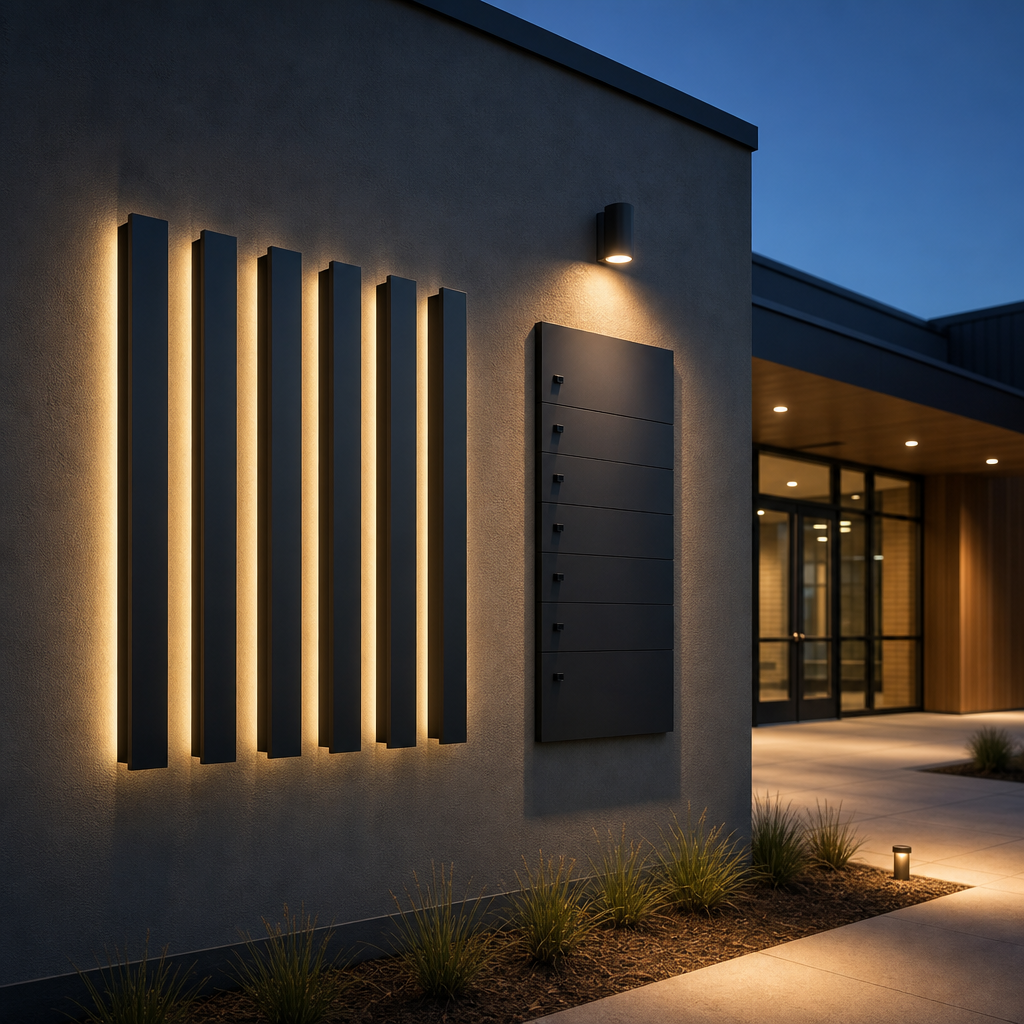
The process starts with a site survey to measure the facade, check fixing substrate (rendered masonry in this scenario), and confirm sightlines from the street and car park. Laser cut aluminium letters, individually mounted with stand-off fixings, are a common choice here because they read cleanly in daylight and at night under existing building lighting, and they hold their finish far longer outdoors than printed or vinyl-applied lettering.
Inside, a laser cut or CNC cut directory panel lists room names and hire information, sized and contrasted to meet accessibility guidance for wayfinding signage in public buildings. Because the hall keeps operating throughout the project, installation is typically scheduled for early morning or a weekend, before the first booking of the day, so ladders and fixing work never interrupt a playgroup, a seniors' group or a community meeting already in progress. That staging decision, more than the design itself, is often what determines the installation date the facility manager signs off on.
Approvals here are usually straightforward if the hall isn't heritage-listed: a facade sign of this scale generally sits within a council's own delegated approval rather than a full planning application, though heritage overlays or a prominent road frontage can add a review step.
Case Study: A Sporting Club, Reserve or Aquatic Centre
Consider a suburban sporting reserve or aquatic centre wanting a stronger street presence: an entrance pylon or monument sign, plus large-format panels for sponsors and wayfinding to the canteen, change rooms and pool concourse. This is one of the most common briefs councils and club committees bring to a signage project.
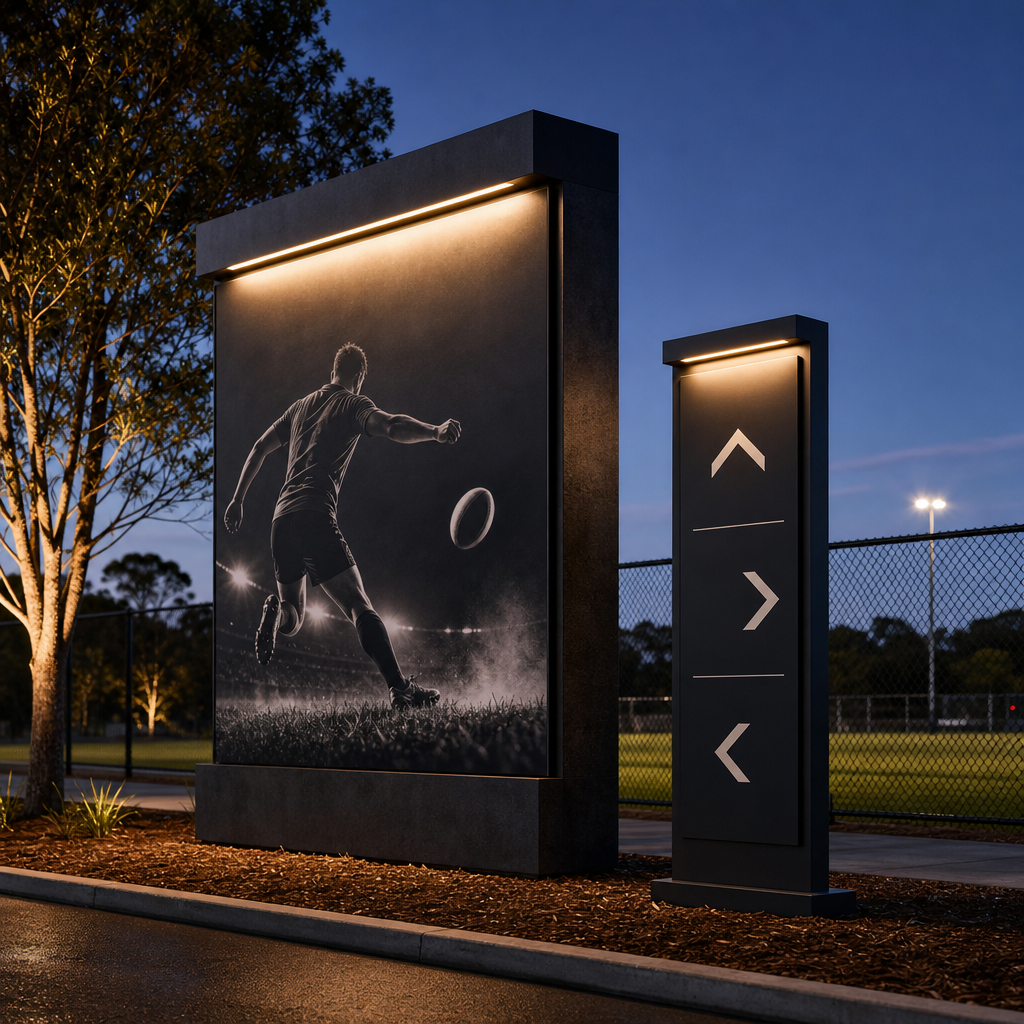
A pylon or monument sign on reserve land carries more engineering weight than a shopfront sign, because it's a freestanding structure exposed to full weather and, in coastal or bayside suburbs, salt air. Footings and wind load are calculated and certified before fabrication, and the sign face itself is usually powder coated aluminium or an aluminium composite panel with UV-stable printed or laser cut graphics, chosen specifically because it won't chalk or fade within a few seasons the way a budget substrate can.
Sponsor recognition adds a practical wrinkle: sponsor panels change as agreements lapse and renew, sometimes annually. A well-specified pylon or monument sign is designed with a removable or interchangeable panel system from day one, so a club doesn't need to replace the whole structure every time a sponsorship changes hands. Large-format printed panels for wayfinding, using durable UV-cured inks on aluminium composite panel, hold up well near pool decks where chlorine and constant foot traffic wear out cheaper printed materials quickly.
Approval for anything built on council reserve land generally involves a separate sign-off from the facility or reserve manager in addition to the club committee, and sometimes a road authority check if the sign sits close to a public road frontage. Building this approval step into the project timeline early avoids the common trap of a fabricated sign sitting in storage while paperwork catches up.
Case Study: A Community Service Provider's Vehicle Fleet
Picture a community service provider running a mixed fleet: a few vans for community transport, a couple of utes for maintenance staff, and a trailer or two, all needing consistent branding for public trust and funder visibility. Vehicle wraps are the practical answer, but a fleet project has its own logistics.
Unlike a single shopfront vehicle, a fleet wrap project usually needs to be staged vehicle by vehicle rather than all at once, because most community organisations can't take every van off the road on the same day. A typical approach schedules one or two vehicles into the workshop at a time, working around rostered shifts, so client transport and outreach services keep running throughout. A full wrap gives maximum branding coverage and the strongest paint protection underneath, while a partial wrap (doors, bonnet and tailgate) is a common middle ground for organisations balancing budget against brand visibility across a larger fleet.
Material choice matters for resale too: a quality cast vinyl wrap, properly installed and removed at end of lease, generally protects the original paint rather than damaging it, which matters for organisations that lease or rotate vehicles every few years. Funding bodies sometimes have their own branding or acknowledgement requirements, which is worth confirming before artwork is finalised rather than after a van is already wrapped.
Case Study: A Civic Precinct Refresh
Imagine a council upgrading an ageing civic precinct, library forecourt or town square, wanting illuminated feature signage at the main entrance alongside CNC cut architectural screens or lettering that reflect the area's character. This kind of project sits at the more complex end of public signage work because it touches urban design, heritage and electrical trades all at once.
Illuminated feature signage, whether LED-illuminated channel letters or a neon-style acrylic feature piece, needs early coordination with an electrician for power runs and switching, and the illuminated component needs its own compliance certification separate to the sign structure itself. CNC cut aluminium or metal screens used as architectural or placemaking elements are chosen for a precinct because the technique allows intricate, repeatable patterns (local motifs, council branding elements, perforated screening) that laser cutting on thinner sheet material can't always achieve at that scale.
Heritage overlays are the biggest wildcard in this scenario. A precinct with even a partial heritage listing can require a heritage impact statement before a development application is even lodged, which affects timing more than any manufacturing step. Councils that flag heritage considerations at the first site meeting, rather than after design is locked in, generally move through approvals with far fewer redesigns.
The Real Cost Driver in Public Signage Isn't the Sign
Most councils and committees compare signage quotes on unit price. That's the wrong comparison. The real cost driver in public and community signage is total cost of ownership plus approval risk, and neither shows up on a one-line quote.
A cheaper substrate that needs replacing in a few years costs a facility more over a decade than a marginally more expensive powder coated aluminium or acrylic sign that doesn't need touching. A pylon sign built without a proper engineering certificate might be cheaper upfront, but it's the one that gets flagged when council reviews structures on reserve land, forcing a costly retrofit. And a project quoted without factoring in staged, after-hours installation often blows its own timeline the moment a facility manager says the works can't run during business hours.
There's also a quieter trend worth naming: much of the commentary on public and government signage online is written from a digital signage angle, screens, kiosks and content management systems. For councils and community organisations, physical signage, laser cut, CNC cut, illuminated and printed, remains the default for a good reason. It has no ongoing power draw beyond illumination, no software to patch, no screen to vandalise or replace, and it survives an audit conversation far more easily: it's a fixed asset with a design file and a warranty, not a subscription. Digital screens have a place in some foyers and libraries, but for entrance identification, wayfinding and pylon signage on reserve land, physical signage is usually the more defensible spend, not the old-fashioned one.
Process and Specification Checklist
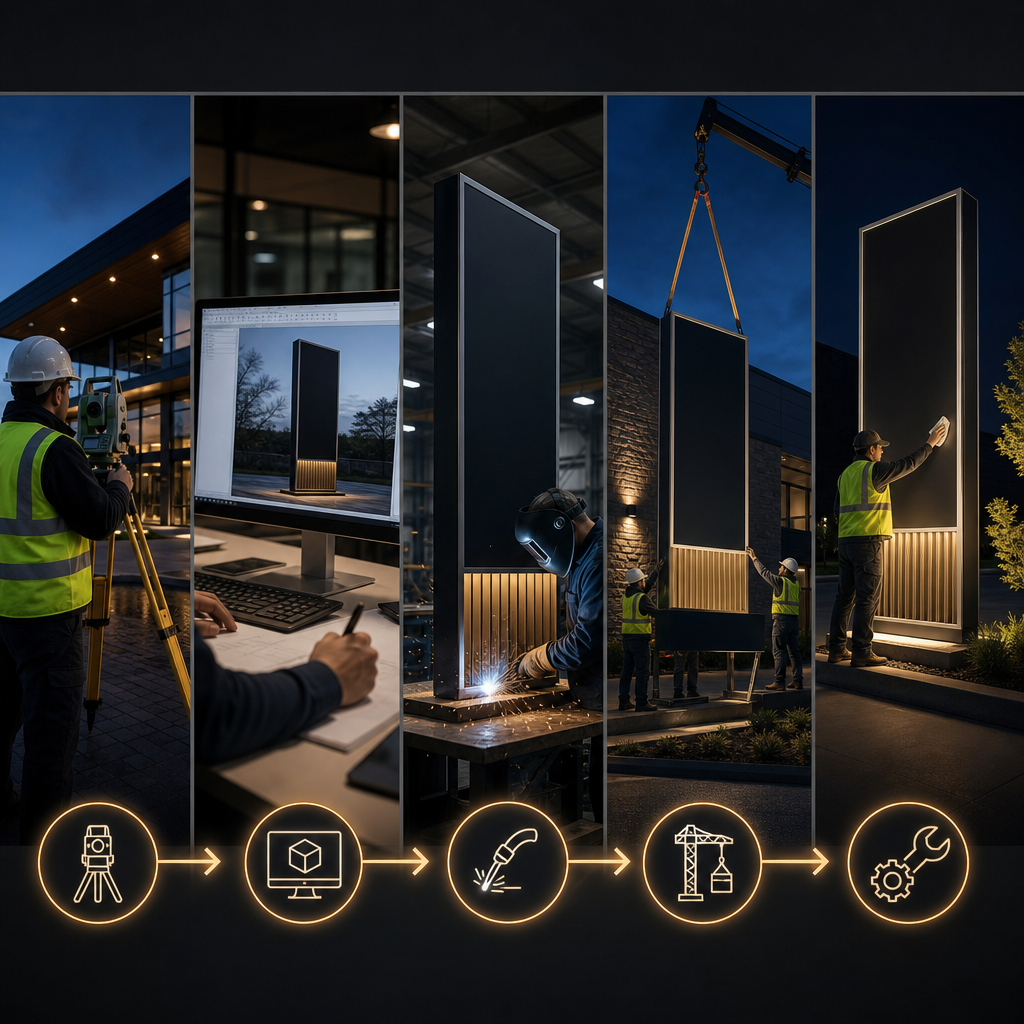
A council, committee or contractor preparing a signage brief needs a clear run-through of what happens between first enquiry and a finished install, and what to have ready at each step, so nothing stalls in approvals or on site.
Site survey and measurement. This comes first, always. A proper site survey confirms substrate, fixing points, sightlines, access for installation equipment and any existing services (power, conduit) that affect illuminated or electrical signage. Skipping this step is the single most common cause of a design that has to be revised after fabrication has already started.
Permits and approvals. Building identification signage on a council-owned facade may sit within delegated approval. Freestanding pylon or monument signs on reserve land, anything on a heritage-listed site, and illuminated signage requiring new electrical connection, usually need a separate development application or facility sign-off. Getting a supplier to help manage this documentation, rather than treating it as the client's problem alone, keeps the project moving.
Material selection. Powder coated aluminium and cast acrylic are the standard choices for outdoor public signage because they resist UV fading and corrosion far better than uncoated metal or lightweight substrates like coreflute, which are really only suited to short-term or indoor use. The extra spend upfront is straightforward to justify against a facility's expected decade-plus ownership horizon.
Installation scheduling around public access. Public facilities rarely close for signage work. Installation is almost always staged, early mornings, weekends, or split across multiple short visits, to avoid disrupting hire bookings, club training sessions, transport runs or library opening hours. Flagging blackout dates (school holidays, grand finals, election periods for council facilities) at the quoting stage prevents scheduling conflicts later.
Maintenance and repair. Public signage takes more punishment than retail signage: weather, vandalism, and constant public contact all take a toll. A facility should agree on a repair pathway before install, not after storm damage or graffiti happens, so a damaged panel or cracked acrylic letter can be replaced quickly rather than sitting broken for months while a new quote is chased.
References
- Standards Australia, AS 1428.1 Design for access and mobility, www.standards.org.au
- Australian Government, Disability Discrimination Act 1992 (Cth), Federal Register of Legislation, www.legislation.gov.au
- Standards Australia, AS/NZS 2312 Guide to the protection of structural steel and other metals from atmospheric corrosion, www.standards.org.au
Councils, committees and contractors planning a public or community signage project can book a site survey with Sunquest Signs and request a fully documented, quotable proposal covering materials, approvals and installation scheduling before any budget is committed.
Talk to a signage expert
Tell us about your project and we'll come back with options and honest advice.
Get in TouchFrequently Asked Questions
How long does council approval for signage usually take?
Approval timing varies widely by council and by structure type. A facade sign under delegated authority can move quickly, while a freestanding pylon sign, anything on reserve land, or a heritage-affected site typically needs a formal development application, which adds significant lead time. Building the approval step into the project schedule from day one, rather than after fabrication starts, is the best way to protect an install date.
What materials last longest for outdoor public signage?
Powder coated aluminium and cast acrylic are the standard choices for public and community signage exposed to Australian weather, because they resist UV fading and corrosion far better than uncoated metal or lightweight substrates such as coreflute. Coreflute and similar budget substrates are better suited to short-term or indoor use rather than permanent facility signage.
Does a community club need council approval for sponsor signage on club grounds?
Usually yes, if the club operates on council-owned reserve land. Even where the club committee approves the sponsor arrangement, the physical sign, particularly a pylon or monument structure, typically needs sign-off from the council's facilities or reserve management team as well.
Can signage be installed without closing a facility to the public?
Yes, and it's the norm rather than the exception. Most council halls, libraries, sporting facilities and community centres stay open throughout a signage project. Installation is scheduled around opening hours, often early morning or on weekends, and larger jobs are split into shorter visits to avoid disrupting bookings, training sessions or public access.
What's the difference between laser cut and CNC cut signage?
Laser cutting uses a focused laser to cut thinner sheet materials like acrylic or thin aluminium with fine detail, and suits lettering, directory panels and smaller feature elements. CNC cutting uses a rotating tool to cut thicker or more varied materials, including timber, thicker metal and composite panels, and is generally the better fit for larger architectural elements, screens and structural signage components.
Related Articles
Sunshine Coast Signage Project Gallery: Real Local Sign Installs by Suburb and Sign Type
Signage in Caboolture: Sign Options for CBD, Morayfield and Industrial Businesses, Council Rules and Costs
Signage in Nambour: Sign Options for CBD, Heritage and Industrial Businesses, Council Rules and Costs
Signs that set you apart
Over 40 years on the Sunshine Coast. Design, compliance, manufacture and installation handled end to end.
Get a Free Quote