
Signage in Nambour: Sign Options for CBD, Heritage and Industrial Businesses, Council Rules and Costs
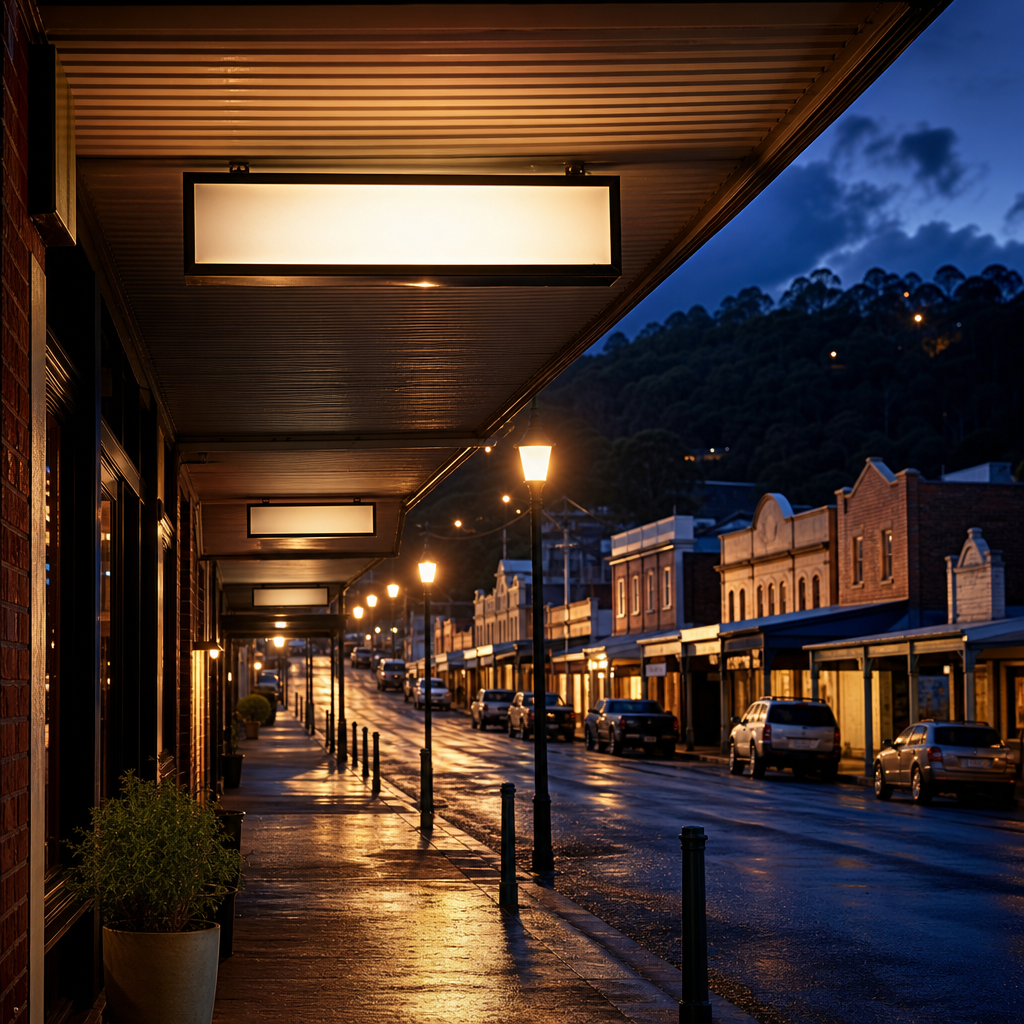
The right signage in Nambour depends on your building and zone. CBD shopfronts suit under-awning, fascia and window graphics, character buildings need low-impact fixing and restrained scale, and industrial sites suit building and pylon signs. Check Sunshine Coast Council advertising device rules and landlord consent before fabrication, because approvals shape the design.
Nambour is not Mooloolaba or Kawana. It is a hinterland town with an older main street, a council and services presence, and working trade and industrial areas. A sign that suits a coastal retail strip can look wrong, or fail early, on a Nambour facade.
This guide is for business owners, franchisees, landlords and property managers planning new or replacement signs. You will learn which sign types suit each setting, how to treat character buildings, which materials cope with hinterland weather, how council and landlord approvals work, and what drives cost and timing.
Key Takeaways
- Nambour signs must work at two speeds: slow pedestrian and kerbside traffic in the CBD, and faster arterial traffic around industrial and roadside sites.
- Under-awning and window signs often do more work than a large fascia sign in a CBD with awnings and a sloping streetscape.
- On character buildings, fixing method and scale matter more than the sign face. Protect the masonry first.
- Hinterland weather means strong UV, humidity and summer storms. Specify UV-stable finishes and sealed lightbox housings.
- Whether a sign is exempt or assessable depends on zone, size, illumination and heritage factors. Confirm with Sunshine Coast Council and your landlord before you order.
- Cost is driven by size, illumination, engineering and access equipment, not by the printed face alone.
Ready to make your business impossible to miss?
Design, manufacture and installation, all under one roof in Warana.
Get a Free QuoteSummary Table
| Business setting | Typical sign types | Main constraint | Approval focus |
|---|---|---|---|
| CBD shopfront | Fascia, under-awning blade, window graphics, lightbox | Awning height and facade character | Landlord consent, council check for illumination and projection |
| Character or heritage building | Painted or applied lettering, halo-lit letters, neon | Protecting original masonry and proportions | Heritage considerations, careful fixing, landlord consent |
| Industrial or roadside site | Building signs, pylon signs, directional signs | Wind loads, visibility from the road | Engineering, council assessment for larger structures |
| Medical and professional office | Entry signs, directory boards, wayfinding, interior signs | Clarity for first-time visitors, accessibility | Building management and landlord rules |
Why Is Signage in Nambour Different From the Coast?
Nambour signage differs because the town is a hinterland centre with older facades, awnings over footpaths, mixed traffic speeds and a hilly streetscape. Signs must read from slow main-street traffic and from faster arterial roads, while suiting buildings that were never designed for modern fascia boxes.
Three local factors shape almost every decision.
Older facades and awnings. Many CBD buildings have awnings, parapets and masonry details. The awning often hides a fascia sign from across the street. That is why under-awning blade signs and window graphics earn their place here.
Mixed speeds. Currie Street and the surrounding CBD streets move slowly, so people read detail and notice shopfront presentation. Roads on the edge of town move faster, so industrial and roadside businesses need larger lettering, higher contrast and simpler messages.
Hills and sight lines. In a hilly streetscape, a sign that looks fine on a flat plan can be hidden by a rise, a tree or the neighbour's awning. Before you design anything, stand where your customers approach from and note where the sign is first visible. Sunquest does this as part of a site measure, because it changes sign height, position and size.
Climate. Nambour gets less direct salt spray than the beachfront, but UV is strong, humidity is high and summer storms can be severe. We cover materials below.
Which Sign Types Suit Each Nambour Business Setting?
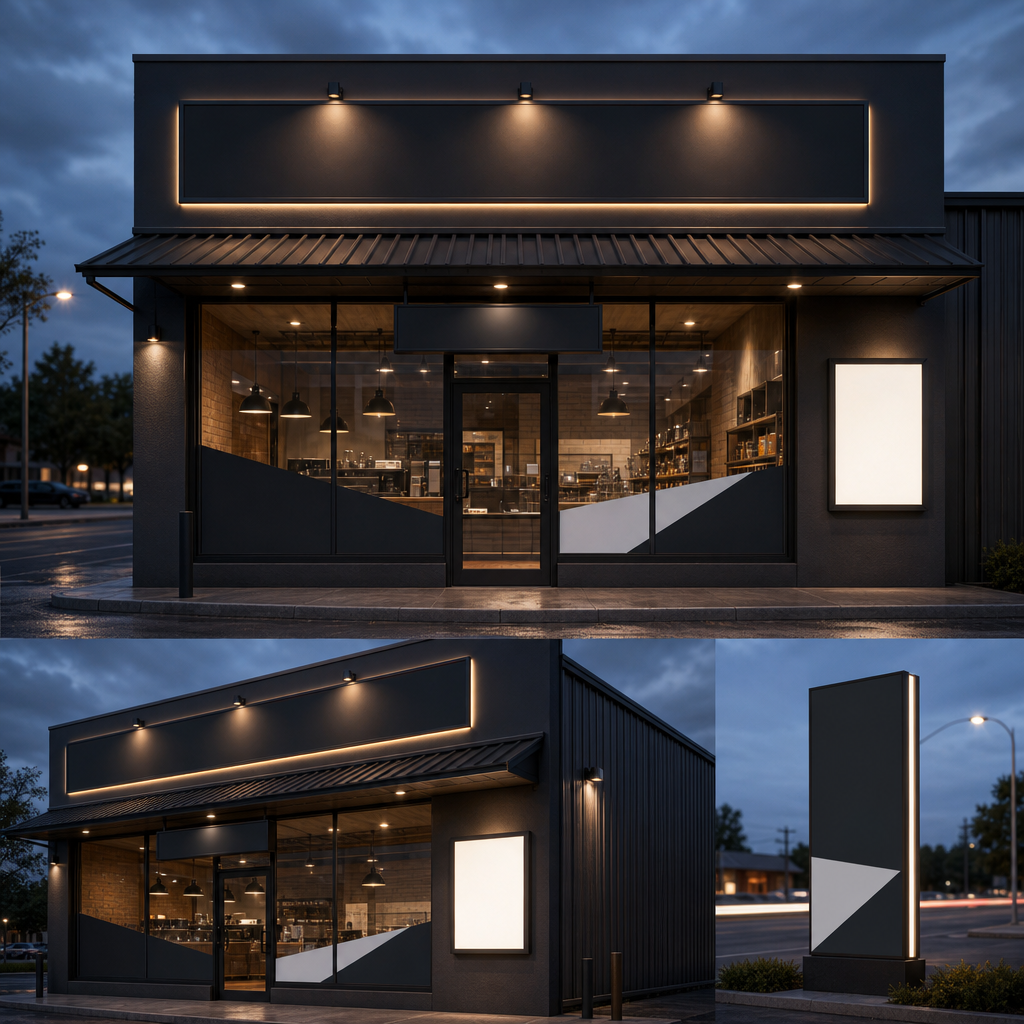
Sign choice should follow the setting. CBD retailers usually need a combination of fascia, under-awning and window signage. Industrial and roadside sites need large building signs or pylons. Medical and office tenants need clear entry, directory and wayfinding signs that help first-time visitors.
CBD shopfronts: fascia, under-awning and window
A CBD shopfront competes for attention at close range. A layered approach works best.
- Fascia signs carry the business name and main offer. They need to suit the building width and any existing sign bands. Our team covers this in more detail under shop front signs on the Sunshine Coast.
- Under-awning blade signs face people walking along the footpath. In a town with awnings, they are often the most visible sign for pedestrians.
- Window graphics add opening hours, services, branding and privacy. Cut vinyl, frosted film and printed graphics each suit different uses. See our notes on window decals and graphics for Sunshine Coast shopfronts.
- Illuminated signs such as lightboxes and halo-lit letters extend visibility into evening trade. They suit cafes, restaurants, pharmacies and any business open after dark. They also raise the approval and electrical requirements.
For a full shopfront refresh, a retail signage fitout ties these elements together so the facade, window and interior read as one brand.
Typical scenario: a CBD retailer replacing a faded awning sign
This is an illustrative scenario, not a client case. Consider a gift shop in the Nambour CBD with a painted fascia sign that has faded after years of afternoon sun. Customers walking past on the footpath cannot see it from under the awning, and the window is cluttered with old stickers.
A sensible plan would run in this order. Measure the fascia and awning. Check the lease for sign conditions and ask the landlord for written consent. Replace the fascia face with a UV-stable material in the existing sign band. Add a slim under-awning blade sign for walking traffic. Clean up the window with a consistent vinyl layout. Only then consider illumination, once the approval path is clear.
The result is a better-organised shopfront for a fraction of the effort of a full rebuild, and no change to the building itself.
Industrial and roadside sites: building signs and pylons
Industrial and trade operators have a different problem. Customers and delivery drivers are looking for a driveway, not browsing. The sign must be readable at speed and from a distance.
- Building signs with large, high-contrast lettering suit warehouse and showroom walls.
- Pylon signs lift the business above fences, vehicles and landscaping. They need footings, structural design and often council assessment. Our pages on pylon sign engineering and installation explain what that involves.
- Illuminated pylon signs keep a site visible in early starts, late finishes and winter evenings.
- Multi-tenant pylon signs suit business parks and shared sites where several tenants need a position. The landlord or body corporate usually controls panel order and design rules.
- Directional signs keep trucks and visitors moving and reduce confusion at the gate.
Medical and professional offices: interior and wayfinding
Nambour has a strong health and services sector, and those tenants share a need: clarity. A first-time patient or client should find the right door without asking.
Good office signage includes an external entry sign, a building directory, floor or suite signs and clear directional signs inside. Plain wording, strong contrast and consistent placement matter more than design flair. Wayfinding systems, lightbox entry signs and interior signs are best planned together so the typeface, colours and mounting heights match.
How Do You Fit Signs to Character Buildings?
On character buildings, protect the masonry, keep the sign in scale with the facade and choose materials that suit the era. Fix into mortar joints rather than brick faces where possible, avoid covering architectural detail, and consider painted lettering, halo-lit letters or neon where they suit the streetscape.
Fixing methods that protect older masonry
Old brick and render are easy to damage and hard to repair. Drilling through the face of a brick leaves a permanent scar. Drilling into mortar joints is usually reversible, because mortar can be repointed.
A few practical rules:
- Fix into mortar joints where the substrate allows it.
- Use stainless steel fixings to avoid rust staining on light masonry.
- Use stand-off mounts so air and water can move behind the sign.
- Run cabling through existing penetrations or discreet routes instead of cutting new holes in decorative surfaces.
- Photograph the facade before work starts so any landlord or heritage query can be answered.
On a heritage-listed or character-protected building, ask whether any fixing is acceptable before you design. The answer can change the whole concept.
Keeping the sign in scale with the facade
A large flat box sign can overwhelm a narrow historic frontage. Look at the building's own lines: sign bands, parapet panels, window heads and awning edges. A sign that follows those lines looks intended. A sign that cuts across them looks stuck on.
As a rule of thumb, let the building set the proportions. If the original sign band is shallow, use a shallow sign. Cut the message down rather than enlarging the sign.
When traditional materials or neon suit
Painted timber or metal lettering, applied individual letters and hand-finished details suit many older buildings. Neon also has a place. It suits cafes, bars, barbers and boutiques where a warm, retro look matches the street. It needs careful placement, a sound electrical connection and a clear approval path. Where neon is not practical, LED neon-style flex gives a similar look with lower fragility, though it is a different product and should be described honestly to the customer.
Which Materials Last in a Hinterland Climate?
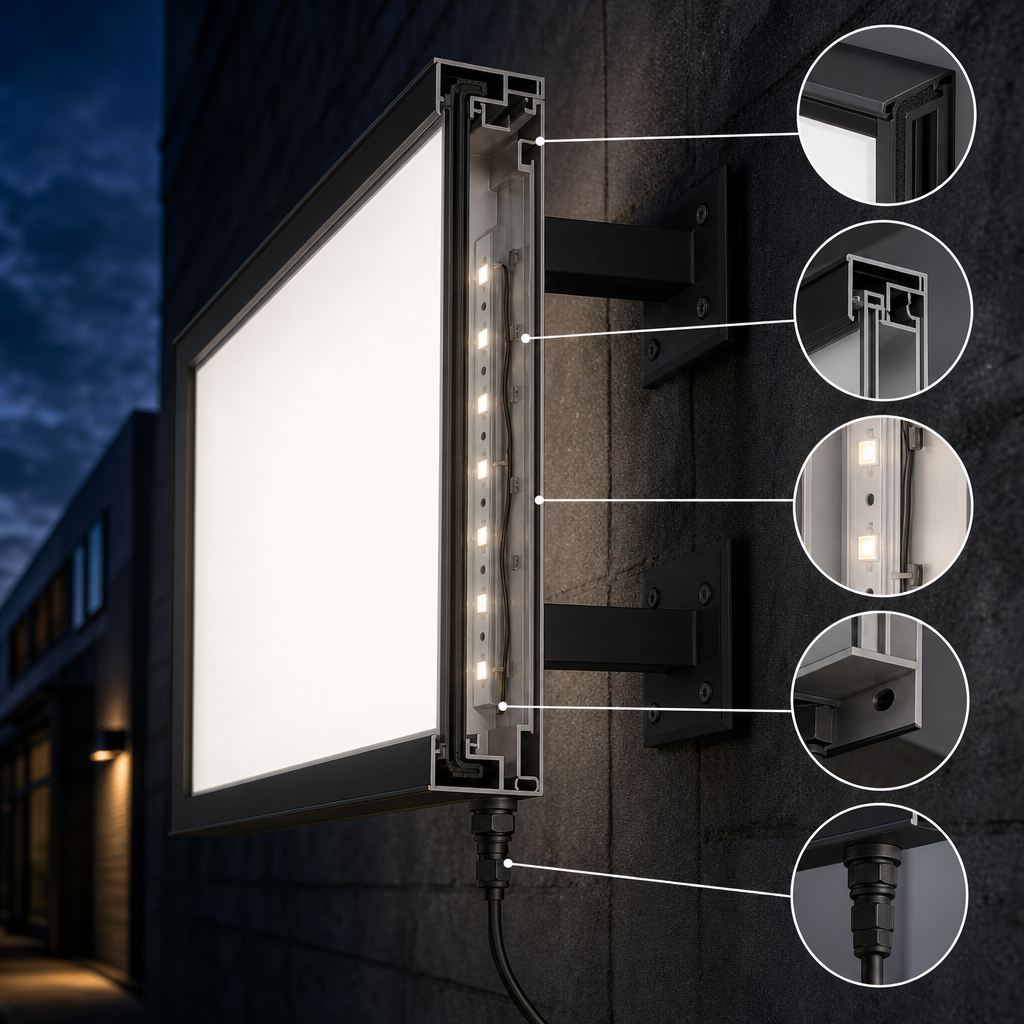
Hinterland signs need UV-stable vinyls and paints, sealed lightbox housings that resist storms and humidity, and LED lighting that is rated for outdoor use. Nambour sees less beachfront salt spray than the coast, but sun, moisture and storms still shorten the life of poor-quality signs.
UV-stable vinyls and paints
UV is the main cause of faded signs in Queensland. Cheap vinyl chalks, cracks and shifts colour. Red, orange and some blues fade fastest.
Specify cast or high-performance vinyls rated for exterior vertical use. Ask whether the printed graphics carry a clear protective laminate. For painted signs, use exterior-grade coatings applied to a properly prepared surface. Preparation matters as much as the paint. Chalky, flaking or damp surfaces will undermine any finish.
Dark colours on aluminium panels in direct afternoon sun absorb heat. Material selection and panel bracing should allow for expansion so the face does not warp.
Sealed lightbox housings
Humidity and summer storms are hard on illuminated signs. Water finds its way into poorly sealed housings, corrodes connections and fogs the face. A good lightbox design includes:
- a sealed or gasketed face and frame,
- drainage provision so condensation can escape,
- corrosion-resistant fixings and fittings,
- cable entries that are sealed and face downwards,
- a back panel and brackets rated for the local wind loads.
Sunquest's lightbox work follows these principles, and they matter just as much on a small blade sign as on a large wall box.
LED lighting choices
Modern LED modules use less power than older fluorescent tubes, run cooler and last longer. For a shopfront, choose a consistent colour temperature so the sign looks even and matches your branding. Cool white can look harsh on a heritage facade, while a warmer white often suits older buildings better. Make sure the drivers and modules are rated for outdoor use and sit where they can be serviced.
For wind loads on larger structures, designers refer to the Australian and New Zealand wind actions standard, AS/NZS 1170.2. Engineering of pylons and large signs should follow it.
When Do Sunshine Coast Council Rules and Landlord Approvals Apply?
Sunshine Coast Council regulates advertising devices through its planning scheme. Whether your sign is exempt or needs assessment depends on factors such as the zone, the sign's size, whether it projects or is illuminated, and any heritage or character overlay. Always confirm with council before fabrication, and get landlord consent in writing.
How council advertising device rules work
The Sunshine Coast Planning Scheme includes provisions for advertising devices. In general terms, some small or low-impact signs can be carried out without a development application, while larger, illuminated, freestanding or projecting signs are more likely to need assessment. Signs on or near places with heritage or character significance get closer scrutiny.
Because the rules depend on specific site details, we do not quote thresholds here. Council can update planning provisions, and a general guide is no substitute for a check against your actual address. Start with the planning information on the Sunshine Coast Council website and, if you are unsure, ask council's planning staff directly.
A few signs of a likely assessable sign:
- a new pylon or freestanding structure,
- a sign that projects over a footpath or road reserve,
- a large or illuminated sign facing a main road,
- any sign on a building with heritage or character protection.
What landlords usually ask for
Even when council does not require approval, your lease often does. Landlords and property managers commonly ask for:
- a scaled drawing or mock-up showing size, position and colours,
- details of materials and fixing methods,
- confirmation of electrical work by a licensed electrician,
- evidence of public liability insurance for the installer,
- an agreement to make good any damage and remove the sign at lease end.
Submit this package early. Landlord approval is a common source of delay, particularly for multi-tenant buildings and sites managed by a body corporate.
Where Sunquest fits in
Sunquest can prepare drawings, support the approvals process and coordinate the installation, so one team stays accountable from design to handover. We do not replace council's decision, and we will tell you plainly if a design is likely to need a development application.
What Drives Cost and How Long Does a Sign Project Take?
Sign cost is driven mainly by size, illumination, engineering and access equipment. Timelines follow a sequence of site measure, design, approvals, fabrication and installation. We do not publish generic prices because two signs that look similar can differ greatly once site conditions are known.
The main cost drivers
- Size. Larger signs use more material, need stronger frames and take longer to install.
- Illumination. Lightboxes, halo-lit letters and neon cost more than non-lit signs, and add electrical work and ongoing maintenance.
- Engineering. Pylons, large wall signs and anything exposed to wind need structural design and footings, and sometimes certification.
- Access equipment. Signs above awnings, on tall walls or over footpaths may need an elevated work platform, traffic control or after-hours work.
- Substrate and fixing. Fixing to masonry, sheet metal or older render can require different methods and more care.
- Approvals. An assessable sign adds fees and time before fabrication can begin.
The cheapest quote can leave these items out. Ask every supplier to list what is included.
A realistic project sequence
- Site measure and consultation. Measure the facade, check sight lines and discuss the brief.
- Design and mock-up. Produce scaled drawings that show the sign on your building.
- Landlord and council check. Confirm what approvals apply and lodge them where needed.
- Engineering and electrical planning. Required for pylons, large signs and illuminated work.
- Fabrication. Build the sign to the approved design.
- Installation. Fix, connect, test and clean up.
- Handover. Provide care and maintenance advice.
Approvals usually set the pace, not fabrication. Starting the landlord and council conversation during design saves the most time.
Why Fixing Quality Matters More Than the Sign Face in Nambour
My position is simple: in Nambour, most businesses spend their attention on the sign face and too little on how it is fixed, approved and maintained. That is backwards.
The face is the visible part, but the fixing decides whether the sign survives a summer storm, whether the landlord lets you keep it, and whether your building is left scarred at lease end. On an older masonry facade, a poor fixing choice is permanent. A weak design can be replaced in a day. A drilled brick face cannot be undone.
The second point is about the awning. Many Nambour business owners ask for a bigger fascia sign when the real problem is the awning hiding it. A well-placed under-awning blade sign and a tidy window layout usually fix the visibility problem for less disruption and less risk of triggering a heavier approval path. Bigger is not always more visible.
This is a view based on how sign projects tend to succeed or fail, not a claim about any specific client result. Test it against your own building: stand on the footpath, look for your sign, and ask what a customer actually sees.
If you want a second opinion, book a site measure and design consultation with Sunquest Signs. We can manage design, fabrication, approvals support and installation in one project, so you deal with one team from first sketch to final fixing.
References
- Sunshine Coast Council, planning and development information
- Standards Australia, AS/NZS 1170.2 Structural design actions: Wind actions
- Bureau of Meteorology, Climate information
- Australian Building Codes Board, National Construction Code
Talk to a signage expert
Tell us about your project and we'll come back with options and honest advice.
Get in TouchFrequently Asked Questions
Do I need council approval for a sign in Nambour?
Sometimes. Sunshine Coast Council regulates advertising devices through its planning scheme, and the answer depends on the zone, size, illumination, projection and any heritage or character factors. Larger, freestanding or illuminated signs are more likely to need assessment. Confirm with council and get landlord consent before ordering.
How much does a shop front sign cost in Nambour?
It depends on size, illumination, materials, engineering and access needs. A simple non-lit fascia face costs far less than an illuminated sign needing an elevated work platform. A site measure lets a signmaker quote accurately. Ask for a written scope so you can compare quotes fairly.
Can I put a sign on a heritage or character building in Nambour?
Often yes, but with more care. Use fixings that protect the masonry, such as mortar joints, keep the sign in scale with the facade and check whether heritage or character provisions apply. Landlord consent and a council check are the first steps.
What signs work best for a cafe in the Nambour CBD?
A layered setup works well: a fascia sign with the name, an under-awning blade sign for people walking past, and window graphics with hours and offers. Illumination helps if you trade into the evening. Warm lighting often suits older streetscapes.
How long does a signage project take?
The sequence is site measure, design, approvals, fabrication and installation. Approvals and landlord consent usually take the longest, especially for pylons or illuminated signs. Starting those conversations during design is the best way to shorten the overall timeline.
Related Articles
Sunshine Coast Signage Project Gallery: Real Local Sign Installs by Suburb and Sign Type
Signage in Caboolture: Sign Options for CBD, Morayfield and Industrial Businesses, Council Rules and Costs
Illuminated Signs in Noosa: LED Lightboxes, Lit Letters and Pylon Signage for Coastal Trading
Signs that set you apart
Over 40 years on the Sunshine Coast. Design, compliance, manufacture and installation handled end to end.
Get a Free Quote