Illuminated Signs in Noosa: LED Lightboxes, Lit Letters and Pylon Signage for Coastal Trading
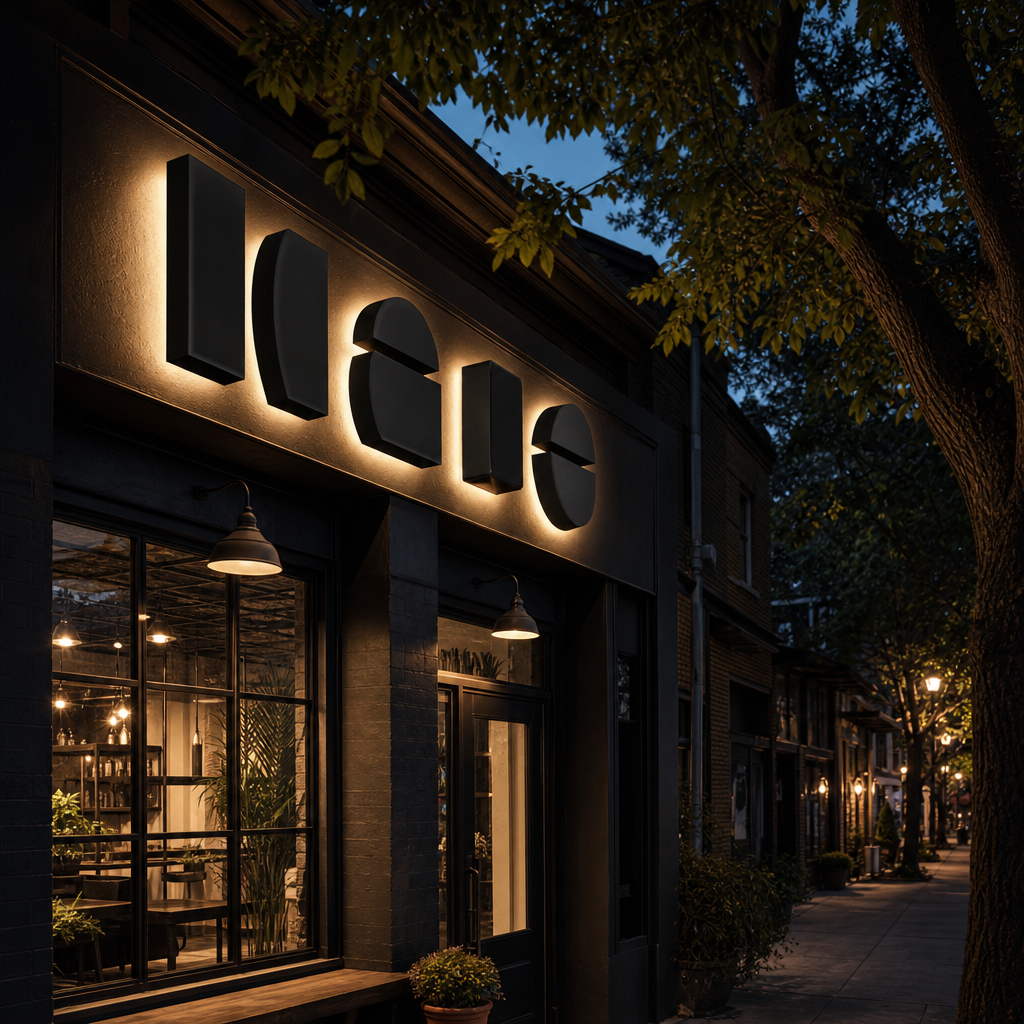
Illuminated signage in Noosa works best as restrained, high-quality lighting, not brash internally lit boxes. Halo-lit letters, face-lit fabricated letters, push-through acrylic and slimline LED lightboxes suit the shire's low-rise, tree-shaded streetscapes. Most projects need Noosa Shire Council sign approval and, where applicable, centre management sign-off, before fabrication and licensed electrical installation begin.
Noosa trades on restraint. Hastings Street, Noosa Junction, Noosaville and Gympie Terrace built their reputations on a low-key, tree-shaded, low-rise character that resists the glowing plastic box aesthetic you see in most coastal strip centres. That does not mean illuminated signage is off the table. It means the wrong illuminated sign will make a good venue look cheap, and the right one will make an evening trading operator far easier to find after dark.
This guide covers the illumination options that actually suit Noosa, how to build a sign that survives salt air without corroding within a couple of seasons, how brightness and colour temperature affect neighbour relations and after-dark trade, and what Noosa Shire Council and centre managers typically expect before a sign goes up. It closes with the process Sunquest Signs runs for Noosa fit-outs, from site measure through to licensed electrical install.
Key Takeaways
- Halo-lit (reverse-lit) letters and face-lit fabricated letters generally suit Noosa's low-key streetscapes better than generic internally lit lightboxes, even in locations where a lightbox would technically be permitted.
- Salt air degrades cheap signage fast. Marine-grade fixings, powder-coated or fabricated aluminium returns, sealed LED modules and IP-rated drivers are the difference between a sign that lasts and one that corrodes within a couple of seasons.
- LEDs use far less electricity than fluorescent tubes or neon-style transformers and last considerably longer, which matters for venues that trade seven nights a week.
- Warm colour temperatures and dimmable drivers keep a sign legible without glare, which matters in tightly held precincts where neighbours and centre management notice brightness.
- Noosa Shire Council approval, and often a landlord or centre management design sign-off, needs to happen before fabrication starts, not after.
- Sunquest Signs provides a scaled render and written quote before any commitment, so operators can see exactly what will go up before paying a deposit.
Ready to make your business impossible to miss?
Design, manufacture and installation, all under one roof in Warana.
Get a Free QuoteSummary Table: Illumination Options for Noosa Shop Fronts
| Illumination Type | How It Works | Best Suited To | Noosa Streetscape Fit |
|---|---|---|---|
| Halo-lit (reverse-lit) letters | LEDs face the wall behind fabricated letters, creating a soft glow outline | Cafes, restaurants, day spas, galleries wanting an upmarket, understated look | Excellent. Reads as premium, not commercial |
| Face-lit fabricated letters | LEDs illuminate the letter face directly through an acrylic or polycarbonate front | Retail and hospitality wanting clear legibility after dark | Good, especially in warm white |
| Push-through acrylic | Acrylic letters or logos pushed through a routed aluminium or ACM panel, lit from behind | Boutiques, real estate offices, medical suites wanting a tactile, dimensional look | Very good, reads as custom joinery rather than a sign |
| Edge-lit acrylic panels | LEDs run along the panel edge, lighting the whole face evenly | Directories, menu panels, small feature signs | Good for interior and undercover applications |
| Slimline LED lightbox | Traditional box format but shallow profile with even LED backlighting | Tenancies where council or landlord permits a lightbox and legibility is the priority | Fair. Needs a restrained face design to avoid looking generic |
| Illuminated pylon | Freestanding illuminated structure, often multi-tenant, at a driveway or car park entry | Noosa Heads centres, medical precincts, multi-business sites needing kerbside visibility | Good when scaled and detailed to suit the site, subject to council approval |
Why Illuminated Signage Works Differently in Noosa
Noosa's streetscapes are shaped by canopy trees, low building heights and a heritage-feel character that most coastal towns abandoned decades ago. An illuminated sign that would disappear into a busy Maroochydore strip will stand out immediately in Noosa, for better or worse.
Hastings Street's tree canopy means signage sits low and close to eye level, not up on a fascia competing with traffic at speed. Noosa Junction and Noosaville trade on a village feel, with a mix of hospitality, boutique retail and professional services rather than big-format retail. Gympie Terrace leans on its riverside outlook, where operators want to be seen from the water and the footpath without looking like a highway bottle shop.
Evening dining trade is a major driver of illuminated signage demand. Noosa's hospitality economy runs later than a typical CBD strip, and a cafe or restaurant that closes its kitchen at 9pm still wants to be visible to the foot traffic still wandering Hastings Street at 10pm. The difference in Noosa is that visibility does not need to mean brightness. A softly halo-lit name above a doorway, glowing warm against a dark timber or render facade, does more for a venue's positioning than a bright plastic box ever will.
The Illumination Options Explained
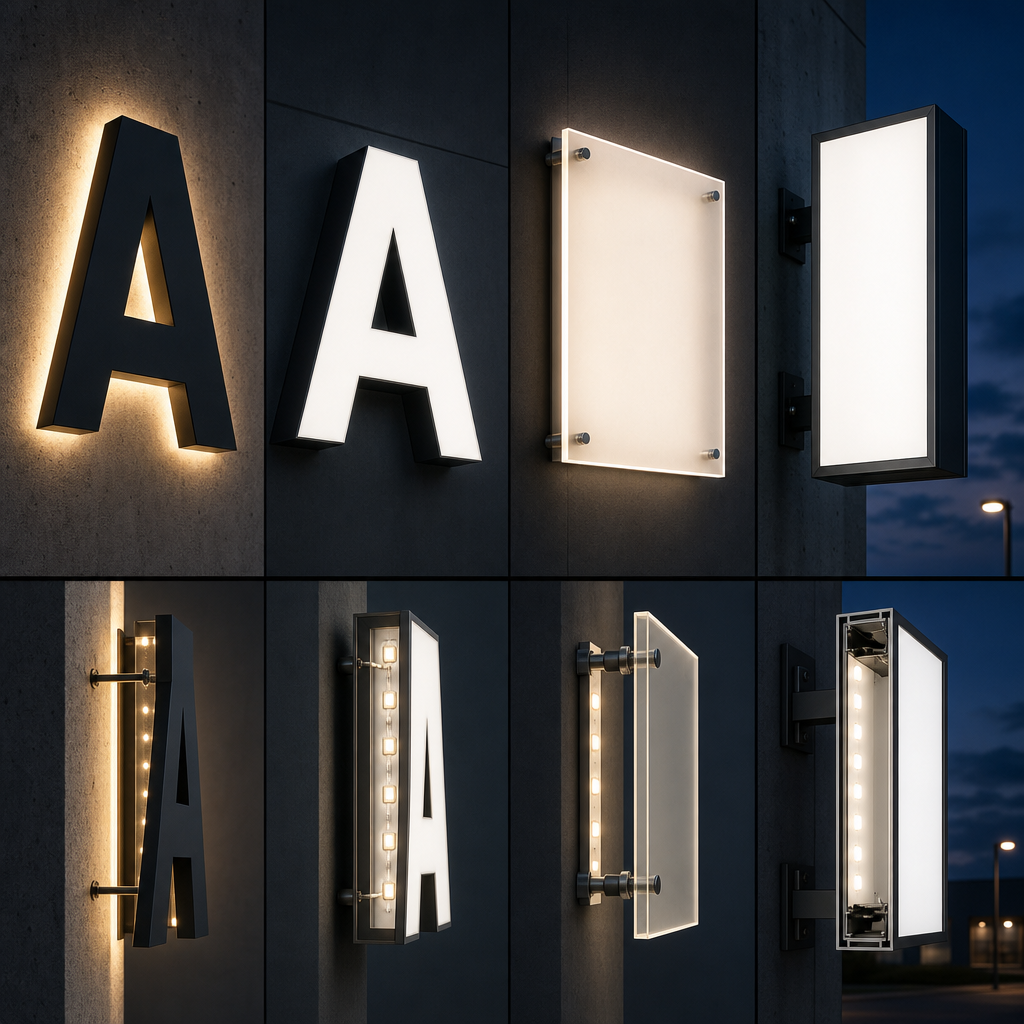
Each illumination method suits a different look and budget. Halo-lit and face-lit fabricated letters suit premium hospitality and retail. Push-through acrylic suits boutiques and professional services. Slimline lightboxes and illuminated pylons suit tenancies and multi-business sites that need stronger kerbside legibility.
Halo-lit (reverse-lit) letters mount fabricated letters slightly off the wall, with LEDs facing backward so light spills out around the letter edges rather than through the face. The result is a soft glow, not a glare. This is the option Sunquest recommends most often for Hastings Street and Noosa Junction hospitality fit-outs, because it reads as considered and high-end rather than commercial.
Face-lit fabricated letters illuminate through the letter face itself, usually through an acrylic front on a metal return. They are more legible from a distance than halo-lit letters, which suits venues that need to be found quickly by evening diners, such as a restaurant set back from the street or up a laneway.
Push-through acrylic routs a logo or lettering shape through an aluminium or ACM panel, then backlights it so the acrylic glows while the surrounding panel stays solid and matte. It looks closer to custom signage joinery than an illuminated sign, which is exactly why it suits boutiques, day spas, galleries and real estate offices that want a tactile, non-plastic finish.
Edge-lit acrylic panels work well for smaller interior or undercover applications, such as a directory board or a menu panel, where even illumination across a whole face matters more than a glowing outline.
Slimline LED lightboxes are the traditional shopfront format, but modern slimline units are a fraction of the depth of older fluorescent or neon-tube boxes. Where a lightbox is genuinely the right call, such as a busy multi-tenant retail strip or a pharmacy needing strong legibility, a well-designed slim box with a restrained face still reads far better than a dated, deep, brightly lit box from the 1990s.
Illuminated pylons give freestanding, multi-tenant visibility at a driveway or car park entry, which matters for medical precincts and shopping centres around Noosa Heads where individual tenancy signage is limited by centre design guidelines.
Surviving Salt Air: Why Cheap Imported Boxes Fail Fast
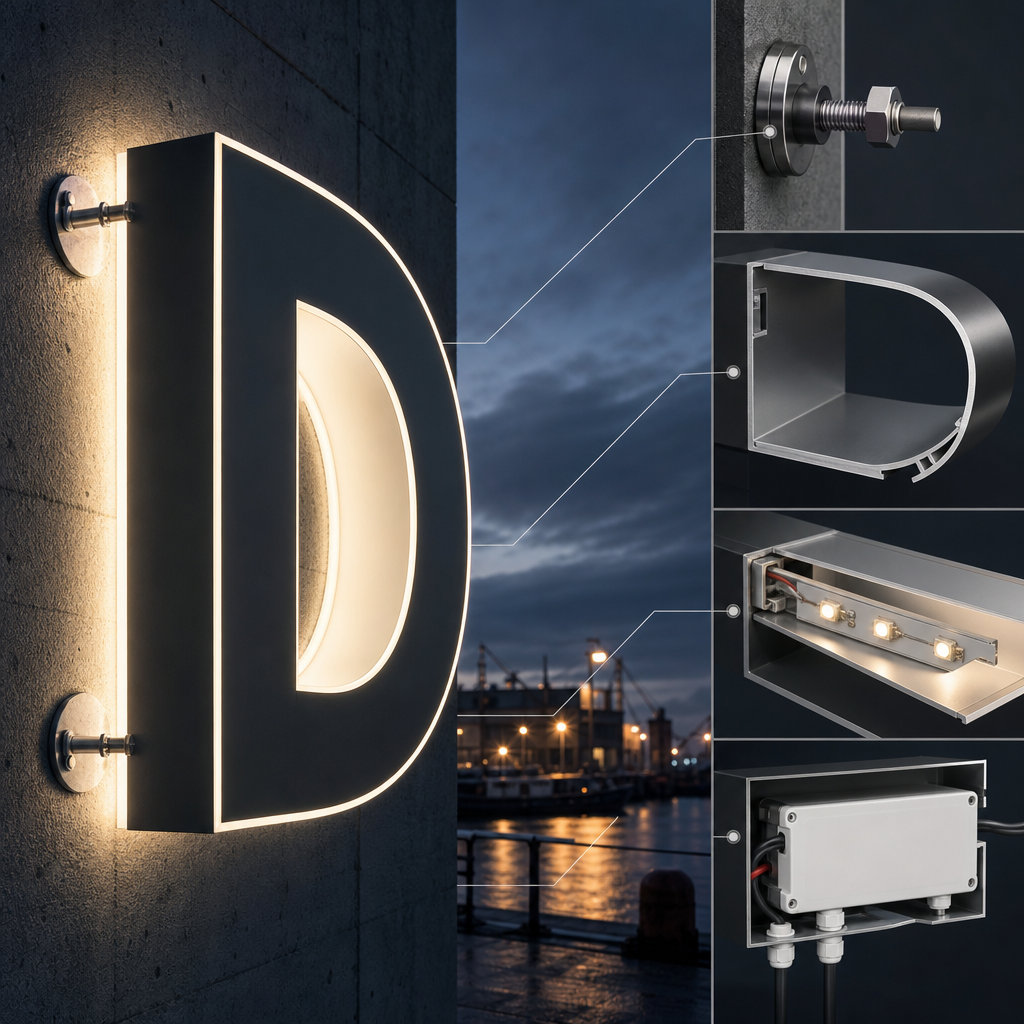
Salt-laden coastal air corrodes untreated metal and cheap plastics quickly. A sign built for an inland shopping strip will not survive long near Noosa's beaches without marine-grade fittings, sealed electrical components and corrosion-resistant fabrication.
The failure points are predictable. Cheap fixings rust and stain the facade within a season or two. Unsealed LED modules let in moisture, causing dead sections and flickering. Untreated steel returns bubble and blister under powder coating that was never rated for a marine environment. Budget drivers without an adequate IP rating fail in humidity long before the LEDs themselves wear out.
Sunquest builds Noosa signage around a few non-negotiables: marine-grade stainless steel fixings (grade 316, not the cheaper 304 used inland), aluminium returns that are either powder-coated with a coastal-rated finish or left as raw fabricated aluminium where the design calls for it, fully sealed LED modules, and IP-rated drivers housed in weatherproof enclosures. None of this is visible once the sign is installed, which is exactly why it gets skipped on cheaper imported units. The difference shows up two years later, when a poorly specified sign is streaked with corrosion and a properly specified one still looks new.
LEDs also outlast the fluorescent tubes and neon-style transformers they replaced by a wide margin, and they draw considerably less electricity to run. For a venue trading long hospitality hours seven nights a week, that lower running cost and reduced maintenance burden compounds over the life of the sign.
Brightness, Dimming and Being a Good Neighbour After Dark
The right illuminated sign for Noosa is legible without being glary. Warm colour temperatures (around 2700K to 3500K) and dimmable LED drivers let a sign suit a low-glare precinct, stay comfortable for neighbouring tenancies and residences, and still do its job after dark.
Cool white LEDs (5000K and above) read as clinical and commercial, which is exactly the look most Noosa operators are trying to avoid. Warm white tones sit closer to candlelight and ambient street lighting, which is why they suit hospitality and boutique retail in tree-lined, low-rise precincts.
Dimmable drivers matter for two reasons. First, a sign that looks right at 6pm dusk can look overpowering by 11pm once the street quietens down and surrounding light drops off. A dimmable driver, either on a timer or a simple manual dimmer, lets brightness step down later in the evening. Second, centre management and neighbouring residents in mixed-use buildings around Noosa Junction and Noosaville increasingly expect signage brightness to be considered, not just compliant. A sign that can be dimmed is far easier to get approved and far easier to live next door to.
Approvals and Landlord Rules in Noosa Shire
Most illuminated signs in Noosa need approval before fabrication starts, either from Noosa Shire Council under its planning scheme, from a landlord or centre manager under a design guideline, or both. Getting this sequence wrong is the single most common cause of installation delays.
Noosa Shire Council administers signage as part of its planning scheme, generally known as the Noosa Plan. Character areas such as Hastings Street, Noosa Junction and the Gympie Terrace riverside frontage often carry additional design expectations around scale, illumination brightness and materials, on top of standard building and electrical approvals. Shopping centres and multi-tenant sites around Noosa Heads typically layer their own centre management sign criteria manual on top of council requirements, covering approved sign types, size limits, illumination rules and even acceptable fonts.
Sunquest handles this by supplying the documentation both council and landlords typically ask for before a permit or lease sign-off is issued: a scaled elevation drawing showing the sign against the facade, illumination specifications including colour temperature and any dimming capability, and structural or electrical details where required. Getting this paperwork right the first time avoids the common trap of fabricating a sign, discovering it does not meet a design guideline, and having to remake it at the operator's expense.
Process and Timeline: From Site Measure to Switch-On
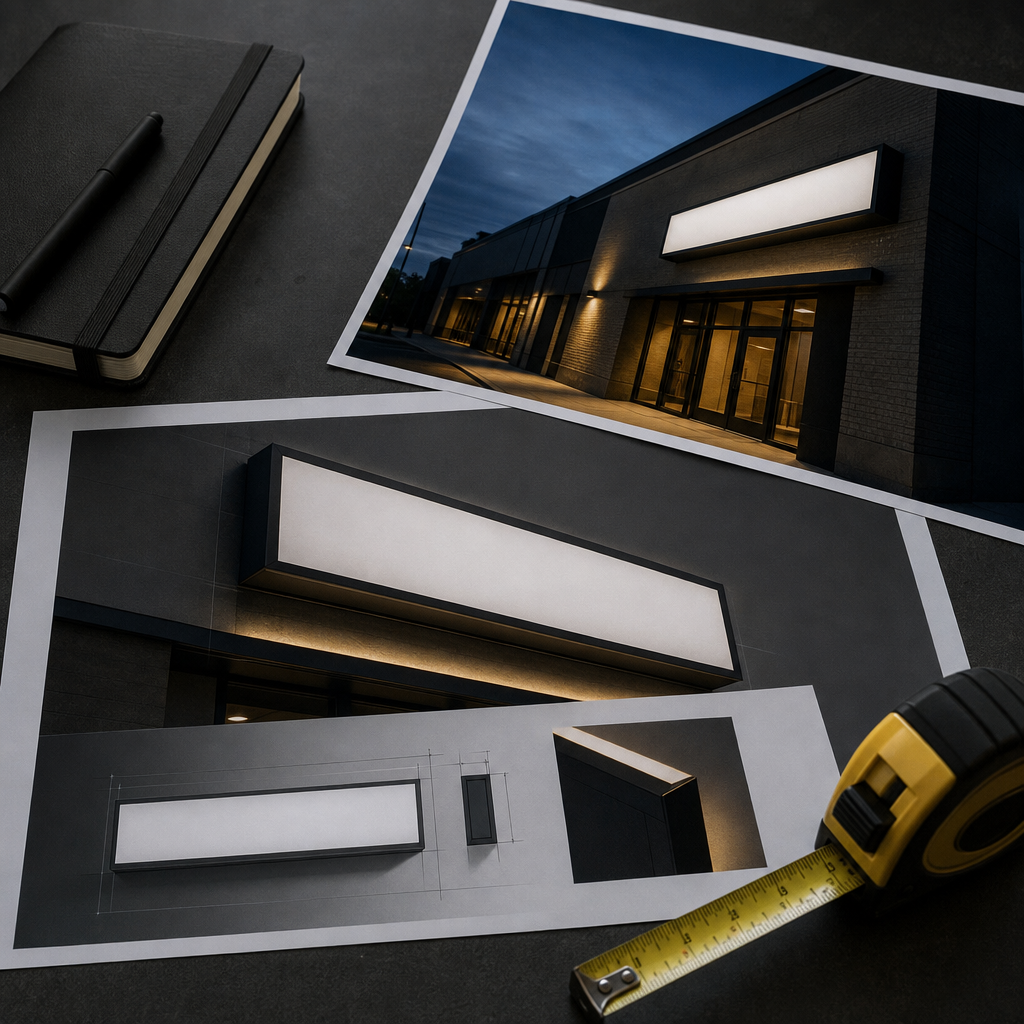
A typical illuminated sign project runs through five stages: a free site measure, a concept and scaled render, council and landlord approval, fabrication, and licensed electrical installation. Approval is usually the longest variable, since it depends on Noosa Shire Council's assessment timeframes and any landlord sign-off required.
The process starts with a site visit to measure the facade, check power access, and assess mounting conditions, including how much wall or awning depth is available and where the closest suitable power point sits. From there, Sunquest produces a concept and a scaled render showing the sign in place on a photo of the actual site, along with a written quote, so an operator can see exactly what they are approving before any commitment is made.
Once a design is signed off, the approval documentation goes to Noosa Shire Council and, where relevant, to the landlord or centre manager in parallel. Fabrication begins once approvals are confirmed, using the marine-grade fixings and sealed componentry outlined earlier. Installation is carried out by licensed electrical contractors, since any hardwired illuminated sign in Queensland needs to be connected by someone licensed to do electrical work, not just mounted by a signwriter.
Operators considering an illuminated sign alongside other shopfront work, such as new window graphics, a shopfront makeover, a pylon replacement, or fleet vehicle wraps to match a new brand look, generally get better pricing and a more coordinated result by scoping it all in the one project rather than staggering the work over separate quotes.
Why We Talk Some Noosa Clients Out of the Brightest Option
The most useful thing Sunquest does for a lot of Noosa enquiries is talk the operator out of the biggest, brightest lightbox they initially ask for. Council permission is not the same as a good fit for the street, and Noosa's precincts punish signage that ignores that difference.
Operators often arrive with a reference photo from a bigger regional centre such as Maroochydore or Caloundra, where a bold internally lit box works fine because the streetscape is wider, faster-moving and less tree-shaded. Transplanted onto a narrow Hastings Street shopfront under a fig tree canopy, the same sign reads as out of place, even where council would technically approve it. A venue can hold council approval and still have the wrong sign for its street.
The contrarian position worth stating plainly: in Noosa, a smaller, warmer, more restrained illuminated sign usually generates better foot traffic than a bigger, brighter one, because it signals that the business understands the precinct it is trading in. Diners walking Hastings Street after dinner are not looking for the brightest sign on the block. They are looking for the sign that looks like it belongs there. A halo-lit name glowing softly above a timber-clad entry does more for a restaurant's positioning than a backlit box ever could, even though the box is technically more visible from further away. Visibility and fit are not the same goal, and treating them as interchangeable is where a lot of otherwise good fit-outs get their signage wrong.
This is also where corrosion-resistant fabrication and dimmable drivers earn their keep. A sign built to look restrained on day one still needs to look restrained, not faded or yellowed, three summers later. That only happens with the coastal-rated build detailed earlier in this guide, not with a generic imported unit.
References
- Noosa Shire Council, Noosa Plan (planning scheme), https://www.noosa.qld.gov.au
- Standards Australia, AS/NZS 3000:2018 Electrical Installations (Wiring Rules)
- Queensland Government, Electrical Safety Office, https://www.worksafe.qld.gov.au/electrical-safety
- Australian Government, Energy Rating, https://www.energyrating.gov.au
If you are planning an illuminated sign for a Noosa shop front, restaurant, boutique or medical suite, book a free site measure with Sunquest Signs. You will get a scaled render and a written quote before you commit to anything.
Talk to a signage expert
Tell us about your project and we'll come back with options and honest advice.
Get in TouchFrequently Asked Questions
Do I need council approval for an illuminated sign in Noosa?
Most illuminated signs need Noosa Shire Council approval under its planning scheme, particularly in character precincts such as Hastings Street and Noosa Junction. Landlords and centre managers often require their own design sign-off as well, so both need checking before fabrication starts.
What is the difference between halo-lit and face-lit letters?
Halo-lit letters illuminate backward, creating a soft glow around the letter outline against the wall. Face-lit letters illuminate through the letter's front face, giving stronger direct legibility. Halo-lit generally suits Noosa's understated streetscapes better, while face-lit suits venues needing clearer legibility from further away.
How much does an illuminated sign cost in Noosa?
Cost depends on the illumination type, letter or panel size, materials and installation complexity, so it is not something to estimate without seeing the site. Sunquest provides a free site measure, a scaled render and a written quote before any commitment, which gives an accurate figure for the specific job.
How long do LED signs last compared to fluorescent or neon-style alternatives?
LEDs used in modern signage run on considerably less electricity than fluorescent tubes or neon-style transformers and generally last a good deal longer, with far fewer maintenance call-outs over the life of the sign. This matters most for venues trading long hospitality hours, where a sign is running most evenings of the week.
Can illuminated signs be dimmed for evening trading?
Yes. Slimline lightboxes, halo-lit letters and push-through acrylic panels can all run on dimmable LED drivers, either on a timer or a manual dimmer. This lets brightness step down later in the evening, which suits Noosa's low-glare precincts and keeps neighbouring tenancies and residents comfortable.
How long does it take to get an illuminated sign installed in Noosa?
Timelines vary depending on approval turnaround from Noosa Shire Council and any landlord sign-off required, which is usually the longest stage. Once approvals are confirmed, fabrication and licensed electrical installation typically follow in a matter of weeks, not months.
Related Articles
Shop Front Signs in Noosa: Precinct Styles, Coastal Materials, Council Rules and Costs
Sunshine Coast Signage Project Gallery: Real Local Sign Installs by Suburb and Sign Type
Signage in Caboolture: Sign Options for CBD, Morayfield and Industrial Businesses, Council Rules and Costs
Signs that set you apart
Over 40 years on the Sunshine Coast. Design, compliance, manufacture and installation handled end to end.
Get a Free Quote