Illuminated Signs in Toowoomba: LED Lightboxes, Lit Letters and Pylon Signage for the Darling Downs
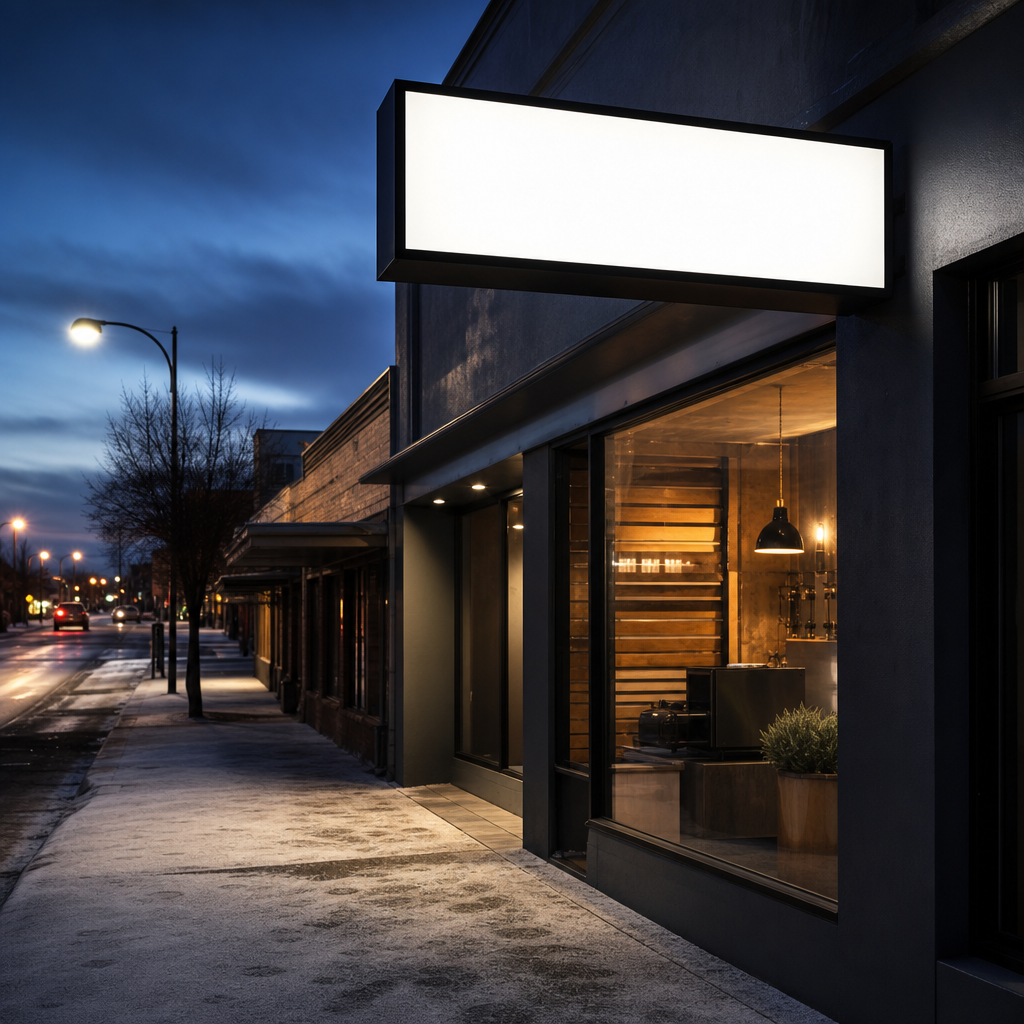
Illuminated signs in Toowoomba need to survive frosty mornings, sharp day-to-night temperature swings, hail and strong westerly winds, not just look bright after dark. The right build uses sealed and drained lightbox housings, IP-rated LED drivers, acrylic faces with allowance for thermal movement, and pylon footings engineered for local wind loading. Get those details right and a sign lasts well over a decade instead of failing in five.
Toowoomba sits on the Great Dividing Range at close to 700 metres, which means a different climate story to the coast. Frost is common on winter mornings, afternoons can still push warm, and the swing between the two happens most days from May to September. That kind of thermal cycling is hard on sealed lightboxes and fabricated letters if they weren't built for it.
This guide covers what actually separates a short-lived illuminated sign from one that keeps trading for you through a decade of Downs winters. It's written for business owners and property managers on Ruthven, James and Herries Streets who are comparing quotes and want to know what questions to ask before they sign off.
Key Takeaways
- Toowoomba's frost, thermal swings and westerly winds are a different engineering problem to coastal salt exposure, and signs built for one climate aren't automatically right for the other.
- Sealed, drained lightbox housings and IP-rated componentry stop condensation build-up, which is the main cause of internal corrosion and premature LED failure on the Downs.
- Acrylic faces need room to expand and contract with temperature swings; rigid mounting without that allowance leads to cracking and warping over time.
- Pylon and monument signs need footing and structural design that accounts for wind loading, not just a sign that looks good on paper.
- Toowoomba Regional Council's heritage overlay affects parts of the CBD, so illuminated shopfront and projecting signs on those frontages need design input before ordering.
- LED illumination draws far less power than older fluorescent lightboxes and needs less frequent servicing, which changes the running cost conversation for after-hours trade.
Ready to make your business impossible to miss?
Design, manufacture and installation, all under one roof in Warana.
Get a Free QuoteSummary Table: Illuminated Sign Options for Toowoomba Premises
| Sign Type | Best Suited To | Downs-Specific Consideration | Typical Build Material |
|---|---|---|---|
| LED lightbox (acrylic face) | Shopfronts, tenancy signage, arterial road frontages | Needs sealed housing and expansion allowance for temperature swings | Aluminium tray, acrylic face, LED modules |
| LED lightbox (flex face) | Larger format shopfront and awning signs | Flex face reduces cracking risk under thermal cycling versus rigid acrylic | Aluminium frame, PVC flex face, LED modules |
| Fabricated illuminated letters (face-lit) | Premium shopfront branding, tenancy identification | Return depth and sealing matter more in frost-prone conditions | Aluminium returns and trim, acrylic face, LED |
| Fabricated illuminated letters (halo/reverse-lit) | Heritage frontages, architectural branding | Reads well in low CBD light without altering streetscape character | Aluminium fabrication, LED backlighting |
| Pylon and monument signage | Arterial road visibility on Ruthven, James, Herries Streets | Wind loading and footing design are the main engineering considerations | Steel structure, aluminium composite panel or lightbox faces |
| Illuminated under-awning and projecting signs | Pedestrian-level CBD visibility, laneway frontages | Council approval and heritage controls apply in overlay areas | Aluminium cabinet, acrylic or flex face, LED |
Why Illumination Matters on Toowoomba's Arterial Roads
Toowoomba's winter darkness sets in early, and traffic on Ruthven, James and Herries Streets keeps moving well past dusk. An unlit or dimly lit sign on these roads loses visibility for hours of genuine trading time, particularly through the cooler months when daylight trading hours shrink.
These three corridors carry a large share of the city's commercial through-traffic. Drivers are moving at speed, scanning for landmarks, and an illuminated sign gives a business a fighting chance of being noticed and remembered. A dark shopfront next to a lit competitor loses that contest before a customer even considers stopping.
Twilight in Toowoomba also runs longer than many people expect, given the elevation and the region's clear-sky winter mornings and evenings. That extended half-light period, before full darkness and after sunrise, is exactly when a well-lit sign earns its keep. Fluorescent-lit boxes from decades past often looked patchy or dim during this window, which is one of the practical reasons LED has become the standard replacement.
After-hours trade, whether that's a fuel stop, a medical clinic, a restaurant, or a service business with evening appointments, depends on a sign that reads clearly from a moving vehicle. That's a different design brief to a daytime-only sign, and it should shape the illumination method chosen from the outset.
The Illuminated Sign Types We Build for Toowoomba Businesses
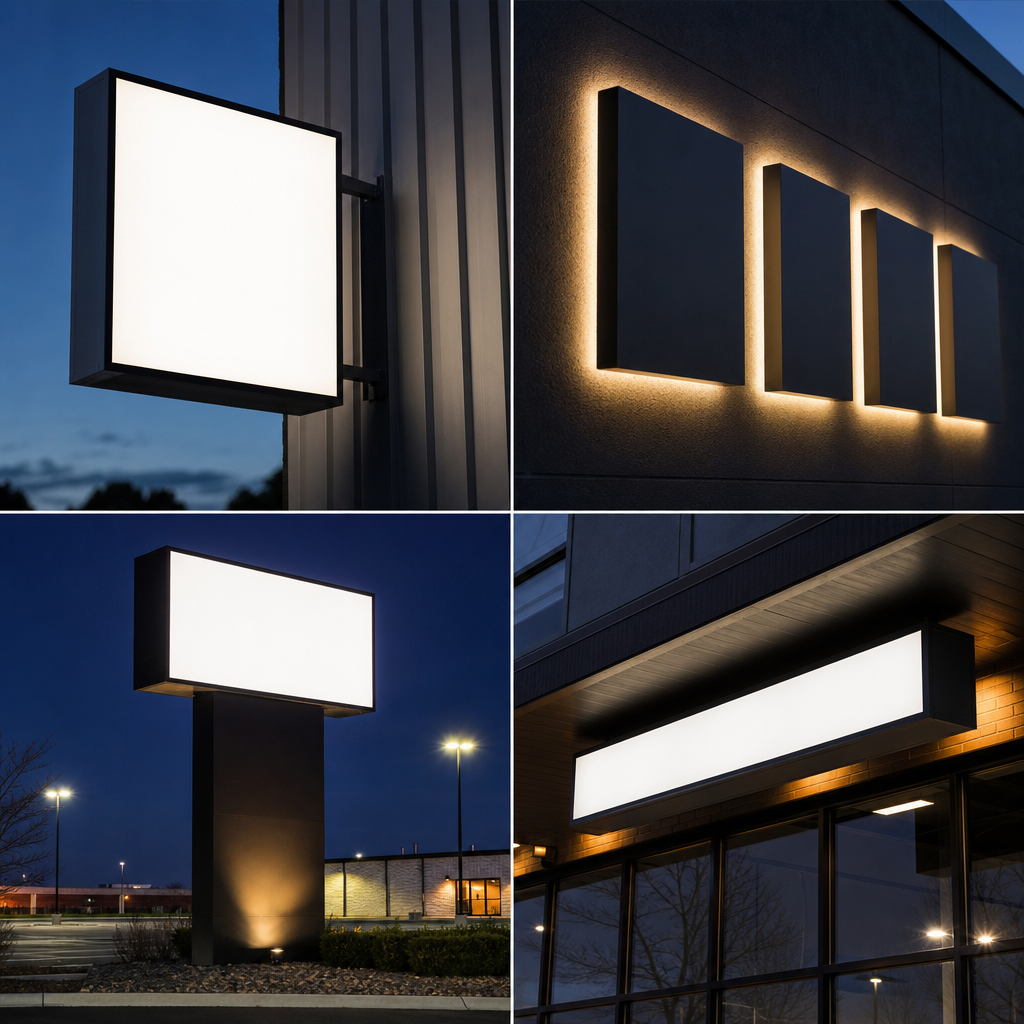
Toowoomba businesses generally choose from four illuminated sign types: LED lightboxes, fabricated illuminated letters, pylon or monument signs, and illuminated under-awning or projecting signs. Each suits a different frontage, budget and visibility requirement, and most CBD and arterial sites end up combining two or more.
LED lightboxes remain the most common option for tenancy and shopfront signage. An acrylic-faced lightbox uses a routed and printed or vinyl-applied acrylic panel over an LED module array, housed in an aluminium tray. A flex-faced lightbox swaps the rigid acrylic for a tensioned PVC fabric face, which is generally the better choice for larger format signs because it flexes slightly under thermal movement rather than cracking.
Fabricated illuminated letters suit businesses wanting a more premium, three-dimensional shopfront identity. Face-lit letters have an illuminated acrylic face with aluminium returns and trim, giving a crisp, even glow. Halo-lit (reverse-lit) letters mount the LED illumination behind a solid face, projecting a soft glow onto the wall behind, which reads well on heritage brick or render without altering the daytime appearance of the frontage.
Pylon and monument signage delivers the long-range visibility that arterial roads demand. A pylon sign lifts illuminated faces on a structural pole or frame, visible well before a driver reaches the site entry. Monument signs sit lower and wider, often suited to set-back commercial and medical precincts where a tall pylon isn't appropriate or permitted.
Illuminated under-awning and projecting signs work at pedestrian scale, particularly through the CBD where footpath traffic matters as much as vehicle traffic. These signs need to be compact, well-sealed against weather exposure to the underside, and compliant with council clearance requirements over public footpaths.
Built for the Downs: Sealing, Drainage and Thermal Movement
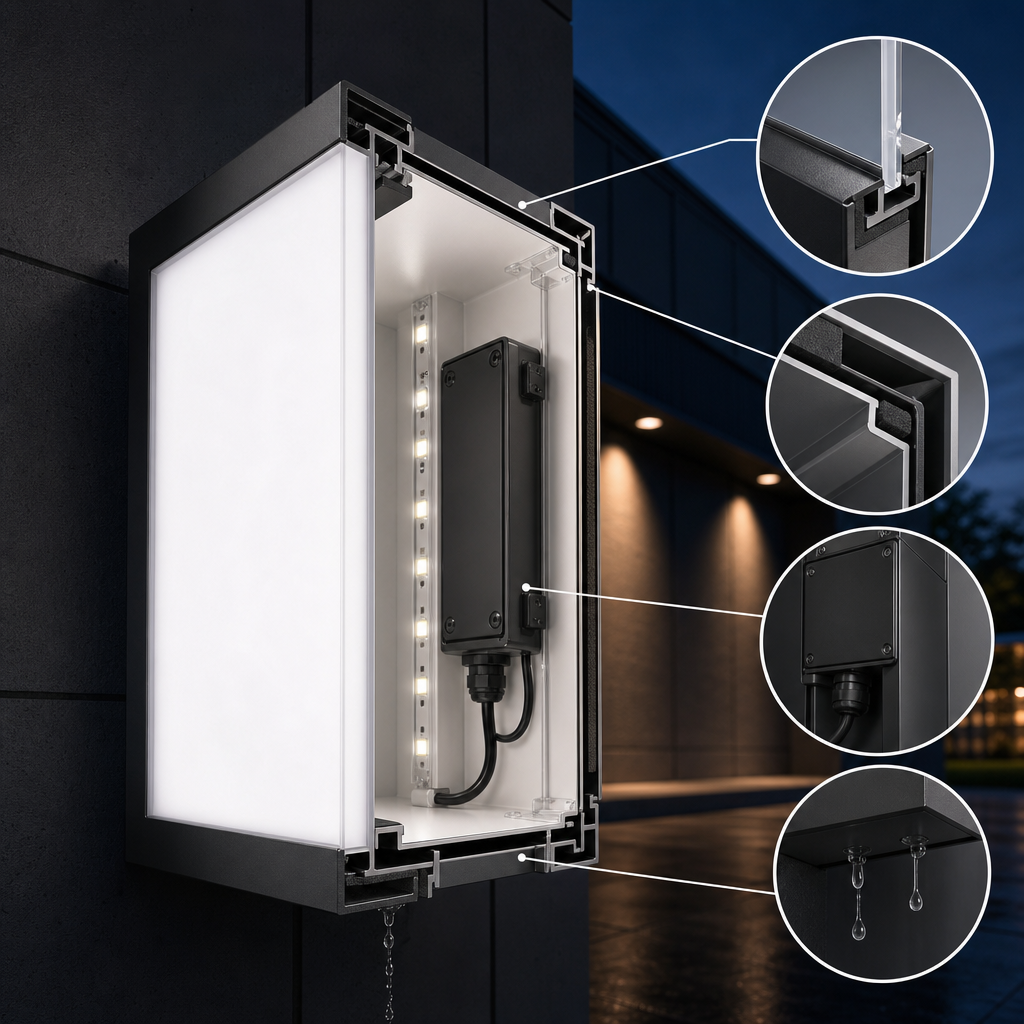
An illuminated sign built for Toowoomba needs a sealed, drained enclosure, IP-rated LED drivers, and acrylic or flex faces with room to expand and contract. Without these details, condensation forms inside the housing overnight, moisture reaches the electronics, and internal corrosion or LED failure follows well ahead of the sign's expected life.
The coastal signage conversation is usually about salt air and corrosion. Toowoomba's problem is different: it's thermal cycling and moisture management. A lightbox that sits at close to freezing overnight and warms significantly by midday is constantly expanding and contracting. If that housing isn't sealed and drained properly, moist air gets drawn in and out with every cycle, condenses on the cooler internal surfaces overnight, and pools at the bottom of the box.
That trapped moisture is what causes yellowed, delaminating acrylic faces, corroded LED module housings, and driver failures well before their rated life is reached. A properly built lightbox includes weep holes or drainage channels at the lowest points, gasket sealing around access panels, and IP-rated driver and module componentry so the electronics can tolerate the moisture that does get in.
Acrylic itself expands and contracts with temperature. A rigid acrylic face fixed too tightly into its frame, with no allowance for that movement, is prone to cracking or bowing after enough thermal cycles. Building in expansion gaps and using appropriate fixing methods around the perimeter of the face is a small detail at fabrication stage that prevents a much bigger problem two or three winters in.
Hail is a genuine risk on the Downs, and acrylic faces take the brunt of it. Face thickness and support spacing behind the panel both affect how a face copes with hail impact, and it's worth discussing with your signmaker at the quoting stage rather than after the first bad storm.
Pylon Wind Loading and Footing Design
Pylon signs face real structural loads from Toowoomba's strong westerly winds, and footing design needs to account for that rather than following a generic template. Wind actions on structures in Australia are governed by AS/NZS 1170.2, and a pylon sign's height, face area and site exposure all feed into how deep and how reinforced its footing needs to be.
A taller pylon with a larger illuminated face catches more wind load, which increases the overturning force at the base. Underspecified footings are one of the more common failure points we see on older pylon signs around the region, showing up as visible lean, cracking at the footing collar, or movement during high wind events. Getting the structural design right at the outset, rather than value-engineering the footing down to save cost, is the difference between a pylon that stands for fifteen years and one that needs remedial work inside five.
CNC Fabrication Behind the Scenes

Illuminated letters and lightbox faces on the Downs are built from CNC-routed acrylic and aluminium composite panel, cut and finished to tolerances that hand fabrication can't consistently match. That precision matters because tight, even seams and returns are what keep a sealed enclosure actually sealed against Toowoomba's moisture cycling.
A face-lit or halo-lit letter set starts as a digital file, routed on a CNC machine to cut the letter face, returns and trim to exact dimensions. That process is covered in more depth in our guides on CNC routing for acrylic and CNC routing for aluminium composite panels, both of which explain the tolerances and finishing methods that go into a fabricated letter or lightbox face.
Consistent CNC cutting means every letter return sits flush against its face with an even, gap-free joint. That's not just a cosmetic detail. A poorly fitted return is a moisture entry point, and on the Downs, that moisture entry point becomes a condensation and corrosion problem within a couple of winters.
Lead times for CNC-fabricated illuminated signage depend on complexity, current workload and whether council approval is needed before fabrication starts. As a general guide, expect design and approval stages to run longer than the fabrication itself, so it pays to start the conversation well ahead of any opening date or lease milestone you're working toward.
Councils, Approvals and Heritage Frontages
Toowoomba Regional Council requires development approval for most new illuminated signage, and CBD frontages within the heritage overlay face extra design scrutiny around scale, material and how the sign sits on the building. Getting this sorted before fabrication starts avoids costly redesigns later.
Businesses on heritage-listed or heritage-overlay frontages in the CBD should expect council to look closely at how a new sign interacts with the building's original facade. Halo-lit letters are often favoured on these sites precisely because they don't require drilling large mounting holes through original render or masonry, and the soft glow reads as sympathetic to the streetscape rather than competing with it.
Before you order an illuminated sign in Toowoomba, it's worth having on hand: your lease or title documentation, clear photos of the existing frontage, accurate measurements of the available sign area, and any body corporate or landlord signage criteria that apply to the tenancy. A signmaker who also handles the council approval process can fold these requirements into the design from the start, rather than submitting a design that gets bounced back for revision.
Pylon signs generally face additional scrutiny around height, setback from road frontage and total illuminated area, particularly on arterial roads where council manages sightlines and traffic safety. Confirming these limits before finalising a pylon design saves a redesign after council feedback.
Running Costs and Maintenance on the Downs
LED illumination draws substantially less power than the fluorescent tubes it has largely replaced, and it needs less frequent servicing, which is the main driver of lower running costs for illuminated signage today. The main ongoing cost for a well-built LED sign is periodic driver replacement, not the LED modules themselves.
Older fluorescent lightboxes relied on tubes and ballasts that degraded steadily, dimmed unevenly across the face, and needed regular tube replacement to keep the sign looking presentable. LED modules don't dim the same way and typically keep even illumination across the face for years longer than fluorescent tubes managed.
The component most likely to need replacement over a sign's life is the LED driver, the unit that converts mains power to the voltage the LED modules need. Drivers are a serviceable, swap-out component in a well-designed lightbox, which is another reason access panel design and sealing matter at the fabrication stage: a technician needs to get to the driver without compromising the seal that keeps moisture out.
A sensible maintenance routine for illuminated signage in Toowoomba includes an annual check of seals and drainage points before the onset of winter, a visual check for condensation or discolouration inside acrylic faces, and prompt replacement of any failed LED modules or drivers rather than letting a sign trade with dark patches.
Choosing and Briefing a Signmaker
A proper illuminated signage quote for Toowoomba should list the componentry (LED module and driver brand and IP rating), face material and thickness, housing construction and sealing method, structural detail for any pylon footing, and what warranty applies to workmanship versus electronic componentry. If a quote is missing these details, ask for them before you sign.
Vague quotes that just say "LED lightbox" without specifying the module type, driver IP rating or face material make it hard to compare like with like. Two quotes at similar prices can represent very different builds, and the cheaper one often cuts corners on sealing, driver quality or footing depth, exactly the details that determine whether a sign lasts five years or fifteen on the Downs.
Ask who handles design, fabrication, council approval and installation. A signmaker managing all of it in-house, rather than subcontracting fabrication or installation out, generally gives better accountability if something needs adjusting after the sign goes up. It also usually means faster turnaround, since nothing is waiting in someone else's production queue.
Finally, ask what happens if a component fails within the warranty period, and get that answer in writing as part of the quote. A clear warranty position on both the sign structure and its electronic componentry tells you a lot about how confident the signmaker is in their own build.
Frost Beats Salt: The Real Engineering Story on the Downs
Most signage advice written for Queensland assumes a coastal climate and talks about salt air corrosion. That's the wrong lens for Toowoomba. The bigger threat here is condensation caused by daily thermal cycling, not airborne salt, and treating a Downs sign like a coastal build misses the actual failure point.
Consider a service station on the edge of the CBD running a fifteen-year-old fluorescent lightbox. Over winters of frosty mornings and warm afternoons, moisture has been drawn in and out of the housing on every cycle. The acrylic face has yellowed unevenly, the ballast hums audibly, and patches of the face barely glow at all by evening. None of that is salt damage. It's years of condensation cycling inside a housing that was never properly sealed or drained, on a sign built before IP-rated LED componentry was standard.
A reface in that situation isn't just a face swap. It's an opportunity to fit a sealed, drained aluminium housing, IP-rated LED modules and driver, and a new acrylic or flex face with proper expansion allowance, essentially rebuilding the sign to handle the climate it's actually operating in rather than patching the symptom. That's the build standard we treat as the baseline for any illuminated sign going up on the Downs, not an upgrade option.
Our view, from fabricating signage across different Queensland climates, is that a sign specified for the coast and simply installed in Toowoomba without adjustment is a false economy. The failure mode is different, and the build needs to answer to frost and thermal swing, not salt spray.
References
- Bureau of Meteorology, Queensland climate data (www.bom.gov.au)
- Standards Australia, AS/NZS 1170.2 Structural Design Actions: Wind Actions
- Toowoomba Regional Council, Planning Scheme and heritage overlay provisions (www.tr.qld.gov.au)
- Australian Competition and Consumer Commission, consumer guarantees and warranties (www.accc.gov.au)
Talk to a signage expert
Tell us about your project and we'll come back with options and honest advice.
Get in TouchFrequently Asked Questions
How long do illuminated signs last in Toowoomba's climate?
A well-sealed, correctly built illuminated sign with IP-rated componentry and proper expansion allowance can run well over a decade on the Downs. Signs without proper sealing and drainage often show condensation damage, driver failure or cracked acrylic faces well before that.
Do I need council approval for an illuminated sign in Toowoomba?
Most new illuminated signage in Toowoomba requires development approval from Toowoomba Regional Council, and CBD frontages within the heritage overlay face additional design assessment. Confirm requirements before ordering, since approval timeframes can affect your project schedule.
What's the difference between face-lit and halo-lit illuminated letters?
Face-lit letters glow evenly across the acrylic face itself, giving a bright, crisp look suited to shopfront branding. Halo-lit (reverse-lit) letters have a solid face and project a soft glow onto the wall behind, which suits heritage frontages where a subtler effect is preferred.
How much does an illuminated pylon sign cost in Toowoomba?
Pylon sign cost depends on height, face size, structural footing requirements and illumination method, and varies significantly between sites. The most reliable way to get an accurate figure is to send site photos, frontage measurements and any council constraints for a formal quote.
Can illuminated signs handle Toowoomba's hail risk?
Acrylic and flex-faced lightboxes can be specified with appropriate face thickness and support spacing to better withstand hail impact, though no sign face is entirely hail-proof in a severe storm. Discuss hail exposure with your signmaker at the design stage rather than after damage occurs.
What maintenance do LED illuminated signs need?
LED illuminated signs need far less maintenance than older fluorescent lightboxes, mainly periodic driver replacement and an annual check of seals and drainage points before winter. Prompt attention to any dark patches or condensation prevents small issues becoming full reface jobs.
Related Articles
Sunshine Coast Signage Project Gallery: Real Local Sign Installs by Suburb and Sign Type
Signage in Caboolture: Sign Options for CBD, Morayfield and Industrial Businesses, Council Rules and Costs
Signage in Nambour: Sign Options for CBD, Heritage and Industrial Businesses, Council Rules and Costs
Signs that set you apart
Over 40 years on the Sunshine Coast. Design, compliance, manufacture and installation handled end to end.
Get a Free Quote