
Signage in Kawana: Sign Options for Birtinya, Buddina and Warana Businesses, Approvals and Costs
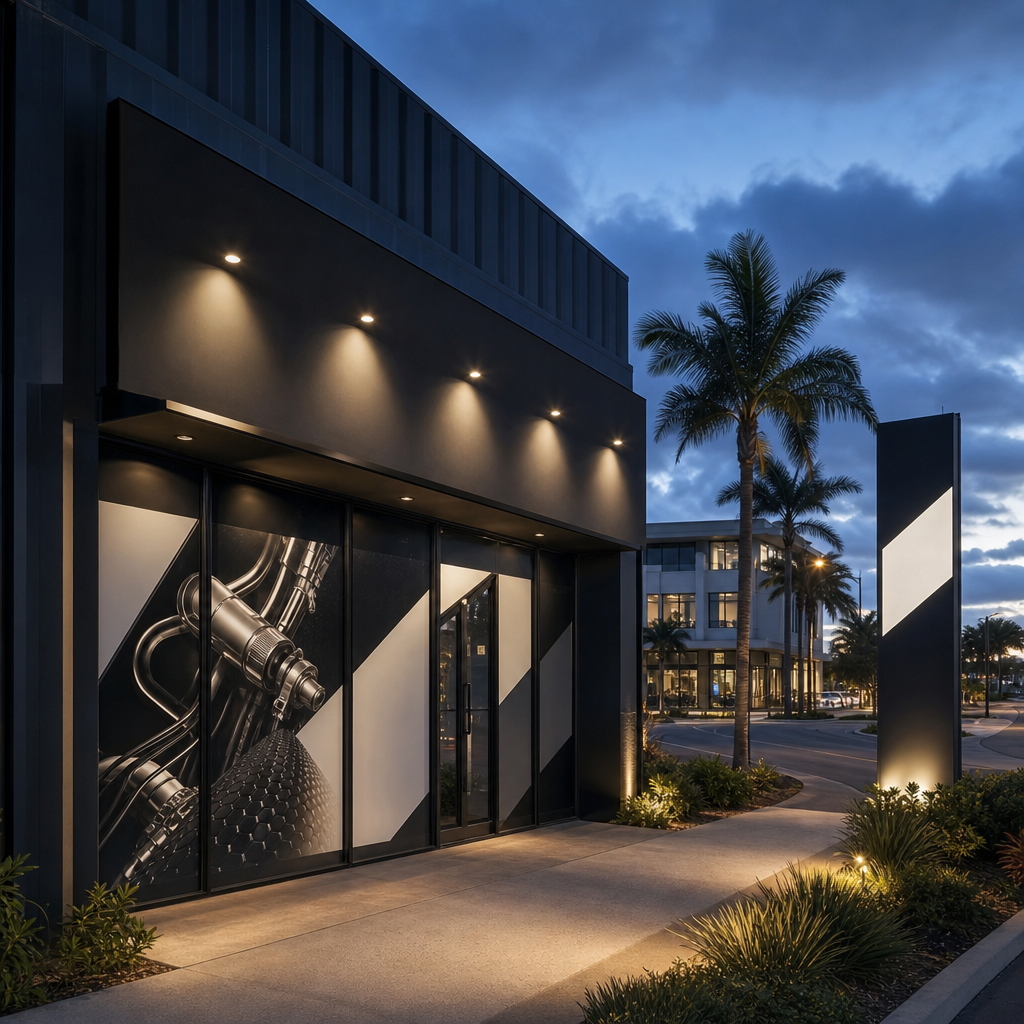
Signage in Kawana works best when planned by precinct. Shopping centre tenants follow landlord guidelines, Birtinya clinics need clear wayfinding and accessible signs, and roadside businesses may need pylon or fascia signs approved by Sunshine Coast Regional Council. Use coastal-grade materials, confirm approvals before manufacture, and expect cost to depend on size, illumination, access and engineering.
Kawana is not one retail strip. A tenancy at Kawana Shoppingworld, a medical suite at Birtinya, a cafe in Warana and a trade business on an arterial road all face different rules, different audiences and different viewing distances. A sign that works in one precinct can fail in another.
This guide walks through each precinct, the sign types that suit it, how coastal conditions affect materials, who needs to approve what, and what drives cost. If you are opening, rebranding or upgrading, you will leave with a clear brief to work from. We cover Mooloolaba in a separate guide, so this one stays focused on the Kawana corridor.
Key Takeaways
- Plan signage by precinct first, then choose sign types. The site decides the brief.
- Birtinya health businesses need external branding and internal wayfinding designed together, with accessibility built in from the start.
- Salt air, UV and humidity shorten the life of cheap materials. Specify aluminium composite, marine-grade fixings, UV-stable vinyls and sealed LED modules.
- Approvals can involve three parties: Sunshine Coast Regional Council, your landlord or shopping centre, and a body corporate. Check all three before you pay for manufacture.
- Cost is driven by size, illumination, installation access and engineering, not by sign type alone. Ask for a quote after a site visit, not before.
Ready to make your business impossible to miss?
Design, manufacture and installation, all under one roof in Warana.
Get a Free QuoteSummary Table: Signage Needs by Kawana Precinct
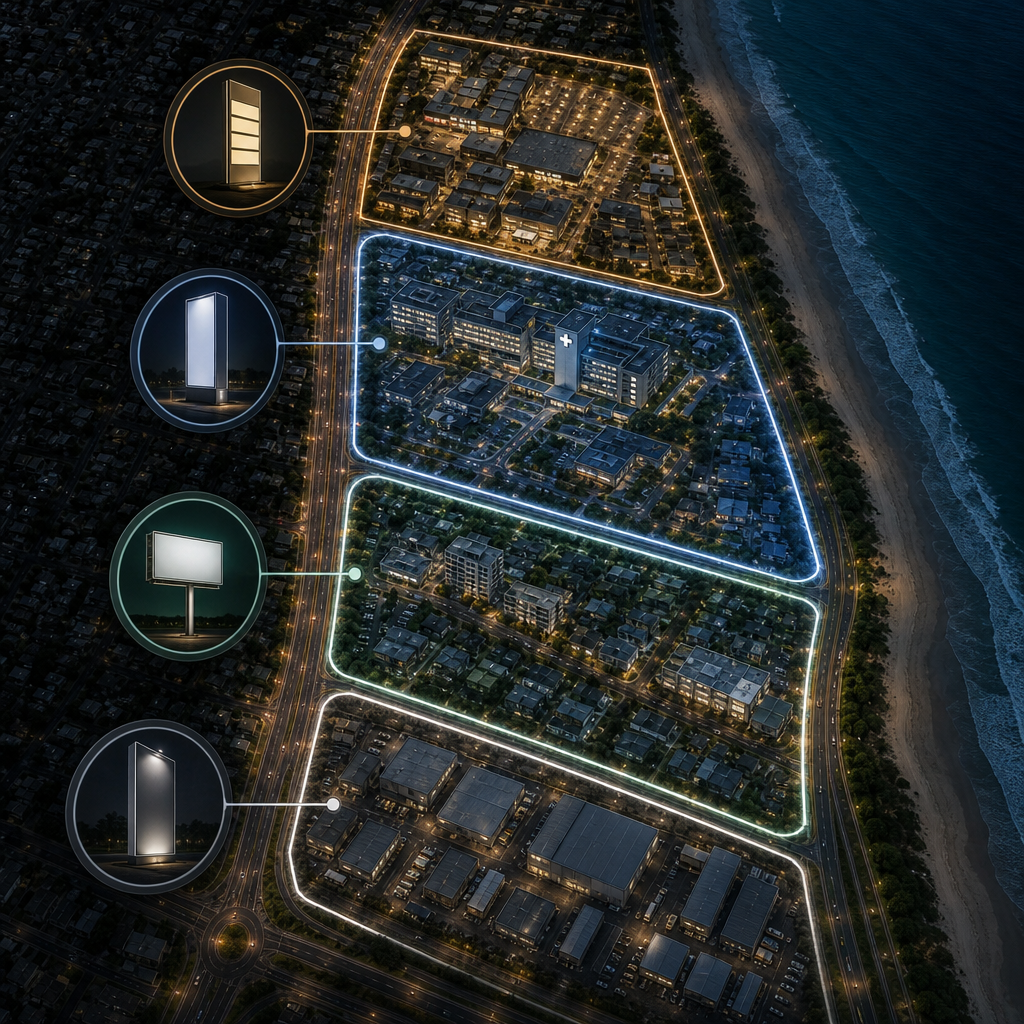
| Precinct | Main signage need | Typical sign types | Who usually has a say | Biggest risk |
|---|---|---|---|---|
| Buddina retail strip and Kawana Shoppingworld | Standing out among neighbouring tenants | Shop front signs, lightboxes, window graphics | Landlord, centre management, sometimes council | Design rejected by landlord guidelines |
| Birtinya health and town centre | Trust, clarity and accessibility | Fascia signs, directory boards, wayfinding, tactile signs | Landlord, body corporate, council | Patients unable to find the right entrance |
| Warana and Bokarina suburb shops | Local recognition at walking and slow driving speed | Fascia signs, A-frames, window decals, neon for hospitality | Landlord, possibly council | Fading and corrosion from coastal exposure |
| Arterial roads and trade areas | Readability at driving speed | Pylon signs, building signs, boundary signs | Council, landlord, engineer | Sign too small or too complex to read from the road |
Why Signage in Kawana Differs by Precinct
Kawana signage differs by precinct because each area has a different audience, approval path and viewing distance. A shopping centre tenant answers to a landlord. A clinic answers to patients who are often stressed. A roadside business answers to drivers with seconds to read. Start with the precinct, then pick the sign.
Buddina retail strip and Kawana Shoppingworld
The Buddina strip is competitive. Neighbouring tenancies sit close together, so your sign competes at a short distance with several others. Contrast, a clear name and a consistent shop front matter more than size.
If you are a tenant inside or attached to a shopping centre, expect the landlord to control sign size, position, illumination and sometimes colour. Many centres issue tenant design guidelines. Get them before you design anything. We regularly see good designs that need rework because the brief ignored a centre rule on fascia height or lighting type.
Birtinya health and town centre
Birtinya, around Sunshine Coast University Hospital, is dominated by health and professional services. Visitors are often first-time patients, carers or people under stress. They need to find the right building, the right entrance and the right suite without guessing.
Signs here carry more work than branding alone. They also direct, reassure and meet accessibility expectations. We cover this in detail further down.
Warana and Bokarina suburb shops
The suburb shops in Warana and Bokarina serve locals who know the area. Customers often walk or drive slowly. Signs can be more personal and detailed, and hospitality venues can use neon and warm lighting to build atmosphere after dark.
These sites are closer to the coast, so salt exposure deserves extra attention when you choose materials.
Arterial roads and trade businesses
Trade, automotive and service businesses on arterial roads such as Kawana Way and Nicklin Way depend on drivers noticing them quickly. Here the job is simple: a short name, a clear service line and a sign sized for the speed of passing traffic. Pylon signs and building signs do the heavy lifting. They also bring the most demanding approval and engineering requirements.
Sign Types That Suit Kawana Businesses
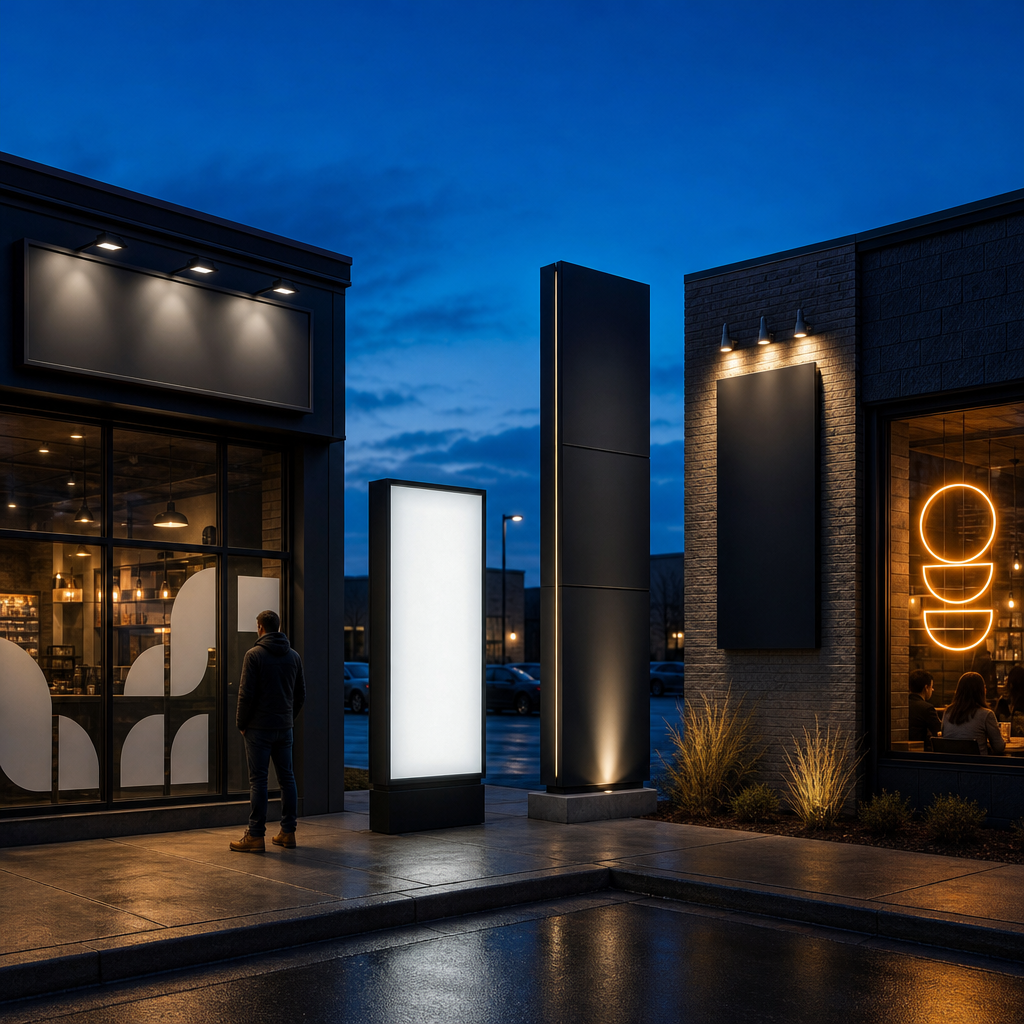 The right sign type depends on viewing distance and the work the sign must do. Shop front and fascia signs suit pedestrians. Illuminated signs extend visibility after dark. Pylon signs suit roadside sites. Neon suits hospitality. Interior and wayfinding signs suit clinics and multi-tenant buildings. Most businesses need a combination.
Shop front signs and fascia signs
These are the workhorses of the Buddina and Warana strips. A fascia sign names the business. Window graphics add services, hours and a call to action. We cover the wider topic in our Sunshine Coast shop front signs guide, and our Caloundra shop front signs article shows how a different part of the coast approaches the same job.
Keep the message hierarchy simple: name first, then what you do, then contact details. If a passer-by cannot read your fascia in a couple of seconds, it has too much on it.
Illuminated and lightbox signs
Illuminated signs matter for any business open in the evening, including hospitality, after-hours clinics and gyms. Modern LED lightboxes are efficient and even in output. Illumination usually triggers extra scrutiny from landlords and council, and it requires electrical work by a licensed electrician. Plan it early, not as an add-on.
Pylon signs for roadside visibility
Pylon signs give multi-tenant and roadside sites a presence that a building-mounted sign cannot. They are also structures. They need footings, wind loading consideration and often engineering sign-off. If your site is on a busy road, consider illuminated pylon signs and treat engineering and installation as part of the job from day one, not a surprise at the end.
Building signs and wall signs
Large building signs work for businesses on corner sites or with long, visible walls. They are good for brand recognition at a distance. They are also the sign type most likely to need council assessment because of their size.
Neon for hospitality
Neon and LED neon-style signs suit cafes, bars and restaurants, particularly in Warana, Bokarina and Birtinya town centre dining areas. They work as interior feature walls and as window signs. In humid coastal conditions, choose sealed, outdoor-rated products where they face the weather.
Window decals and graphics
Window graphics are a low-cost way to add information, privacy or branding. They are useful for clinics that need frosted privacy panels as well as for retailers promoting offers. See our window decals and graphics information for options.
Interior and wayfinding signs
For clinics, offices and multi-tenant buildings, interior signs are as important as the external sign. Directories, door signs, room numbers and directional arrows reduce reception interruptions and make a practice feel organised. Our retail signage fitouts work follows the same logic: the inside of the tenancy should carry the brand through consistently.
Health Precinct Signage: Wayfinding, Accessibility and Professional Branding
Health precinct signage near the hospital should do three things: help people find the right entrance, meet accessibility requirements, and present the practice as professional and trustworthy. Plan the external sign and internal wayfinding as one system, so a patient's path from the street to the consulting room is unbroken.
Wayfinding is a sequence, not a single sign
Think of a patient's journey in stages: street identification, building entrance, lift or corridor, suite door, then reception. Each stage needs a sign that confirms they are in the right place and tells them where to go next. Gaps in that sequence are where patients get lost, arrive late or interrupt reception staff.
Consistent typography, colour coding and arrow conventions across all stages make the system easy to follow without conscious effort.
Accessibility
Accessible signage is not optional polish. The Disability Standards for Access to Premises and the National Construction Code set requirements for certain signs, including Braille and tactile signs in particular locations in many building classes. Australian Standard AS 1428.1 covers design for access and mobility, including legibility and contrast considerations.
In practice, this means high contrast between text and background, non-reflective finishes, readable type sizes, and tactile signs mounted at consistent heights. Your building certifier or access consultant should confirm which requirements apply to your fit-out. We can then design and manufacture signs to meet that brief.
Professional branding
Clinic signage that looks tired signals tired care, fairly or not. Clean fascia signs, consistent door signs and tidy window graphics support credibility before the patient meets anyone. Avoid clutter: list practitioners and services on an interior directory rather than cramming them onto the external sign.
An illustrative example
Consider a hypothetical allied health clinic opening in a Birtinya professional suite. Its external fascia sign carries the practice name and a short service line, illuminated so it reads in the evening. Inside, a ground-floor directory lists the practice and its level. A directional sign at the lift lobby points to the suite. The suite door carries the practice name and a tactile sign, and reception has a branded wall sign. None of these is complicated alone. Together they take a patient from the footpath to the front desk without a question. This is an example of the approach, not a described client project.
Coastal Materials and Durability: Salt Air, UV and Humidity
Coastal signs fail from salt corrosion, UV fading and moisture getting behind panels. Specify aluminium composite panels, marine-grade fixings, UV-stable vinyls and sealed LED modules. Cheaper alternatives often look fine at installation and then stain, peel or corrode within a few seasons, which costs more to replace than a better specification would have.
Kawana sits close to the coast, and conditions vary by site. Standards Australia's AS 4312 classifies atmospheric corrosivity zones across Australia, and sites near the surf or exposed to onshore winds sit toward the more aggressive end. A sign in Bokarina facing the beach wind will weather harder than one in an inland light industrial area. Ask your sign maker how the site's exposure affects the specification.
Aluminium composite and aluminium sections
Aluminium does not rust the way steel does, and aluminium composite panels hold a flat, clean finish. They suit fascia panels, building signs and pylon cladding. Edges and cut-outs should be sealed so moisture cannot get into the panel core.
Marine-grade fixings
Fixings are where coastal signs quietly fail. Standard steel screws and bolts corrode and leave rust streaks down the sign and the wall. Stainless steel fixings, selected for marine conditions, avoid this. It is a small cost line that prevents a very visible problem.
UV-stable vinyls and inks
Queensland sun fades low-grade vinyl and prints quickly, particularly reds and other saturated colours. Choose cast or premium vinyls and UV-resistant inks rated for outdoor use, and consider a protective laminate for printed graphics on west-facing windows and walls.
Sealed LED modules
Humidity gets into poorly sealed lighting and causes flicker, dead modules and condensation inside lightboxes. Sealed, outdoor-rated LED modules and properly gasketed lightbox housings are worth specifying. Ventilation and drainage details matter too.
Maintenance
Even good materials last longer with a simple rinse. Fresh water on external signs removes salt build-up. Check fixings and seals periodically, and book repairs before small problems spread.
Approvals for Signs in Kawana: Council, Landlord and Body Corporate
A sign in Kawana can need approval from up to three parties: Sunshine Coast Regional Council, your landlord or shopping centre, and a body corporate. Which ones apply depends on the sign type, size, illumination and property. Confirm all of them before manufacture, because each can change your design.
Sunshine Coast Regional Council
Council regulates advertising devices through the Sunshine Coast Planning Scheme 2014, which includes provisions covering advertising devices, under Queensland's Planning Act 2016. Requirements depend on the zone, the type of sign, its size, whether it is illuminated, and how it relates to the road. Some low-impact signs may not need an application. Larger, illuminated or freestanding signs such as pylon signs are more likely to.
Check the current planning scheme and council's development information before committing to a design. If you are unsure, ask for guidance early. We can help you work out what is likely to apply and how to prepare for it, but council decides its own requirements, and you should confirm them directly with council or a town planner for your site.
Building and engineering requirements
Freestanding and large wall-mounted signs are structures. They may need a building approval and engineering certification for footings and wind loads. Illuminated signs need electrical work by a licensed electrician. Our page on pylon sign engineering and installation explains what is involved for roadside structures.
Shopping centre and landlord guidelines
Landlords can set rules stricter than council. For Buddina and shopping centre tenancies, expect design guidelines covering sign dimensions, position, materials, lighting type and sometimes brand colours. Lease agreements often require written landlord approval before any sign is installed or changed. Read your lease and request the tenant design guidelines first.
Body corporate consent
If your tenancy is in a strata-titled building, which is common in Birtinya medical and professional suites, the body corporate may control the external facade, common property and shared directory boards. Consent can take time because it often depends on committee meetings. Raise it at the start of the project, not at the end.
A sensible order of operations
- Read your lease and request landlord guidelines.
- Confirm whether a body corporate is involved.
- Draft the design and check it against those rules.
- Confirm council requirements for the specific sign.
- Lodge any applications and obtain written consents.
- Only then approve manufacture.
Costs and Timelines: What Drives Signage Price in Kawana
Signage cost depends on size, illumination, installation access, engineering, materials and complexity, not on sign type alone. A simple printed fascia panel and a freestanding illuminated pylon sit at opposite ends. Reliable pricing requires a site visit, because access and approvals often change the scope more than the sign itself.
What drives the price
- Size: Larger signs use more material, take more labour and may need heavier support.
- Illumination: Lightboxes and LED lettering add components, wiring and electrical installation.
- Installation access: Signs above ground level may need a lift, scaffold or traffic management. Roadside work can add safety requirements.
- Engineering: Pylons and large structures need footings, certification and sometimes excavation.
- Materials: Coastal-grade materials cost more upfront and less over the life of the sign.
- Approvals: Applications, drawings and consents add time and sometimes fees.
- Complexity: Custom shapes, 3D lettering and neon cost more than flat panels.
- Removal and make-good: Taking down old signs and repairing the wall or fascia behind them adds to the job.
We do not publish fixed prices because the same sign can cost very different amounts at different sites. A written quote after a site visit is the reliable way to budget.
A typical brief-to-install sequence
- Brief: You describe the business, audience, location and any deadlines.
- Site visit: We inspect the site, check access and measure.
- Design: We prepare concepts and check them against landlord, centre and council rules.
- Approvals: You or your landlord submit applications and consents, with our drawings and guidance.
- Quote and sign-off: You approve the final design and price in writing.
- Manufacture: The sign is made to the approved specification.
- Installation: We install, test lighting and clean up.
The main variables in timing are approvals and manufacture. Landlord and body corporate consents are often the slowest steps, so start them first. If you have a fixed opening date, tell us at the brief stage so the schedule works backward from it.
Design for the Approach, Not the Shopfront
The most common signage mistake I see in coastal suburbs is designing at a desk instead of on the street. A sign is read in motion, from a particular angle, at a particular distance, often in glare or at dusk. My position is that every Kawana sign brief should begin with a site walk, not a mock-up.
Here is the test I would apply to any Kawana business. Stand where your customer first sees you. For a Buddina shop, that is the footpath or car park. For a Birtinya clinic, it may be the car park, the street or the lift lobby. For a roadside business on Kawana Way, it is the driver's seat at the speed of traffic. Read your own sign from there. If you cannot read it in a glance, the design needs to be simpler, not larger.
The second part of my view is more contrarian: for clinics, spend on internal wayfinding before you upsize the external sign. A bigger fascia attracts the same patient. Better internal signs keep that patient calm, on time and out of reception's way. In a health precinct, the experience after the front door shapes how people judge the practice, and it is the part most often left until the end of the budget.
Finally, treat coastal durability as a design input. Choosing materials that will still look clean in several years is a brand decision as much as a technical one.
Ready to Plan Your Kawana Signage?
Sunquest Signs handles design, approvals guidance, manufacture and installation for businesses across Kawana, Birtinya, Buddina, Warana and the wider Sunshine Coast. If you are opening, rebranding or upgrading, book a site visit or request a quote at sunquest.com.au. Bring your lease, any landlord guidelines and your opening date, and we will map out the sign plan from there.
References
- Sunshine Coast Council, planning scheme and development information
- Australian Building Codes Board, National Construction Code
- Standards Australia, AS 1428.1 Design for access and mobility and AS 4312 Atmospheric corrosivity zones in Australia
- Queensland Government, Queensland legislation including the Planning Act 2016
Talk to a signage expert
Tell us about your project and we'll come back with options and honest advice.
Get in TouchFrequently Asked Questions
Do I need council approval for a business sign in Kawana?
It depends on the sign. Sunshine Coast Regional Council regulates advertising devices under its planning scheme, and requirements vary by zone, size, illumination and position. Some low-impact signs may not need an application, while pylon and large illuminated signs are more likely to. Confirm with council or a town planner for your site.
Can I change my sign if I lease a shop at Kawana Shoppingworld?
Usually only with written landlord approval. Shopping centres commonly set tenant design guidelines covering size, position, materials and lighting. Check your lease, request the guidelines, and have your design checked against them before manufacture.
What signs does a medical clinic near the hospital need?
Most clinics need an external fascia or building sign, a directory or entrance sign, internal wayfinding, door and room signs, and any tactile or Braille signs required for the building. Accessibility requirements depend on the building class, so confirm them with your certifier.
What materials last best in Kawana's coastal conditions?
Aluminium composite panels, marine-grade stainless fixings, UV-stable vinyls and inks, and sealed outdoor-rated LED modules perform best. The closer your site is to the coast, the more important these specifications become.
How much does signage cost in Kawana?
There is no single figure. Price depends on size, illumination, installation access, engineering, materials and approvals. A site visit and written quote give a reliable number for your project.
How long does it take to get a sign installed?
Timelines depend mainly on approvals and manufacture. Landlord, body corporate and council consents are often the slowest steps, so start them early and share your opening date when you brief your sign maker.
Related Articles
Shop Front Signs on the Sunshine Coast: Types, Coastal Materials, Council Rules and Costs
Sunshine Coast Signage Project Gallery: Real Local Sign Installs by Suburb and Sign Type
Signage in Caboolture: Sign Options for CBD, Morayfield and Industrial Businesses, Council Rules and Costs
Signs that set you apart
Over 40 years on the Sunshine Coast. Design, compliance, manufacture and installation handled end to end.
Get a Free Quote