Signage in Mooloolaba: Sign Types, Coastal Materials, Council Rules and Costs for Local Businesses
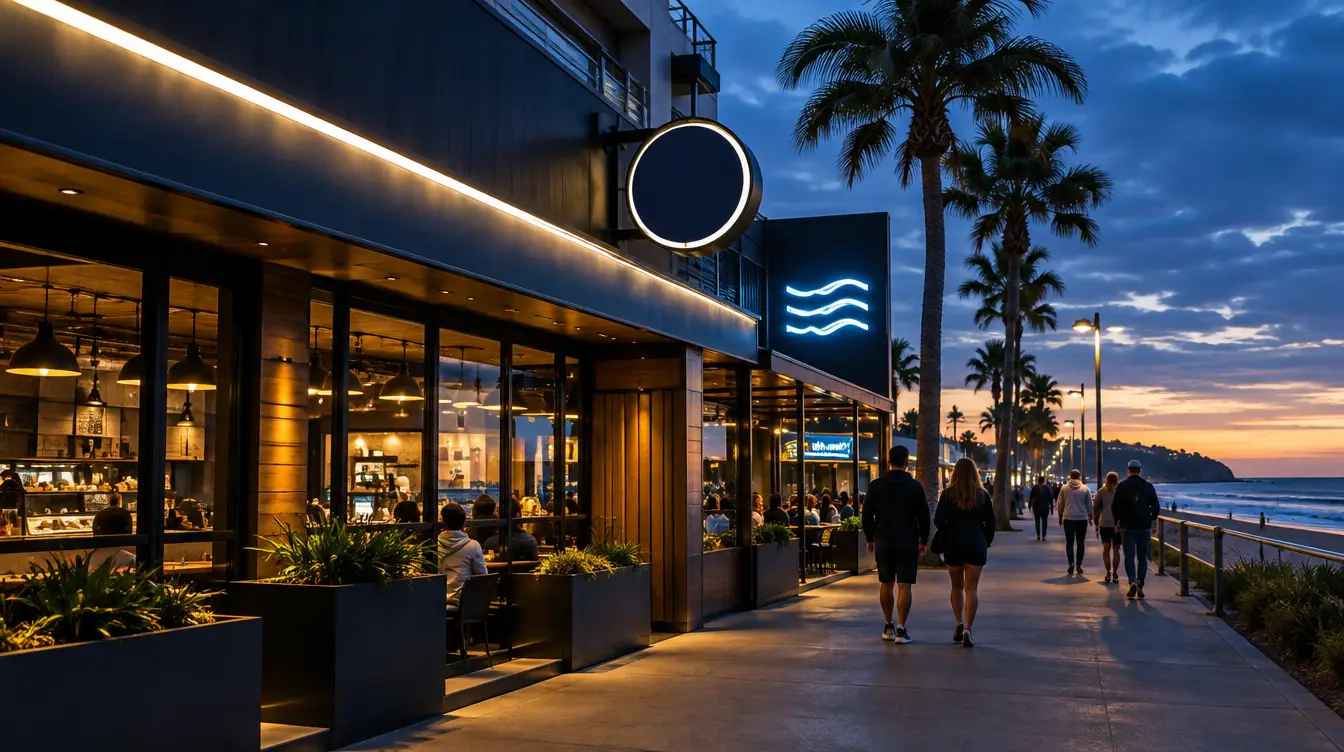
Signage in Mooloolaba needs to work in three conditions at once: heavy daytime foot traffic, evening trade and direct salt exposure. Most businesses combine a fascia or projecting sign, illumination for night visibility and marine-grade materials, then confirm Sunshine Coast Council and landlord requirements before fabrication.
Mooloolaba is not a generic shopping strip. The Esplanade trades on tourists and night dining, The Wharf sits on a working marina, and Brisbane Road and Walan Street serve locals and trades. One sign type will not suit all three, and a sign that looks perfect on install day can be stained or faded within a season if the materials are wrong.
This guide covers the full signage mix for Mooloolaba premises: which sign types suit which precinct, which materials survive near the water, how council and landlord approvals work, what drives cost, and how to maintain signs in salt air. It is written for cafe, restaurant, retail, accommodation, tourism and professional-services owners, plus property managers and body corporates planning new or replacement signage.
Key Takeaways
- Choose signage by precinct. The Esplanade, The Wharf and Brisbane Road each have a different audience, viewing distance and trading hours.
- Night visibility matters more in Mooloolaba than in most suburbs because so much trade happens after dark. Illuminated and neon-style signs earn their place here.
- Salt exposure decides material choice. 316 marine-grade stainless, powder-coated aluminium, sealed LED modules and UV-stable vinyl outlast cheaper alternatives, and fasteners matter as much as the sign face.
- Check the Sunshine Coast Planning Scheme advertising devices provisions, and get landlord or body corporate sign-off, before you order anything.
- Costs are driven by size, illumination, mounting height and approvals. Any honest price needs a site measure first.
- A simple wash and inspection routine extends sign life in a salt-air environment.
Ready to make your business impossible to miss?
Design, manufacture and installation, all under one roof in Warana.
Get a Free QuoteSummary Table
| Precinct | Typical audience | Sign types that suit | Main material concern |
|---|---|---|---|
| Mooloolaba Esplanade | Tourists, diners, beachgoers | Fascia, projecting, neon and LED neon, window graphics | Direct salt spray and strong sun |
| The Wharf and marina | Boaters, visitors, resort guests | Wayfinding, tenancy signs, lightboxes | Salt, humidity and moisture around fixings |
| Brisbane Road | Drive-by traffic, locals | Pylon signs, large fascia, building signs | Wind loading and mounting height |
| Walan Street pockets | Locals, professional clients | Fascia, window graphics, directory signs | Sun fade and neighbouring residential amenity |
| Apartments and resorts | Residents, guests, delivery drivers | Building ID signs, entry signs, wayfinding | Body corporate rules and long-term durability |
Why Is Mooloolaba Signage Different From Other Suburbs?
Mooloolaba signage faces four pressures most suburban signs do not: dense pedestrian traffic, a visitor audience who does not know your business, strong evening trade and constant salt exposure. Each one changes what you should build, how it should read, and what it should be made from.
A tourist audience reads fast. Visitors walking the Esplanade are deciding where to eat in seconds. They do not know your name or reputation, so the sign has to communicate what you sell before they reach the door. Clear category words (coffee, seafood, surf hire, day spa) next to the brand name do more work than a clever logo alone.
Evening trade is a core part of the business. Many Esplanade venues earn a large share of revenue after sunset. A sign that disappears at dusk is working half a day. That is why illumination is a baseline consideration here, not an upgrade.
The beach is a harsh environment. Salt, humidity, sand and high UV act on every exposed surface. Materials that behave in an inland shopping centre can pit, stain, peel or lose their finish near the water.
Planning rules still apply. Mooloolaba is a mix of commercial, tourism and high-density residential. Signs that suit a retail strip may be restricted when apartments sit directly above or beside them.
Which Sign Types Suit Each Mooloolaba Precinct?
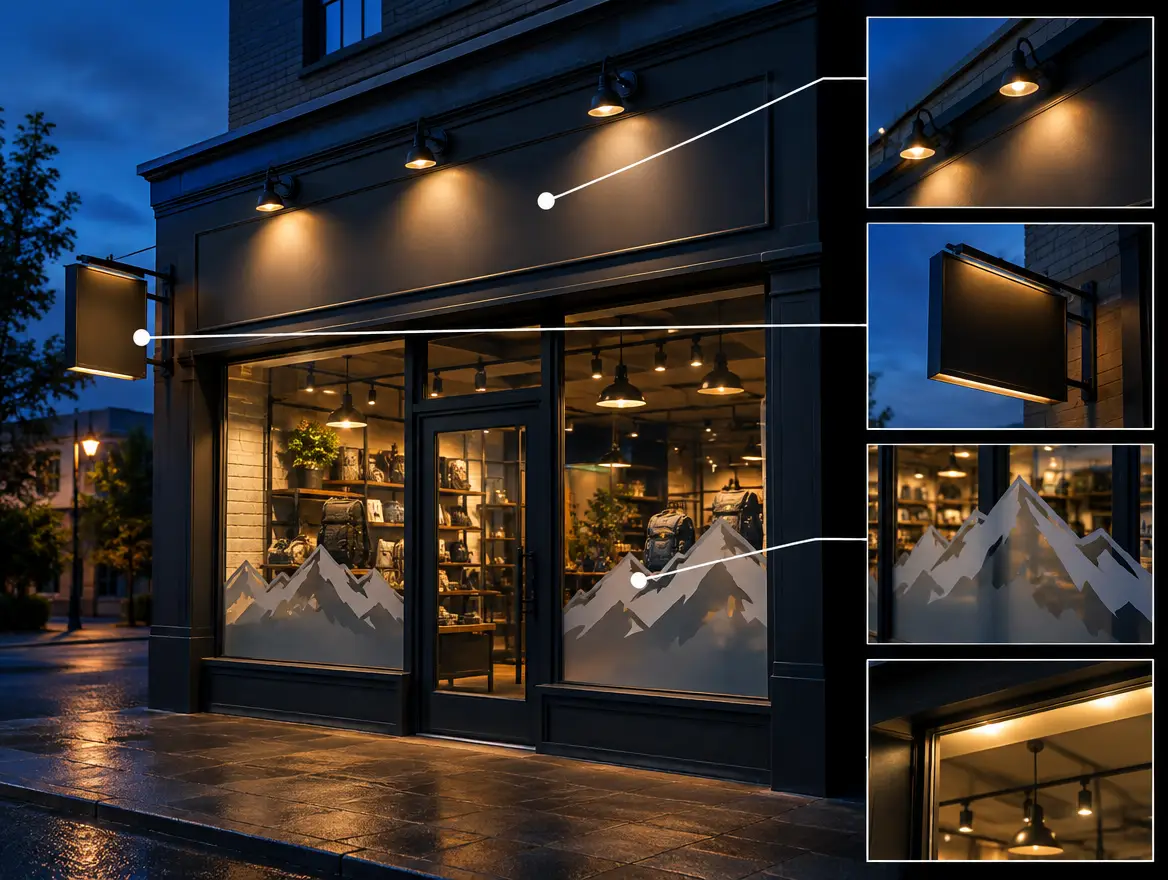 The right sign type depends on where you trade. Esplanade venues need pedestrian-scale, night-visible signs. Wharf and marina businesses need clear wayfinding. Brisbane Road sites need larger, higher signs read from moving vehicles. Matching the sign to the viewing distance and trading hours is the first decision.
The Esplanade: shop fronts, neon and night dining
On the Esplanade, most customers see your sign from the footpath or from across the street at walking pace. The core signs are:
- Fascia signs above the entry, which carry your name and category. These are the anchor of any shopfront.
- Projecting (blade) signs, which are visible along the footpath from both directions. For a strip with continuous frontages, a blade sign often gets seen well before the fascia does.
- Neon and LED neon signs for restaurants, bars and cafes. LED neon gives the warm, hand-bent look with lower heat, lower power use and better resistance to knocks, which suits an outdoor or semi-outdoor position.
- Illuminated lightboxes, which give an even, readable face for menus, logos and promotions.
- Window decals and graphics, which add hours, services, payment info and branding at eye level without a full sign.
If you are planning a complete shopfront, think of these as layers: fascia for identity, blade for approach, window graphics for detail, illumination for after dark.
The Wharf and marina: wayfinding and tenancy signs
Visitors at The Wharf and the marina are often navigating unfamiliar paths between car parks, restaurants, charters and accommodation. Here, wayfinding matters as much as branding. Directional signs, tenancy directories, building identification and entry signs reduce confusion and phone calls.
Resorts, tour operators and marina businesses benefit from a consistent wayfinding system rather than a collection of one-off signs. A common colour palette, typeface and mounting style makes a precinct feel organised and makes later additions easier to match.
These locations also sit closest to moisture and salt, so fixings and finishes need the most attention.
Brisbane Road and Walan Street: pylons and building signs
Brisbane Road and the Walan Street pockets serve a different customer: locals, trades, professional clients and passing traffic. Viewing distance is longer and speed is higher, so scale and height matter.
- Pylon signs suit sites set back from the road, multi-tenant buildings and businesses that need to be seen by drivers well before the turn-in.
- Large fascia and building signs work for showrooms, clinics, offices and trade counters.
- Directory signs help in buildings with several tenants.
Pylon signs carry the heaviest engineering demand. They need correct footings, wind loading consideration and often approval, so start these early.
Apartment buildings and accommodation
Building name signs, street number signs and entry wayfinding for apartments and resorts are as much about safety and delivery access as marketing. Body corporates usually have specific rules on materials, colours and positions, so check the by-laws and committee process before you design.
Which Materials Survive Salt Air in Mooloolaba?
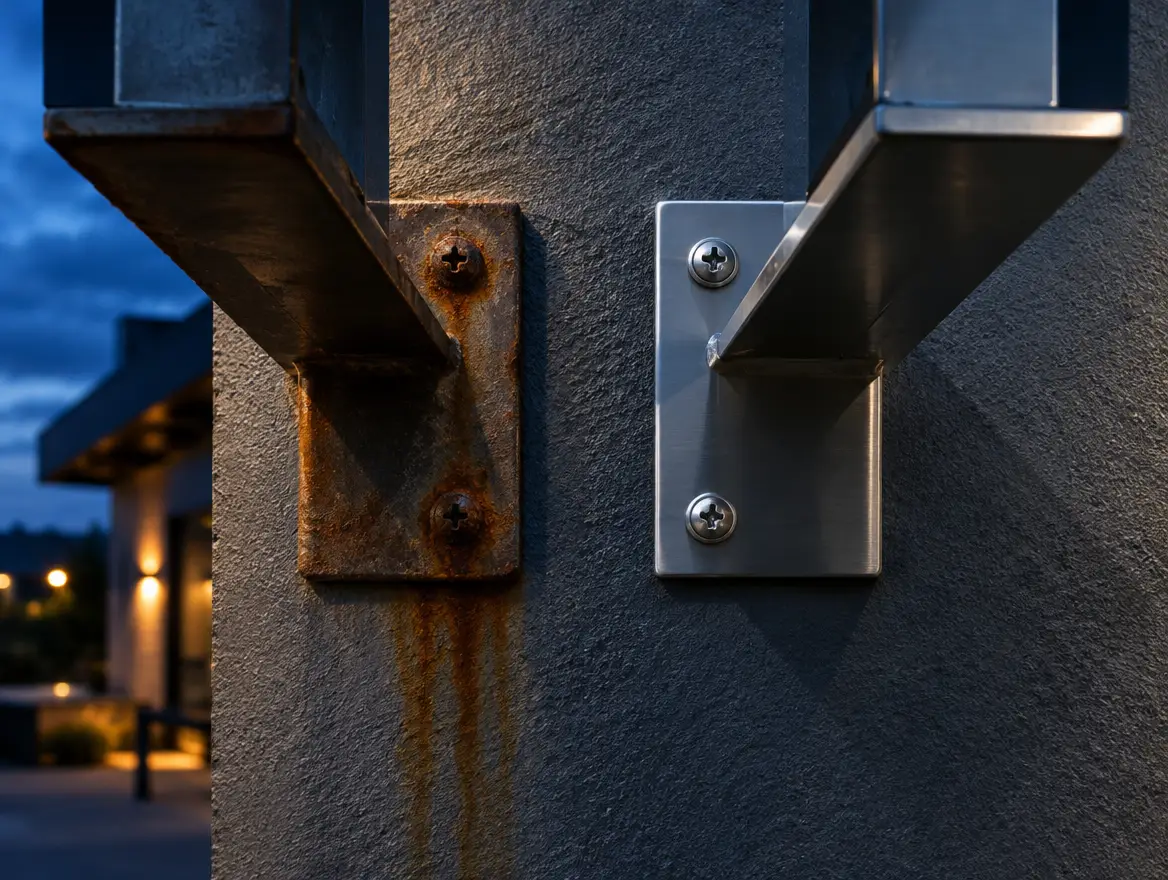 Near the water, the best-performing materials are 316 marine-grade stainless steel, powder-coated aluminium, aluminium composite panel, UV-stable vinyl and sealed LED modules. Cheaper steel, untreated fixings, unsealed edges and standard vinyl are the usual first failures, often showing as rust streaks, bubbling or fading.
Salt is the key variable. It accelerates corrosion on any metal that is not specified for the environment, and it creeps into gaps, screw holes and cut edges where moisture sits. Add Queensland UV and you also get fade and chalking on weaker inks and films.
| Material | Where it works well | What to watch |
|---|---|---|
| Marine-grade stainless steel (the molybdenum-alloyed marine grade) | Letters, brackets, fixings, plaques close to the water | Surface tea staining can still occur without cleaning, so finish and washing matter |
| Powder-coated aluminium | Fascias, pylon cladding, trays, frames | Coating quality and sealed cut edges decide longevity |
| Aluminium composite panel (ACP) | Flat sign faces, building signs, wayfinding | Edges must be sealed and the product suited to outdoor use |
| UV-stable vinyl | Window graphics, panel graphics, wraps | Cheap films fade and lift, so specify outdoor-grade vinyl |
| Sealed LED modules | Illuminated lightboxes, channel letters, LED neon | Ingress protection and sealed connections are critical |
What corrodes or fades first
In practice, the sign face is rarely the first thing to fail. The weak points tend to be:
- Fasteners and brackets. Mixed metals and low-grade screws rust and stain the sign below them. This is the most common visible failure near the coast.
- Cut edges and drill holes on coated aluminium or ACP, where moisture can get under the finish.
- Electrical connections and power supplies in illuminated signs that are not properly sealed.
- Printed colours, especially reds and some dark tones, which fade quickest under strong UV in standard films.
- Standard 304 stainless in direct spray zones, which can show surface rust where 316 would hold up.
The Australian Stainless Steel Development Association publishes guidance on selecting stainless grades for marine and coastal environments, and 316 is generally the grade recommended for exposed coastal use.
What Council and Landlord Approvals Apply to Mooloolaba Signs?
Signs in Mooloolaba are assessed under the Sunshine Coast Planning Scheme, which includes an Advertising devices code. Whether you need a development approval depends on the sign type, size, position and zoning. You may also need landlord, centre management or body corporate consent, which is separate from council.
Sunshine Coast Planning Scheme and the Advertising devices code
The Sunshine Coast Planning Scheme 2014 contains an Advertising devices code. It sets out outcomes for how signs should fit their setting, including size, location, illumination and effects on amenity and safety. Some simple signs may be acceptable without a development application, while larger, higher, illuminated or freestanding signs are more likely to need assessment.
Because thresholds depend on the zone, overlays and the specific sign, check the current planning scheme or ask council before committing. Rules can be amended, so do not rely on what a neighbour was able to install a few years ago.
When a development approval is likely
A development approval is more likely to be needed when a sign is:
- freestanding, such as a pylon or large ground sign
- large, or mounted high on a building
- illuminated in a way that could affect neighbours or traffic
- changing, flashing or digital
- in a location affected by an overlay or sensitive setting
- on or near a state-controlled road, where the Queensland Government may be involved
Signs over footpaths or public land, and A-frames on the Esplanade, are generally covered by council local laws and permits rather than the planning scheme alone.
Illumination near residential units
Mooloolaba has apartments directly above and behind many commercial frontages. The advertising devices provisions deal with light spill and glare, so illuminated signs near residential units are treated with more care. Practically, that means:
- steady, even illumination is easier to approve than flashing or moving effects
- lightbox and LED neon designs with controlled brightness are better neighbours than bare, high-output sources
- dimmers and timers can help demonstrate that night impact is managed
Landlord, centre and body corporate sign-off
Even if council has no issue, your lease or the building by-laws may. Shopping centres often have a sign criteria document covering size, colour, font and illumination. Body corporates may need committee approval and sometimes a general meeting for external changes. Get written sign-off before fabrication, not after.
Sunquest Signs can help prepare drawings for council or landlord approval, so you have scaled artwork, dimensions, mounting details and illumination information in the form assessors expect.
What Does Signage Cost in Mooloolaba and How Long Does It Take?
Sign costs depend on size, illumination, materials, mounting height and approvals, so honest pricing needs a site measure. A simple window graphic and an illuminated pylon sit at opposite ends of the range. Timelines depend on design sign-off, approvals and fabrication, with approvals often the least predictable step.
We do not publish generic price ranges here because they would mislead. A fascia on a ground-floor shopfront and a fascia requiring a lift or scaffold are different jobs. The main cost drivers are:
- Size and complexity. More material, more fabrication time, more installation labour.
- Illumination. Lightboxes, channel letters and LED neon add components, power supplies and electrical work.
- Material grade. 316 stainless and quality coatings cost more upfront and cost less over a salt-air lifespan.
- Mounting height and access. Elevated work needs equipment and additional safety measures.
- Approvals and drawings. Council or landlord submissions add preparation time and, where applicable, application fees.
- Existing sign removal and making good. Taking down old signs and repairing the surface behind them can be a real part of the job.
On timelines, treat approvals as the main variable and start them first. Fabrication cannot reliably be scheduled until artwork, approvals and landlord consent are settled. If you have a hard opening date, such as a new venue before peak season, work backwards from it and raise the signage early.
The quickest way to get a real number is a free site measure and quote with Sunquest Signs.
How Do You Maintain Signs in a Salt-Air Environment?
Maintain coastal signs by rinsing salt deposits with fresh water on a regular schedule, inspecting fixings and seals, cleaning illuminated faces and repairing small coating damage early. Short, routine care prevents most of the corrosion and staining that shorten sign life near the beach.
A practical routine:
- Rinse regularly. Wash sign faces, frames and stainless with fresh water and a soft cloth or sponge. Salt that sits on a surface keeps attacking it. Avoid abrasive pads that scratch coatings or stainless.
- Check fixings. Look for rust streaks, loose brackets or lifting edges. Replace any fastener that is staining.
- Inspect seals on illuminated signs. Water inside a lightbox is the start of a failure. Look for condensation, flickering or dark patches.
- Touch up chips. Small coating damage on aluminium can be treated before moisture travels under the paint.
- Check graphics. Peeling corners on window vinyl and wraps are easier to fix early.
- Clean after storms. Wind-driven rain pushes salt and debris into places that normal weather does not reach.
For body corporates and property managers, a simple annual inspection of all external signs, with a short list of repairs, is more cost effective than waiting for visible damage.
Why Specify Signs by Exposure Zone, Not Just by Precinct
Here is the position I hold after looking at how coastal signage fails: the precinct tells you what to build, but the exposure zone tells you what to build it from. Two shops on the same street can need different specifications.
Consider two hypothetical neighbours on Mooloolaba Esplanade. One has a sign on an open, beach-facing frontage. The other has the same sign on a sheltered, covered arcade entrance. Both are "Esplanade" businesses, but the first sees direct spray and the second does not. Quoting them the same package means one is overspecified or the other is underspecified.
My approach is to ask four questions on site before choosing any material:
- Does the sign face the water or the prevailing wind?
- Is it under cover, or fully exposed to rain and sun?
- How close is it to the beach, marina or river?
- Can someone safely reach it for cleaning?
The answers set the grade of stainless, the coating, the sealing detail and the maintenance plan. The contrarian part: I would rather see a business spend more on fasteners, sealing and edges than on a bigger sign face. A modest sign that still looks sharp after several summers beats a large one that is streaked with rust. People notice a tired sign and read it as a tired business, which is the opposite of what a tourist-facing venue needs.
The second rule is to design for night first. On the Esplanade and at The Wharf, plan the illuminated look, then check how it reads in daylight, not the other way round.
Book a Free Site Measure and Quote
Sunquest Signs designs, fabricates and installs signage across the Sunshine Coast, including Mooloolaba shopfronts, illuminated and neon signs, pylons, building signs and wayfinding. We can help prepare drawings for council or landlord approval, so your application is clear from the start.
Book a free site measure and quote for your Mooloolaba premises at sunquest.com.au.
References
- Sunshine Coast Council, Sunshine Coast Planning Scheme and development information
- Queensland Government, Department of State Development, Infrastructure, Local Government and Planning, planning information
- Australian Stainless Steel Development Association, stainless steel selection and corrosion guidance
Talk to a signage expert
Tell us about your project and we'll come back with options and honest advice.
Get in TouchFrequently Asked Questions
Do I need council approval for a sign in Mooloolaba?
Sometimes. Signs are assessed under the Sunshine Coast Planning Scheme, including its Advertising devices code. Simple signs may not need a development approval, while freestanding, large, high or illuminated signs are more likely to. You may also need landlord or body corporate consent. Confirm requirements before ordering.
What is the best material for signs near the beach in Mooloolaba?
There is no single best option, but 316 marine-grade stainless steel, quality powder-coated aluminium, sealed aluminium composite panel, outdoor-grade UV-stable vinyl and sealed LED modules perform best near salt. Fixings and sealed edges matter as much as the face material.
Can I install a neon or illuminated sign on the Esplanade?
Often yes, but illumination is considered under the planning scheme and by landlords or body corporates, especially with residential units nearby. Steady, controlled lighting such as LED neon or a lightbox with dimming is generally easier to justify than flashing or very bright sources.
How much do business signs in Mooloolaba cost?
It depends on size, illumination, materials, mounting height and approvals, so a fixed price without a site visit would be a guess. A site measure lets Sunquest Signs scope the work and provide a written quote.
How do I look after a sign in a salt-air environment?
Rinse salt off with fresh water regularly, check fixings and seals, clean illuminated faces, touch up small coating chips and inspect after storms. Catching rust streaks or lifting vinyl early prevents most costly repairs.
Related Articles
Shop Front Signs on the Sunshine Coast: Types, Coastal Materials, Council Rules and Costs
Signage in Caboolture: Sign Options for CBD, Morayfield and Industrial Businesses, Council Rules and Costs
Signage in Kawana: Sign Options for Birtinya, Buddina and Warana Businesses, Approvals and Costs
Signs that set you apart
Over 40 years on the Sunshine Coast. Design, compliance, manufacture and installation handled end to end.
Get a Free Quote