Awning signs
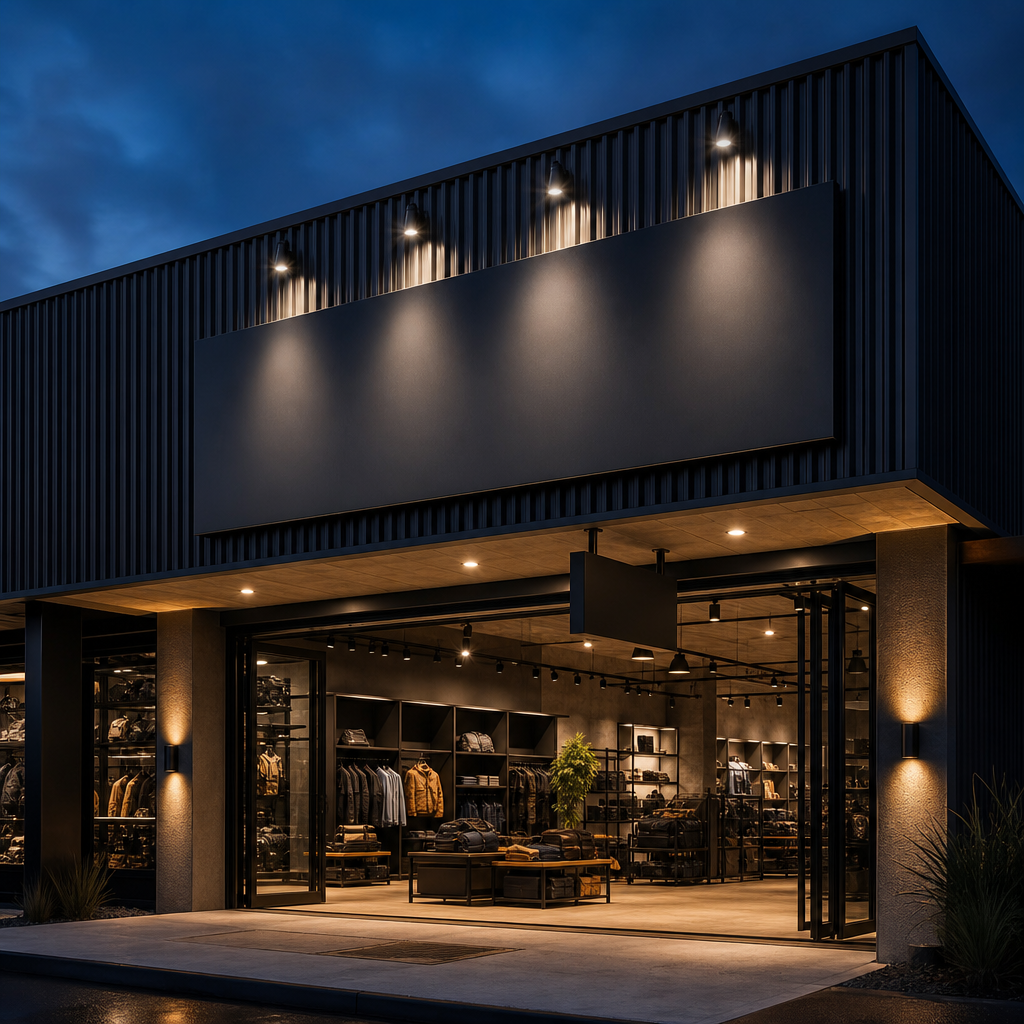
Awning signs identify a business from the fascia, underside or upper surface of a shopfront awning. The right format depends on pedestrian sightlines, road visibility, available structure, lighting and local approval requirements. Effective awning signage uses concise wording, strong contrast, durable materials and installation details designed for the specific building.
Awning signage occupies some of the most useful visual space on a commercial facade. It can be seen by pedestrians approaching along the footpath, passing traffic and customers standing across the street.
That does not mean every awning should carry the same sign. This guide explains the main formats, design decisions, materials, approval issues, installation process and maintenance requirements relevant to Australian businesses.
Key takeaways
Good awning signage starts with the viewing direction, not the sign material. The sign must suit how customers approach the premises, remain readable around nearby buildings and street furniture, and connect clearly with the entrance. Structural suitability, planning controls, illumination and maintenance access should be resolved before production begins.
- Fascia signs primarily face traffic and people viewing the building from across the street.
- Under-awning signs are usually more visible to pedestrians moving parallel to the shopfront.
- Short wording, clear letterforms and strong contrast improve recognition at a glance.
- Materials must suit local exposure, awning condition and the chosen illumination method.
- Council, landlord, building and electrical requirements should be checked before installation.
- A complete quote should define design, manufacture, access, installation and approval responsibilities.
Ready to make your business impossible to miss?
Design, manufacture and installation, all under one roof in Warana.
Get a Free QuoteAwning sign options at a glance
The main options differ by mounting position, viewing direction and construction. A business may use more than one format where the facade and local controls allow it. The best combination avoids unnecessary repetition while making the premises recognisable from the paths customers actually use.
| Sign type | Mounting position | Best suited to | Main design consideration |
|---|---|---|---|
| Fascia sign | Front face of the awning | Traffic and views from across the street | Letter size, contrast and fascia depth |
| Under-awning sign | Suspended beneath the awning | Pedestrians approaching along the footpath | Clear headroom, projection and secure suspension |
| Awning roof sign | Above the awning | Longer-distance visibility where permitted | Wind loading, planning controls and visual scale |
| Applied awning graphic | Fixed directly to an existing surface | Simple branding on suitable cladding | Surface condition, adhesion and replacement access |
| Illuminated awning sign | Fascia, underside or associated mounting frame | Businesses operating after dark | Glare, wiring, servicing and local lighting controls |
What are awning signs?
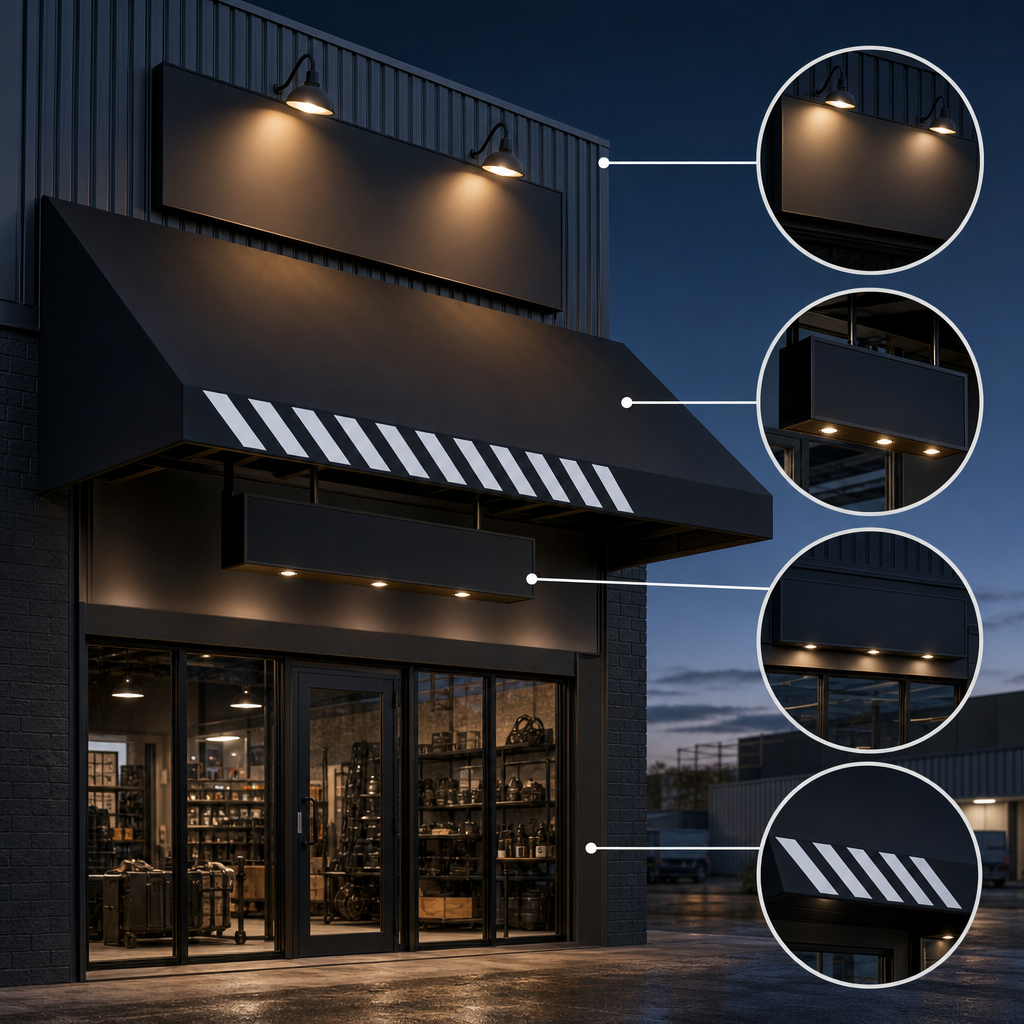
Awning signs are business identification or promotional signs attached to, suspended beneath or installed above an awning. They can use flat panels, fabricated lettering, lightboxes, vinyl graphics or illuminated elements. Their defining feature is the relationship to the awning, rather than one particular material or manufacturing method.
The term is often used loosely, which can create confusion during quoting. It helps to separate the available sign zones.
A fascia sign sits on the vertical front edge of the awning. It generally faces the road or the opposite side of the street. This format works well when the fascia has enough depth for readable branding and the awning remains visible around parked vehicles, trees and street furniture.
An under-awning sign hangs below the structure and usually projects at a right angle from the shopfront. It is aimed at pedestrians travelling along the footpath. In a retail strip, this sign may become the most useful identifier because people often approach from the side rather than directly across the road.
A sign above an awning may offer greater distance visibility, but it also introduces stronger structural and planning considerations. Wind exposure, support framing, building appearance and council controls all become important.
These formats are related, but they solve different visibility problems. Treating them as interchangeable often produces a sign that looks acceptable in artwork and performs poorly once installed.
Which type of awning sign suits your business?
Choose the sign type by tracing the customer's approach to the premises. Under-awning signs suit pedestrian traffic along a retail strip. Fascia signs suit views from roads and opposite footpaths. Above-awning signs may support longer sightlines, while applied graphics suit simple identification on a sound existing surface.
Start by inspecting the site from realistic viewing positions. Do not assess the awning only while standing directly in front of it. Walk in both directions along the footpath. View it from across the road where safe. Note trees, poles, outdoor dining, parked vehicles, neighbouring signs and changes in street level.
For a cafe in a continuous shopping strip, an under-awning blade or lightbox may help customers identify the tenancy while walking past adjacent businesses. The fascia can then reinforce the trading name from across the street.
For a showroom beside a wider road, the fascia may carry more visual weight because traffic approaches from a greater distance. Detailed service lists are unlikely to help in that setting. The business name and its category usually deserve priority.
Professional services may need a quieter treatment. Fabricated letters on a fascia can integrate with the building more cleanly than a large lightbox. The correct decision still depends on sightlines, facade proportions and approval conditions, not industry fashion.
Where several sign positions are available, give each one a job. Repeating the same crowded layout on every surface adds visual noise. A fascia might establish the brand, while an under-awning sign marks the entrance.
How should awning signs be designed for visibility?
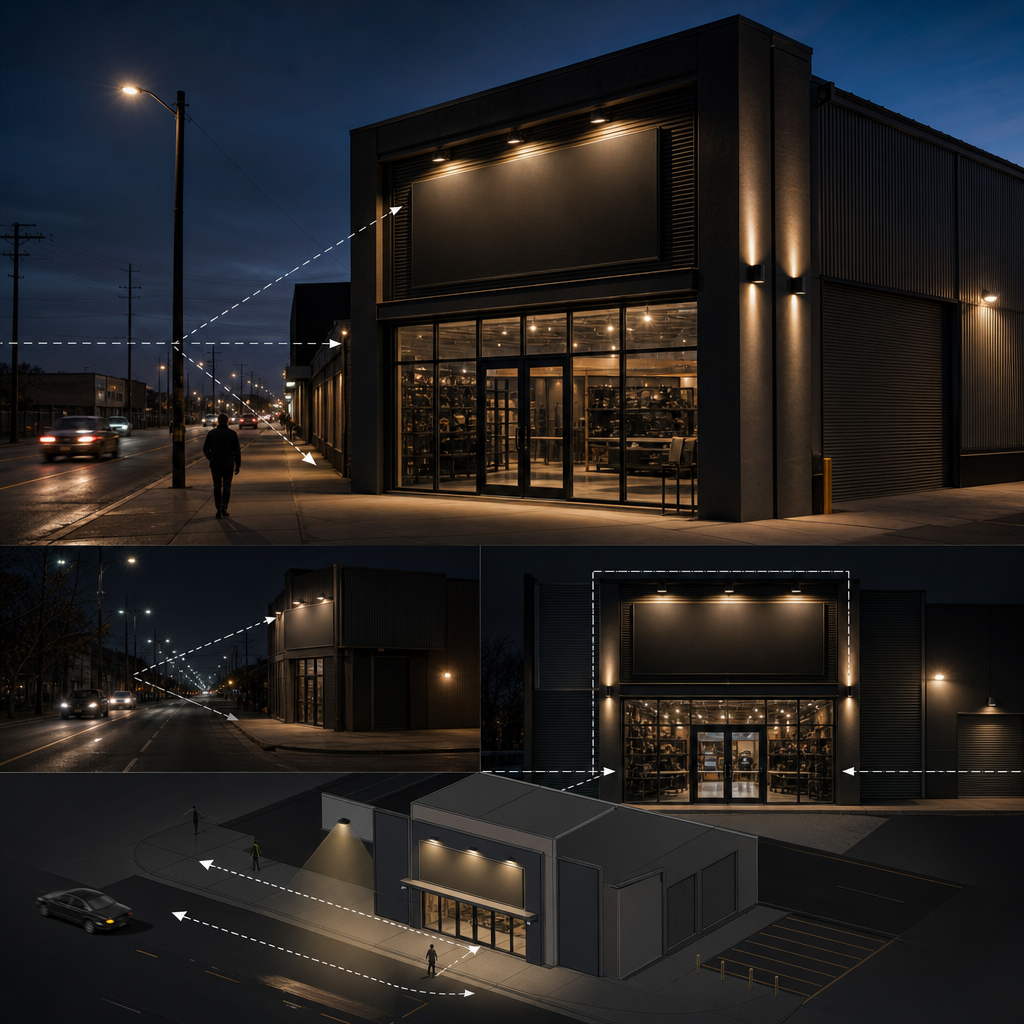
Design awning signage around recognition speed, contrast and viewing angle. Give the business name priority, remove wording that cannot be read from the intended position, and test the artwork on a photograph of the actual facade. A technically accurate logo is not effective if its important details disappear at installed size.
Establish a clear message hierarchy
Start with the information a new customer genuinely needs. That is usually the trading name, business category or a highly recognisable brand mark. Contact details, long service lists and social handles can compete with the primary message.
This is especially important for under-awning signs. A pedestrian sees the sign at an angle, often among several competing signs. The available viewing time is limited by movement and obstructions. Concise copy improves the chance of recognition.
Use contrast deliberately
Contrast is not simply a choice between light and dark colours. Letter weight, spacing, background pattern and illumination all affect legibility. Thin lettering can disappear against a busy background. Closely spaced capitals may become a single shape when viewed obliquely.
Brand guidelines should inform the design, but they should not prevent practical adaptation. A secondary approved colour treatment may perform better on the awning than the primary logo placed over an incompatible facade colour.
Design for the installed context
Artwork should be shown on a measured facade image before manufacture. This reveals whether the sign aligns with architectural features, sits too close to an awning edge or becomes lost beside neighbouring signage.
A site mock-up should also account for the sign's depth. Fabricated letters, folded panels and lightboxes project from the mounting surface. That depth can affect shadows, clearances, side views and access for cleaning.
Connect the sign to the entrance
A visible sign is not automatically a useful wayfinding device. Customers should be able to connect the sign with the correct doorway. This matters in shared buildings, arcades and premises with entrances offset from the main awning.
If the mounting position and entry are separated, supporting window graphics or door identification may be needed. Those elements should be planned as part of the sign system rather than added after customers become confused.
Which materials and illumination methods work best?
The best material depends on exposure, sign depth, structural capacity, finish and maintenance access. Common options include aluminium composite panel, fabricated aluminium, acrylic, vinyl and purpose-built lightbox components. Illumination should be selected only after considering operating hours, surrounding brightness, electrical access and glare controls.
Flat aluminium composite panels suit many non-illuminated fascia applications. They provide a stable face for printed or cut graphics, but edges, joins and fixings still need careful detailing. A panel attached over a damaged or uneven fascia will not correct the underlying structure.
Fabricated aluminium allows greater depth and can support dimensional lettering or enclosed sign forms. It also gives the manufacturer more control over returns, seams and mounting points. The supporting awning must still be assessed for the proposed load and fixing method.
Acrylic is commonly used for sign faces and dimensional elements. Its suitability depends on thickness, support, exposure and fabrication details. Large unsupported faces can move or become damaged, so material selection cannot be separated from engineering and installation.
Vinyl graphics can be effective on smooth, compatible surfaces. Surface contamination, failing paint, corrosion and unsuitable cladding can undermine adhesion. Existing finishes should be inspected and prepared rather than assumed to be sound.
Illumination options include internally illuminated lightboxes, illuminated fabricated letters and external lighting directed towards the sign. Each creates different servicing and approval requirements. Internal lighting can provide an even sign face when properly specified. Individual illuminated letters create a more architectural result but require coordinated wiring and mounting.
Brightness should suit the site. More light is not automatically more legibility. Excessive output can reduce comfort, create glare and conflict with local controls. AS/NZS 4282 provides a framework for managing the obtrusive effects of outdoor lighting, while local planning rules may impose additional requirements.
What approvals and technical checks are required?
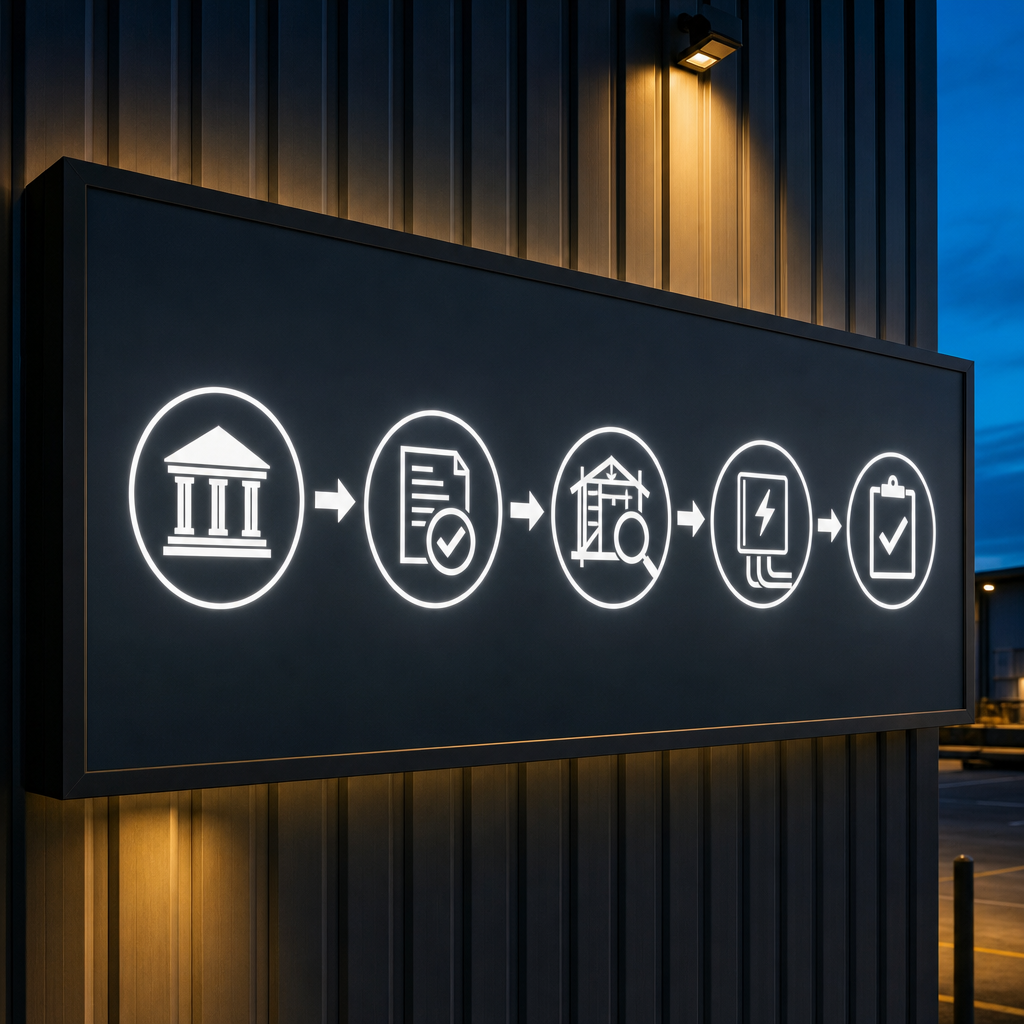
Approval requirements vary by council, planning zone, building, sign size, illumination and mounting method. Before production, confirm council rules, landlord consent, structural suitability, electrical work and public access requirements. Exempt development provisions should never be assumed to apply without checking the relevant jurisdiction and the actual proposal.
Local government planning schemes commonly regulate sign location, form, area, illumination and relationship to the building. Heritage areas and character precincts may impose tighter controls. A sign that appears modest in a drawing can still require approval because of its position or construction.
Tenants also need written landlord or centre management consent. A council approval does not replace permission from the property owner. Retail centres may have separate design manuals covering colours, sign zones, illumination, cable routing and reinstatement obligations.
Structural assessment becomes particularly important for suspended and above-awning signs. Existing awnings may have hidden corrosion, inadequate framing or previous penetrations. The mounting design should consider the sign's weight, projection and wind actions. AS/NZS 1170.2 addresses wind actions used in structural design.
Under-awning signs must preserve safe pedestrian movement. Placement should account for required clearances, the accessible path of travel and potential conflicts with doors, services and other projections. The National Construction Code and applicable access standards may influence the solution.
Illuminated signs require suitable electrical planning. Cabling, isolators, power supplies and service access should be resolved before installation. Electrical work must be completed by appropriately licensed people under the rules applying in the relevant state or territory.
Approval responsibility should be stated in the quote. The owner, tenant, sign company, planner and building professional may each handle different parts. Ambiguity at this stage causes delays and redesign later.
What does the awning sign process involve?
A reliable awning sign process moves from site assessment to design, approvals, manufacture, installation and handover. Each stage should resolve a different risk. Skipping measurement, structural review or approval checks may save effort early, but it can produce rework once fabrication or access equipment has been booked.
Site assessment
The assessment should record dimensions, fascia condition, awning construction, potential fixing points, electrical access and installation constraints. Photographs should cover the direct view, side approaches and surrounding streetscape.
Access matters. A sign above a busy footpath may require traffic or pedestrian management, restricted installation times or specialised equipment. These conditions can affect both scheduling and price.
Design and specification
The design stage converts the brand artwork into a buildable sign. It should define materials, dimensions, colours, illumination, mounting details and the sign's relationship to the facade.
Artwork approval should not be limited to a logo floating on a blank page. A scaled placement drawing helps the customer evaluate proportion and position. Technical drawings may also be required for landlords, councils or structural review.
Approvals and pre-production checks
Required permissions should be identified before irreversible manufacturing begins. Final artwork, spelling, colours, dimensions and electrical requirements also need written confirmation.
Where existing branding files are poor quality, suitable vector artwork may need to be recreated or supplied. Enlarging a low-resolution image does not create sharp production artwork.
Manufacture and installation
Manufacture should follow the approved specification. Installation then needs appropriate fixings, sealing, cable management and alignment. Penetrations should be treated carefully to avoid water entry and damage to the existing awning.
At handover, the customer should understand cleaning requirements, isolation procedures for illuminated signs and any access limitations for future servicing.
What affects the cost of awning signs?
Awning sign cost is driven by size, construction, illumination, access, approvals, structural work and the condition of the existing awning. A small sign can still require substantial installation planning, while a larger flat panel may be straightforward. Comparable quotes must include the same scope rather than only the manufactured sign face.
The main pricing variables include:
- custom fabrication and material selection
- printed, cut or dimensional graphics
- internal or external illumination
- electrical connection and cable routing
- engineering or structural input
- council applications and supporting drawings
- landlord documentation
- access equipment and site controls
- removal and disposal of existing signage
- repairs or preparation to the mounting surface
- travel, scheduling and restricted working conditions
Ask whether the quote includes final artwork, colour matching, fixings, installation, electrical work and site clean-up. Also check who is responsible for permits and making good the facade if an old sign is removed.
The cheapest initial option may not be the lowest-cost choice over the sign's working life. Difficult lamp access, exposed wiring, unsupported faces and poor surface preparation can increase maintenance or bring replacement forward. Durability comes from the complete specification, not a single premium material.
How should awning signs be maintained?
Awning signs should be inspected and cleaned according to their material, exposure and mounting method. Maintenance should address dirt, fading, loose fixings, water entry, corrosion, damaged graphics and lighting faults. Problems on suspended signs deserve prompt attention because the sign occupies space above a public access area.
Cleaning products must be compatible with the face material, graphics and paint system. Abrasive tools or aggressive chemicals can dull acrylic, damage printed films and mark coated metal. Test any product in an inconspicuous area and follow the material supplier's instructions.
Illuminated signs need safe isolation before internal servicing. Uneven lighting may indicate failed modules, power supply issues, contamination or ageing sign faces. Replacing only the obvious failed component may not correct the underlying cause.
Inspect sealants, drainage paths and penetrations after severe weather or when water staining appears. Water entering through poorly treated fixings can damage both the sign and the awning structure.
Brand changes also provide a useful maintenance point. Before applying new graphics over an old sign, assess the substrate. Layers of ageing vinyl, adhesive residue and faded backgrounds can remain visible through the replacement work.
The visibility triangle matters more than sign size
Our practical view is that awning sign performance depends on a visibility triangle: approach direction, recognition hierarchy and entrance connection. Sign size sits inside that framework. Making a sign larger will not solve a side-on viewing problem, unclear wording or a mounting position that customers cannot associate with the correct doorway.
This approach changes the questions asked during design.
First, where does the customer come from? A pedestrian approaching along the awning line sees a different sign face from a driver or passenger across the road.
Second, what must they recognise? If the answer is the business name, that information should not compete equally with a phone number, service list and slogan.
Third, where do they go next? The signage should make the entrance evident. A strong brand sign positioned above the wrong bay can still create uncertainty.
Consider a hypothetical medical tenancy in a mixed retail strip. A large fascia sign may be clearly visible from across the road, yet patients walking under the awning could pass the entrance because the fascia sits outside their natural view. Adding an appropriately positioned under-awning identifier may solve the actual wayfinding problem more effectively than enlarging the fascia.
This is why awning signs should be specified as part of a viewing system. Material, colour and illumination remain important, but only after the sign's job has been defined.
Get in touch about an awning sign
A useful awning sign enquiry includes the site address, tenancy details, photographs, available brand artwork, preferred sign position and operating hours. It should also identify the landlord or centre manager and any known approval conditions. Better site information allows design, access and compliance questions to be addressed earlier.
Sunquest Signs can assess fascia, under-awning and illuminated sign requirements against the building and intended viewing conditions. To discuss a new sign or replacement, visit the Sunquest Signs contact page at /contact and provide clear photographs of the facade and existing awning.
Avoid removing an existing sign before the replacement scope is settled. The old installation may reveal electrical feeds, structural limitations or facade damage that affects the new work.
References
These sources provide the broader Australian framework relevant to building work, structural wind actions, outdoor lighting, permits and electrical risk. The exact standards, planning controls and licence requirements applying to an awning sign should be confirmed for its location, design and installation method.
- Australian Building Codes Board, National Construction Code
- Standards Australia, Standards Catalogue, including AS/NZS 1170.2 for wind actions and AS/NZS 4282 for outdoor lighting effects
- Australian Business Licence and Information Service, ABLIS
- Safe Work Australia, Model Code of Practice: Managing electrical risks in the workplace
Talk to a signage expert
Tell us about your project and we'll come back with options and honest advice.
Get in TouchFrequently Asked Questions
What is the difference between a fascia sign and an under-awning sign?
A fascia sign is mounted to the front vertical face of an awning and generally addresses the road or opposite footpath. An under-awning sign hangs beneath the awning, usually projecting towards pedestrians approaching from either side.
Do I need council approval for an awning sign?
Possibly. Requirements depend on the local planning scheme, sign position, dimensions, illumination, zoning and building context. Confirm the rules with the relevant council and obtain landlord consent before manufacture.
Can an existing awning support a suspended sign?
It should not be assumed. The awning's framing, condition, fixing points and exposure need assessment. Structural input may be required for the proposed sign and mounting system.
Are illuminated awning signs suitable for every business?
No. Illumination should suit the business's operating hours, location, surrounding brightness, planning controls and available electrical access.
What files are needed to produce an awning sign?
Vector logo artwork is generally preferred because it can be scaled cleanly. Brand colour references, typeface details and approved logo variations are also useful.
Can new graphics be installed over an old awning sign?
Sometimes, but the existing face should be inspected for failing paint, loose vinyl, corrosion, uneven panels and adhesive residue before new graphics are applied.
Signs that set you apart
Over 40 years on the Sunshine Coast. Design, compliance, manufacture and installation handled end to end.
Get a Free Quote