Business Signs in Caloundra: A Practical Guide to Shopfronts, Illuminated Signage and Vehicle Graphics
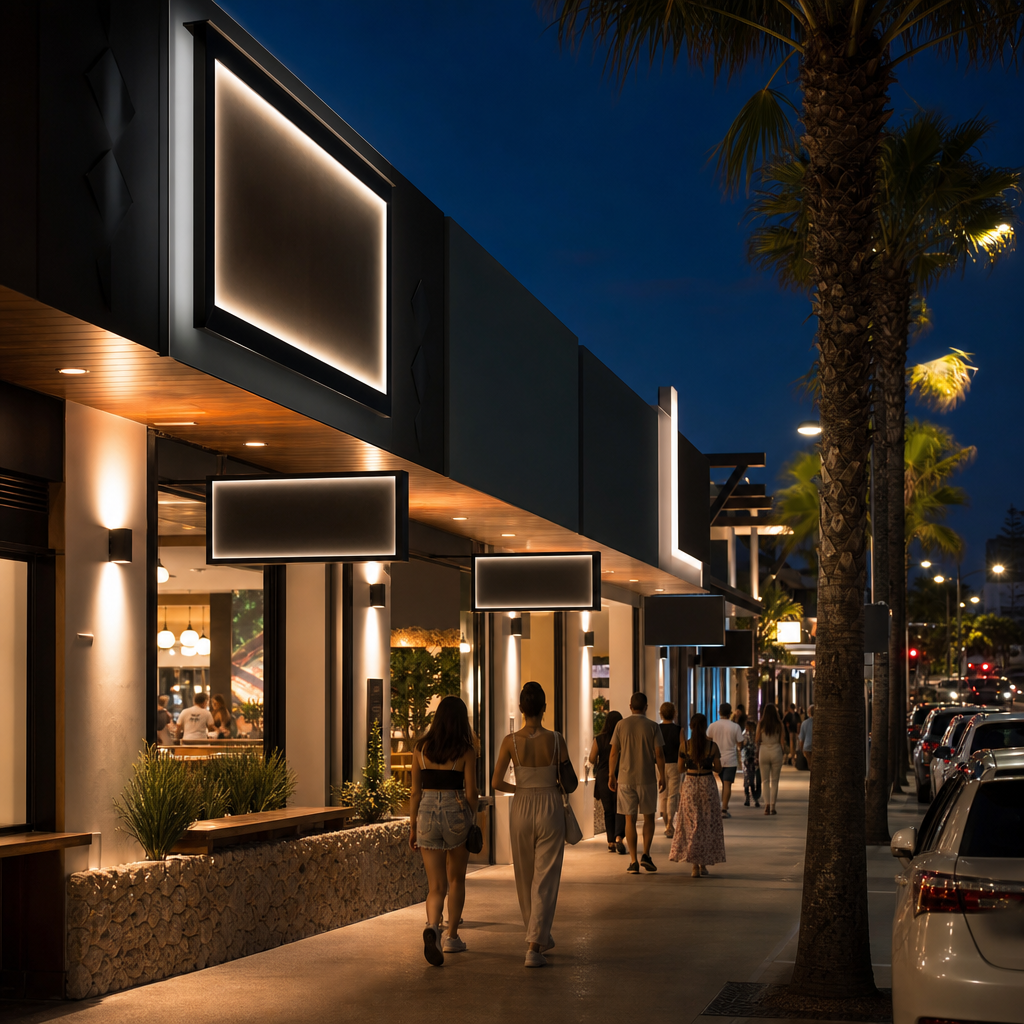
Business signs in Caloundra need marine-grade materials, UV-stable finishes and layouts matched to the site, whether that's a Bulcock Street shopfront or an industrial estate off Nicklin Way. Sunquest Signs designs, fabricates and installs shopfront, illuminated, pylon and vehicle signage locally, choosing materials and placement based on exposure, council rules and how customers actually move past the site.
Caloundra isn't a generic sign market. Salt air off the Pumicestone Passage, harsh Queensland UV and a mix of pedestrian strip shops and drive-by industrial estates all change what a sign needs to survive and perform. A sign that looks fine on day one but fades, corrodes or delaminates within eighteen months isn't a bargain, it's a second job.
This guide walks through every major sign type Caloundra business owners are likely to need, why coastal conditions change the spec, and how the process runs from site measure to install. It's written for cafe owners, retailers, tradies, clinics, gyms and professional offices weighing up their options before they commit.
Key Takeaways
- Caloundra's salt air and strong UV demand marine-grade metals, UV-stable vinyl and corrosion-resistant fixings, not standard signage stock.
- Bulcock Street and foreshore strips favour illuminated shopfronts and under-awning signs for pedestrian visibility after dark.
- Industrial estates and medical precincts off Caloundra Road and Nicklin Way suit pylon and plinth signs for multi-tenancy identification.
- Vehicle wraps turn trade utes and service vans into moving advertising right across the Sunshine Coast.
- Council and landlord approvals affect project timelines, so early artwork proofing avoids delays.
- Local fabrication, including laser-cut and CNC letters, speeds up turnaround and makes repairs simpler down the track.
Ready to make your business impossible to miss?
Design, manufacture and installation, all under one roof in Warana.
Get a Free QuoteSummary Table: Sign Types for Caloundra Businesses
| Sign Type | Best For | Typical Caloundra Setting | Key Material Consideration |
|---|---|---|---|
| Shopfront and fascia signs | Retail, cafes, professional offices | Bulcock Street and strip shops | Aluminium composite panel or acrylic, UV-stable finish |
| Illuminated lightboxes and halo/face-lit letters | After-hours visibility, hospitality | Retail strips, restaurants, bars | LED modules, powder-coated or corrosion-resistant housings |
| Neon-effect signage | Branding for hospitality venues | Cafes, bars, restaurants | Flexible LED neon, low heat output, coastal-safe casing |
| Pylon and plinth signs | Multi-tenant site identification | Industrial estates, medical suites off Caloundra Road and Nicklin Way | Marine-grade steel, engineered footings |
| Vehicle wraps and fleet graphics | Mobile advertising | Trade utes and service vans across the Sunshine Coast | Cast vinyl with UV laminate |
| Window, wall and floor graphics | Privacy, branding, wayfinding | Offices, clinics, gyms, reception areas | Frosted film, anti-slip floor-rated vinyl |
Why Caloundra's Coastal Conditions Change Your Signage Brief
Caloundra signage faces heavier salt exposure and stronger UV than an inland town like Toowoomba, so a sign spec that works elsewhere won't necessarily survive here. Salt air accelerates corrosion in untreated fixings and cheap metal frames. Material choice has to be the first decision in the brief, not an afterthought once the design is locked in.
The town also has two very different trading environments. Bulcock Street and the foreshore strip run on pedestrian traffic, tourists and evening foot trade, which rewards illuminated fascia signs, under-awning signs and clear window graphics that catch people walking past at a slower pace. Industrial estates and medical precincts off Caloundra Road and Nicklin Way run on drive-by visibility, where a pylon sign at the entrance does more work than a small fascia sign ever could.
According to ARPANSA (Australian Radiation Protection and Nuclear Safety Agency), Queensland regularly records extreme UV index readings, particularly through summer. That matters for signage because standard vinyl prints and unprotected acrylics can fade or become brittle well before a marine-grade or UV-laminated equivalent shows any wear. Fixings matter just as much as the sign face. Stainless steel or powder-coated aluminium brackets cost more upfront than mild steel, but mild steel fixings within a few kilometres of the coast can rust and stain a fascia within a couple of years.
Shopfront and Fascia Signage for Bulcock Street and Beyond
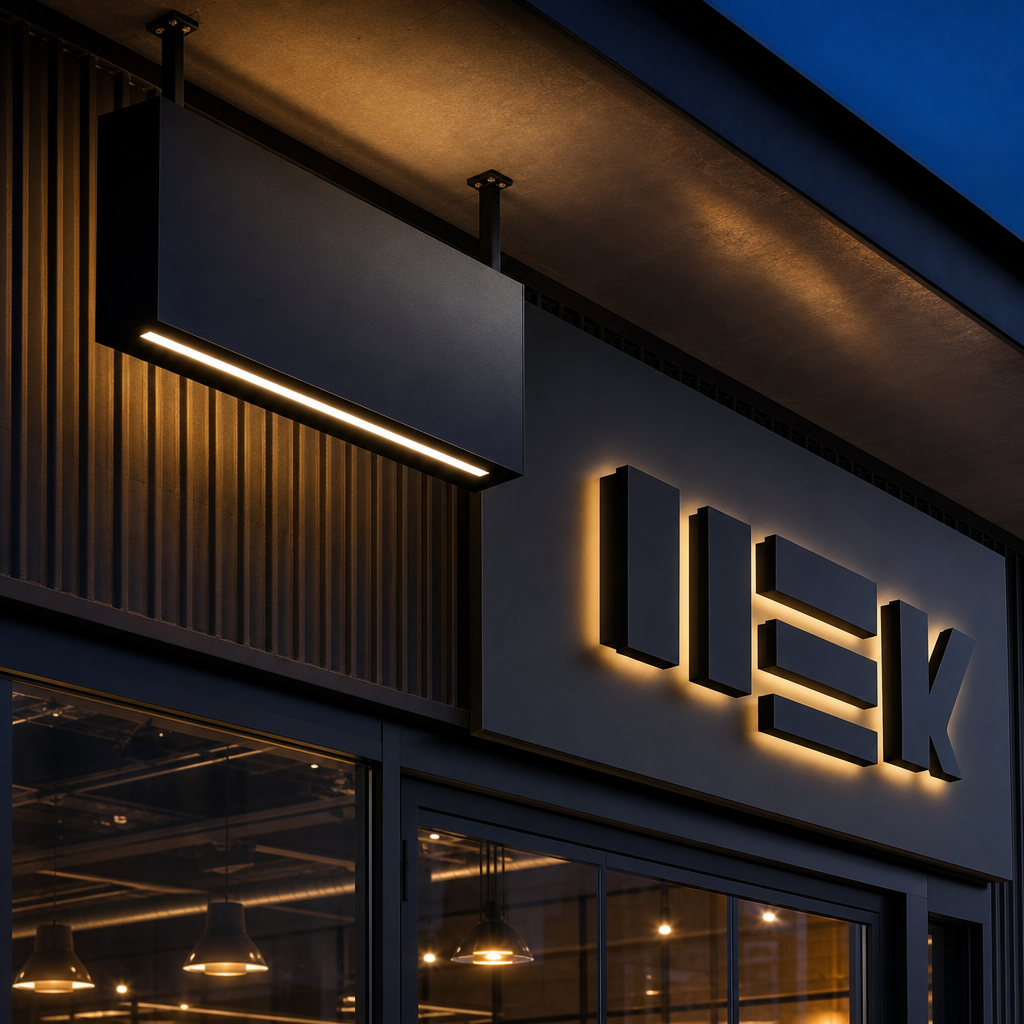
Shopfront signs Caloundra businesses rely on need to survive salt air, catch pedestrian attention and meet whatever heritage or awning restrictions apply to the strip. Aluminium composite panels, laser-cut 3D letters and under-awning signs each suit a different shopfront style, and most Bulcock Street sites end up combining two or three of these elements.
Acrylic and aluminium composite panels
Acrylic panels give a clean, modern face for fascia signage and work well when backlit or paired with vinyl-cut lettering. Aluminium composite panel (ACP) is the more common choice for exposed coastal fascias because it resists warping and won't corrode the way raw metal sheeting can. Both substrates take digitally printed or vinyl-applied branding, and both hold their colour longer when finished with UV-stable inks or laminates.
Laser-cut and fabricated 3D letters
Laser-cut and CNC-fabricated letters give a shopfront a built, premium look that flat printed signage can't match. Sunquest Signs fabricates these in-house, which matters for Caloundra jobs because it means letter depth, mounting studs and finish can all be adjusted to suit an awning line or heritage facade without waiting on an outside supplier. Powder-coated aluminium or acrylic-faced letters are the standard picks for coastal durability.
Awning and under-awning signs
Under-awning signs (sometimes called blade or hanging signs) are one of the most effective formats for Bulcock Street style strips, because they're read by pedestrians walking underneath rather than driving past. They also tend to sit partly protected from direct sun and rain, which helps extend the life of printed faces.
Illuminated Signage: Lightboxes, Halo Letters and Neon-Effect
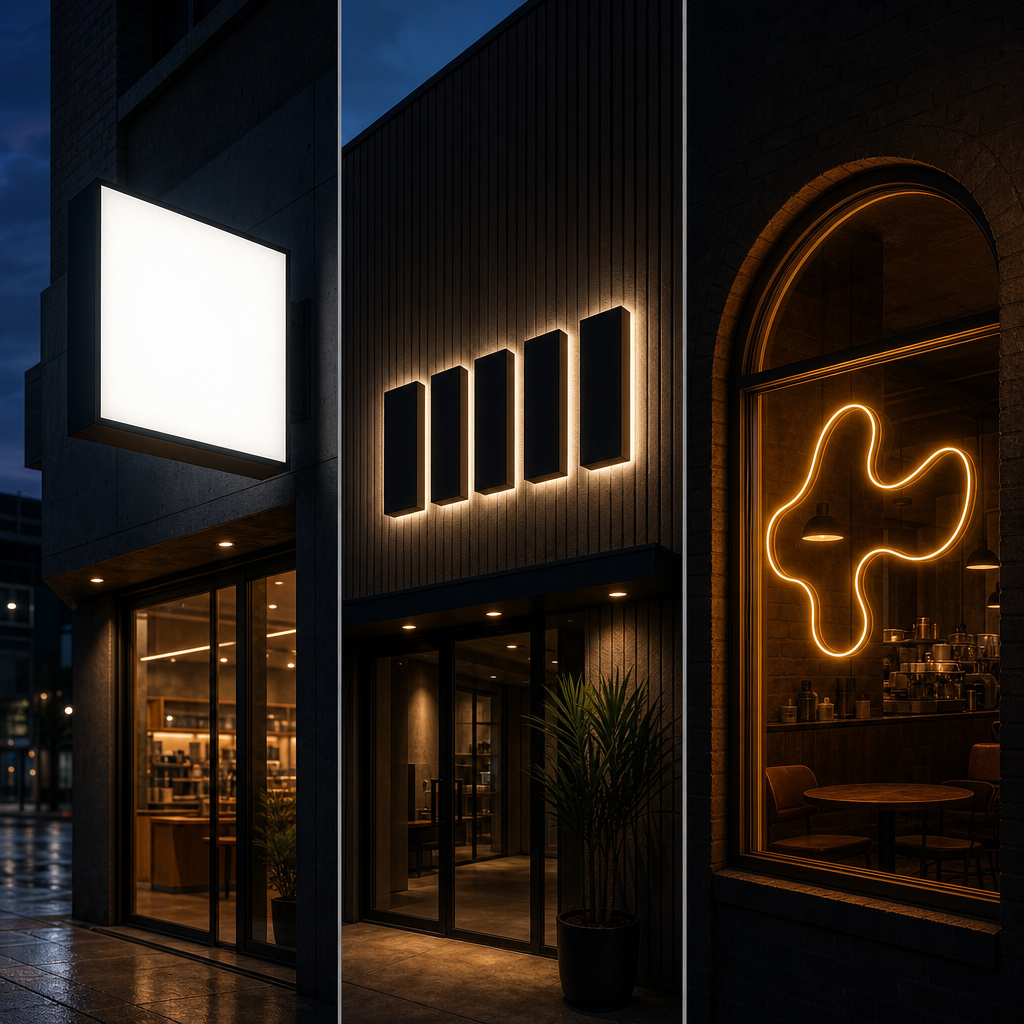
Illuminated signs Sunshine Coast businesses use fall into three main categories: LED lightboxes, halo or face-lit letters, and neon-effect signage. Each suits a different budget and visual style, but all three extend a shopfront's visibility well past sunset, which matters for any Caloundra business trading into the evening.
LED lightboxes remain the most common option for retail and hospitality fascias because they give even, bright illumination at a lower running cost than older fluorescent or neon tube systems. Halo-lit letters (where light glows around the edge of a raised letter) and face-lit letters (where the letter face itself glows) suit businesses wanting a more premium, architectural look, and they read well both day and night.
Neon-effect signage, built with flexible LED neon rather than glass tube, has become popular with Caloundra cafes, bars and restaurants wanting a distinctive after-hours identity. It runs cooler and more reliably than traditional neon, and because it's LED-based it copes better with the vibration and temperature swings that can shorten the life of glass neon in a coastal environment. For a hospitality venue on the foreshore strip, a well-placed neon-effect sign in a window often does more for brand recall than a standard fascia sign alone.
Pylon and Plinth Signs for Multi-Tenancy Sites
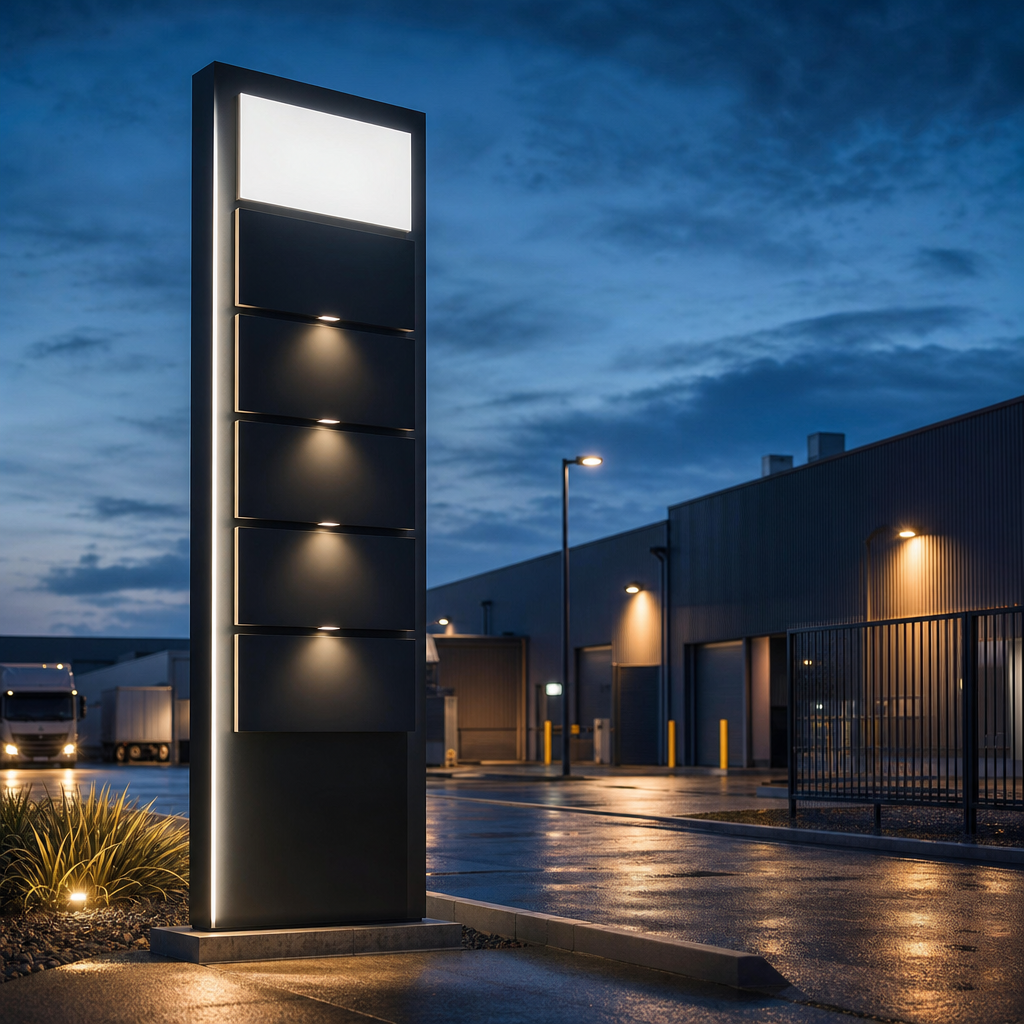
Pylon signs Sunshine Coast industrial estates and medical precincts rely on give multiple tenants a single, visible identification point at the site entrance, which matters where individual shopfronts sit well back from the road. A pylon or plinth sign is often the only signage a passing driver sees before deciding whether to turn in, so panel layout and readability at speed matter more than decorative detail.
Sites off Caloundra Road and Nicklin Way tend to be exactly this kind of multi-tenancy layout: a mix of trade businesses, medical suites and offices sharing one driveway. A well-designed pylon sign groups tenants clearly, uses a consistent font size hierarchy so the biggest or ground-floor tenant isn't the only one anyone can read, and gets illuminated where the site trades after dark.
Because pylon and plinth signs are freestanding structures, they also need to be engineered for wind loading, which is a genuine coastal consideration and not just a formality. Standards Australia's AS/NZS 1170.2 sets out wind action requirements for structures including signage, and any reputable sign supplier should be designing footings and frame strength with that standard in mind, particularly for taller pylon structures near open ground.
Vehicle Wraps and Fleet Graphics Across the Sunshine Coast
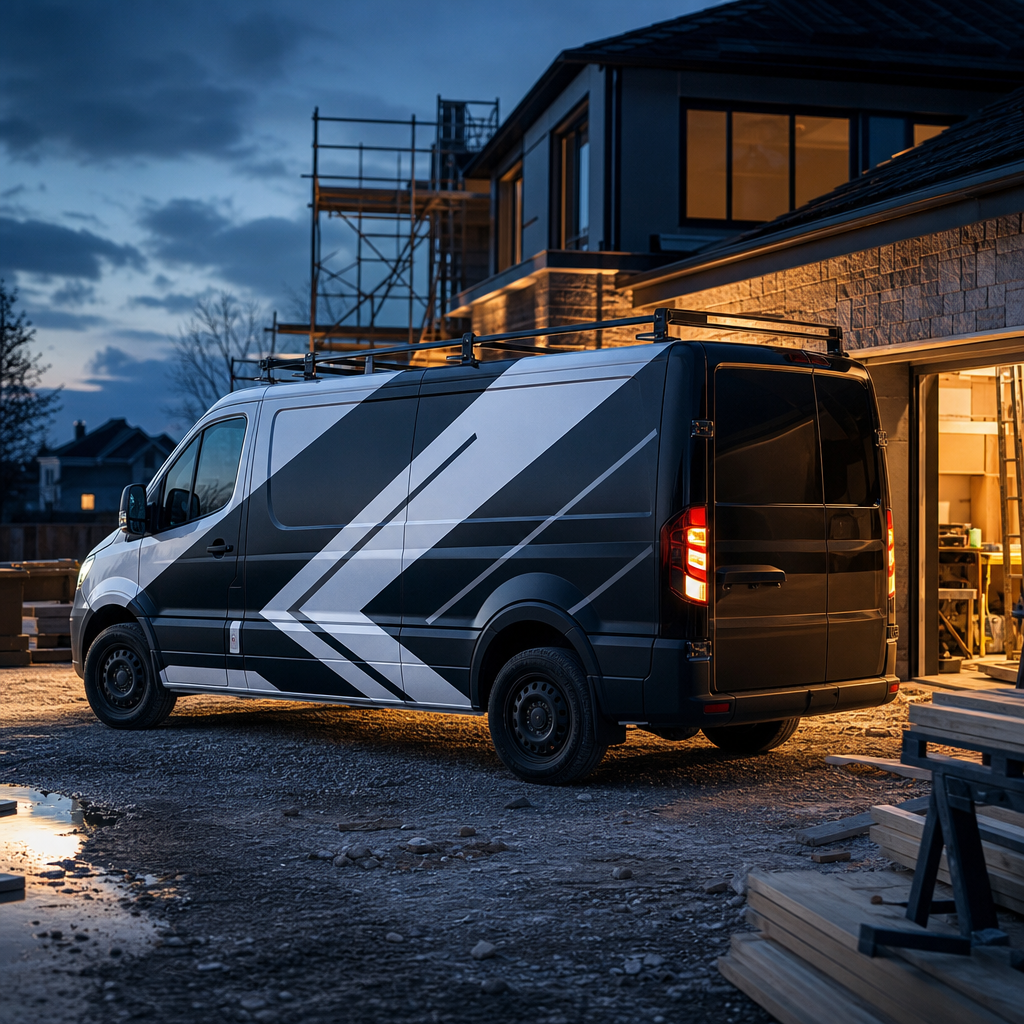
Vehicle signage Caloundra tradies and service businesses use turns a ute or van into a moving billboard that works every time it's parked or driven, without any ongoing cost after installation. A full or partial wrap using cast vinyl with UV laminate is the standard approach, because cast vinyl conforms to body curves better than cheaper calendered vinyl and holds its colour longer under constant sun exposure.
Consider a Caloundra plumbing or electrical business running two or three service vans between jobs across the wider Sunshine Coast. A well-designed wrap, with the business name, phone number and trade licence details clearly legible from the side and rear, gets seen at every set of lights, every job site and every servo stop. That's exposure a static shopfront sign simply can't match, and it travels well beyond Caloundra's own catchment into Golden Beach, Currimundi and up toward Mooloolaba.
Fleet consistency matters too. When every van in a fleet carries the same wrap design, colours and logo placement, it reads as a bigger, more established operation, which helps with trust before a tradesperson even knocks on the door. Partial wraps (covering bonnet, doors and rear panel rather than the full vehicle) are a lower-cost option that still delivers strong visibility for businesses not ready to commit to a full wrap budget.
Windows, Walls and Interior Signage
Window, wall and floor graphics extend a business's branding indoors and can solve practical problems like privacy, wayfinding and reception presentation, not just decoration. Frosted privacy film is one of the most requested products for Caloundra clinics, allied health practices and offices needing to screen reception areas or treatment rooms without losing natural light.
Wall murals and large-format printed graphics give retail fitouts and gyms a branded backdrop that's far cheaper to update than a full paint or fitout change, and reception signage, whether cut vinyl lettering or a fabricated 3D logo, sets the tone the moment a client walks in. Wayfinding signage matters more than most business owners expect, particularly in multi-suite medical or professional buildings where a confused client wandering a corridor reflects badly on every tenant, not just the one they're looking for.
Floor graphics, printed on anti-slip rated vinyl, have become common in retail and hospitality for queue management and directional cues, and they hold up well indoors away from direct UV exposure, which makes them one of the lower-maintenance sign types on this list.
The Process: Site Measure to Install, Compliance and Repairs
A typical signage project runs through site measure, design proofing, fabrication, council or landlord approval where required, then installation, and the earlier each step happens the smoother the timeline. Skipping the site measure or rushing artwork approval is the most common cause of delay on any signage job, coastal or otherwise.
Sunquest Signs starts with an on-site measure to check mounting surfaces, power access for illuminated signage, and any structural considerations for pylon or plinth signs. From there, artwork proofs go to the client for sign-off before anything is fabricated, which avoids costly reprints. Depending on the sign type and site, council approval through Sunshine Coast Council may be required, particularly for larger freestanding signs, illuminated signage or anything affecting a heritage-listed facade. Landlord or body corporate approval is often needed as well for shopping strip and multi-tenancy sites. Business.gov.au's guidance on advertising and signage is a useful starting point for owners unsure whether their sign needs a permit.
Once approvals are in place, fabrication and installation follow, using in-house laser-cutting and CNC capability for custom letters and panels, which keeps more of the process under one roof and reduces handoffs between suppliers. Existing signage doesn't always need full replacement either. Sign repair and refurbishment, from replacing failed LED modules in a lightbox to repainting a faded pylon sign, is often a fraction of the cost of starting again and can extend a sign's working life by years.
The Signage Mistake That Costs Caloundra Businesses Twice
The most expensive signage decision a Caloundra business owner can make isn't overspending, it's buying a cheap sign built for an inland climate and having to replace it within two or three years. That's a genuinely contrarian view in an industry where price comparisons dominate the conversation, but it holds up once you account for coastal wear.
A standard vinyl-printed fascia panel or an untreated steel-framed pylon sign might look identical to a marine-grade equivalent on install day. The difference only shows up eighteen months to three years later, when the cheaper option is fading, delaminating at the edges, or rusting through fixing points. At that stage the business isn't just paying for a replacement sign, it's paying for a second install, a second round of council or landlord paperwork, and lost visibility while the old sign looks tired in the meantime.
Our position at Sunquest Signs is that a proper coastal spec, whether that's UV-laminated print, powder-coated aluminium, or stainless fixings, should be treated as the baseline for any Caloundra sign, not an optional upgrade. It rarely adds a dramatic amount to the upfront quote, but it removes the second job entirely. For a business weighing up quotes from different suppliers, the question worth asking isn't just "what does this cost", it's "what is this rated to survive, and for how long".
If you're comparing local sign suppliers, it's worth noting Sunquest Signs also serves businesses in Noosa and Toowoomba, so the same fabrication standards and coastal-grade thinking that apply in Caloundra carry across other Sunshine Coast and inland Queensland locations, even though the material specs shift depending on climate.
Ready to Get Your Caloundra Signage Sorted?
If your shopfront, pylon sign or fleet is overdue for an upgrade, or you're opening a new site and need signage that will actually hold up on the coast, get in touch with Sunquest Signs for a free site measure and quote. Their team can assess your site, talk through material options suited to Caloundra's conditions, and give you a clear timeline before you commit. Reach out by phone or through the enquiry form on the Sunquest Signs website to get the process started.
References
- ARPANSA (Australian Radiation Protection and Nuclear Safety Agency), Ultraviolet Radiation: https://www.arpansa.gov.au/understanding-radiation/what-is-radiation/ultraviolet-radiation
- Sunshine Coast Council, business and planning information: https://www.sunshinecoast.qld.gov.au
- Standards Australia, AS/NZS 1170.2 Structural design actions: Wind actions: https://www.standards.org.au
- Business.gov.au, advertising and signage guidance for small business: https://business.gov.au
Talk to a signage expert
Tell us about your project and we'll come back with options and honest advice.
Get in TouchFrequently Asked Questions
How much do business signs cost in Caloundra?
Cost depends on sign type, size, materials and whether illumination is involved. A basic vinyl-lettered fascia sign costs far less than an illuminated lightbox or an engineered pylon sign. The most reliable way to get an accurate figure is a free site measure and quote, since pricing without seeing the site is only ever a rough guide.
Do I need council approval for a shopfront sign in Caloundra?
Many shopfront signs need approval from Sunshine Coast Council, particularly larger, illuminated or freestanding signage, and some sites also require landlord or body corporate sign-off. Requirements vary by sign type and location, so it's worth checking before fabrication starts to avoid delays.
What material lasts longest in Caloundra's coastal climate?
Marine-grade stainless steel fixings, powder-coated aluminium composite panels and UV-stable or UV-laminated print generally outlast standard steel and untreated vinyl in coastal conditions. Salt air and strong UV are the two biggest factors shortening the life of cheaper materials.
How long does illuminated shopfront signage take to install?
Timelines vary depending on design approval, fabrication complexity and whether council or landlord sign-off is needed. Sunquest Signs provides a project timeline as part of every quote once the site measure and artwork proofing stages are complete.
Can vehicle wraps be applied to a whole fleet at once?
Yes. Fleet graphics can be scheduled across multiple vehicles to keep branding consistent, and partial wraps are available for businesses wanting strong visibility without the cost of a full wrap on every vehicle.
Can an old or faded sign be repaired instead of replaced?
Often, yes. Sign repair and refurbishment, such as replacing failed LED modules, repainting faded panels or re-fixing corroded mounts, can extend a sign's life significantly and usually costs less than a full replacement.
Related Articles
Illuminated Signs on the Sunshine Coast: LED Lightboxes, Lit Letters and Pylon Signage That Survive the Coast
Indoor vs Outdoor Neon Signage: How to Choose the Right LED Neon for Your Space
Illuminated Sign Maintenance: How to Keep LED Signage Bright, Safe and Trading
Signs that set you apart
Over 40 years on the Sunshine Coast. Design, compliance, manufacture and installation handled end to end.
Get a Free Quote