
Illuminated Sign Maintenance: How to Keep LED Signage Bright, Safe and Trading
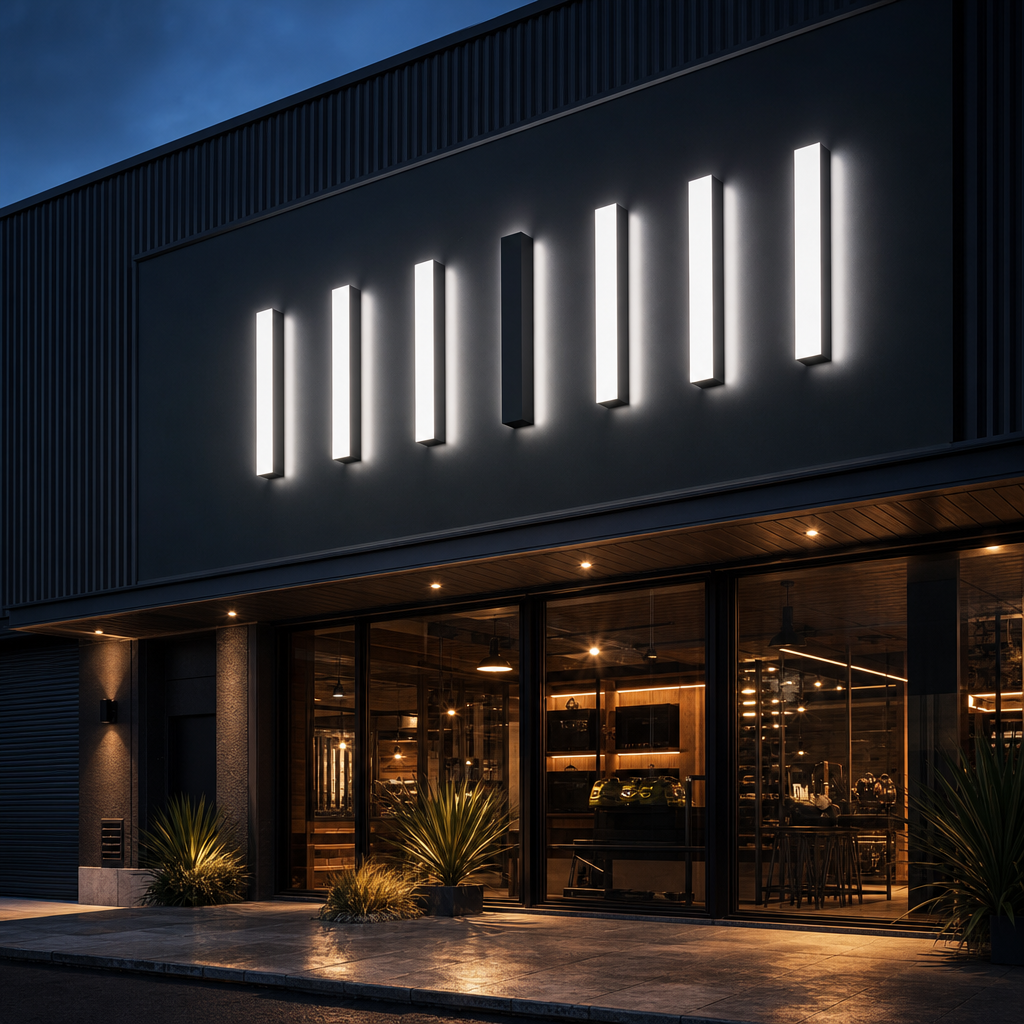
Illuminated sign maintenance means checking LED drivers, seals, fixings and acrylic faces on a set schedule, cleaning faces with mild detergent only, and calling a licensed electrical signwriter the moment a letter goes dark or a pylon flickers at night. Monthly night checks, quarterly cleans and an annual electrical inspection catch most faults before they force a full shutdown.
A lit sign that half-works reads as a business that half-cares. One dark letter in a shopfront word, a flickering pylon face, or a yellowed lightbox at the highway turn-off tells passing customers something is wrong before they even walk in. Most of these faults are cheap to prevent and expensive to ignore.
This guide covers why illuminated signs fail on the Sunshine Coast, Noosa, Maroochydore, Caloundra and Toowoomba, what a realistic maintenance schedule looks like, how to clean faces safely, and when repair stops making sense and refabrication takes over. It is written from the servicing side of the trade, not the sales side.
Key Takeaways
- LED driver failure, water ingress and UV-yellowed acrylic cause most illuminated sign faults, not the LEDs themselves.
- A monthly night-time walk-past, a quarterly face clean and an annual electrical inspection catch the majority of faults early.
- Never clean acrylic faces with solvents or abrasives, and always isolate power before any contact cleaning.
- Coastal salt air, humidity and storm season shorten fixing and seal life on the Sunshine Coast and Noosa faster than inland at Toowoomba.
- All electrical repair work on illuminated signage must be done by a licensed electrician, not general trade staff.
- A single dark letter is the most reported fault and often the cheapest one to fix, provided it is reported early.
Ready to make your business impossible to miss?
Design, manufacture and installation, all under one roof in Warana.
Get a Free QuoteIlluminated Sign Maintenance at a Glance
| Task | Frequency | Who Should Do It | What It Catches |
|---|---|---|---|
| Night-time walk-past check | Monthly | Owner or centre manager | Dark letters, flicker, uneven light |
| Face and return clean | Quarterly | Sign company or trained staff | Grime build-up, early yellowing, insect ingress |
| Electrical and fixing inspection | Annually | Licensed electrician or signwriter | Driver failure, corrosion, loose fixings, seal wear |
| Post-storm check | After severe weather events | Owner, then signwriter if damage found | Water ingress, wind strain, cracked fixings |
| Repair vs refabricate assessment | When a fault recurs or a sign approaches end of service life | Signwriter | Whether the face, tray or letter set is worth saving |
Why Illuminated Signs Fail
Most illuminated sign failures come from four repeat causes: LED driver breakdown, water finding a way in through seams and fixings, UV yellowing of acrylic faces, and corroded fixings in salt-laden coastal air. The LEDs themselves are usually the last component to fail.
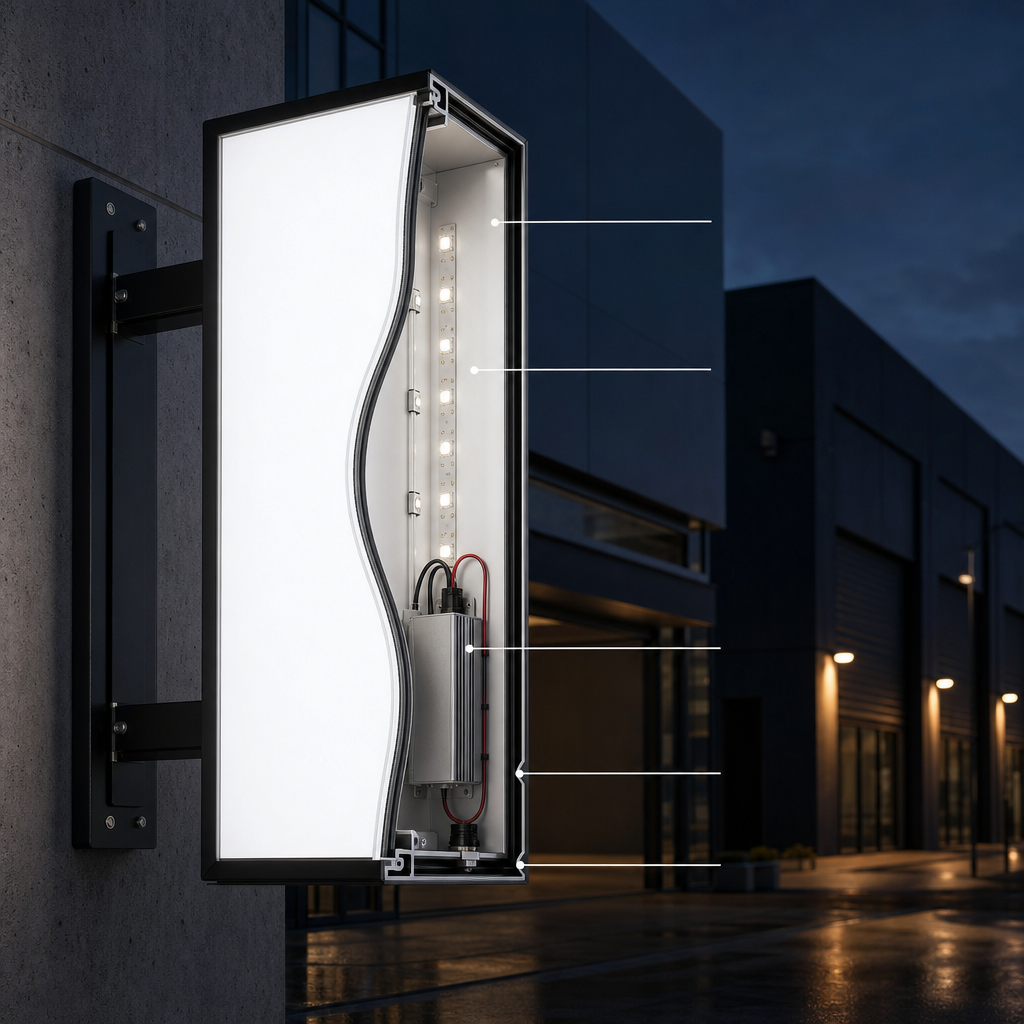
The driver is the small electrical unit that converts mains power into the low voltage the LED modules need. It runs constantly during trading hours and is the component most likely to give up first, usually well before the LED modules it feeds. When a whole lightbox or an entire word goes dark at once, rather than one letter, the driver is the first suspect.
Water ingress is the next most common cause. Lightboxes and lit letters are built with sealed seams, gaskets and cable glands, but sealant degrades with age, movement and heat cycling. Once moisture reaches the LED modules or driver, corrosion follows, and faults become intermittent before they become permanent. A sign that flickers only in wet weather has a water ingress problem, not an LED problem.
UV yellowing affects the acrylic face itself. Constant sun exposure, especially on north and west-facing pylon signs and shopfront lightboxes, breaks down the acrylic surface over time and dulls the colour and light transmission. Vinyl-applied graphics fade for the same reason, often unevenly if part of the face sits in shade for part of the day. Fixings, brackets and cabinets made from lower-grade metals corrode faster in coastal salt air than the same components would inland, loosening panels and letting more water in over time.
A Simple Maintenance Schedule for Illuminated Signage
A workable maintenance schedule has three layers: a monthly visual check anyone on site can do, a quarterly clean, and an annual electrical inspection by a licensed tradesperson. Skipping the cheap early layers is what turns a $200 fix into a $2,000 refabrication.
The monthly check takes five minutes. Walk past the sign after dark, once it is fully lit, and look for anything different from last month: a dark letter, a flickering section, a dim patch, or moisture fogging behind the acrylic. Photograph it. This single habit catches most faults at the cheapest possible stage, because a single failed LED module or a loose connector is far less costly than a driver that has cooked itself trying to run a failing circuit.
The quarterly clean deals with grime, salt residue and insect build-up on faces and returns, all of which reduce light output and accelerate face degradation if left. This is a job any staff member can do safely with the right method, covered below.
The annual inspection is the one layer that needs a licensed electrician or signwriter. This covers opening cabinets, testing driver output, checking earthing and cable condition, and inspecting fixings and brackets for corrosion or movement. For pylon signs specifically, this should also include a check of the structural fixings at the base, since these carry both wind load and the full weight of the cabinet.
How to Clean Illuminated Sign Faces and Returns Safely
Clean illuminated sign faces with a soft cloth and a mild detergent diluted in water, never with solvents, glass cleaners or abrasive pads, and always isolate power at the switch before any contact cleaning. Acrylic scratches easily and solvents cloud it permanently, so the wrong product does more damage than the dirt it was meant to remove.
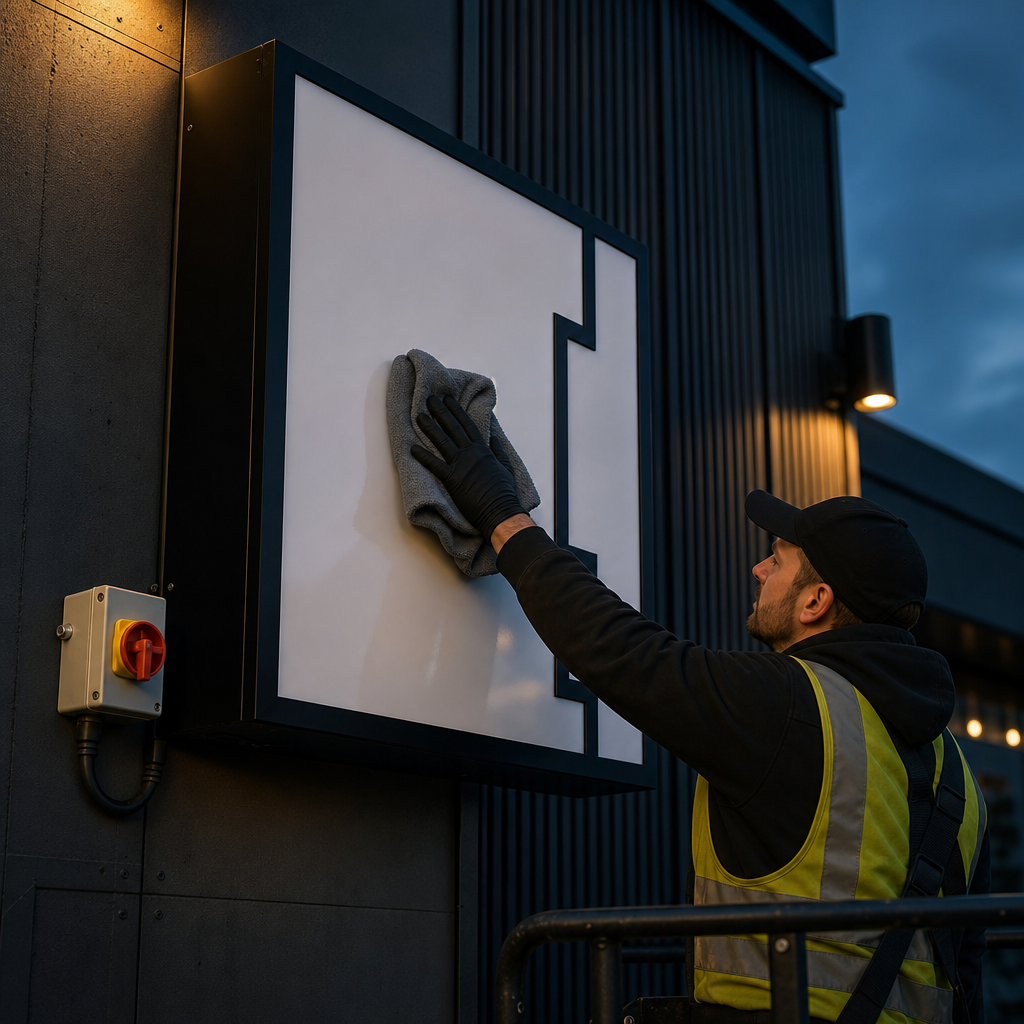
Start by switching the sign off at the isolator, not just at a wall switch, and confirm it is off before touching the face. This matters for two reasons: it protects whoever is cleaning, and it lets you see faults that are only visible when the sign is dark, such as hairline cracks or discoloured seals.
Use a soft microfibre or cotton cloth with warm water and a small amount of mild dish detergent. Work in straight lines rather than circles, and rinse the cloth often so grit already lifted off the face does not get dragged back across it. Avoid ammonia-based glass cleaners, methylated spirits and any solvent-based product: these attack the acrylic surface and cause the same clouding that UV exposure does, only faster. Never use a scourer, stiff brush or paper towel, all of which leave fine scratches that trap dirt and scatter light unevenly once the sign is back on.
For returns (the sides of a lightbox or lit letter) and metal cabinets, the same mild detergent approach works, followed by a clean water rinse to remove any residue before it dries. On coastal sites, a quarterly rinse also removes salt deposits before they start working on fixings and seams.
If a face has water fogging behind the acrylic, cracking, or a return that has come away from its fixings, stop cleaning and call a signwriter. These are structural or electrical issues, not cleaning ones.
Repair or Refabricate: Knowing When a Sign Has Reached End of Life
A driver swap or LED module replacement is usually enough when the fault is electrical and the face, tray and structure are still sound. Refabrication becomes the better option once the acrylic face has yellowed beyond a clean, the tray has corroded, or the fault keeps recurring after repair.
Driver and LED module replacement is a straightforward, contained job. If a lightbox has gone fully dark, or a section of channel letters has failed together, and the cabinet, seals and face are otherwise in good condition, swapping the driver or the affected LED modules restores full function at a fraction of the cost of a new sign. This is the outcome in most call-outs for a dark or flickering sign that has been reported promptly.
Refabrication is the right call when the fault is in the structure rather than the electrics. A yellowed acrylic face that no longer cleans back to a clear finish has lost light transmission permanently: no amount of cleaning restores clarity once UV has broken down the polymer. A corroded tray or letter return that has let water in repeatedly, even after resealing, will keep failing until it is replaced. Faded vinyl graphics that no longer match the brand colour are a cosmetic issue but still a trading issue, since a faded, patchy shopfront reads as neglected even when the lighting itself is fine.
The practical test is repeat failure. One fault, fixed once, is a repair. The same fault recurring across two or three service visits is a sign the underlying component, not just the part that failed, has reached the end of its useful life.
Coastal and Regional Conditions: Why the Sunshine Coast Shortens Sign Life
Salt-laden air, high humidity and storm season UV exposure shorten the service life of fixings, seals and acrylic faces on the Sunshine Coast and in Noosa faster than the same sign would age inland in Toowoomba. Coastal sites need shorter inspection intervals for exactly this reason.
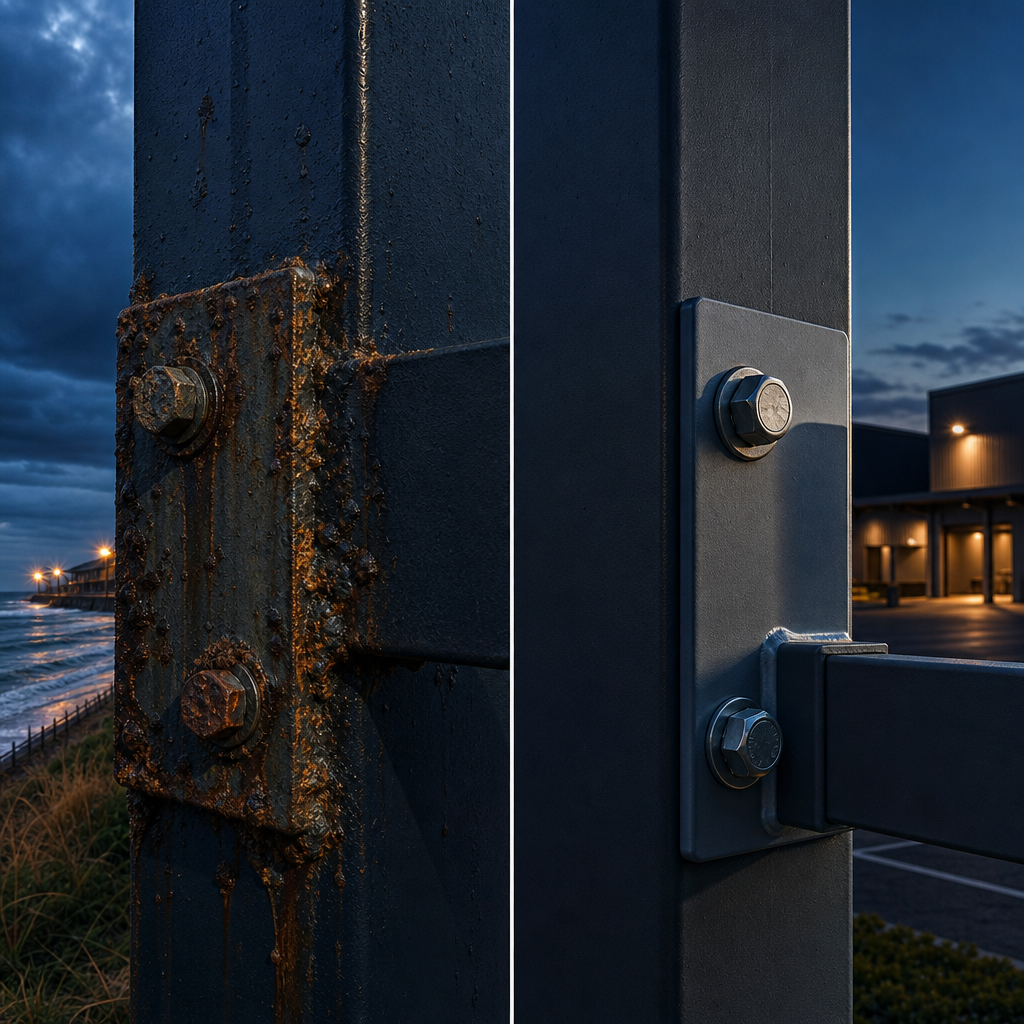
Salt air accelerates corrosion in any exposed metal fixing, bracket or cabinet seam, and does so faster the closer a sign sits to the coastline. A pylon sign at Caloundra or Maroochydore carries a different corrosion risk profile to one on the Bruce Highway near Toowoomba, even if both signs were built to the same specification. This is not a reason to under-build coastal signage; it is a reason to inspect coastal signage more often.
Humidity works alongside salt to soften sealant and gasket materials over time, which is part of why water ingress is a more frequent fault call on the coast than inland. Storm season adds a second layer of risk: wind load on pylon and cabinet signs, and sudden heavy rain finding any seal that has already started to degrade. A post-storm visual check, in addition to the regular schedule, is worth the five minutes it takes.
UV exposure is intense across the whole Sunshine Coast, Noosa and Toowoomba region, but coastal glare off water and sand adds reflected UV that inland sites do not get to the same degree. North and west-facing faces age fastest wherever the sign sits, but coastal orientation compounds the effect.
Electrical Safety and Compliance for Illuminated Sign Servicing
All electrical work on illuminated signage, including driver replacement, rewiring and fault diagnosis inside a cabinet, must be carried out by a licensed electrician. Height access for pylon signs and elevated lightboxes adds a second compliance layer that most business owners are not equipped to manage themselves.
Illuminated signs are mains-powered fixtures, and opening a cabinet or touching internal wiring without the correct licence and isolation procedure is both illegal and dangerous. This is not a job for general maintenance staff, however capable, and it is not a job to attempt after hours to avoid a service call. A licensed signwriter carrying electrical licensing will isolate the circuit correctly, test before touching anything, and leave the installation compliant with Australian wiring rules.
Height access is the other compliance issue specific to pylon signs and elevated shopfront lettering. Working at height needs the right equipment and, in many cases, a second person on site, which is part of why pylon sign faults often take longer to schedule than ground-level lightbox faults.
After-hours trading impact is worth factoring into how urgently a fault gets actioned. A dark shopfront sign on a Friday night, heading into a weekend trading period, has a different priority to the same fault reported on a quiet Tuesday morning. Flagging trading hours and foot traffic patterns when reporting a fault helps a signwriter schedule the right urgency.
The Single Dark Letter Problem
In our experience servicing illuminated signage across the region, the single dark letter is the fault reported more than any other, and it is almost always treated as more urgent by the customer than it actually is electrically, while being under-reported for how much it costs the business in perception. A dark "C" in a shopfront name is a five-minute diagnosis for a signwriter but a much bigger problem for how the business looks to everyone driving past after dark.
The pattern we see is this: a letter goes dark, the business keeps trading normally because the sign is still mostly readable, and the fault sits unreported for weeks or months because it does not feel urgent. By the time a call comes in, what started as one failed LED module or a loose connection has sometimes progressed, because the same seal or connection issue that took out the first letter is often working on the one next to it. Reporting a dark letter within the first week or two, rather than waiting until a second one fails, is consistently the difference between a quick module swap and a more involved repair.
Our honest view, and it runs against the instinct to wait until a sign is properly broken before calling anyone, is that illuminated sign faults should be reported the same week they are noticed, every time, regardless of how minor they look. It costs nothing to send a photo. It costs a genuine amount, in both repair scope and lost trading credibility, to wait.
If your illuminated shopfront sign, pylon sign, LED lightbox or lit letter set is showing any of the faults covered above, book an inspection with Sunquest Signs. We service and repair LED lightboxes, fabricated lit letters, illuminated shopfront signs, pylon signs and LED neon signage across the Sunshine Coast, Noosa and Toowoomba, and where a face, tray or letter set is beyond a sensible repair, we refabricate it rather than patch something that will only fail again.
What to Give Your Signwriter When You Call
A useful fault call includes a daytime photo, a night-time photo once the sign is lit, the approximate age of the sign, and a clear description of how the fault behaves. This lets a signwriter often diagnose the likely cause before a site visit, which speeds up parts ordering and scheduling.
The daytime photo shows the physical condition of the face, returns and fixings: yellowing, cracking, corrosion or loose panels. The night-time photo, taken once the sign is fully lit, shows exactly which letters or sections are affected and whether the light is out completely, flickering, or dim rather than dark. Sign age matters because driver and LED module lifespan expectations differ across older and newer installations, and it helps a signwriter judge whether a repair or a refabrication conversation is more likely.
Fault behaviour is the detail most owners leave out but that matters most. Is the fault constant, or does it come and go? Does it only happen in wet weather, at a certain time of day, or after the sign has been running for a few hours? Does the whole sign fail or just one section? Each of these details points toward a different likely cause, whether that is an LED channel letter build, a lightbox face, a neon-style LED tube, or a pylon sign driver, and cuts down the number of return visits needed to land on the right fix.
References
- Electrical Safety Office, Workplace Health and Safety Queensland, Queensland Government: https://www.worksafe.qld.gov.au
- Standards Australia, AS/NZS 3000 Wiring Rules: https://www.standards.org.au
- Bureau of Meteorology, Queensland climate and severe weather information: https://www.bom.gov.au/qld/
- Australian Competition and Consumer Commission, consumer guarantees on repairs: https://www.accc.gov.au/consumers/repairs-warranties-and-returns
Talk to a signage expert
Tell us about your project and we'll come back with options and honest advice.
Get in TouchFrequently Asked Questions
How often should an illuminated sign be serviced?
Most illuminated signs need a monthly visual check, a quarterly face clean, and an annual electrical inspection by a licensed electrician. Coastal sites on the Sunshine Coast and in Noosa benefit from more frequent checks than inland sites like Toowoomba, due to salt air and humidity.
Can I clean my own illuminated shopfront sign?
Yes, for the face and cabinet exterior, using a soft cloth and mild detergent, provided power is isolated first. Never use solvents, glass cleaners or abrasive pads on acrylic, and leave any electrical, cracking or water ingress issue to a licensed signwriter.
How long do LED sign modules typically last?
LED modules used in commercial signage are generally the last component to fail. Drivers, seals and fixings tend to give out first, particularly in coastal salt air, which is why an ageing sign more often needs a driver swap or reseal than new LEDs.
What causes an LED sign to flicker or go dark?
Flickering is most often caused by a failing driver, a loose connection, or water ingress affecting a circuit intermittently. A section going fully dark usually points to driver failure, while a single dead letter is more often one failed LED module.
Is it cheaper to repair or replace an illuminated sign?
Repair is usually cheaper when the fault is electrical, such as a driver or module, and the face, tray and fixings are still sound. Refabrication becomes the more cost-effective option once the acrylic face has yellowed permanently or the tray has corroded.
Do I need an electrician for illuminated sign repairs?
Yes. Any work involving mains wiring, drivers or internal electrical components inside a lightbox, pylon sign or lit letter must be carried out by a licensed electrician, in line with Australian wiring rules.
Related Articles
Illuminated Signs on the Sunshine Coast: LED Lightboxes, Lit Letters and Pylon Signage That Survive the Coast
Sunshine Coast Signage Project Gallery: Real Local Sign Installs by Suburb and Sign Type
Pylon Signs on the Sunshine Coast: Design, Materials, Approvals and Installation
Signs that set you apart
Over 40 years on the Sunshine Coast. Design, compliance, manufacture and installation handled end to end.
Get a Free Quote