
Pylon Signs on the Sunshine Coast: Design, Materials, Approvals and Installation
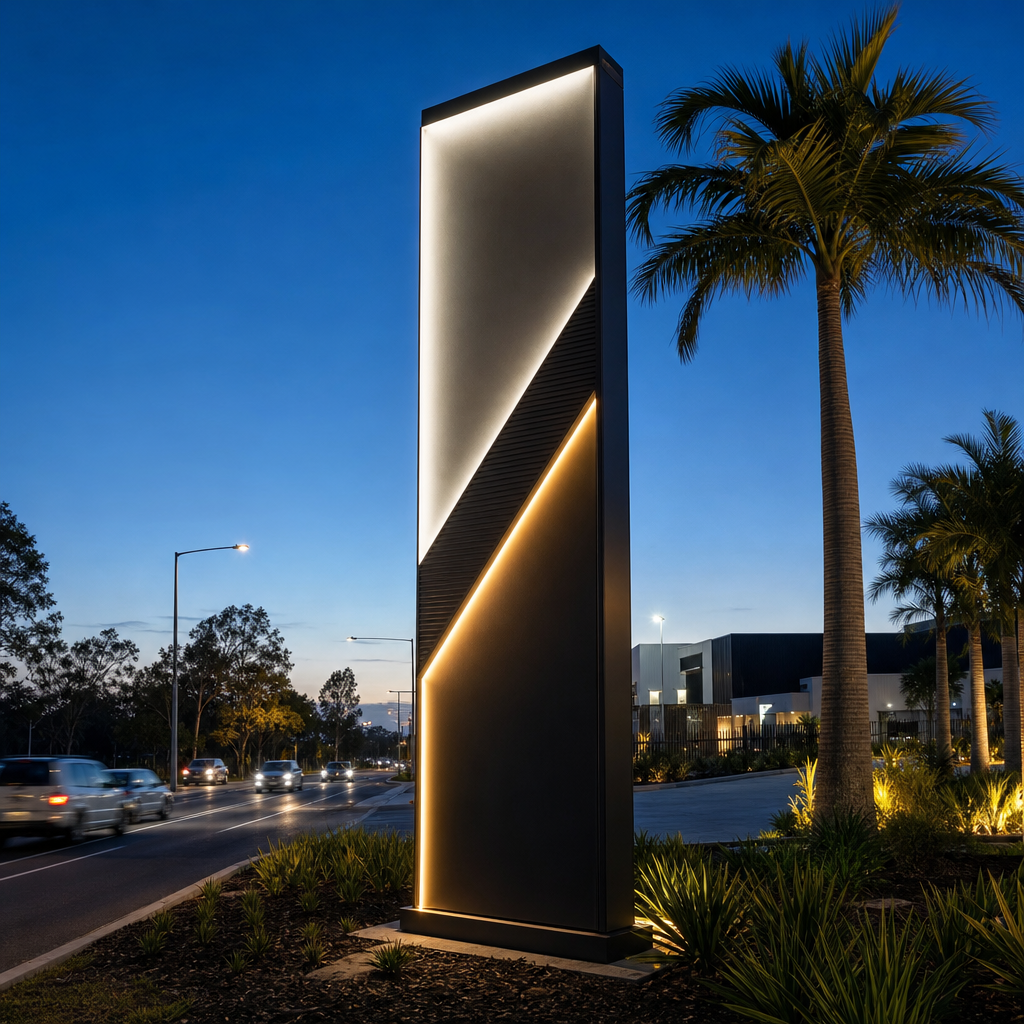
A pylon sign is a freestanding sign mounted on one or more tall supports, built to be read from passing traffic. On the Sunshine Coast, a good one uses corrosion-resistant materials, an engineered footing for wind loads, and the right approvals before installation. Sunquest Signs designs, fabricates and installs them as one local team.
If your business sits back from the road, or shares a site with other tenants, a shopfront sign will not do the job. Drivers on the Bruce Highway, Nicklin Way or the Sunshine Motorway have seconds to decide whether to turn in. A pylon sign gives you height, a clear message and a visible entry point.
This guide is written for owners and managers from Caloundra to Noosa. It covers what a pylon sign is, when it earns its cost, how coastal conditions shape the build, how approvals and engineering work, and how the Sunquest Signs process runs from site visit to maintenance.
Key Takeaways
- A pylon sign is a tall, freestanding sign for roadside and set-back sites. It suits businesses that rely on drivers spotting them early.
- Multi-tenant pylons need a panel system designed for easy replacement from day one, not retrofitted later.
- Illumination should follow legibility, not decoration. High contrast and short messages matter more than size.
- Salt air, UV and storm-season winds demand aluminium cladding, quality powder coat, stainless fixings and an engineered footing.
- Council approval, structural certification against AS/NZS 1170.2 and an underground services check all come before installation. Confirm specifics with Sunshine Coast Council.
- Cost is driven by height, number of faces, illumination, footing engineering and panel count, not by a single flat rate.
Ready to make your business impossible to miss?
Design, manufacture and installation, all under one roof in Warana.
Get a Free QuotePylon Sign Types at a Glance
This table compares the main freestanding and projecting sign types. It is qualitative, because the right choice depends on your site, road speed and approvals.
| Sign type | Best suited to | Visibility from the road | Tenant flexibility | Main limitation |
|---|---|---|---|---|
| Single-tenant pylon | Car yards, medical centres, trade businesses on set-back sites | High, read from a distance | One brand, one message | Needs footing engineering and approvals |
| Multi-tenant pylon | Business parks, shopping centres, shared industrial sites | High, with a shared layout | Replaceable tenant panels | Panel hierarchy and text size need careful planning |
| Monument sign | Sites close to the road, estates, professional suites | Moderate, low profile | Limited, unless panels are built in | Can be hidden by traffic, landscaping or fences |
| Blade sign | Shopfronts and pedestrian strips | Good for foot traffic, poor for fast traffic | One business | Not designed for highway-speed reading |
What Is a Pylon Sign and Who Needs One?
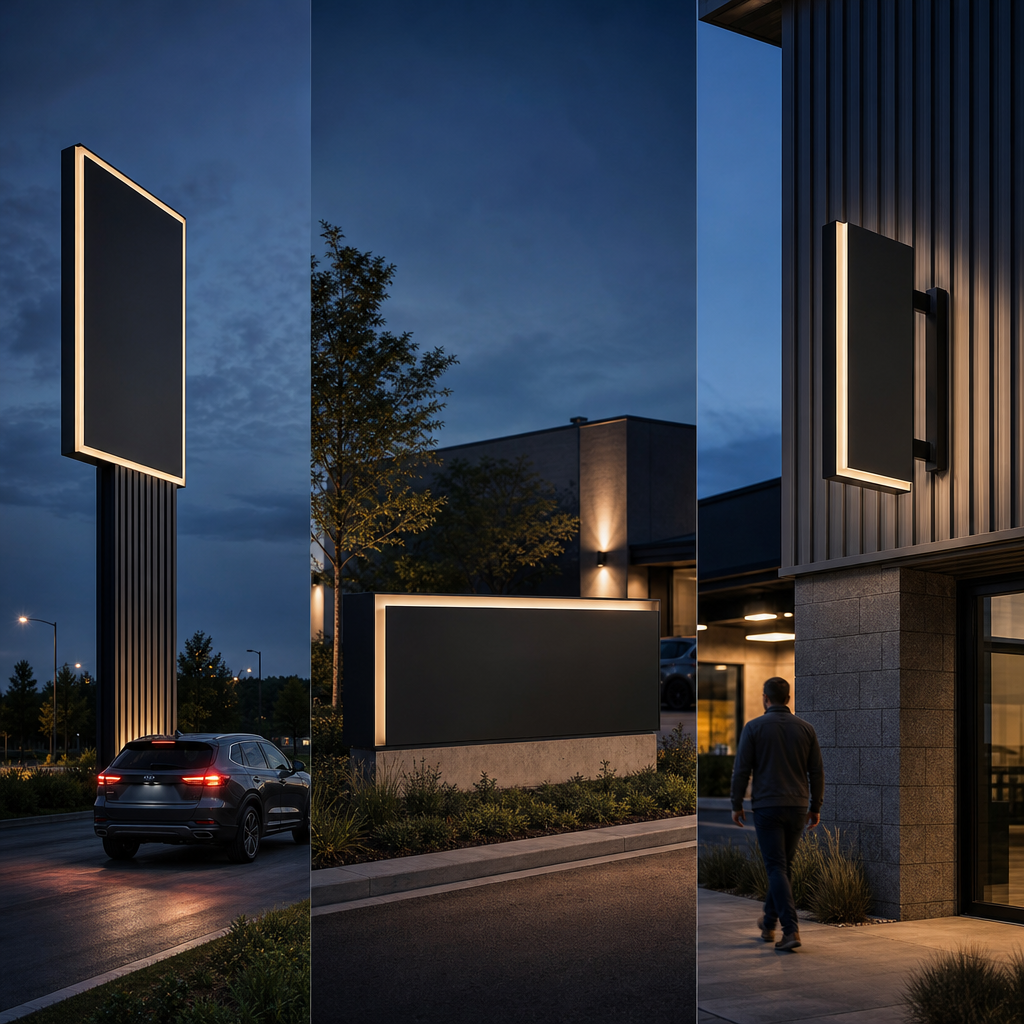
A pylon sign is a freestanding sign mounted on one or more tall supports, positioned so drivers can read it before they reach your driveway. It differs from a monument sign, which sits low to the ground, and from a blade sign, which projects from a building.
How pylons differ from monument and blade signs
Height is the main difference. A monument sign sits at or near eye level and works well when the road is close and traffic is slow. A blade sign hangs off a building face and speaks to pedestrians. A pylon lifts your message above parked cars, fences, trees and trucks.
That height is what makes it effective on faster roads. It is also what brings structural engineering, wind loading and approvals into the picture. A pylon is a small structure, and it should be treated like one.
Which businesses benefit most
Pylons earn their place where drivers need early warning. The strongest cases are:
- Car yards and dealerships, where the sign has to compete with neighbouring lots.
- Shopping centres and bulky goods precincts, where several tenants share one entry.
- Medical centres and allied health clinics, where patients are often first-time visitors looking for an entrance.
- Trade and industrial businesses on set-back sites, where the building is hidden behind other lots.
- Multi-tenant business parks, where visitors and couriers need to know which unit is which.
A pylon is not always the answer. If your business is on a pedestrian strip in Caloundra, Maroochydore or Noosa, a well-built shopfront sign or blade sign may do more. A pylon makes sense when your customers are in a car and your entrance is easy to miss.
Single-Tenant vs Multi-Tenant Pylon Signs
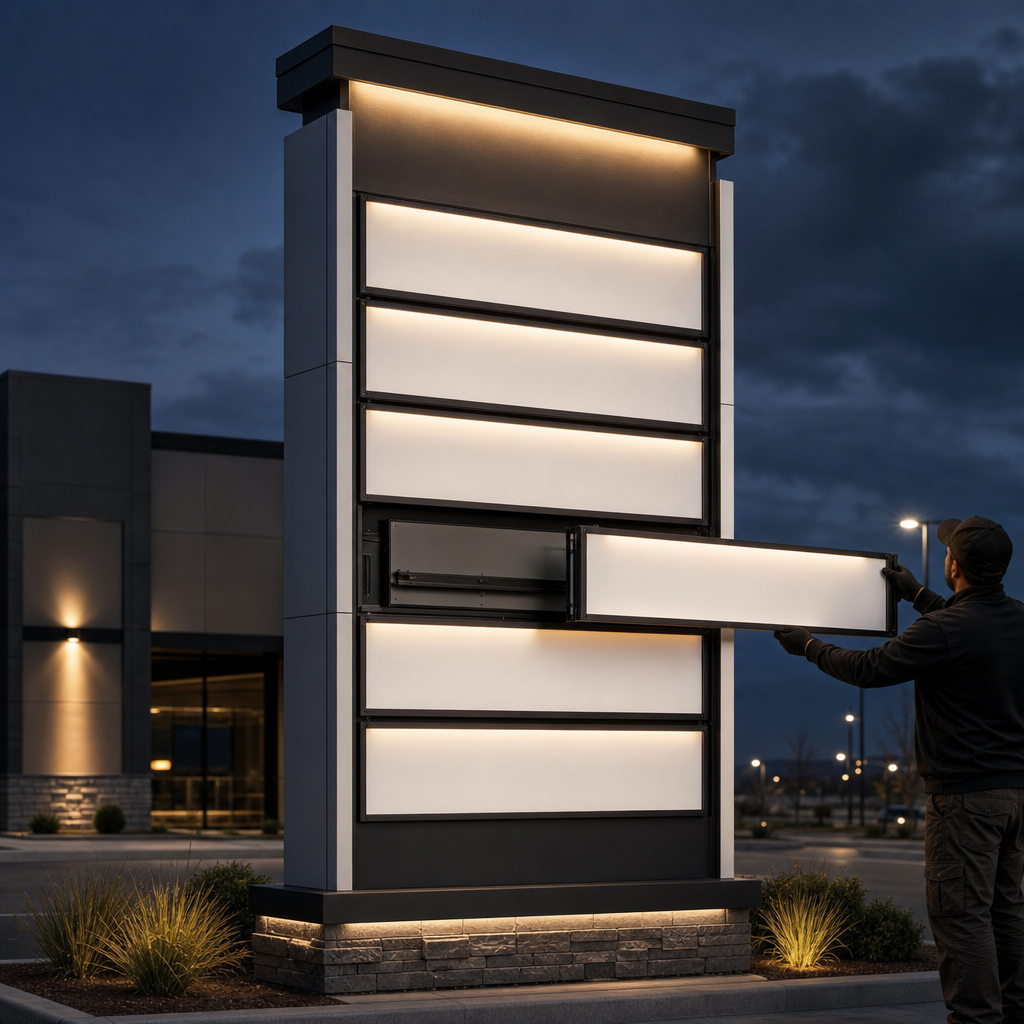
A single-tenant pylon carries one brand and can use its full face for one message. A multi-tenant pylon divides the face into panels, one per tenant, so each can be updated without rebuilding the structure. The difference is less about size and more about how the sign handles change.
Tenant panel layouts
A multi-tenant pylon usually has a header section for the site name or owner, followed by stacked tenant panels. The layout needs a hierarchy. Anchor tenants may get larger panels, while smaller tenants share equal sizes.
The key design choice is the panel system. Panels can slide into rails, fix to a frame with concealed fasteners, or sit behind removable faces. Each approach trades off speed of replacement, weather sealing and appearance. In a salt-air environment, sealing and drainage matter as much as looks.
Text size is where multi-tenant signs fail most often. Every extra tenant shrinks the space available. If the panels are too small to read at road speed, the sign loses its purpose. It is better to limit the road-facing sign to brand names and use a separate directory sign inside the site for suite numbers and detail.
Replacing panels when tenants change
Tenants come and go. A well-designed pylon makes that a short job rather than a rebuild. Interchangeable panels are cut and printed to a consistent size, so the replacement is made off-site and fitted on a quick visit.
This works best when the original build records exact panel dimensions, fixing details and the artwork template. Custom laser-cut signage components, such as cut lettering, faces and fixings, can be produced to match the original system so new panels sit flush with existing ones.
An illustrative scenario
Imagine a business park with several tenants along a main arterial road. The owner installs a pylon with a site header and a stack of tenant panels. Two years later, one tenant leaves and another moves in.
Because the panel size, fixings and artwork template were documented at install, the new panel is fabricated off-site and swapped in during a short visit. The structure, footing and lighting are untouched. Without that planning, the owner would face re-measuring, re-engineering questions and possibly a fresh approval conversation. This is an example only, not a client case.
Illuminated Pylon Sign Options
An illuminated pylon sign is lit from within so it stays readable after dark and in poor weather. The main choices are internally lit lightbox faces, channel letter toppers, or a non-illuminated build. The right one depends on your trading hours, road speed and the surrounding light.
Internally lit lightbox faces
A lightbox pylon has faces made from acrylic or similar translucent material, lit from behind by LEDs. It suits multi-tenant panels well, because each panel can be a separate lit face. Acrylic laser cutting for signage allows crisp edges, clean lettering cut-outs and consistent panel sizes.
LED lighting has largely replaced older tube lighting in new builds because it is more efficient and easier to maintain. The design should still allow access to power supplies and LEDs without dismantling the whole sign.
Channel letter toppers
Channel letters are individual three-dimensional letters, often lit from within, mounted on top of the pylon or on its face. They give a brand name strong presence against the sky. A channel letter topper over a panelled pylon is a common combination: the brand reads as a clean silhouette above, and the lit panels carry the detail below.
Illuminated, lightbox and channel letter signs are a topic in their own right, and the same fabrication principles apply when they are mounted on a pylon.
Non-illuminated builds
Not every pylon needs lighting. If your business trades only in daylight, a non-illuminated pylon with high-contrast, reflective or well-finished graphics can be a sensible, lower-cost choice. It also avoids the ongoing electrical connection. The trade-off is that the sign effectively disappears at night and in heavy rain.
Legibility at speed and distance
The sign is read in a glance. That is the design constraint behind every choice. Three principles hold up:
- Fewer words. A brand name, a short descriptor and perhaps an arrow or a single call to action. Long lists belong on a site directory.
- Strong colour contrast. Light lettering on a dark background, or the reverse, with a clear difference in tone. Similar mid-tones blur at distance.
- Simple letterforms. Clean, medium-to-bold typefaces read better at speed than thin or decorative ones.
Check your colour choices at night as well as in daylight. Some combinations that look fine in the sun wash out once lit.
Built for Sunshine Coast Conditions
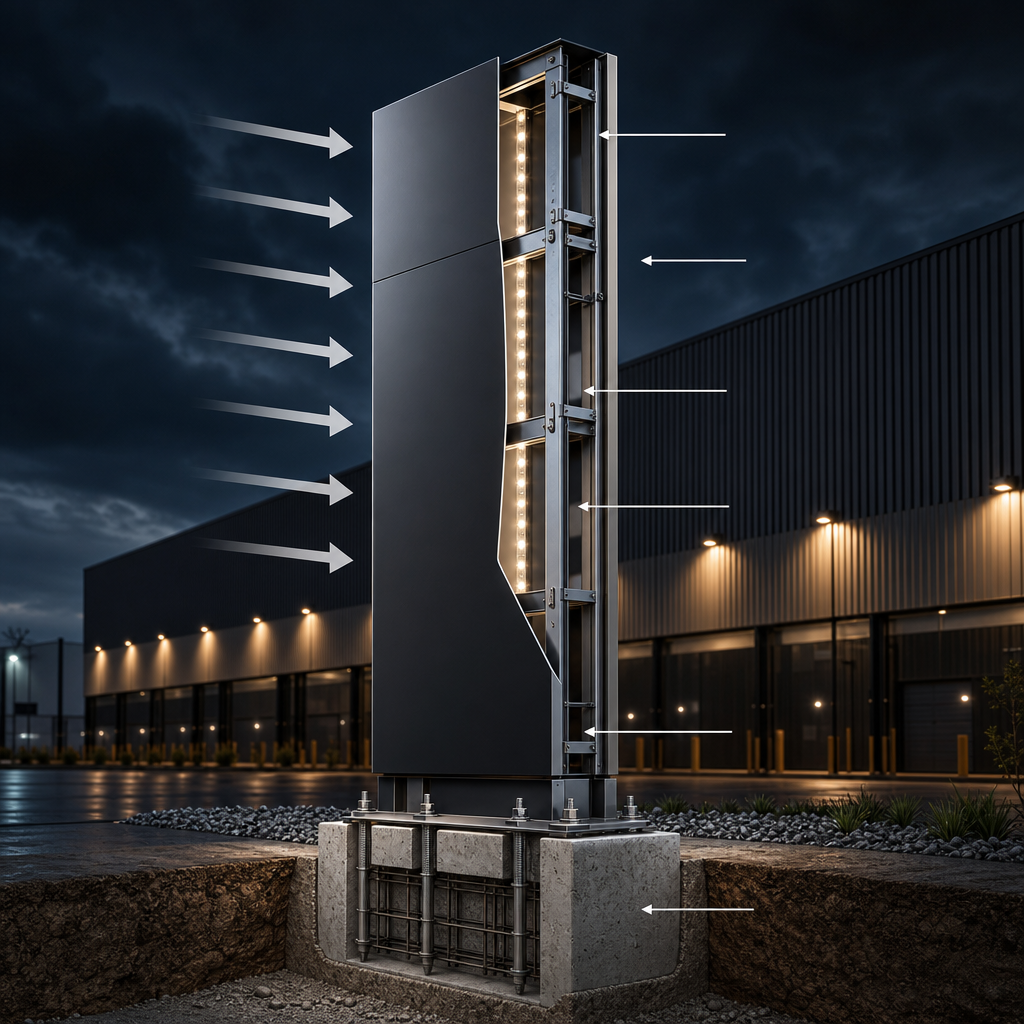
Coastal pylon signs need materials that resist salt air, UV and storm-season winds. In practice that means aluminium cladding, quality powder coat finishes, stainless steel fixings and an engineered footing. Cheaper substitutes tend to show corrosion, fading and loose fixings sooner, especially close to the water.
Salt air and corrosion
Salt accelerates corrosion on exposed metal. Aluminium cladding does not rust the way mild steel does, which is why it is a common choice for sign faces and skins. Where steel is used for internal structure, it should be galvanised or otherwise protected, and any cut edges or welds treated.
Stainless steel fixings matter just as much. A sign is only as durable as its weakest bolt. Dissimilar metals in contact can also corrode through galvanic action, so fixings and isolation details need to be chosen with the cladding in mind.
UV and finishes
Queensland sun is hard on colour. Powder coat gives a tough, even finish that holds up better than many standard paints, and it comes in a wide range of colours. Printed graphics and vinyls should be specified for outdoor UV exposure, and brand colours should be tested against the chosen finish. Dark and saturated colours, red in particular, are the ones most likely to fade first.
Storm-season winds and footings
A tall, flat-faced sign catches wind like a sail. The structure and footing carry that load into the ground, which is why footing design is not an area to economise on. Soil type, sign height, face area and the exposure of the site all affect the engineering. The Bureau of Meteorology tracks severe weather across Queensland, and summer storm season is the period a sign has to be built for.
A footing is the one part of a pylon you cannot easily change once it is poured. Get it right first.
Pylon Sign Council Approval and Engineering
Most pylon signs need approvals and engineering sign-off before installation. That typically includes advertising device requirements under Sunshine Coast Council, structural certification for wind loads, and a check for underground services. Requirements vary by site, so confirm specifics with council before you commit to a design.
Sunshine Coast Council advertising device requirements
Council regulates advertising devices through its planning framework and local laws. What applies to your sign depends on the zone, the size and type of sign, whether it is illuminated, and where it sits on your property. If your site fronts a state-controlled road such as the Bruce Highway or Sunshine Motorway, additional requirements from the Department of Transport and Main Roads may be relevant.
We do not state heights, setbacks or fees here, because they depend on your site and change over time. Check the current requirements directly with Sunshine Coast Council, and ask your sign provider to confirm what has to be lodged. Approvals support from your signage team can save time and avoid design changes late in the process.
Structural certification and AS/NZS 1170.2
Wind is the governing load on most pylon signs. AS/NZS 1170.2 (Structural design actions, Part 2: Wind actions) is the Australian and New Zealand standard that sets out how wind loads are determined for structures. It takes into account factors such as the wind region, terrain, the height of the structure and its shape.
In practice, a structural engineer uses the standard to design or certify the pylon and its footing for your site. That engineering feeds into the footing design, steel sizing and fixing details. Ask for certification documents before installation, and keep them with your property records.
Site surveys and underground services
Before a footing is excavated, you need to know what is underground. Water, sewer, electrical, telecommunications and gas lines can all run through a frontage. Before You Dig Australia provides a free service for locating underground assets in many areas, and a site survey should include this check.
The survey also looks at ground conditions, access for machinery, power availability for illuminated signs, sight lines for drivers and the position of the sign relative to your boundary. Many installation problems come from skipping this step.
What Drives Pylon Sign Cost
Pylon sign cost depends on five main drivers: height, the number of faces, illumination, footing engineering and panel count. Because each site differs, a reliable price comes from a site visit and a design proof, not from a generic number.
- Height. Taller signs need stronger structure and deeper footings, and may raise approval questions.
- Number of faces. Double-sided signs need more fabrication and carry more wind load than single-sided ones.
- Illumination. Lit faces add LEDs, power supplies, wiring and an electrical connection.
- Footing engineering. Soil, exposure and sign size determine footing depth and design.
- Panel count. Multi-tenant signs add fabrication and a panel system for each tenant.
A cheap quote that leaves out engineering, approvals support or the footing is not cheap. Ask what is included.
How Sunquest Signs Delivers a Pylon Sign
Sunquest Signs handles a pylon sign from first visit to ongoing maintenance as one local team across the Sunshine Coast. That means one point of contact for design, approvals support, fabrication and installation, with no hand-offs between separate trades.
- Site visit. We look at the road, sight lines, ground, services and power. This is where we find the constraints early.
- Design proof. You see the sign in proportion, with layout, lettering, colours and panel system, before anything is made.
- Approvals support. We help you work through council requirements and prepare the engineering and documentation needed for certification.
- Fabrication. The structure, cladding, faces and lettering are built in a controlled workshop environment, using materials suited to coastal conditions.
- Installation. Footings, structure and signage are installed and connected, with the site left clean.
- Ongoing maintenance. Panel changes, lighting checks, cleaning and repairs keep the sign working and looking sharp.
We work across the region, from Caloundra to Maroochydore and Noosa. If your site is on the Sunshine Coast and you want a pylon that is built for the conditions, book a free site visit or request a pylon sign quote from Sunquest Signs.
Design the Tenant Change Before You Design the Sign
My position is that most pylon projects are designed for the day of installation, when they should be designed for the day a tenant leaves. The sign will look right for the first few months. What tests it is year three, when a panel needs replacing and nobody can find the artwork template or the fixing details.
Three habits follow from that view:
- Decide the panel replacement method before the artwork. If the method is slow or needs specialist tools, owners delay updates and the sign shows outdated tenants.
- Treat the footing as the permanent decision. Faces, panels and lighting can be changed later. The footing and structure cannot, so size them with future additions in mind and have them engineered properly the first time.
- Judge the design by a glance, not a close look. Hold the proof at a distance and give yourself two seconds. If you cannot identify who is there and where to turn, the sign needs fewer words, not bigger ones.
This is an opinion based on how these signs fail in principle, not a statistic. It also happens to be cheaper. Planning for change up front costs little. Fixing it later means re-approvals, re-engineering and downtime on your road frontage.
References
- Standards Australia. AS/NZS 1170.2 Structural design actions, Part 2: Wind actions. https://www.standards.org.au
- Sunshine Coast Council. Planning and development information, including advertising devices. https://www.sunshinecoast.qld.gov.au
- Before You Dig Australia. Free underground asset location service. https://www.byda.com.au
- Bureau of Meteorology. Severe weather and warnings, Queensland. http://www.bom.gov.au
- Queensland Department of Transport and Main Roads. Information on advertising devices near state-controlled roads. https://www.tmr.qld.gov.au
Talk to a signage expert
Tell us about your project and we'll come back with options and honest advice.
Get in TouchFrequently Asked Questions
What is a pylon sign?
A pylon sign is a freestanding sign on one or more tall supports, designed to be read from the road. It is commonly used by car yards, shopping centres, medical centres, trade businesses and business parks that need visibility from passing traffic.
Do I need council approval for a pylon sign on the Sunshine Coast?
In most cases, yes, some form of approval applies. Requirements depend on your zone, the sign's size and illumination, and whether your site fronts a state-controlled road. Confirm the current requirements with Sunshine Coast Council before you finalise a design.
How much does a pylon sign cost?
There is no single price, because cost depends on height, the number of faces, illumination, footing engineering and panel count. A site visit and design proof is the most reliable way to get an accurate quote for your location.
Can tenant panels be replaced on a multi-tenant pylon sign?
Yes, if the sign is designed for it. Interchangeable panels are made to a consistent size and fitted into a panel system, so a new tenant's panel can be fabricated off-site and swapped in without rebuilding the structure.
What materials suit pylon signs near the coast?
Aluminium cladding, quality powder coat finishes, stainless steel fixings and a protected, engineered structure suit coastal conditions. These resist salt-air corrosion and UV better than cheaper alternatives, and the footing should be engineered for local wind loads.
Related Articles
Shop Front Signs in Caloundra: Precinct Styles, Coastal Materials, Council Rules and Costs
Pylon Signs in Noosa: Design, Coastal Materials, Council Approvals and Installation
Sunshine Coast Signage Project Gallery: Real Local Sign Installs by Suburb and Sign Type
Signs that set you apart
Over 40 years on the Sunshine Coast. Design, compliance, manufacture and installation handled end to end.
Get a Free Quote