Shop Front Signs in Caloundra: Precinct Styles, Coastal Materials, Council Rules and Costs
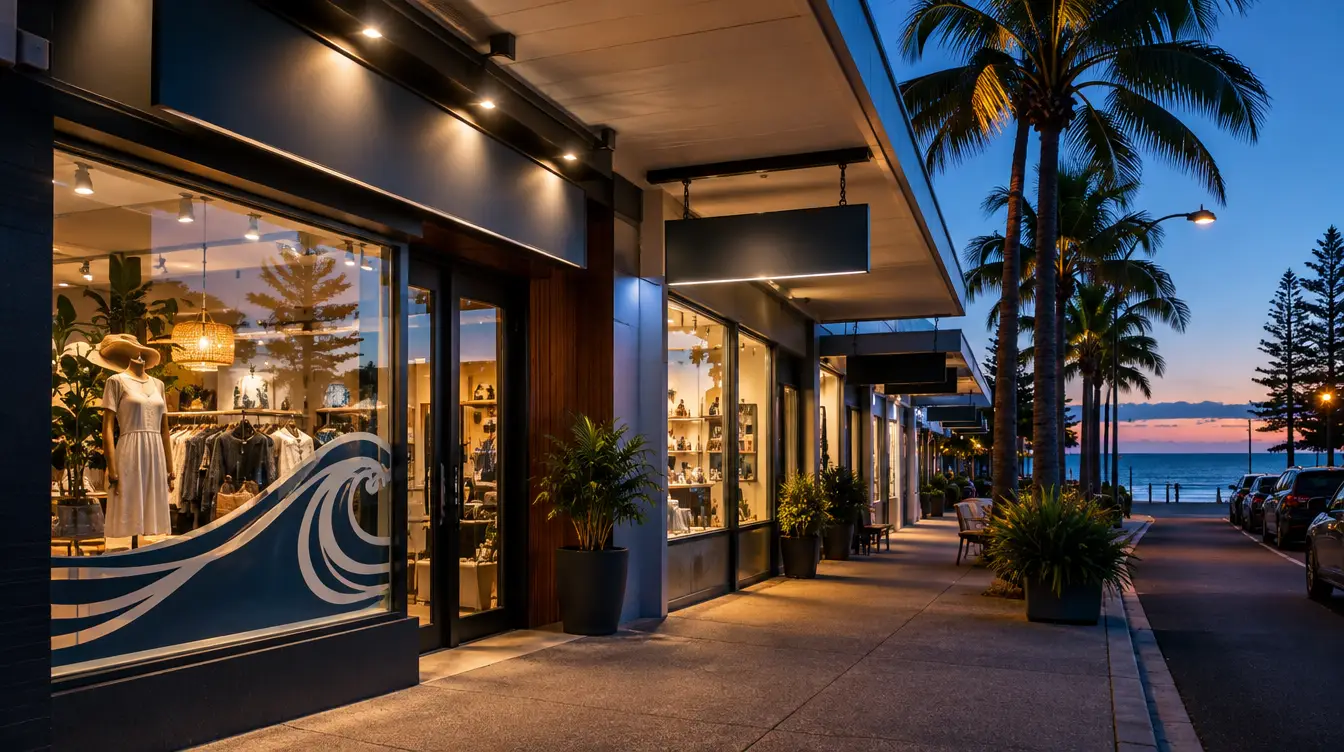
The best shop front signs in Caloundra match the precinct, use coastal-grade materials and are approved before fabrication. Bulcock Street suits refined fascia and under-awning signs, beachfront strips suit bold, salt-resistant signs, and new centres like Aura suit consistent, tenancy-guided designs. Most signs need landlord consent, and some need Sunshine Coast Council approval.
Caloundra is not one shopping strip. A cafe on Bulcock Street, a takeaway at Moffat Beach and a clinic in a new Aura centre all face different foot traffic, different neighbours and different conditions on the facade. A sign that works in one place can look wrong, or fail early, in another.
This guide is built around those differences. You will get style direction for each Caloundra precinct, the sign types that suit local shop fronts, the materials that survive salt and sun, a short summary of council rules, and what drives cost and lead time. We keep approvals brief because the full detail sits in our Sunshine Coast shop front signs guide.
Key Takeaways
- Design the sign for the precinct first. Bulcock Street, the beachfront strips, suburban centres and Aura each reward a different approach.
- Salt spray, UV and humidity shorten the life of poor materials. Marine-grade aluminium, quality powder coating, UV-stable vinyl and sealed LED modules are the baseline.
- Check landlord or body corporate consent before you pay for design. Council approval may also apply, depending on the sign and the site.
- Illuminated signs add evening visibility but need licensed electrical work and sensible brightness.
- Cost depends on size, construction, lighting, access and approvals. A site visit gives a firm quote faster than any generic price list.
Ready to make your business impossible to miss?
Design, manufacture and installation, all under one roof in Warana.
Get a Free QuoteSummary Table
| Precinct | Character | Signs that tend to suit | Main watch-out |
|---|---|---|---|
| Bulcock Street | Traditional main street, mixed heritage and modern frontages | Fascia signs, under-awning signs, built-up letters, window graphics | Heritage character, awning rules, footpath clearance |
| Kings Beach | Visitor-heavy foreshore, hospitality focus | Bold fascia signs, illuminated signs for evening trade | Heavy salt exposure, glare and wind |
| Moffat Beach and Dicky Beach | Relaxed beachside strips, cafes and takeaway | Hand-finished looks, built-up letters, LED neon features | Salt corrosion, casual style that still reads from the road |
| Golden Beach and Currimundi | Local suburban centres serving residents | Clear fascia signs, lightboxes, window graphics | Shared tenancy signage, competing neighbours |
| Caloundra South (Aura) | New-build centres with set signage zones | Uniform fascia panels, lightboxes, window graphics | Landlord design guidelines and approval sequence |
Why Shop Front Signage Matters in Caloundra
Shop front signage matters in Caloundra because most customers decide in seconds, on foot or from a car. Visitors do not know your business, and locals have plenty of choice. A clear, well-placed sign is often the first and cheapest piece of marketing a tenancy has.
Caloundra has two audiences that behave differently. Residents repeat-shop and learn where things are. Visitors rely on what they can see while walking the foreshore or driving in. Tourism Research Australia publishes visitor data for the Sunshine Coast region, and it consistently shows how significant visitation is to the local economy. That means a large share of your potential customers have never seen your shop before.
Competition is also close. On a main street, three cafes can sit within a short walk. When the offer is similar, the sign that is readable, well lit and in good condition wins the glance.
Growth adds pressure. ABS regional population data shows the Sunshine Coast as a growth region, and Caloundra South is a major part of that story. New centres bring new competitors, so established shops in older strips cannot assume loyalty will hold.
Three practical tests help:
- Distance test: can someone read your name and category from across the street?
- Speed test: can a driver understand it in about the time it takes to pass?
- Evening test: does the shop still look open and inviting after dark?
Precinct-by-Precinct Style Guide
Each Caloundra precinct has its own streetscape, customer mix and weather exposure, so the right sign style changes by location. Match your design to the neighbours, the viewing distance and the building. The notes below are starting points, not rules. Your tenancy and your brand decide the final call.
Bulcock Street
Bulcock Street is Caloundra's traditional main street. Customers walk it, browse it and look up at awnings. Signage here works best when it respects the street's mixed character rather than shouting over it.
Fascia signs and under-awning signs do most of the work. The fascia carries your name for people across the road, while the under-awning sign serves pedestrians walking along the shopfront. Built-up letters in painted or powder-coated aluminium suit older buildings. Window graphics add opening hours, services and a quiet second layer of branding.
If the building is older, ask early whether any heritage or character provisions apply. Council can advise, and we check this as part of the site visit. Keep clearance above the footpath in mind for anything hung from an awning.
Kings Beach, Moffat Beach and Dicky Beach
The beachfront precincts are hospitality-led, seasonal and exposed. Kings Beach draws a steady visitor flow, while Moffat Beach and Dicky Beach lean more casual and local. Signs need personality, but they also need to survive the coast.
For cafes, bars and restaurants, illuminated signs earn their place because trade runs into the evening. LED neon-style features suit relaxed venues and photograph well, which matters when customers share them. Built-up letters give depth without looking corporate.
The trade-off is exposure. Salt air reaches these frontages directly, so fixings, finishes and electrical components matter more than the artwork. A beautiful sign that stains and corrodes within a couple of seasons works against a venue that sells a coastal lifestyle.
Golden Beach and Currimundi
Suburban centres at Golden Beach and Currimundi serve residents who come back weekly. Clarity beats cleverness here. People need to find the pharmacy, hair salon or physio quickly, often from a car park.
Lightboxes and clean fascia signs suit these centres well. Use strong contrast, a short business name and a clear category line such as the service you provide. Window graphics can carry hours, bookings and contact details so the fascia stays uncluttered.
Many of these tenancies sit in shared buildings with common signage structures. Confirm what the landlord allows before you design. A sign that ignores a centre's existing layout may be refused, however good it looks.
Caloundra South (Aura)
Aura's commercial centres are new builds, and the landlord or developer usually sets the signage framework. That can include fascia sizes, positions, lighting types and approved suppliers. It makes the approval path clearer, but it also limits creative freedom.
The strongest approach is to design within the framework and use your brand colours and typography to stand out. Consistent fascia panels, lightboxes and window graphics are common. Ask for the tenancy design guidelines before you commission artwork, not after.
A new centre also means a new customer base with no habits yet. Your sign has to introduce the business, so make the category obvious as well as the name.
Sign Types That Suit Caloundra Shop Fronts
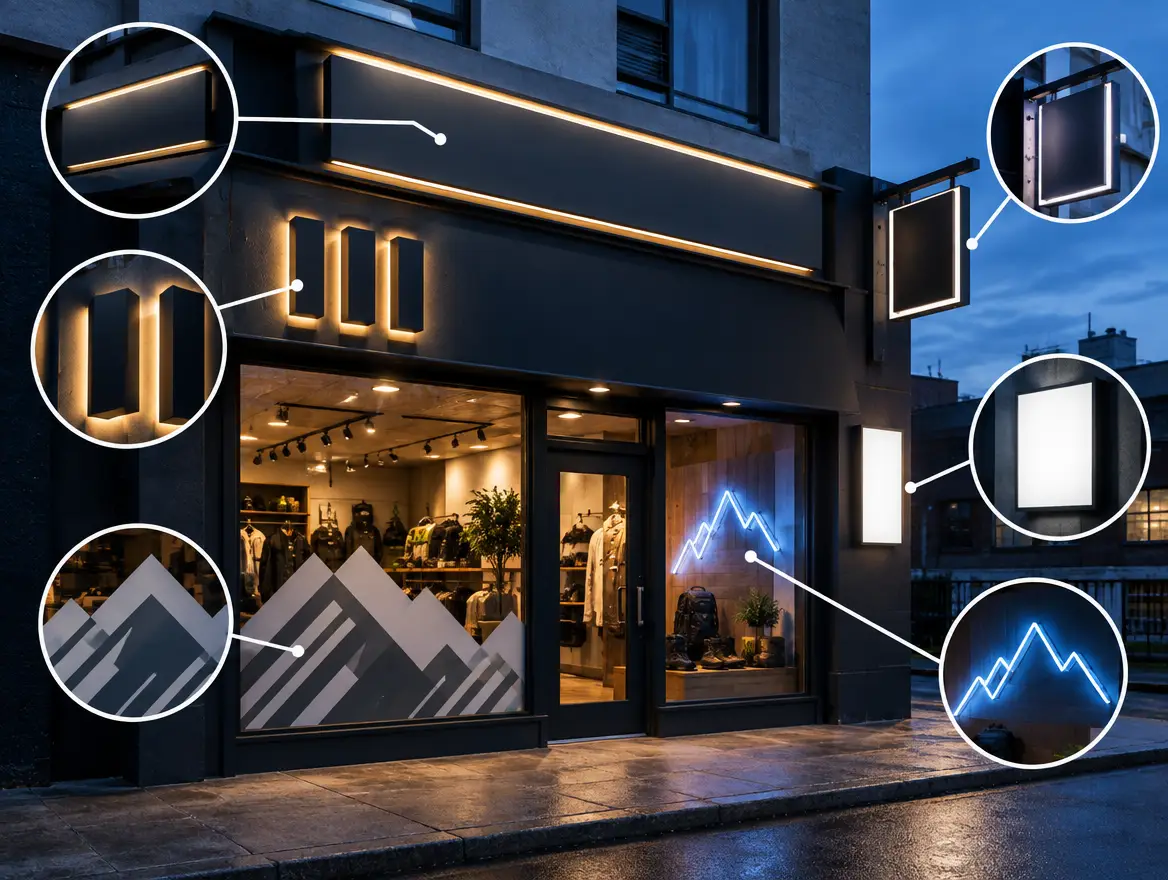 The sign types that suit Caloundra shop fronts are fascia signs, lightboxes, built-up letters, window graphics, under-awning signs and LED neon features. Most tenancies use two or three together. Each does a different job, and the combination matters more than any single sign.
- Fascia signs: the primary identity sign above the entry. Aluminium composite or fabricated aluminium panels are common choices. They suit every precinct.
- Lightboxes: internally lit signs with a clear face. Good for suburban centres and new-build tenancies where visibility at night and consistency matter.
- Built-up letters: dimensional letters mounted on the facade or a backing panel. They add depth and suit Bulcock Street and beachside venues. They can be illuminated with halo or face lighting.
- Window graphics: cut vinyl or printed film for names, hours and services. Low commitment, easy to update, and useful for seasonal messages.
- Under-awning signs: hung perpendicular to the shopfront so pedestrians see them while walking. Very effective on Bulcock Street.
- LED neon features: flexible LED in a neon style, often used for logos, slogans and feature walls. Popular with cafes, bars, salons and boutique retail. Our guides on business logo neon signs and on indoor versus outdoor neon signage cover the differences, and outdoor use needs weather-rated construction.
For more on lit options, see our Illuminated and Lightbox Signs range. For wider facade work, see our Building, Outdoor and Architectural Signs range. For feature walls, menus and wayfinding inside the tenancy, see our Custom, Interior and Wayfinding Signs range.
A Note on Illuminated Shop Front Signs
Illuminated shop front signs in Caloundra work hardest in hospitality and late-trading venues. They also add risk if done poorly. Over-bright signs can look cheap and may attract complaints in mixed-use areas. Aim for even, controlled illumination, and have all electrical work done by a licensed electrician to the relevant Australian wiring standard.
Coastal Materials: Salt Spray, UV and Humidity
 Coastal materials need to resist salt corrosion, UV fading and humidity-driven moisture ingress. For Caloundra, that means marine-grade aluminium, quality powder coating, UV-stable vinyl, stainless fixings and sealed LED modules. Cheap substitutes often look fine on installation day and fail within a few seasons.
The Bureau of Meteorology publishes climate data for the Sunshine Coast, and the pattern is familiar to anyone who has lived here: strong sun, warm humid summers and salt-laden air near the water. Each factor attacks signs differently.
- Salt spray corrodes untreated metals and fixings. Marine-grade aluminium, such as the 5000-series alloys commonly used in marine fabrication, and 316 stainless steel fasteners hold up far better than mild steel or standard zinc-plated hardware.
- UV fades inks and breaks down cheap vinyl and plastics. Specify UV-stable vinyl and fade-resistant inks, and ask what warranty applies.
- Humidity finds gaps. Water that enters a lightbox causes fogging, mould and electrical faults. Sealed construction and drainage detail matter.
- Wind loads signs through the year and especially during storms. Fixing method and structure should suit the exposure of the site.
Finishes and Lighting
Powder coating over properly prepared aluminium gives a durable, colour-stable finish. Surface preparation is where cheap jobs cut corners, so ask what pre-treatment is used. For lighting, sealed LED modules and weather-rated drivers outlast older fluorescent systems in humid conditions and use less energy.
Coastal signs also need basic maintenance. A periodic fresh-water rinse removes salt build-up and extends life, particularly in Kings Beach, Moffat Beach and Dicky Beach positions.
Book a Free Caloundra Site Visit
Sunquest Signs designs and fabricates for Caloundra conditions, with coastal-grade materials and local knowledge of each precinct. Book a free site visit and quote at sunquest.com.au, and we will assess your frontage, exposure and approval path before you commit to anything.
Council Rules in Brief
Council rules for shop signs in Caloundra come under the Sunshine Coast Planning Scheme, which regulates advertising devices. Some signs are straightforward, while others need a development application. You also need written consent from the landlord or body corporate. Check both before design is finalised.
Caloundra sits within Sunshine Coast Council, so the same framework applies across all the precincts above. In brief:
- Advertising device requirements: the planning scheme includes an advertising devices code covering matters such as size, location, illumination and effect on the streetscape.
- Landlord or body corporate consent: required for almost every tenancy. Shopping centres and strata buildings often have their own signage policies, which can be stricter than council's.
- When lodgement may be needed: larger, projecting, illuminated or freestanding signs, signs on heritage-listed or character buildings, and signs over road reserves or footpaths are the usual triggers. Whether approval is needed depends on the specific site and sign.
- Electrical compliance: illuminated signs need licensed electrical work regardless of planning status.
We have set out the full detail, including what to expect and how to prepare, in our guide Shop Front Signs on the Sunshine Coast. The Noosa guide, Shop Front Signs in Noosa, shows how a different council area handles a similar process. Council also publishes planning scheme information on its website, and you can speak to its planning team about a specific site. We always confirm requirements during the site visit so you do not pay for a sign you cannot install.
Cost Ranges and Lead Times
Sign costs and lead times in Caloundra depend on size, construction, lighting, installation access and approvals. We do not publish fixed price lists because the same sign type can vary widely between tenancies. The table below shows relative cost and timing so you can plan, and a site visit gives a firm quote.
These are qualitative estimates only, not quotes.
| Sign type | Relative cost | Relative lead time | What drives the price |
|---|---|---|---|
| Window graphics | Lower | Shorter | Area, print or cut vinyl, number of windows |
| Flat fascia panel | Lower to moderate | Shorter to moderate | Size, substrate, artwork complexity, access |
| Under-awning sign | Moderate | Moderate | Size, double-sided construction, mounting |
| Built-up letters | Moderate to higher | Moderate | Letter depth, finish, lighting, number of characters |
| Lightbox | Moderate to higher | Moderate | Size, lighting system, face material, electrical work |
| LED neon feature | Moderate to higher | Moderate | Complexity of shape, outdoor weather rating, power supply |
| Illuminated signs needing approval | Higher | Longer | Approval path, electrical work, engineering, installation access |
A few things move cost and timing more than people expect:
- Approvals. If a development application is needed, the sign cannot be installed until it is decided. Start this early.
- Access. Signs above a footpath or awning may need traffic management or an elevated work platform.
- Landlord sign-off. Slow consent can hold up fabrication more than the fabrication itself.
- Finish and materials. Coastal-grade specification costs more upfront, but it avoids early replacement.
- Artwork readiness. Supplying vector logo files saves design time.
If your opening date is fixed, tell us at the first conversation. We will work backwards from that date and flag any approval or consent step that could affect it.
The Sunquest Signs Process
The Sunquest Signs process has four stages: consult, design, fabrication and installation. We start with a free site visit, confirm approvals and materials, then design, build and install. Keeping all four stages with one team means fewer handovers and fewer surprises on the day.
- Consult. We visit your Caloundra tenancy, check the frontage, exposure, viewing distances and existing signage. We ask about your brand, trading hours and budget, and we raise approval and consent requirements immediately.
- Design. We prepare layouts and mock-ups on your shopfront so you can see scale and placement. We choose the sign types, materials and lighting for your precinct and the coastal conditions.
- Fabrication. Signs are built with marine-grade aluminium, quality finishes, UV-stable graphics and sealed lighting where relevant. We check each piece before it leaves the workshop.
- Installation. Our team installs the signs, handles electrical connection through licensed trades, and checks the finished result against the approved design.
Why a Cafe Rebrand on Bulcock Street Should Start With the Awning
The common mistake in Caloundra shop front signage is designing first and checking constraints second. Our contrarian view is that the awning, the landlord and the salt exposure should decide the design brief. The logo comes after. This is how we approach every tenancy.
Here is an illustrative scenario, not a real client case. Imagine a Bulcock Street cafe that has traded for several years and is rebranding with a new name and a warmer colour palette. The owner has commissioned a large internally lit fascia sign and a new logo, and wants it installed before the school holidays.
Six weeks into the project, three problems appear. The landlord has requirements about fascia size. The building has older character features that call for a lighter touch. And the planned under-awning sign hangs lower than the footpath clearance allows. The design must be redone, and the opening date slips.
Now imagine the same cafe starting with a site visit. The awning height, landlord's rules and facade character are mapped on day one. The design then uses a slimmer fascia with built-up letters, a double-sided under-awning sign at a compliant height and window graphics for hours and the coffee offer. The brand colours stay and the sign looks like it belongs on the street.
Three principles come out of this:
- Constraints are a design input. Treat landlord rules, clearances and heritage character as the brief, not as obstacles.
- Spend on the finish, not the size. On the coast, fixings, coatings and sealed lighting protect the investment. An oversized sign that stains in two seasons is worse than a modest one that stays crisp.
- Design for two glances. The fascia is for the far glance across the street. The under-awning sign and window graphics are for the near glance on the footpath. Most tenancies only plan for one.
References
- Sunshine Coast Council, planning scheme and development information
- Australian Bureau of Statistics, Regional population
- Tourism Research Australia, visitor data and regional profiles
- Bureau of Meteorology, Climate data online
- Queensland Government, Queensland legislation (Planning Act 2016)
Ready to Refresh Your Caloundra Shop Front?
Whether you are on Bulcock Street, at the beach or in a new Aura centre, Sunquest Signs brings local knowledge of Caloundra precincts and coastal-grade fabrication to every job. Book a free site visit and quote at sunquest.com.au and we will confirm the right sign, materials and approval path for your tenancy.
Talk to a signage expert
Tell us about your project and we'll come back with options and honest advice.
Get in TouchFrequently Asked Questions
How much do shop front signs cost in Caloundra?
Cost depends on the sign type, size, materials, lighting, installation access and whether approval is needed. Window graphics are generally at the lower end, and illuminated or built-up signs cost more. Because every tenancy is different, a free site visit is the fastest way to get an accurate quote.
Do I need council approval for a shop sign in Caloundra?
Sometimes. Advertising devices are regulated under the Sunshine Coast Planning Scheme, and the requirements depend on the sign's size, position, lighting and the site. Heritage or character buildings and signs over footpaths are common triggers. Always confirm with council or your sign supplier before fabrication.
Do I need my landlord's permission to install a sign?
Yes, in almost every case. Landlords and body corporates usually need to approve the design, size and position in writing. Shopping centres and new developments such as Aura often have set signage guidelines, so ask for them before commissioning artwork.
What materials last best on the Caloundra coast?
Marine-grade aluminium, quality powder coating over well-prepared surfaces, UV-stable vinyl, stainless steel fixings and sealed LED modules perform best. These resist salt corrosion, UV fading and moisture. Beachfront sites at Kings Beach, Moffat Beach and Dicky Beach benefit most from this specification.
Are illuminated shop front signs suitable for Caloundra?
Yes, particularly for hospitality and evening-trading businesses. Lightboxes, halo-lit letters and LED neon features all work when built for outdoor, humid and salty conditions. Illuminated signs need licensed electrical installation and may have extra approval considerations, so check requirements early.
Related Articles
Shop Front Signs on the Sunshine Coast: Types, Coastal Materials, Council Rules and Costs
Pylon Signs on the Sunshine Coast: Design, Materials, Approvals and Installation
Sunshine Coast Signage Project Gallery: Real Local Sign Installs by Suburb and Sign Type
Signs that set you apart
Over 40 years on the Sunshine Coast. Design, compliance, manufacture and installation handled end to end.
Get a Free Quote