
Business Signs in Maroochydore: A Practical Guide to Shopfronts, Illuminated Signage and Fleet Graphics
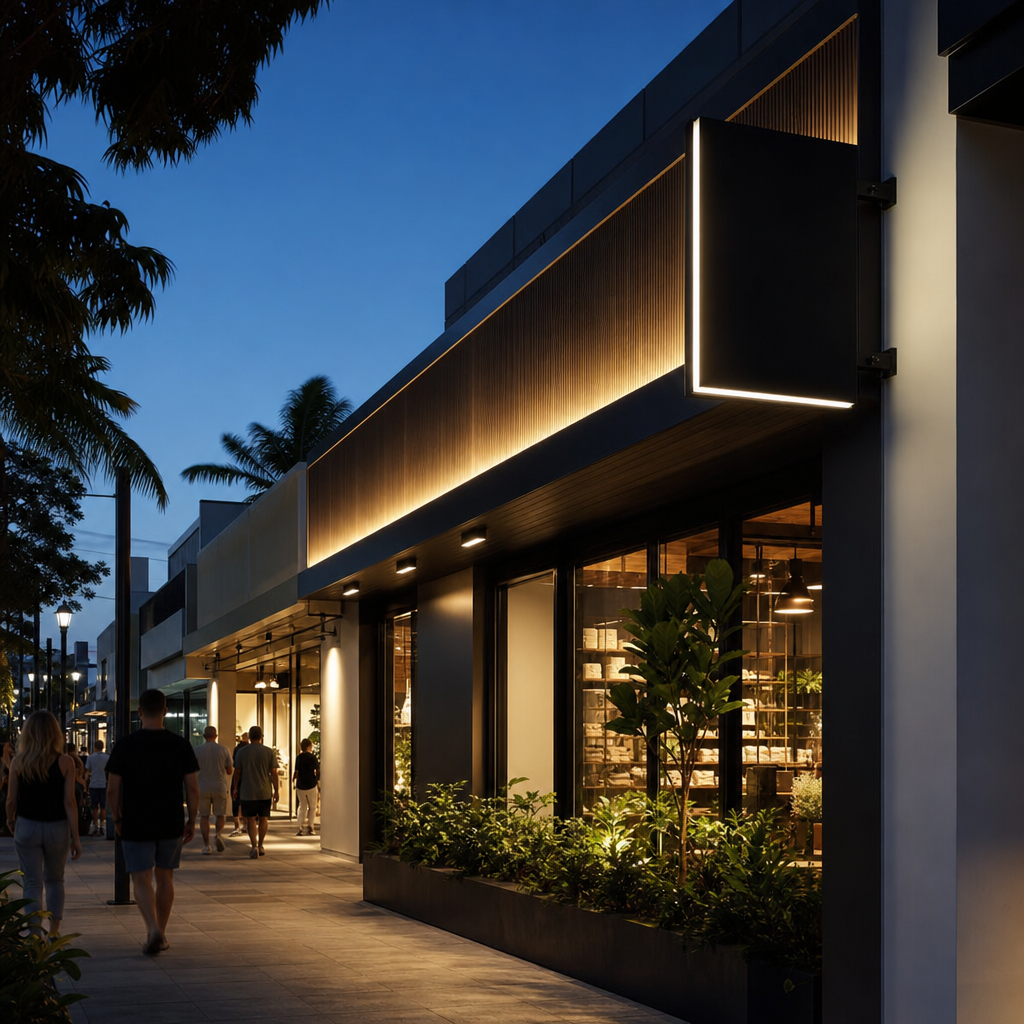
Business signs in Maroochydore need to handle salt-laden coastal air, high UV and cyclone-rated wind loads while cutting through heavy foot and vehicle traffic on Aerodrome Road, Horton Parade and around Sunshine Plaza. The right mix usually combines fascia or illuminated shopfront signage, a pylon or plinth sign for street visibility, and vehicle graphics for mobile operators, all fabricated locally for faster turnaround and easier repairs.
Maroochydore is not one commercial strip, it is several distinct ones stitched together: the retail and dining run along Horton Parade and Ocean Street, the retail gravity of Sunshine Plaza, the emerging Maroochydore City Centre precinct, the industrial pockets around Kuluin, and the growing cluster of medical and allied health suites feeding the Sunshine Coast University Hospital catchment. Each of these settings puts different demands on a sign, from council sightline rules near intersections to landlord fit-out clauses in multi-tenant buildings.
This guide works through the sign types that actually apply to a Maroochydore business opening, rebranding or refreshing a site: shopfront and fascia signage, illuminated lightboxes, pylon and plinth signs, vehicle wraps, interior wayfinding, and the approvals process that ties it all together. Sunquest Signs designs, fabricates and installs from a Sunshine Coast workshop, which shapes a lot of the practical advice below.
Key Takeaways
- Coastal salt exposure, UV and wind loading mean Maroochydore signage should be specified with marine-grade fixings and wind-rated structures, not generic off-the-shelf hardware.
- Shopfront strips like Horton Parade and Ocean Street favour illuminated fascia signs and blade signs that work for both daytime kerb appeal and night-time visibility.
- Multi-tenancy sites, industrial estates in Kuluin and medical precincts near the hospital generally need a pylon or plinth sign to be found from the road at all.
- Vehicle wraps turn a single work vehicle into a moving billboard across the whole Sunshine Coast, which matters for trades and delivery operators covering multiple suburbs a day.
- Sunshine Coast Council advertising device rules and individual landlord fit-out requirements both apply, and they do not always align, so confirm both before ordering.
- In-house laser cutting, CNC routing and engraving give a local fabricator direct control over lead times, which matters when a lease or opening date is fixed.
Ready to make your business impossible to miss?
Design, manufacture and installation, all under one roof in Warana.
Get a Free QuoteSummary Table: Sign Types for Maroochydore Businesses
| Sign Type | Best For | Typical Maroochydore Setting | Approval Considerations |
|---|---|---|---|
| Fascia panel / fabricated letters | Retail, cafes, professional suites | Horton Parade, Ocean Street, Sunshine Plaza tenancies | Landlord fit-out guide plus council sign approval |
| Illuminated lightbox / neon-effect | Night trade, hospitality, retail | Dining strips, Plaza precinct | Council illumination and brightness conditions may apply |
| Under-awning / blade sign | Pedestrian sightlines on footpaths | Horton Parade, Ocean Street | Council footpath encroachment permit usually required |
| Pylon sign | Multi-tenant centres, industrial estates | Kuluin industrial area, medical precincts | Council development approval often required, height limits apply |
| Plinth / monument sign | Single-tenant sites with street setback | Maroochydore City Centre developments | Landscaping and setback rules typically apply |
| Vehicle wrap / fleet graphics | Trades, delivery, mobile services | Sunshine Coast-wide operation | No council approval, roadworthy and visibility rules apply |
| Window, wall and floor graphics | Interior branding, privacy, wayfinding | Retail fitouts, medical suites, offices | Usually landlord sign-off only, no council role |
Why Maroochydore Signage Faces Its Own Set of Conditions
A sign built for an inland shopping strip will not necessarily survive on Maroochydore's coastal fringe. Salt-laden air corrodes untreated fixings, harsh Queensland UV fades cheap vinyl and acrylic within a couple of years, and the Sunshine Coast's cyclone-prone wind region means freestanding structures need proper engineering, not a guess.
Maroochydore compounds this with genuine traffic pressure. Aerodrome Road and Maroochydore Road carry constant vehicle flow past retail and office frontages, while Horton Parade and Ocean Street handle dense foot traffic from diners and shoppers moving between the beach, the Plaza and the café strip. A sign here has to work at two speeds: legible to a driver doing 60 km/h and legible to a pedestrian standing still outside deciding whether to walk in.
Material choice follows from this. Anodised or powder-coated aluminium, marine-grade stainless fixings, and UV-stable digital print laminates cost more upfront than budget alternatives but avoid a repaint or replacement inside two or three years. Any freestanding structure, a pylon or plinth sign in particular, should be engineered to AS/NZS 1170.2 wind action requirements rather than assembled from a generic imported frame, because Maroochydore's exposure to coastal wind is not the same as a sheltered inland site.
Shopfront and Fascia Signage for Horton Parade, Ocean Street and the Plaza Precinct
A shopfront sign is usually a business's first and most repeated point of contact with a new customer, and general retail research consistently points to signage as one of the primary ways first-time customers discover a physical store. In a strip as visually busy as Horton Parade or Ocean Street, that first impression has to work hard against a lot of competing frontage.
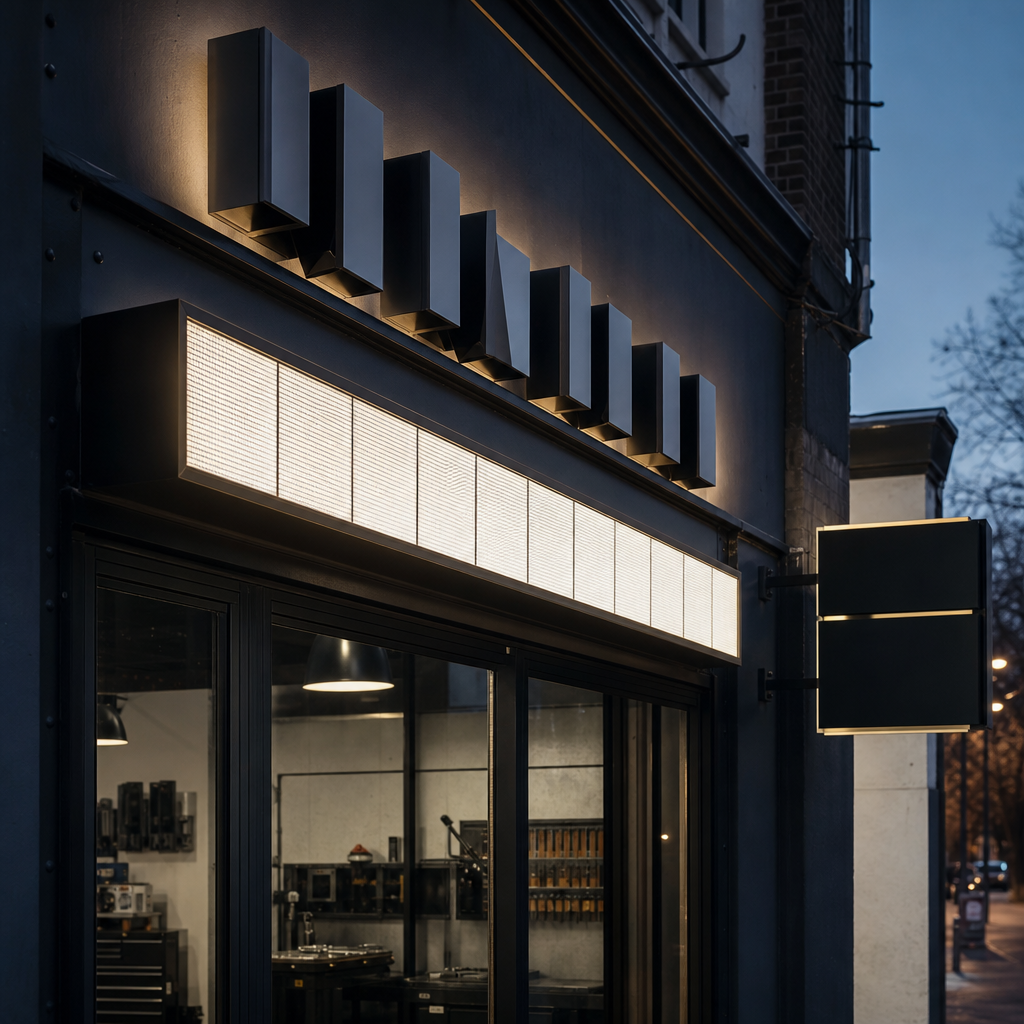
Fascia panels remain the workhorse option: a single clean panel spanning the shopfront, either printed, painted or fitted with fabricated letters. Acrylic and aluminium 3D letters, laser-cut and often face- or halo-lit, give a premium finish that reads well in daylight and holds its shape better than flat vinyl over years of coastal sun exposure. For hospitality and retail tenancies trading into the evening, an illuminated lightbox or a neon-effect LED sign keeps the shopfront visible after dark, which matters along stretches of Ocean Street where evening dining trade is significant.
Under-awning and blade signs solve a different problem: visibility to pedestrians already on the footpath, who may not look up at a fascia sign at all. A blade sign projecting perpendicular to the shopfront catches a walker's eye from both directions along the strip, which is particularly useful on Horton Parade's narrower footpath sections where sightlines to a flat fascia sign are limited.
Matching the Sign to the Tenancy
Sunshine Plaza tenancies typically operate under a centre-specific signage manual that dictates panel size, font zones and sometimes colour. A retailer moving into the Plaza precinct needs a fabricator who can read that manual and produce compliant artwork and hardware first time, rather than submitting a design that gets bounced back by centre management.
Freestanding Visibility: Pylon and Plinth Signs for Multi-Tenancy Sites, Industrial Estates and Medical Precincts
A pylon or plinth sign answers one question: can this business be found from the road before a driver has passed it? In Kuluin's industrial pockets, in multi-tenant developments, and around the medical and allied health suites near Sunshine Coast University Hospital, a fascia sign alone is often invisible from the road entirely, which makes freestanding signage the primary way these sites get found.
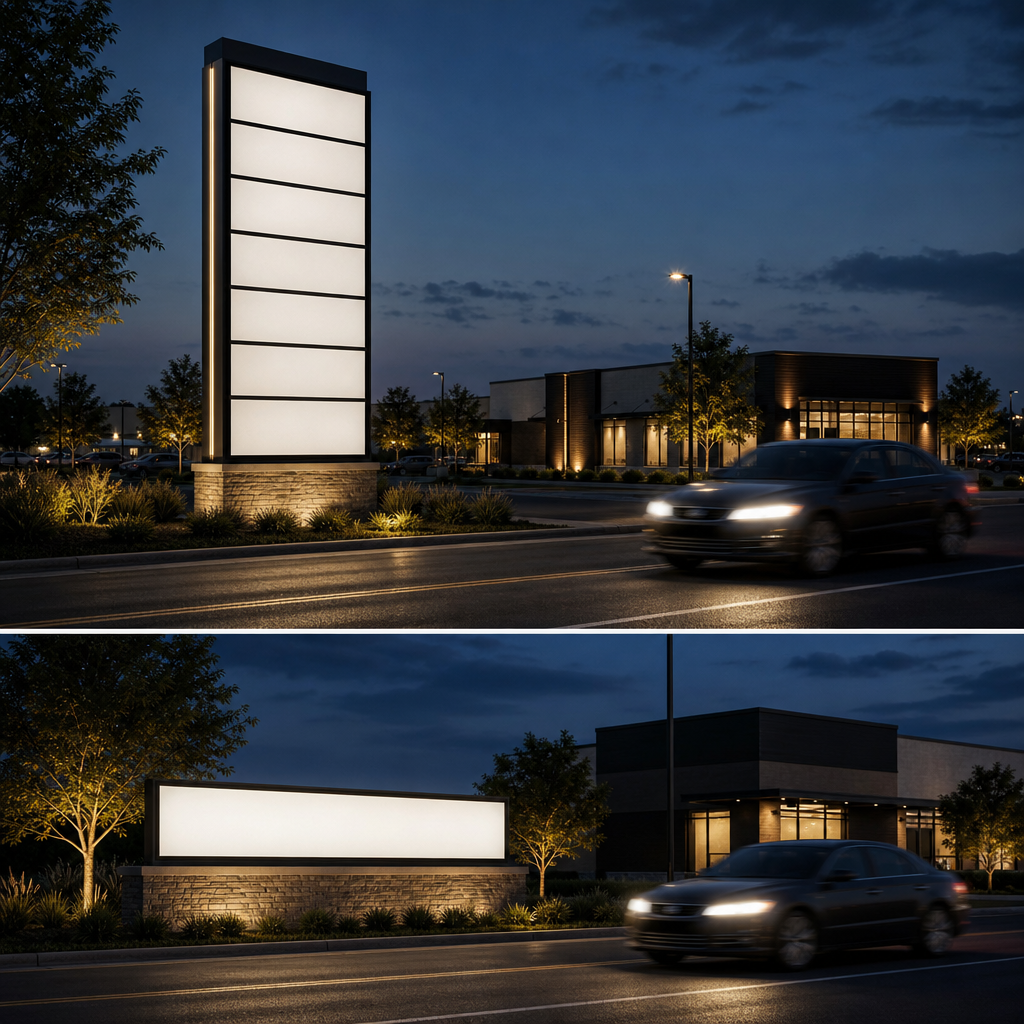
Pylon signs suit multi-tenant sites with several businesses sharing one street frontage, listing each tenant on a shared vertical structure visible from a distance. They are common along Maroochydore's commercial corridors where a single building houses a mix of trades, retail and services. Plinth or monument signs work better for a single-tenant site with some street setback, such as a standalone medical practice or a corporate office in the Maroochydore City Centre precinct, where a lower, wider structure sits comfortably within landscaped grounds.
Industrial Estates and Medical Suites Need Different Things
A Kuluin industrial tenant usually needs a sign that is legible at speed to trade customers and delivery drivers searching for a specific unit number among several near-identical buildings. Clear numbering, contrasting colour and a simple business name matter more than decorative finish here. A medical or allied health suite near the hospital catchment, by contrast, is usually read by a patient on foot or in a slow-moving car searching for a specific practice among several in the same building, so directory-style pylon signage with clear individual tenancy panels tends to work better than a single dominant name.
Both settings benefit from illumination, since foot and vehicle traffic around medical precincts and industrial estates often continues into early evening and early morning.
Vehicle Wraps and Fleet Graphics for Trades and Delivery Operators
A vehicle wrap turns a single work vehicle into signage that travels across the entire Sunshine Coast rather than sitting in one spot. For trades, mobile services and delivery operators based in Maroochydore, this is often more cost-effective reach per week than a static sign, since the vehicle is seen in Kuluin one hour and Buderim or Alexandra Headland the next.
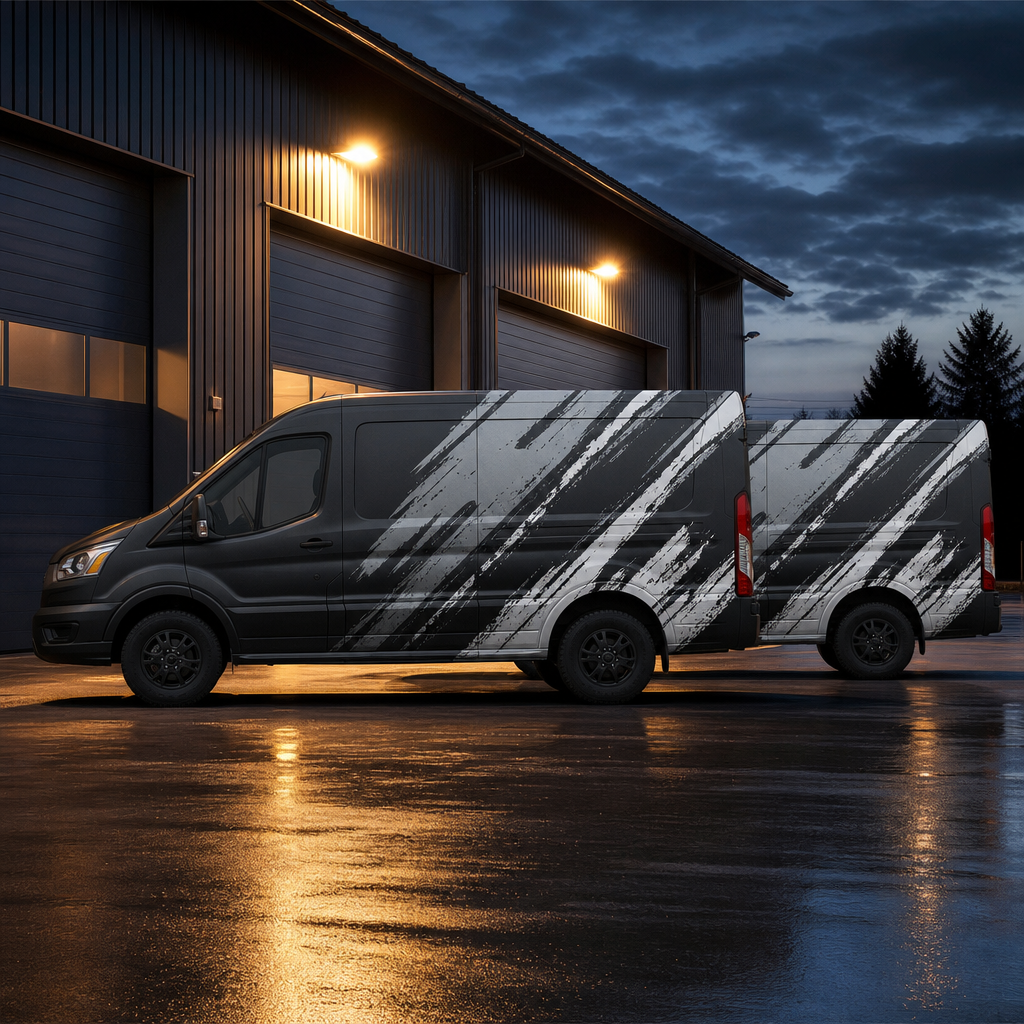
Full wraps give maximum brand coverage and work well for a business rebranding a whole fleet at once. Partial wraps and cut vinyl decals suit a lighter budget or a vehicle that needs to keep some of its original paintwork visible, common with tradespeople running a single ute or van. Fleet graphics extend the same design system across multiple vehicles so a business looks consistent whether a customer sees one van or five.
Coastal conditions apply here too. UV-stable, cast vinyl films hold their colour longer than cheaper calendered vinyl, which matters for a vehicle parked outside on site for long stretches of a Sunshine Coast summer. A wrap should also be designed with Queensland roadworthy visibility rules in mind, particularly around windscreen coverage and rear vision.
Interior Signage: Wayfinding, Reception Walls and Window Graphics
Interior signage finishes the job that exterior signage starts: getting a visitor from the front door to the right desk, room or counter without confusion. A reception wall sign, corridor wayfinding and clear window or door graphics matter as much in a medical suite near the hospital as they do in a retail fitout in the Plaza precinct.
A reception wall typically carries a business's主 branding at a scale that reads clearly from the entry, often in 3D fabricated letters or a printed and mounted panel. Wayfinding signage, directional panels and room numbering, matters most in multi-suite medical and professional buildings where several practices share one floor. Window graphics do double duty: branding visible from the street during the day, and privacy frosting or manifestation for staff and clients inside, which is a common requirement in allied health and consulting rooms. Floor graphics are increasingly used in retail and hospitality fitouts to guide foot traffic or reinforce brand at the point of entry.
Approvals, Landlord Requirements and Sunshine Coast Council Considerations
Almost every exterior sign in Maroochydore sits under two separate approval layers: the landlord or body corporate's own fit-out and signage requirements, and the Sunshine Coast Council's advertising device rules under its planning scheme and local laws. These two layers do not always say the same thing, and a design approved by a landlord can still need separate council sign-off, particularly for illuminated, pylon or projecting signage.
Generally, minor shopfront signage within an existing tenancy and consistent with a centre's signage manual has a more straightforward path. Freestanding structures such as pylon and plinth signs, anything involving illumination near a road, and signage that projects over a footpath (blade and under-awning signs) are more likely to trigger a development approval or a footpath permit. Heritage overlays, road reserve boundaries and sightline triangles near intersections can also affect what is permitted on a given site.
This is general guidance, not a substitute for a site-specific check. Council rules, centre-specific signage manuals and lease conditions change, and the right approach is always to confirm current requirements for the specific address and sign type before finalising a design. A local sign company that regularly lodges applications in the Maroochydore area will usually know which category a particular sign falls into and what supporting documentation council typically asks for.
Process and Lead Times: Site Measure to Installation and Ongoing Maintenance
A typical signage project runs through five stages: site measure, design, fabrication, installation, then ongoing maintenance. Getting the site measure and design stages right up front avoids the most common cause of delay, which is a sign that does not fit the actual structure once fabrication is underway.
The site measure captures exact fascia dimensions, awning clearances, existing power points for illuminated signage, substrate condition and any structural constraints for a pylon footing. Design follows, incorporating brand guidelines, any landlord or centre signage manual requirements, and council considerations identified earlier. Fabrication, cutting, folding, welding, laser engraving and finishing, happens in the workshop once artwork and materials are approved. Installation is scheduled around trading hours where possible, particularly for retail and hospitality tenancies that cannot afford a shopfront that looks unfinished during business hours.
Maintenance is the stage most businesses forget to plan for. Coastal exposure means illuminated signs need periodic checks on seals and LED modules, and any fabricated sign benefits from an inspection of fixings a few years in. A local fabricator that also handles repairs can usually turn around a cracked panel, a failed LED strip or storm damage faster than sourcing a new supplier from scratch, because the original files and material specifications are already on hand.
Why In-House Fabrication Changes the Turnaround Equation
Most signage delays do not happen in design, they happen in the gap between a design being approved and a physical sign existing, and that gap is almost always caused by outsourced fabrication sitting in someone else's production queue. Sunquest Signs runs laser cutting, CNC routing and engraving in-house, which means a fascia letter set, a pylon cabinet or a set of wayfinding panels moves straight from approved artwork to the workshop floor without waiting on a third-party cutting job to come back.
This matters most on tight timelines, which describes most Maroochydore fit-outs. A retail lease with a fixed opening date, or a rebrand that has to happen over a single quiet trading week, does not have room for a fabrication delay caused by a subcontractor's backlog.
A useful way to picture this is a Sunshine Coast retail rebrand covering three elements at once: new illuminated fascia signage, updated window graphics for the shopfront, and wraps for two delivery vehicles. Run as separate jobs through separate suppliers, that project involves three lead times, three installation bookings and three points where a delay in one job holds up the whole rebrand launch. Run through a single fabricator with in-house cutting, printing and installation crews, the same project becomes one coordinated schedule, with the fascia sign, window graphics and vehicle wraps timed to land in the same week so the business relaunches with everything matching on day one.
The contrarian part of this view: cheaper is not always the outsourced quote. A fabricator with its own laser cutter, CNC router and engraving equipment can often match or beat a reseller's price once travel, subcontracted cutting fees and coordination delays are factored in, because none of those costs exist in a workshop that does the work itself.
Ready to Plan Your Maroochydore Signage?
Sunquest Signs designs, fabricates and installs business signage from a Sunshine Coast workshop, covering shopfront and fascia signs, illuminated lightboxes, pylon and plinth signs, vehicle wraps and interior graphics. Book a free Maroochydore site measure and quote by phone or through the enquiry form to get a fixed scope and realistic timeline before you commit to a design.
References
- Sunshine Coast Council, Planning Scheme and advertising device local laws, sunshinecoast.qld.gov.au
- Standards Australia, AS/NZS 1170.2 Structural design actions: Wind actions
- Business.qld.gov.au, Queensland Government guidance on business signage and permits
- Australian Bureau of Statistics, Sunshine Coast region data, abs.gov.au
Talk to a signage expert
Tell us about your project and we'll come back with options and honest advice.
Get in TouchFrequently Asked Questions
How much does a shopfront sign cost in Maroochydore?
Cost depends on size, materials, illumination and whether council approval is needed, so there is no single accurate figure to quote without seeing the site. A site measure and written quote is the only reliable way to budget a specific project.
Do I need council approval for a sign in Maroochydore?
Many signs do need some form of Sunshine Coast Council approval, particularly illuminated, freestanding, or projecting signage such as pylon and blade signs. Minor fascia signage within an existing tenancy sometimes has a simpler path, but this should always be confirmed for the specific address before ordering.
How long does it take to get business signage made and installed?
Timelines vary with sign type and whether council or landlord approval is required first. A fabricator handling design, in-house cutting and installation directly can generally move faster than one relying on outsourced production, since there is no third-party queue to wait on.
Can illuminated signs handle Maroochydore's coastal climate?
Illuminated signs can handle coastal conditions when specified with marine-grade fixings, sealed LED modules and UV-stable panels. Budget hardware not rated for salt air exposure tends to corrode or fade well before a properly specified sign does.
What's the difference between a pylon and a plinth sign?
A pylon sign is a tall, narrow structure suited to multi-tenant sites where several businesses share street visibility. A plinth or monument sign is lower and wider, better suited to a single-tenant site with landscaped street setback.
Do you repair or refurbish existing signs, not just make new ones?
Yes, repair and refurbishment of existing signage, including storm damage, failed illumination and faded panels, is a standard part of the service, and having the original fabrication files on hand usually speeds up the repair.
Related Articles
Illuminated Signs on the Sunshine Coast: LED Lightboxes, Lit Letters and Pylon Signage That Survive the Coast
Illuminated Sign Maintenance: How to Keep LED Signage Bright, Safe and Trading
Business Signs in Caloundra: A Practical Guide to Shopfronts, Illuminated Signage and Vehicle Graphics
Signs that set you apart
Over 40 years on the Sunshine Coast. Design, compliance, manufacture and installation handled end to end.
Get a Free Quote