CNC Cutting in Noosa: Custom Routed Signs, Letters and Panels for Local Businesses
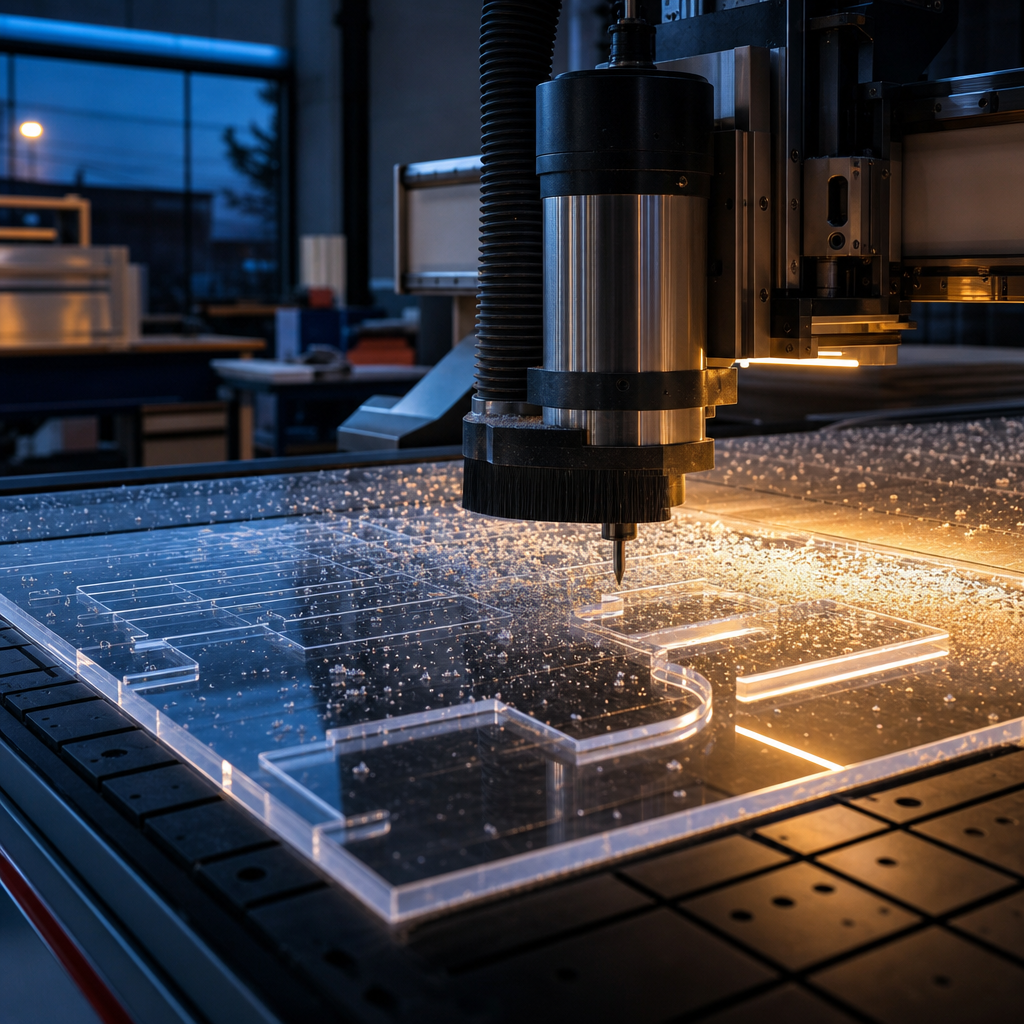
CNC cutting in Noosa is a computer-controlled routing and profile-cutting process used to fabricate custom signage from acrylic, aluminium composite panel, timber and stainless steel. Sunquest Signs runs in-house CNC routers to cut 3D letters, logos, fascia panels and wayfinding signage to precise tolerances, then finishes and installs them across Noosa and the wider Sunshine Coast.
Noosa's signage market is unlike most regional towns. Hastings Street, Noosa Junction and Noosaville run on tourism, hospitality, marine trade and boutique retail, and every one of those businesses is competing for attention in a streetscape that Noosa Shire Council watches closely for heritage character and visual amenity. On top of that, salt air off Laguna Bay and the Noosa River corrodes cheap metal fixings and fades poor-grade acrylic faster than most business owners expect. Getting the fabrication right the first time matters more here than almost anywhere else on the coast.
This guide walks through what CNC cutting actually does, which materials hold up to coastal exposure, what Noosa businesses typically order, and how a project moves from artwork file to installed sign. It also covers when to add illumination and what to check with Noosa Shire before you commit to a design.
Key Takeaways
- CNC routing cuts, engraves and V-grooves rigid sheet materials with tight tolerances, while laser cutting suits thinner sheet and fine detail work.
- Marine-grade aluminium, powder-coated ACM and UV-stable acrylic outperform standard-grade materials in Noosa's salt-air environment.
- Hastings Street and Noosa Junction fall within heritage-sensitive precincts, so signage design should be checked against the Noosa Plan before fabrication starts.
- Built-up 3D letters, flat-cut logos and fascia panels are the most common CNC-fabricated orders for Noosa hospitality and retail fitouts.
- Face-lit, halo-lit and push-through acrylic are the three main illuminated options for routed letters and panels.
- Wind loading on freestanding and fascia signage needs to be engineered to Australian Standards, not guessed.
Ready to make your business impossible to miss?
Design, manufacture and installation, all under one roof in Warana.
Get a Free QuoteSummary Table: CNC Routing vs Laser Cutting vs Hand Fabrication
| Method | Best for | Typical materials | Edge finish | Common Noosa applications |
|---|---|---|---|---|
| CNC routing | Thick sheet, 3D profiles, engraving, V-grooving | Acrylic, ACM, aluminium, timber, PVC foam board | Clean, can be polished or flame-polished on acrylic | 3D letters, fascia panels, wayfinding plates |
| Laser cutting | Thin sheet, fine detail, intricate logos | Thin acrylic, stainless, some timber veneers | Very fine, slightly darkened edge on some materials | Flat logos, decorative screens, lure bibs and small signage |
| Hand fabrication | One-off or highly customised builds, welding, folding | Stainless, aluminium, mixed materials | Variable, depends on fabricator skill | Custom brackets, plinths, structural sign frames |
What CNC Cutting Actually Is
CNC cutting uses a computer-guided router to cut, engrave or groove rigid sheet material along a digital file path. It differs from laser cutting, which burns through thinner material with a focused beam, and from hand fabrication, which relies on manual cutting, welding and folding. For signage, CNC routing is the workhorse process because it handles thicker, more durable materials at the tolerances a shopfront sign needs.
A CNC router moves a spinning cutting bit across a flat sheet, following a vector file uploaded from design software. It can perform several distinct operations on the same machine. Profile cutting cuts all the way through material to create a letter shape or logo outline. Engraving removes a shallow layer to create texture or lettering without cutting through. V-grooving cuts a angled channel, often used to create fold lines in ACM panel or decorative detail on timber and acrylic.
Laser cutting does a similar job but suits thinner materials and finer detail. It is the better choice for intricate small-scale work like fretwork screens or fine logo cutouts in stainless steel. CNC routing wins on thicker stock: 10mm to 25mm acrylic, aluminium composite panel, marine ply and cast aluminium all route cleanly but do not laser-cut well at those thicknesses. Hand fabrication still has a place for welded frames, folded brackets and one-off structural elements that a flat router simply cannot produce.
Most real signage projects use more than one method. A built-up letter set might start as CNC-routed acrylic returns, get hand-folded aluminium faces, and finish with laser-cut vinyl overlay for fine text. Knowing which process does which job is the difference between a fabricator who quotes accurately and one who is guessing.
Materials That Hold Up on the Coast
Material choice matters more in Noosa than in an inland town because salt-laden air accelerates corrosion and UV exposure fades colour faster near open water. Sunquest fabricates in acrylic, ACM, aluminium, stainless steel, timber and PVC foam board, and the coastal-grade version of each material costs more upfront but avoids a repaint or replacement within a couple of years.
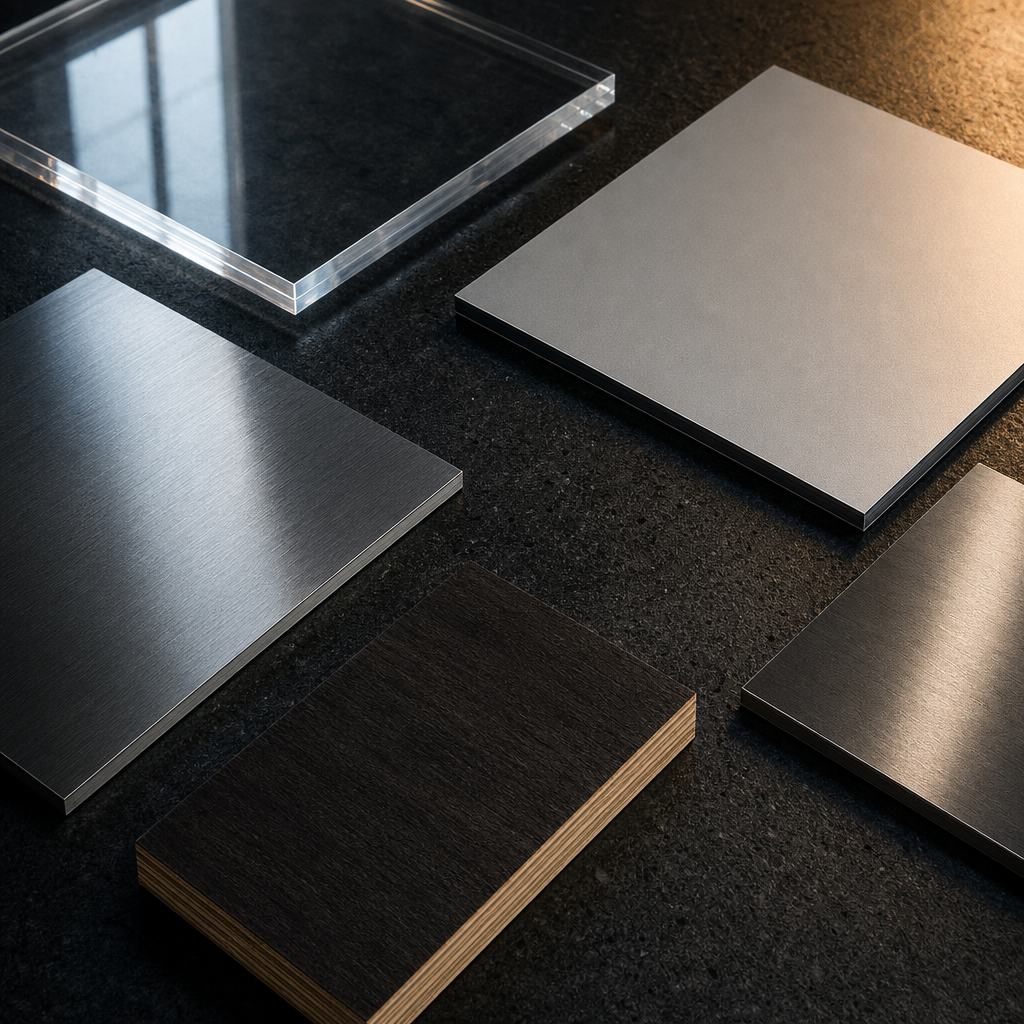
Acrylic is the standard for illuminated letters, push-through faces and flat-cut logos. UV-stable, cast acrylic resists yellowing far better than cheaper extruded sheet, which matters on a north or east-facing fascia catching direct sun most of the day. Aluminium composite panel (ACM) is the go-to for fascia cladding and flat sign faces because it stays flat, routes cleanly for V-grooved returns, and takes a powder-coated finish well. Marine-grade aluminium (5005 or 5052 alloy) and stainless steel in a 316 grade rather than the cheaper 304 are the right calls for anything within a few hundred metres of the river or ocean, including letter returns, brackets and fixings. Standard 304 stainless will pit and stain in a salt environment over time; 316 grade costs more but is the corrosion-resistant standard used in marine hardware for good reason.
Timber, usually marine ply or a treated hardwood, still gets specified for boutique retail and hospitality fitouts chasing a natural look, but it needs a proper marine sealant or UV-stable coating to survive outdoor exposure in Noosa's climate. PVC foam board is a cost-effective option for short-term signage, internal directory boards or event fit-outs where marine-grade durability is not the priority.
The common thread: whatever material a fabricator recommends, ask specifically about the grade and finish, not just the material name. "Aluminium" and "marine-grade aluminium" are not the same product, and the price difference reflects a real difference in how long the sign lasts on a coastal fascia.
What Noosa Businesses Commonly Order
Noosa's business mix drives a fairly consistent order pattern: hospitality venues want a strong shopfront presence within tight heritage design rules, boutique retailers want tactile, premium-feeling signage, and marine and professional-services businesses want something that reads clearly and survives outdoors without fuss. The most commonly fabricated items are:
- 3D fabricated and built-up letters: acrylic or aluminium letter faces with routed returns, either flat-mounted or standoff-mounted from a fascia.
- Flat-cut logos: CNC-routed acrylic, ACM or aluminium logo shapes, often paired with vinyl or paint detail.
- Shopfront fascia panels: ACM or aluminium cladding panels replacing or covering an existing fascia, frequently required to meet Noosa's streetscape design guidelines.
- Reception and feature walls: routed timber, acrylic or metal panels used inside hospitality venues, real estate offices and salons as a branded backdrop.
- Wayfinding plates: directional and identification signage for resorts, retail precincts and marine facilities.
- Menu boards: routed and often illuminated boards for cafes and restaurants, built to handle daily handling and outdoor placement.
- Decorative screens and privacy panels: laser or CNC-cut pattern screens used for outdoor dining areas, pool surrounds and boutique storefronts.
- Plinth and freestanding sign components: the routed panels, letterforms and cladding that go into a freestanding or pylon sign structure.
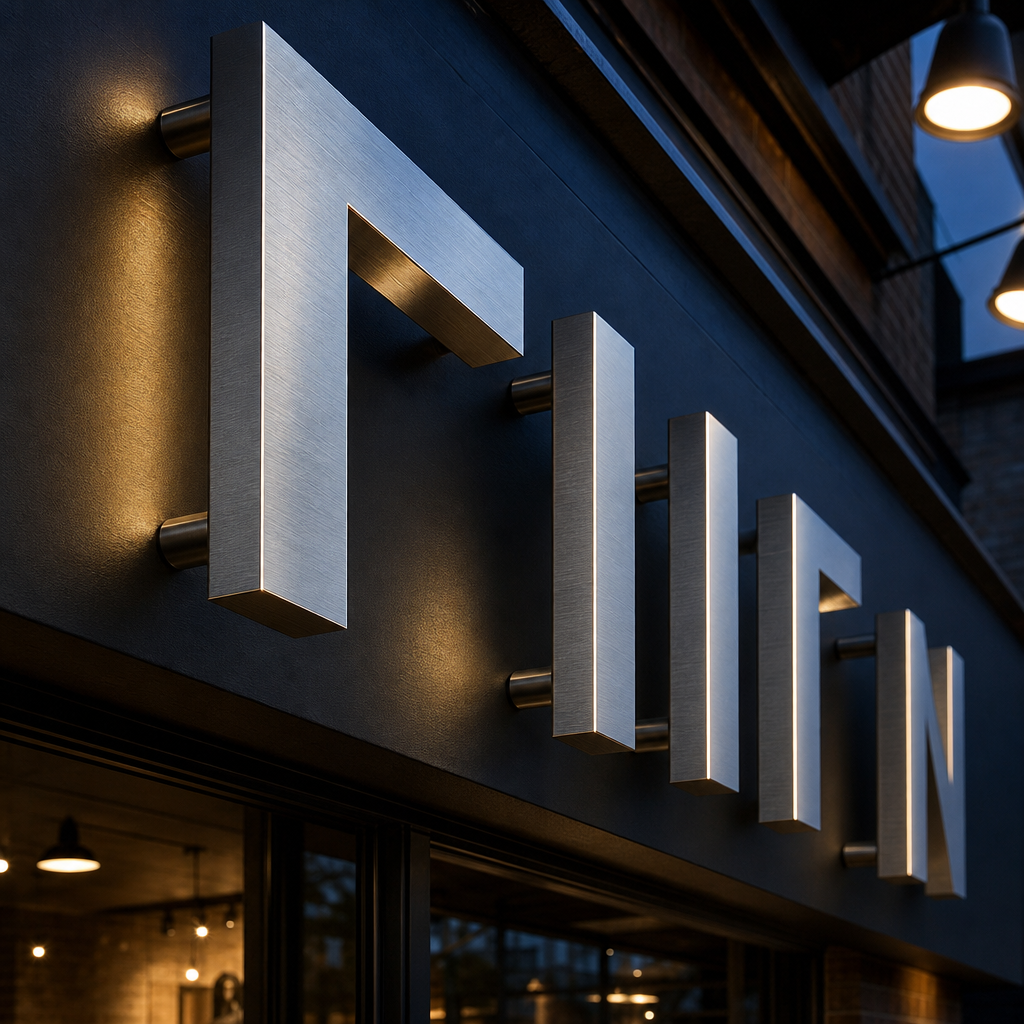
Consider a Hastings Street hospitality fitout needing brushed aluminium letters mounted above a heritage-listed shopfront. The brief calls for a premium finish that reads well by day and holds up to direct sea breeze year-round. Marine-grade aluminium letters with a brushed finish and stainless fixings suit that brief better than a standard acrylic letter set, because the metal resists salt pitting and the brushed texture avoids the glare a polished finish would create against strong Queensland sun.
From Artwork to Installed Sign: The Production Workflow
A CNC-fabricated sign moves through five stages: vector file preparation, proofing, fabrication, finishing, and installation. Each stage has its own tolerances and checkpoints, and skipping proofing is the most common cause of a sign that does not fit its intended location.
The process starts with a vector file, either supplied by the client's designer or created in-house from a logo, sketch or brand guideline. The file needs to be built to the exact dimensions of the final sign, with cutting paths, engraving depths and material thickness all specified before it goes anywhere near a router. Rough sketches and low-resolution logos can be redrawn into a production-ready vector file, but that step needs to happen before quoting, not after.
Once the file is approved, a physical or digital proof goes back to the client. For fascia and shopfront signage, this often includes a scaled mockup against a photo of the actual building, particularly where Noosa Shire's design guidelines require a sign to sit within specific proportions relative to the fascia. Fabrication tolerances on CNC-cut material are tight, typically within a millimetre or two depending on material thickness and cutter size, which matters when a sign needs to fit an existing recess or mounting frame exactly.
Fabrication itself covers the routing, any welding or folding of metal components, and assembly of built-up letters or panels. Finishing follows: powder coating for aluminium and ACM, paint for timber and some acrylics, and polishing or flame-polishing for acrylic edges that will be visible. Installation is the final stage, and for anything mounted above head height or on a heritage shopfront, it typically requires council-compliant fixing methods and, in some cases, a structural sign-off.
Lead times vary with material availability, finish complexity and installation access, so a realistic timeframe is best confirmed at quote stage rather than assumed from a generic industry figure. A simple flat-cut acrylic logo moves faster than a powder-coated, illuminated 3D letter set requiring scaffold access on Hastings Street.
Illuminated vs Non-Illuminated Routed Signage
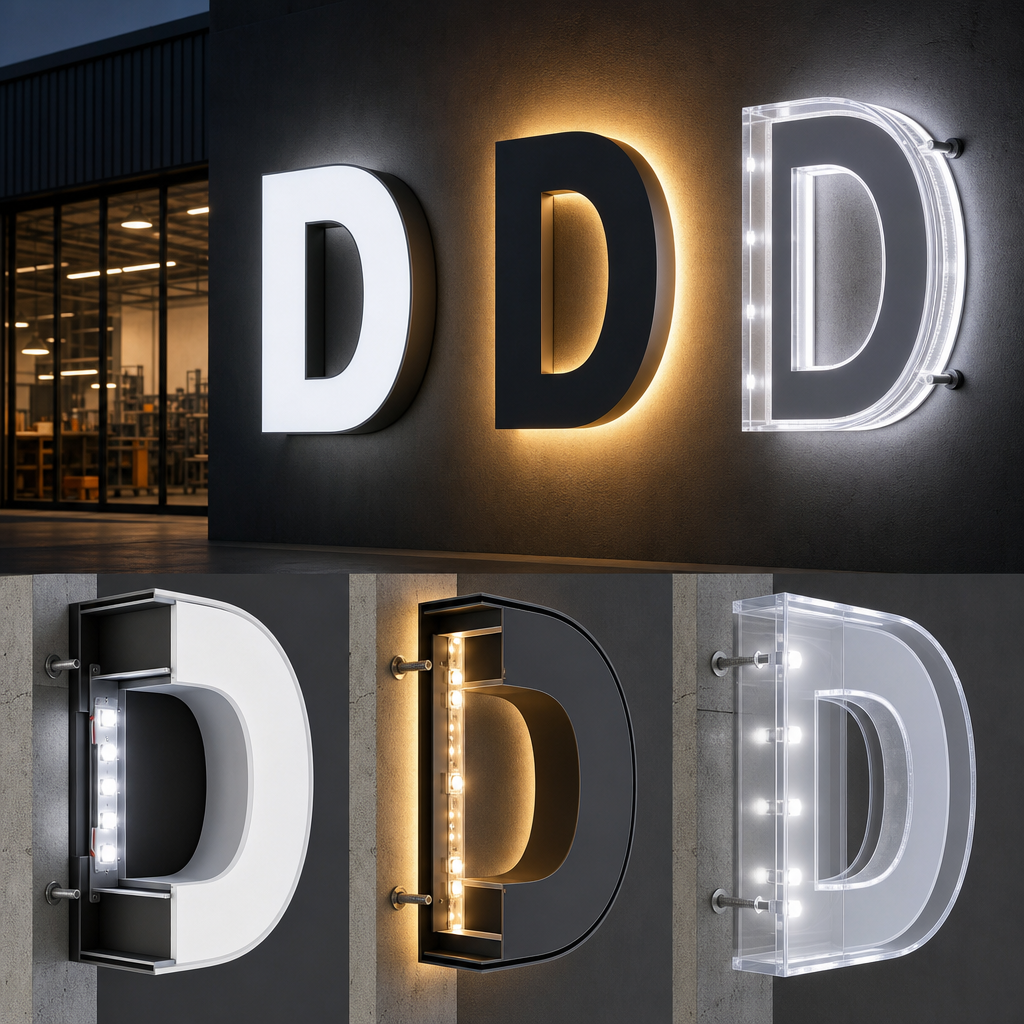
The choice between illuminated and non-illuminated signage comes down to trading hours, visibility needs and council restrictions rather than personal preference alone. Noosa's late dining and evening tourism trade makes illumination genuinely useful for hospitality venues, but heritage precincts sometimes restrict illumination type or brightness, so it pays to check before designing the sign.
Face-lit letters have the light source behind the acrylic or polycarbonate face, so the whole letter glows evenly. This is the most common illuminated option for retail and hospitality fascia signage because it reads clearly from a distance and works well with routed 3D letter construction.
Halo-lit (or back-lit) letters mount LEDs behind a solid metal or acrylic letter face, throwing a soft glow onto the wall behind the letter rather than lighting the letter itself. This creates a premium, understated look that suits boutique retail, salons and professional-services offices wanting a refined night-time presence rather than a bright glowing sign.
Push-through acrylic combines a solid backing panel, usually ACM or aluminium, with routed openings filled by acrylic letter or logo shapes that sit slightly proud of the surface and light up from within. It gives crisp, dimensional lettering with strong night visibility and works well for menu boards and feature signage where a mix of texture and illumination is wanted.
Non-illuminated routed signage remains the right call for daytime-only businesses, heritage-sensitive locations where lighting is restricted, and budget-conscious fitouts. A well-fabricated, non-illuminated 3D letter set in a contrasting colour and finish still reads clearly in daylight and avoids the ongoing running cost of LED illumination.
Specifying for Noosa Conditions and Council Approvals
Specifying signage in Noosa means designing for three things at once: salt air corrosion, UV fade, and wind loading, while also checking the design against Noosa Shire Council's planning scheme before fabrication starts. Getting any one of these wrong leads to a sign that fails early, looks tired within a year, or gets a compliance notice.
Salt air corrodes untreated metal fixings, cheap stainless fittings and lower-grade aluminium faster the closer a business sits to the river or ocean. Sun fade affects acrylic and paint finishes that are not UV-stable, particularly on north and east-facing fascias catching direct Queensland sun most of the day. Wind loading matters for any freestanding, pylon or projecting sign, since wind pressure on a large sign face needs to be calculated against structural mounting capacity, following the wind action provisions in Standards Australia's AS/NZS 1170.2. This is not a step to skip on a coastal site exposed to onshore winds.
Noosa Shire Council also applies specific design controls to signage within its planning scheme, the Noosa Plan, particularly around Hastings Street, Noosa Junction and other heritage-sensitive commercial precincts. Controls typically cover sign size, illumination, projection over footpaths, and how a sign relates to the building's heritage character. Checking these requirements before a design is finalised, rather than after fabrication, avoids a costly redesign or a rejected development application. A fabricator experienced in the local area will usually flag likely issues early, but the applicant remains responsible for confirming approval requirements with council.
Why Material Grade Matters More Than Design in Noosa
After years fabricating signage across South East Queensland, the pattern in Noosa is consistent: businesses spend real time on logo design and colour, then default to standard-grade material because it is cheaper on the quote. That trade-off looks fine on day one and looks like a mistake within eighteen months, once salt pitting shows on cheap stainless fixings or a poorly UV-stabilised acrylic face has yellowed on a north-facing wall.
The contrarian point worth making here: in a coastal tourism precinct like Hastings Street or Noosaville, the material grade is doing more work for the brand than the design itself. A beautifully designed logo fabricated in standard-grade acrylic with 304 stainless fixings will look tired before a competitor's simpler design in marine-grade aluminium with 316 fixings does. Visitors and locals both notice a faded, pitted sign long before they consciously register a logo's design quality. Specifying the right grade of material is a brand decision, not just an engineering one, and it deserves the same attention as the artwork.
Sunquest fabricates signage in-house, covering CNC routing, laser cutting, metal fabrication, powder coating and installation, and services Noosa as part of a wider footprint across the Sunshine Coast and South East Queensland. Keeping fabrication in-house means material grade, tolerance and finish decisions get made by the people actually cutting and assembling the sign, rather than passed between multiple subcontractors.
Get a Quote for Your Noosa Signage Project
If you are planning a new shopfront, fitout or freestanding sign anywhere from Noosaville to Hastings Street, send through your artwork, logo file or even a rough sketch for a no-obligation quote and material recommendation. Sunquest Signs fabricates in-house across acrylic, aluminium, ACM and stainless, and services Noosa as part of a wider Sunshine Coast and South East Queensland coverage area. Call the team or fill in the enquiry form to get the conversation started.
References
- Noosa Shire Council, Noosa Plan (planning scheme, signage and advertising provisions), https://www.noosa.qld.gov.au
- Standards Australia, AS/NZS 1170.2 Structural Design Actions: Wind Actions
- Standards Australia, AS/NZS 2312.1 Guide to the Protection of Structural Steel and Other Metals Against Atmospheric Corrosion
Talk to a signage expert
Tell us about your project and we'll come back with options and honest advice.
Get in TouchFrequently Asked Questions
What is the difference between CNC cutting and laser cutting for signage?
CNC cutting uses a rotating router bit to cut, engrave or groove thicker rigid materials like acrylic, ACM and aluminium. Laser cutting uses a focused beam better suited to thinner sheet and fine detail work such as intricate logos or decorative screens.
What materials are best for signage near the Noosa River or ocean?
Marine-grade aluminium (5005 or 5052 alloy), 316-grade stainless steel, UV-stable cast acrylic and powder-coated ACM all resist salt air corrosion and sun fade better than standard-grade equivalents, making them the better choice for fascia and freestanding signage close to the water.
Do I need Noosa Shire Council approval for a new shopfront sign?
Most new or replacement signage in Noosa Shire, particularly within heritage-sensitive precincts like Hastings Street and Noosa Junction, needs to meet the design controls set out in the Noosa Plan. It is worth checking size, illumination and projection rules with council before finalising a design.
How long does a custom CNC-cut sign take from artwork to installation?
Timeframes depend on material, finish and installation complexity, so it is best confirmed at quote stage. A simple flat-cut logo moves faster through production than an illuminated, powder-coated 3D letter set requiring scaffold access.
Can I supply a rough sketch instead of a finished design file?
Yes. A rough sketch or reference photo is enough to start a conversation and get a material recommendation and rough quote. It will need to be redrawn into a production-ready vector file before fabrication begins.
What is push-through acrylic and when should I use it?
Push-through acrylic is a technique where acrylic letters or shapes sit proud of a solid panel and are lit from behind, creating dimensional, illuminated lettering. It suits menu boards and feature signage where a business wants both texture and strong night-time visibility.
Related Articles
Signage in Nambour: Sign Options for CBD, Heritage and Industrial Businesses, Council Rules and Costs
Shop Front Signs in Noosa: Precinct Styles, Coastal Materials, Council Rules and Costs
Illuminated Signs in Noosa: LED Lightboxes, Lit Letters and Pylon Signage for Coastal Trading
Signs that set you apart
Over 40 years on the Sunshine Coast. Design, compliance, manufacture and installation handled end to end.
Get a Free Quote