
Hospitality Signage Case Studies: How Australian Cafes, Bars and Restaurants Fit Out Their Venues
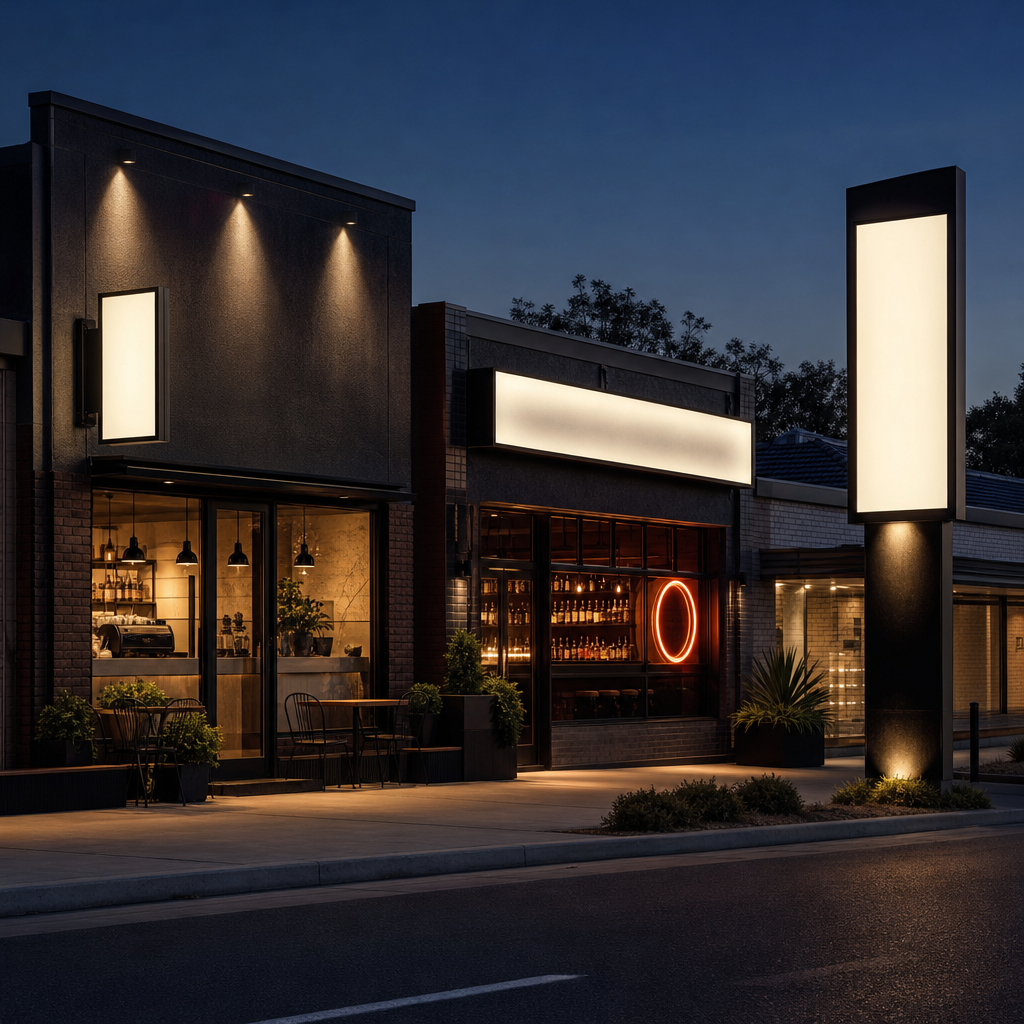
Hospitality signage case studies show how cafes, bars, restaurants and hotels combine fascia signage, illuminated lightboxes, neon or LED features, pylon signs and vehicle graphics into one coordinated package. Unlike retail, hospitality signage must work for kerb appeal, night trading, alfresco zones and delivery fleets, not just daytime foot traffic.
A cafe sign only has to catch someone's eye for a second. A restaurant, bar or pub sign has to do that, then keep working while the customer sits down for an hour, orders a second drink, and walks past it again on the way out after dark. That difference changes almost every decision in a hospitality fitout, from lighting to material to install timing.
This article walks through four composite hospitality projects, a suburban cafe, a licensed bar, a restaurant on a highway or complex site, and a multi-site venue, to show the full signage package behind each one and the reasoning that shaped it. It also covers what these fitouts consistently teach about lead times, approvals and installing around trading hours.
Key Takeaways
- Hospitality signage has to perform in daylight, dusk and full darkness, unlike most retail signage that only needs to work during trading hours.
- A complete package usually blends fascia signage, illuminated lightboxes, window graphics, interior signage and vehicle graphics rather than a single sign.
- Licensed venues carry extra signage obligations tied to liquor licensing, RSA compliance and back-of-house wayfinding.
- A site survey before fabrication is the single biggest safeguard against costly remakes, especially for illuminated and pylon signage.
- Council and landlord approvals, not fabrication time, are the most common cause of hospitality signage delays.
- Installation is frequently scheduled overnight or before opening to avoid disrupting service.
Ready to make your business impossible to miss?
Design, manufacture and installation, all under one roof in Warana.
Get a Free QuoteSummary: Hospitality Signage Packages Compared
| Venue Type | Primary Signage Package | Night Visibility Priority | Approval Complexity | Typical Fabrication Method |
|---|---|---|---|---|
| Suburban cafe | Fascia lettering, window graphics, blade sign | Low to moderate | Low (mostly landlord sign-off) | Laser cut acrylic or metal lettering |
| Licensed bar or pub | Illuminated lightbox, neon or LED feature, interior wayfinding | High | Moderate to high (council plus liquor licensing) | LED neon, illuminated lightbox fabrication |
| Restaurant in complex or highway site | Pylon or plinth sign, illuminated fascia, wayfinding | High | High (council DA, centre management) | CNC and illuminated cabinet fabrication |
| Multi-site or franchise venue | Repeatable fascia spec, CNC letters, vehicle graphics | Moderate to high | Moderate (repeatable per site) | CNC fabrication, vehicle wrap application |
Why Hospitality Signage Behaves Differently to Retail Signage
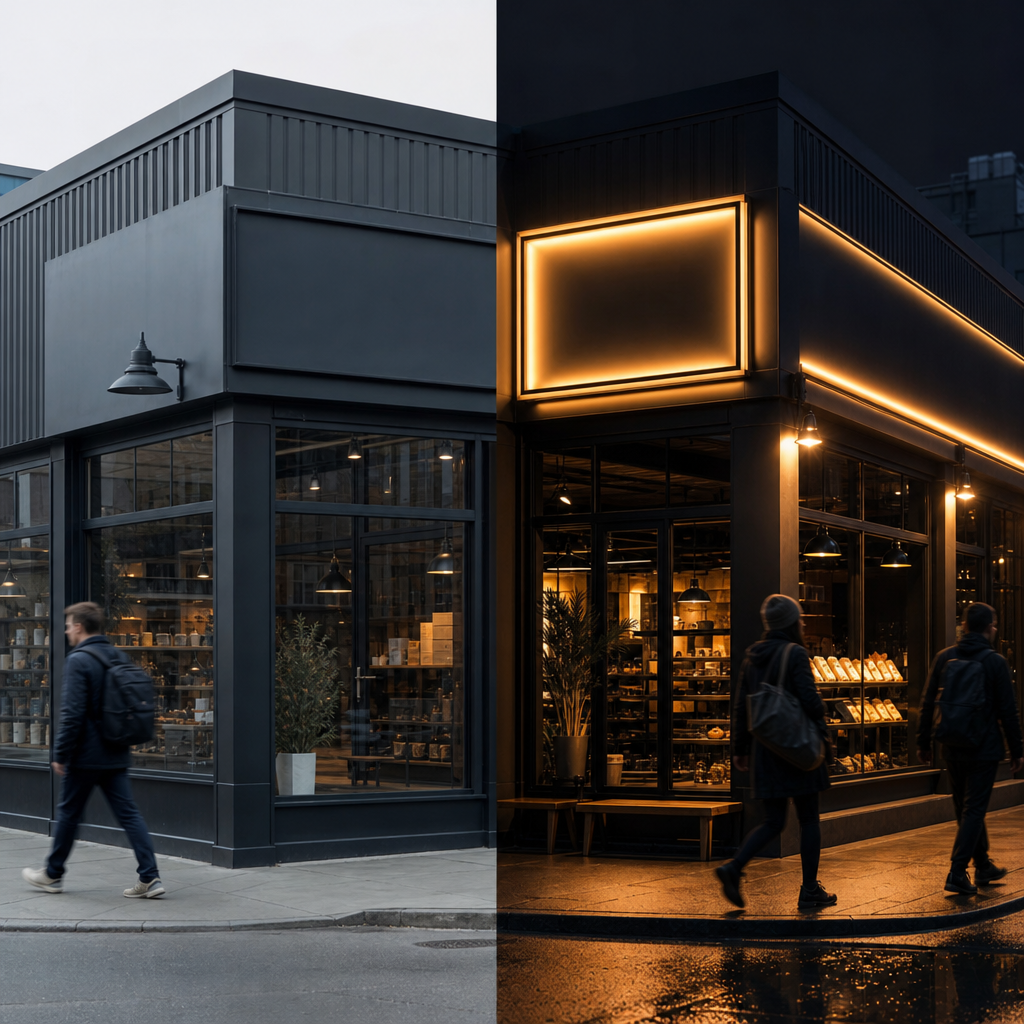 Hospitality signage has to work in low light, hold attention through a long dwell time, and guide people who have already decided to visit. Retail signage mostly earns a glance from someone walking past. A cafe, bar or restaurant sign needs to perform at 9am and 9pm, indoors and out, for a customer staying an hour or more.
Three factors drive this. First, dwell time. A retail customer might spend ten minutes in a store. A restaurant guest might spend ninety. That means interior signage, menu boards and wayfinding get looked at repeatedly, not glanced at once, so finish quality and legibility matter more.
Second, evening trade. Cafes lean on daytime kerb appeal, but bars, pubs and restaurants often do the bulk of their trade after dark. A fascia sign that looks sharp at midday can disappear against a dark shopfront at 8pm if it is not illuminated or reflective. This is why neon, LED and illuminated lightboxes appear so consistently in hospitality fitouts and far less often in daytime-only retail strips.
Third, kerb appeal has to work from a distance and up close. A driver deciding whether to pull into a highway restaurant needs a pylon sign visible from the road. A pedestrian walking past a cafe needs a blade sign and window graphics visible from the footpath. Both audiences exist for the same venue, and a single sign rarely serves both.
Alfresco trading adds a fourth layer specific to Australian hospitality. Outdoor dining areas need their own wayfinding, branding and sometimes privacy screening, which retail tenancies without footpath trading simply don't need.
Case Study One: A Small Suburban Cafe Fitout
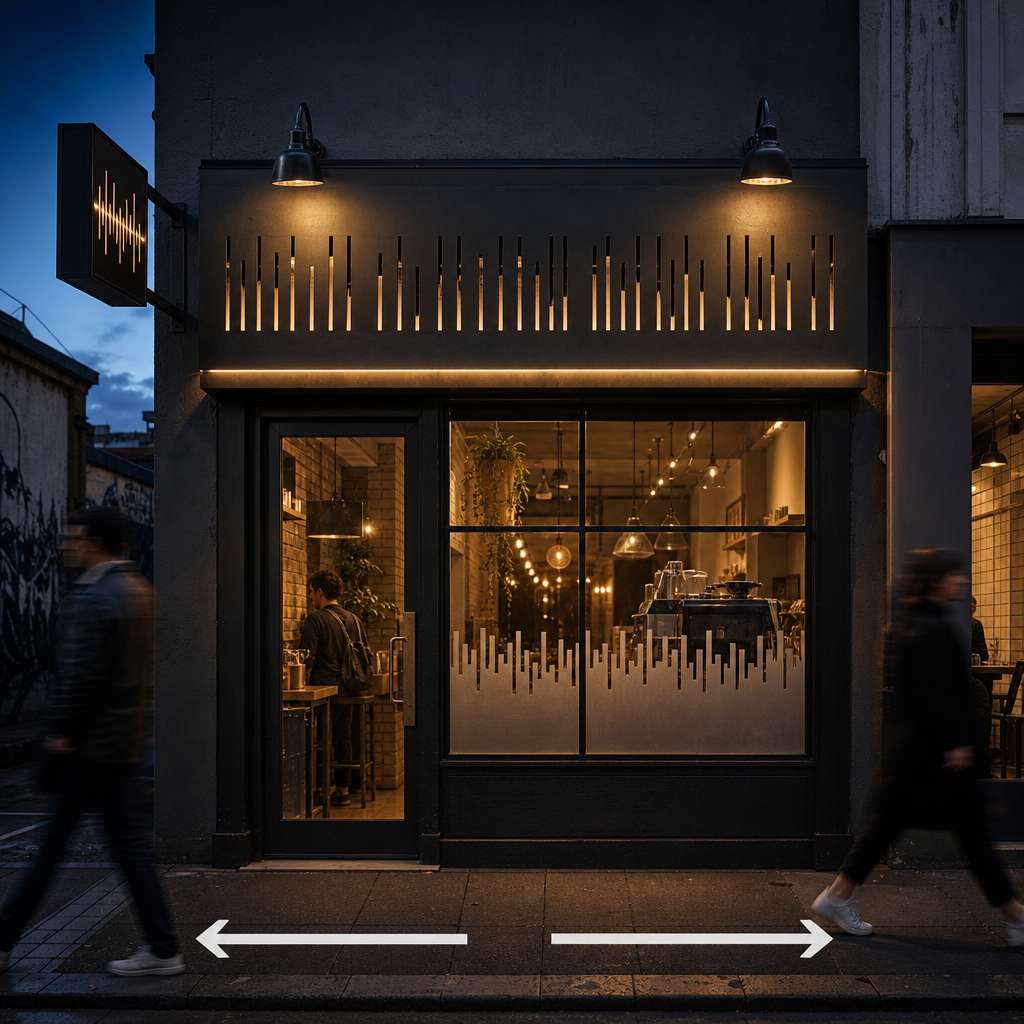 A suburban cafe fitout typically needs laser cut fascia lettering for daytime kerb appeal, window graphics carrying trading hours and menu highlights, and a hand-finished blade sign for footpath sightlines. The combination covers the driver glancing at the strip, the pedestrian walking past, and the regular checking if the doors are open.
Consider a cafe opening on a busy suburban strip with heavy foot traffic but limited street frontage. The fascia is narrow, there's no scope for a large illuminated cabinet, and the landlord's lease conditions restrict what can be fixed to the building face. In a case like this, laser cut and CNC fabricated lettering is usually the right call. It reads clearly in daylight, needs no power connection, and sits flush enough to satisfy most strata or landlord conditions.
Window graphics do the next job. Trading hours, a coffee brand logo, and a rotating specials board printed or vinyl-cut onto the glass let the cafe communicate without a staff member standing outside. Frosted or partial privacy graphics on lower panels can also screen a servery or seating nook from the footpath while keeping the shopfront visually open above.
The blade sign, projecting perpendicular to the building, solves the sightline problem a flat fascia sign can't. Pedestrians approaching from either direction along the strip see it before they see the shopfront itself. For a narrow-frontage cafe, this is often the single highest-impact piece of the package relative to its size.
What ties the three elements together is a site survey before anything is fabricated. Fascia depth, glass type, awning clearance and any existing conduit all affect what fits and how it's fixed. Skipping this step is the most common reason a laser cut letter set arrives and doesn't sit flush against an uneven or curved fascia.
Case Study Two: A Licensed Bar or Pub Fitout
A licensed bar or pub fitout needs an illuminated lightbox for street-level night visibility, a neon or LED feature sign inside to anchor the room's brand identity, and back-of-house and directional interior signage that meets licensing and safety expectations. Night trade makes illumination the priority, not an optional extra.
Consider a pub bistro refurbishing its street frontage and main bar. Because the venue trades heavily after dark, an illuminated lightbox on the fascia or awning does the job daytime-only lettering can't: it stays legible and on-brand once the sun goes down, when most of the venue's covers are booked. Inside, a neon or LED feature sign, often the venue name or a signature phrase, becomes the backdrop for the bar and the most photographed spot in the room. This is where pub and bar neon signs earn their keep commercially, not just decoratively, because they shape how the space gets shared on social media.
Interior signage in a licensed venue also has a compliance dimension that a cafe doesn't. Responsible service of alcohol signage, fire exit and capacity signage, and directional signage to toilets, function rooms or beer gardens all need to be planned alongside the brand-led pieces, not bolted on afterwards. Getting an electrician and a signage fabricator involved early, rather than retrofitting compliance signage around a finished fitout, avoids double-handling.
Approval complexity is higher here than for a simple cafe fascia. Illuminated signage usually needs electrical certification against AS/NZS 3000 wiring rules, and many councils treat illuminated and animated signage as a separate development approval category to static signage. Add liquor licensing obligations specific to the venue type, and a pub or bar signage package typically has more regulatory steps than a cafe, even when the physical scope is similar.
Case Study Three: A Restaurant in a Complex or Highway Site
A restaurant on a highway or in a shopping or dining complex needs a pylon or plinth sign visible from the road at speed, an illuminated fascia for close-range legibility, and wayfinding signage that fits within the centre's or precinct's shared design rules. Distance visibility and multi-tenant coordination both shape the brief.
Consider a restaurant taking a tenancy in a highway service centre or a suburban dining precinct shared with several other operators. A driver deciding whether to pull in needs to identify the venue well before the turn-off, which is exactly what a pylon or plinth sign is built for. Positioned at the property boundary and raised above eye level, it reads at speed in a way a fascia sign never could.
Once the customer has parked, the illuminated fascia sign takes over, doing the closer-range job of confirming the entrance and reinforcing the brand at walking pace. In a shared complex, this sign often has to conform to a centre-wide design manual controlling size, colour and illumination type, which is a layer of constraint a freestanding cafe doesn't face.
Wayfinding is the third piece, and it's frequently underestimated. In a multi-tenant site, customers need directional signage to parking, entrances and sometimes between the restaurant and shared facilities like restrooms or a beer garden. Centre management typically has to sign off on wayfinding design before installation, which means this element often has the longest approval runway of the three.
Case Study Four: A Multi-Site or Franchise Venue Fitout
A multi-site or franchise hospitality brand needs a repeatable signage specification that a fabricator can reproduce consistently across locations, CNC fabricated letters and screens for that consistency, and vehicle graphics for delivery or catering fleets that extend the brand beyond the venue itself.
Consider a QSR or casual dining brand rolling out a third or fourth site. The priority shifts from designing a one-off sign to locking in a specification that can be quoted, fabricated and installed the same way every time, regardless of which site team manages the fitout. CNC fabrication suits this well because cut files, once approved, produce identical letterforms and panel dimensions at every location, removing the variation that hand-finished work can introduce across multiple sites.
Vehicle graphics are the piece a single-site venue rarely needs but a multi-site or delivery-heavy operator can't skip. Delivery and catering vans carry the brand into suburbs the venue itself never reaches, and a consistent wrap or panel graphic across the fleet reinforces recognition every time a van is parked outside a customer's house. For hospitality venue fitout signage at this scale, vehicle graphics are increasingly treated as a core line item rather than an afterthought.
Menu boards and interior displays round out the package, and here again repeatability matters. A franchise needs menu board layouts that can be updated centrally and reproduced at every site without a full redesign each time pricing or offerings change.
What Hospitality Signage Projects Teach Us About Timing and Approvals
The single biggest lesson from hospitality signage projects isn't about the signs themselves, it's about sequencing. Fabrication is rarely the bottleneck. Approvals, electrical certification and installing around live trading hours consistently take longer than the manufacturing itself, and venues that plan for this upfront avoid the worst delays.
A site survey before fabrication is non-negotiable for anything illuminated, pylon-mounted or fixed to an uneven fascia. Measuring on-site, checking existing conduit, and confirming fixing points before cutting acrylic or bending a lightbox cabinet prevents the expensive scenario of a finished sign arriving and not fitting. This is standard practice on any competently run hospitality fitout, and it's the reason experienced fabricators insist on it even when a client is confident their own measurements are accurate.
Council and landlord approvals cause more hold-ups than any fabrication step. Illuminated and pylon signage often triggers development approval requirements that static fascia lettering doesn't, and shopping centres or highway precincts frequently require sign-off from centre management on top of council approval. Licensed venues add liquor licensing signage obligations into the mix. The venues that move fastest are the ones that start the approval conversation before finalising the design, not after.
Installation timing is its own discipline in hospitality, more so than retail. Consider a hotel restaurant that needs a new illuminated fascia sign fitted before Monday's breakfast service, with the bistro trading every night that week. In a case like that, installation has to happen overnight or in the narrow window between last drinks and first coffee service, with scaffolding and cabling cleared before the first guest arrives. Retail tenancies can often close for an afternoon; a trading restaurant or pub rarely has that luxury, so installers plan around service periods rather than around their own convenience.
The contrarian view worth stating plainly: most hospitality operators treat signage as the last decision in a fitout, sorted once the fitout, kitchen and interior are locked in. The venues that get the best result treat it as one of the first. A pylon sign's footing needs to be planned with the landscaping. An illuminated lightbox's power run needs to be roughed in with the electrical fitout, not chased into finished walls afterwards. Signage planned early is cheaper and faster than signage retrofitted late.
Book a Site Survey for Your Venue Fitout
Every project in this article started the same way: a site visit before a single sign was designed. If you're opening or refurbishing a cafe, bar, restaurant or multi-site hospitality venue, book a site survey and request a scoped quote before locking in your fitout plans. It's the step that prevents the most expensive mistakes later.
References
- Standards Australia, AS/NZS 3000:2018 Electrical Installations (Wiring Rules), https://www.standards.org.au
- Liquor & Gaming NSW, licensed venue obligations and compliance guidance, https://www.liquorandgaming.nsw.gov.au
- Australian Bureau of Statistics, Counts of Australian Businesses, including Entries and Exits, https://www.abs.gov.au/statistics/economy/business-indicators/counts-australian-businesses-including-entries-and-exits
- Australian Building Codes Board, National Construction Code, https://ncc.abcb.gov.au
- City of Sydney, development guides and planning controls, https://www.cityofsydney.nsw.gov.au
Talk to a signage expert
Tell us about your project and we'll come back with options and honest advice.
Get in TouchFrequently Asked Questions
What is included in a full hospitality signage package?
A full package typically includes fascia or shopfront signage, illuminated lightboxes, interior and directional signage, window and privacy graphics, and often a pylon or blade sign depending on the site. Multi-site venues add vehicle graphics and menu board systems.
How long does hospitality signage take to design and install?
Timelines vary by scope. Static fascia and window graphics generally move faster than illuminated or pylon signage, which needs electrical certification and often council approval before fabrication can be finalised. A site survey early in the process helps set a realistic programme.
Do I need council approval for pub or restaurant signage?
Most councils require approval for illuminated, animated or freestanding signage such as pylon signs, and some also regulate static fascia signage size and placement. Shopping centres and highway precincts often add their own design sign-off on top of council requirements.
Can signage be installed without closing during trading hours?
Yes, most hospitality signage installation is scheduled overnight or in the gap between service periods specifically to avoid disrupting trade. This is standard practice for licensed venues and restaurants that trade every day of the week.
What signage works best for alfresco and outdoor dining areas?
Alfresco zones typically use a mix of window and privacy graphics for screening, wall graphics for branding within the space, and directional signage where the outdoor area connects to parking or a beer garden.
How much does a hospitality signage fitout cost in Australia?
Cost depends on scope: a single fascia and window graphics package costs far less than a pylon sign with electrical works and council approval. The most reliable way to budget accurately is a site survey and a scoped quote rather than a generic estimate.
Related Articles
Neon Signs in Noosa: Custom LED Neon for Cafés, Bars and Boutiques on the Coast
Retail Signage Case Studies: How Australian Shops Rebrand, Refit and Relaunch
Sunshine Coast Signage Project Gallery: Real Local Sign Installs by Suburb and Sign Type
Signs that set you apart
Over 40 years on the Sunshine Coast. Design, compliance, manufacture and installation handled end to end.
Get a Free Quote