
Large-format printing
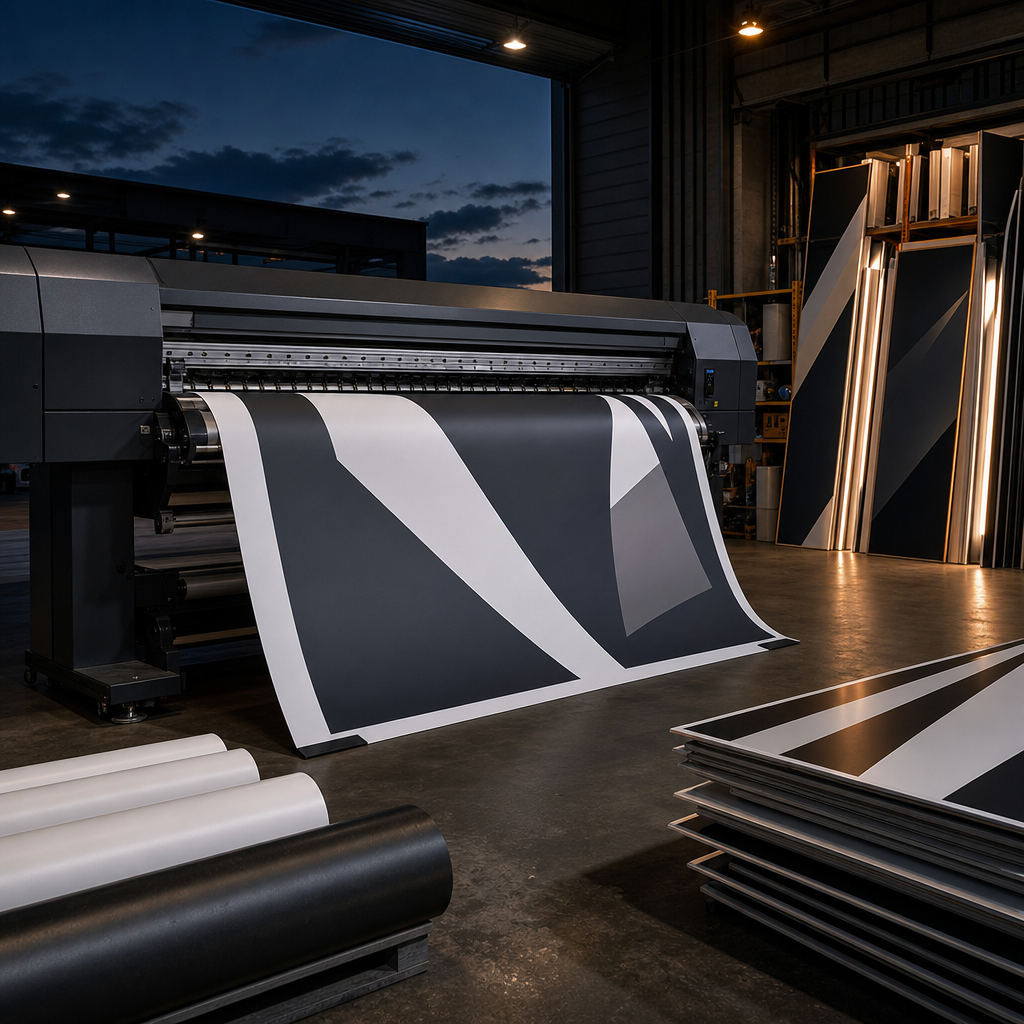
Large-format printing produces oversized graphics for signs, banners, displays, windows, walls, vehicles and construction sites. The best result depends on matching the printing method, ink, substrate, finishing and installation approach to the environment. Artwork quality matters, but material selection and production planning usually determine whether the finished graphic performs as intended.
Large-format printing is often treated as ordinary printing at a bigger scale. That view misses the difficult parts. A file can look perfect on screen and still produce weak colour, unreadable text, visible joins or premature material failure.
This guide explains the full production chain. It covers printing methods, materials, artwork, colour, finishing, installation, maintenance, sustainability and quote comparison, with a focus on practical decisions for Australian organisations.
Key takeaways
Large-format printing works best when the intended viewing conditions, installation surface and service environment are defined before artwork begins. Buyers should assess the complete installed outcome rather than comparing print prices alone. Material compatibility, finishing, access requirements and colour expectations need to be documented before production approval.
- Start with the application, viewing distance, surface and exposure conditions.
- Select the substrate, ink and protective finish as one compatible system.
- Build artwork at the supplier's nominated scale, with correct bleed and image resolution.
- Use physical proofs when colour, fine detail or brand consistency is critical.
- Compare quotes by scope, not only by the headline production price.
- Plan removal, replacement and material disposal before approving short-term graphics.
Ready to make your business impossible to miss?
Design, manufacture and installation, all under one roof in Warana.
Get a Free QuoteSummary table
A large-format project usually involves several linked decisions. The table below shows what each decision controls and what can go wrong when it is left until production. It is a practical briefing tool rather than a material specification, because the correct combination depends on the site and application.
| Decision | What it controls | Common mistake | Better approach |
|---|---|---|---|
| Application | Format, visibility and required durability | Choosing a familiar product without checking site conditions | Define the communication goal and environment first |
| Substrate | Rigidity, flexibility, weight and surface appearance | Selecting by price or appearance alone | Match the substrate to handling, exposure and installation |
| Ink and print method | Colour, adhesion and compatibility | Assuming every machine produces the same result | Confirm suitability for the chosen material and finish |
| Artwork | Sharpness, layout, joins and cutting accuracy | Supplying a screen graphic as final print artwork | Request specifications before design is finalised |
| Finishing | Protection, mounting and final form | Treating finishing as an optional extra | Specify edges, laminates, eyelets, pockets and contours early |
| Installation | Alignment, safety and surface performance | Quoting production without site access details | Inspect or document the site before approval |
| Maintenance | Appearance and replacement planning | Using unsuitable cleaning products | Follow material-specific care instructions |
What is large-format printing used for?
Large-format printing is used when information, branding or imagery must remain visible beyond normal reading distance or cover a substantial surface. Common applications include building signs, retail displays, event graphics, banners, window films, wall graphics, vehicle graphics, exhibition panels, wayfinding signs and construction-site graphics.
The term describes a production category, not one standard product. A fabric banner, rigid directional panel and self-adhesive window graphic can all be produced using large-format equipment, yet they require different materials, artwork preparation and finishing.
Typical applications fall into several practical groups:
- Permanent identification: fascia signs, reception branding and building identification.
- Promotional graphics: campaign posters, retail displays and event signage.
- Directional information: wayfinding, parking signs and site navigation.
- Surface graphics: windows, walls, floors and vehicles.
- Temporary site communication: construction hoardings, development graphics and safety information.
- Portable display systems: pull-up displays, fabric displays and exhibition panels.
Start by defining what the graphic must achieve. A retail window campaign may prioritise visual impact and clean removal. A wayfinding sign must prioritise legibility, contrast and placement. A construction graphic may need weather resistance, secure fixing and coordination with site access rules.
Safety signs require additional care. In Australia, AS 1319-1994, Safety signs for the occupational environment, establishes recognised approaches for workplace safety signs. Decorative freedom should not undermine required meaning, layout or recognition where that standard applies.
How does the large-format printing process work?
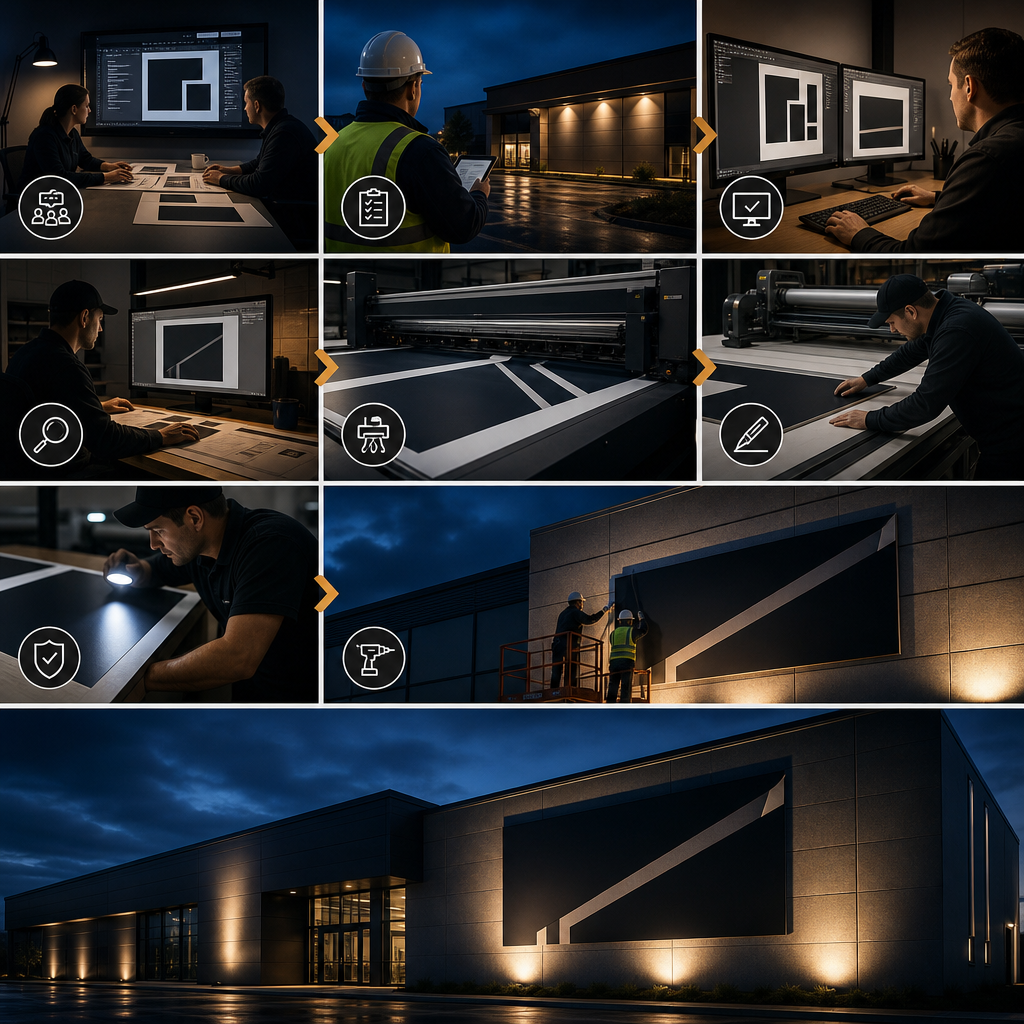
The process moves from site and application briefing through artwork preparation, preflight, proofing, printing, finishing, quality checks and installation. These stages are connected. A late change to material, dimensions or installation method can affect colour, cutting paths, panel joins, finishing and the suitability of the original artwork.
Briefing and site assessment
The supplier needs more than finished dimensions. A useful brief identifies the installation surface, indoor or outdoor exposure, expected service period, viewing conditions, access constraints and removal requirements.
Photographs help, but they can hide texture, failing paint, silicone contamination, moisture and access problems. For wall, window, vehicle and elevated installations, a site inspection or detailed survey can prevent incorrect material selection and unexpected labour.
Artwork preflight
Preflight checks whether the supplied file can be produced correctly. It should cover page dimensions, scale, bleed, image quality, colour space, fonts, transparencies, cut paths and panel layout.
The printer may also add production elements such as hems, eyelets, pockets, overlaps or trimming allowances. These can affect the visible area, so designers need the finishing specification before placing important text or logos near edges.
Proofing and approval
A PDF proof is useful for checking content, spelling, layout and dimensions. It cannot reliably show the final appearance of colour on a specific material. Screens emit light, while printed surfaces reflect it. Gloss, texture, opacity and surrounding light also change perception.
When colour or fine detail is commercially important, request a physical sample printed using the proposed material and production settings. Approval should state what is being accepted, including content, scale, colour expectations, joins and finishing.
Printing, finishing and quality control
After printing, the product may be laminated, contour cut, mounted, hemmed, eyeleted, sewn or assembled. Quality control should check visible defects, dimensions, colour consistency across panels, cutting accuracy and finishing.
For multi-panel graphics, dry fitting or layout checks can identify reversed panels, missing overlaps and alignment problems before the installation team reaches the site.
Which materials suit large-format printing?
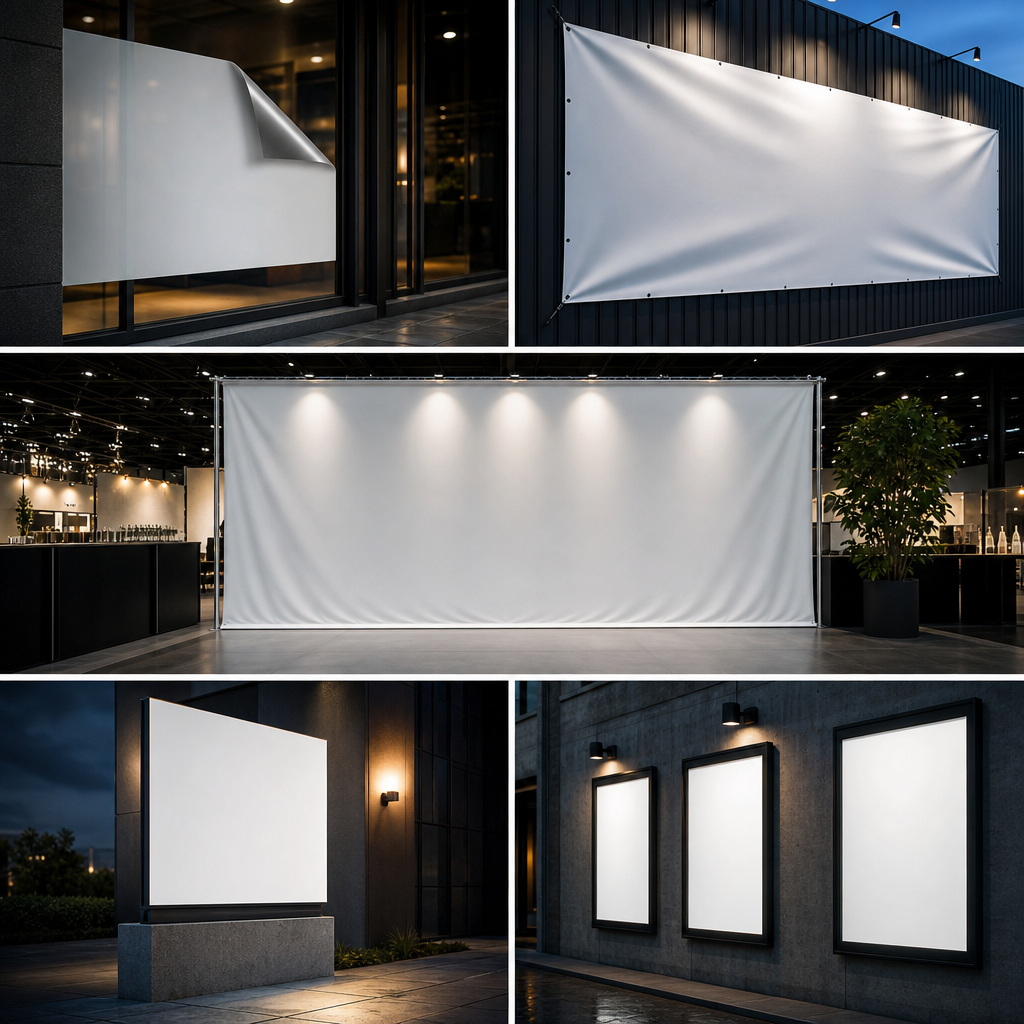
The correct material depends on surface type, rigidity, exposure, required appearance, installation method and removal plan. There is no universally best substrate. A low-cost material can become expensive if it curls, tears, damages the surface, cannot be installed safely or requires premature replacement.
Self-adhesive vinyl and films
Self-adhesive products are used for windows, walls, floors, panels and vehicles. Their performance depends on the adhesive, face film, surface and installation conditions.
A smooth glass panel is different from painted masonry or low-energy plastic. Fresh paint may also need adequate curing before graphics are applied. The material supplier's technical guidance should govern compatibility and preparation.
Window applications may use clear, opaque, perforated, translucent or frosted films. Each changes visibility, light transmission and the appearance from either side. Perforated window film also needs careful consideration where internal lighting affects outward visibility.
Banner materials and textiles
Flexible banner materials suit temporary promotions, events, fences and building displays. Selection should account for wind exposure, fixing points, edge reinforcement and whether the material will be rolled, folded or repeatedly handled.
Textile graphics can suit indoor displays where portability and a softer surface are useful. The print, sewing and frame system must be designed together. A fabric graphic that is slightly loose or incorrectly tensioned will not present as intended.
Rigid boards and sheet materials
Rigid substrates are used for displays, wayfinding, presentation panels, site signs and mounted graphics. Important variables include weight, stiffness, edge quality, moisture resistance, fire requirements and the fixing method.
A board suitable for a short indoor display may be unsuitable for exposed outdoor installation. Likewise, a durable sheet can still fail if its supports, fasteners or frame do not allow for the site conditions.
Paper and display media
Posters and photographic media remain useful for protected indoor spaces. Surface finish affects glare, contrast and perceived colour. A high-gloss print may look strong at close range but become difficult to read beneath direct lighting.
Material choice should therefore follow viewing conditions, not a sample viewed flat on a desk.
How should artwork be prepared?
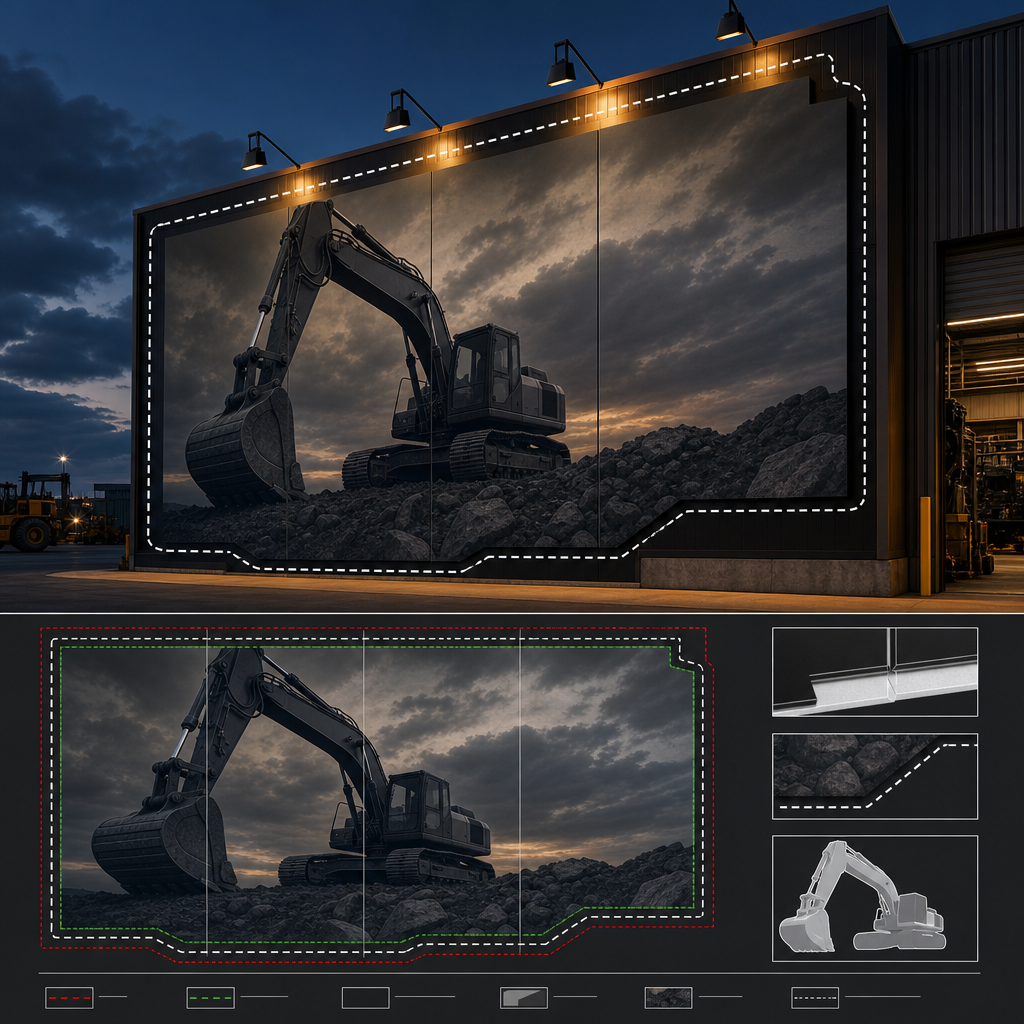
Large-format artwork should be built to the printer's supplied dimensions, scale, colour settings and finishing requirements. The file must contain enough image information for its intended viewing distance. Fonts, linked graphics, transparencies, bleed and cut paths should be checked before a production PDF is exported.
Design for viewing distance
Not every oversized graphic needs close-view photographic detail. A building banner may be viewed from across a road, while a display panel may be read from arm's length. The required image quality depends on that intended distance and the final output size.
This is why generic resolution rules can mislead. Ask the printer for an effective-resolution requirement at final size. Enlarging a low-quality image during preflight does not restore missing detail.
Keep critical content clear of production areas
Hems, eyelets, frames, overlaps, seams and trimming can occupy space near an edge. Keep logos, text and important faces inside the supplier's nominated safe area.
Multi-panel murals also need overlap and alignment planning. Avoid placing small text or key facial features directly across panel joins where possible.
Use controlled colour definitions
Brand colours should be identified clearly, preferably using the organisation's approved colour references rather than visual descriptions such as "bright red" or "navy". The International Color Consortium develops the profile framework used in colour-managed workflows, but profiles do not make every device and material identical.
Some colours sit outside the reproducible range of a selected ink and substrate combination. Transparent, metallic, fluorescent and strongly illuminated colours require particular care. A physical sample is the sensible approval method when matching matters.
Supply production-ready files
PDF is commonly used because it can preserve page geometry, vectors, images, fonts and colour information. The PDF/X standards within the ISO 15930 family define exchange conditions for graphic arts workflows. However, selecting a PDF/X preset does not fix poor source artwork or missing production instructions.
Provide native design files only when the printer requests them. A clear file handover should identify the approved version, finished size, scale, required quantity, material, finishing and any contour-cut or white-ink layers.
How do finishing and installation affect the result?
Finishing and installation determine whether the printed graphic becomes a functional sign, display or surface application. Laminates, mounts, hems, eyelets, frames and fixings must suit the material and environment. Installation planning must also address access, alignment, surface condition, weather, public interaction and workplace safety.
Lamination may add abrasion resistance, alter gloss and support cleaning. It is not automatically necessary for every job. The laminate and printed film must also be compatible, particularly where the finished product must conform to curves or recesses.
Mounting turns printed media into a rigid panel. The adhesive, board and surface expansion behaviour need consideration. Edge lifting or bowing can arise even when the print itself is sound.
Installation scope should state:
- who prepares and cleans the surface
- whether existing graphics must be removed
- how access will be provided
- whether electrical, traffic or site coordination is required
- who approves the final position
- how waste and removed materials will be handled
- what conditions may postpone the installation
Elevated work requires formal safety planning. Safe Work Australia's Model Code of Practice: Managing the risk of falls at workplaces provides guidance for controlling fall risks. A quote that excludes access equipment or assumes unrestricted access may not represent the final project cost.
What determines large-format printing cost?
Cost is determined by the selected material, printed area, ink coverage, finishing, file preparation, proofing, installation access, site conditions, freight and project coordination. A cheaper production line can hide excluded work. Comparable quotes must describe the same substrate, finish, installation scope and responsibility for removal or replacement.
Ask each supplier to identify the exact material family and finish rather than using broad descriptions such as "outdoor vinyl" or "premium board". Those labels do not explain adhesive type, film construction, surface finish or compatibility.
Quote review should also cover:
- artwork checking and corrective work
- colour sampling or proofing
- panel layout and joins
- edge finishing and hardware
- surface preparation
- access equipment and permits
- installation timing and site induction
- packaging and delivery
- removal of existing graphics
- waste handling and end-of-use options
Price should be considered against risk. Reprinting a graphic is only part of the cost of failure. A repeat installation may also involve site access, lost trading time, removal labour and surface repairs.
How long will large-format graphics last?
Service life depends on material construction, ink compatibility, orientation, exposure, surface preparation, installation quality, cleaning and physical wear. Supplier durability statements are conditional, not guarantees for every site. A graphic facing harsh weather or frequent contact will age differently from the same product installed indoors.
Before selecting a product, distinguish between the campaign period and the maximum possible material life. A temporary promotion may need reliable clean removal more than extended durability. A permanent sign may need replaceable graphic components so the whole structure is not discarded when information changes.
Maintenance instructions should specify approved cleaning methods. Abrasive tools, strong solvents and pressure cleaning can damage print, laminate or edges. Damage should be addressed early because lifted edges can collect dirt and moisture.
Keep production records for repeat work. Useful records include approved artwork, dimensions, material, colour settings, finishing, installation photographs and any site-specific notes. Without them, a later reprint may only approximate the original.
Sustainability requires a project plan, not a material label
A credible sustainability approach considers material quantity, expected service period, replacement frequency, transport, installation, removability and realistic disposal routes. Calling a product "eco-friendly" without explaining the basis is not enough. The lowest-impact choice is often the system that avoids unnecessary reprints and separates cleanly at replacement.
The Australian Competition and Consumer Commission advises businesses to make environmental claims that are clear, specific and supported by evidence. Buyers should apply the same standard when assessing supplier claims. Ask what the statement means, which part of the product it covers and what disposal pathway is actually available locally.
Practical measures include designing reusable frames, replacing only the printed face, avoiding excessive material specification, consolidating production and identifying waste streams before ordering. A theoretically recyclable substrate has limited value when adhesives, laminates or local collection rules prevent practical recovery.
Temporary campaigns deserve particular scrutiny. The short display period does not remove the need for durability, but it changes the design objective. Clean removal, reusable hardware and reduced component complexity may matter more than choosing the heaviest available product.
The unit of quality is the installed outcome
The most useful way to judge large-format printing is not by the print sample alone. Quality is the installed outcome in its real setting. That includes readability, alignment, surface adhesion, edge finish, colour under site lighting, safe access, clean removal and the ability to reproduce or replace components later.
This view changes procurement. Instead of sending artwork to several printers and asking for a unit price, start with an outcome brief. State where the graphic will go, who will view it, how long it is needed, what surface exists and what happens after removal.
It also exposes a common false economy. Buyers often focus on the visible printed face because it is easy to compare. Yet an unsuitable adhesive, omitted site inspection or unclear installation scope creates greater risk than a minor difference in print price.
The stronger workflow is application first, system second and artwork third. That order may feel slower at the start. It reduces late redesign because the creative work is built around known production and installation constraints.
Choosing a large-format printing supplier
Choose a supplier that asks detailed questions about the application before recommending a product. Strong suppliers explain material trade-offs, document artwork requirements, identify installation exclusions and offer an appropriate proofing process. Equipment capability matters, but clear scoping and production control are more useful than a long list of machines.
Ask potential suppliers how they manage:
- material selection for unusual surfaces
- colour-critical brand work
- large artwork files and version control
- multi-panel alignment
- outsourced production or installation
- defects discovered before dispatch
- access constraints and site inductions
- repeat orders and archived specifications
- material documentation and environmental claims
The answers should be specific. A supplier who cannot explain why a particular material suits the site is asking you to accept avoidable uncertainty.
For a scoped recommendation, prepare site photographs, approximate dimensions, intended use, required timing and existing artwork. Then visit Sunquest Signs' /contact page to discuss the project and confirm what further information is needed before quoting.
References
These sources provide recognised guidance on colour management, print-file exchange, Australian safety signage, workplace installation risk and environmental marketing claims. Product-specific decisions should also refer to the relevant manufacturer's technical data, because material compatibility and installation conditions vary between systems.
- International Color Consortium, colour management profiles and device-independent colour workflows.
- International Organization for Standardization, ISO 15930 family for graphic technology prepress digital data exchange using PDF.
- Standards Australia, AS 1319-1994, Safety signs for the occupational environment.
- Safe Work Australia, Model Code of Practice: Managing the risk of falls at workplaces.
- Australian Competition and Consumer Commission, guidance concerning environmental and sustainability claims.
Talk to a signage expert
Tell us about your project and we'll come back with options and honest advice.
Get in TouchFrequently Asked Questions
What is the difference between large-format and wide-format printing?
The terms are often used interchangeably for printing beyond common office and commercial sheet formats. The important factors are the supplier's output dimensions, compatible materials and finishing capability.
Can a normal image be enlarged for large-format printing?
An image can be enlarged, but enlargement does not create missing detail. Suitability depends on the source file, final output size and intended viewing distance.
Is large-format printing waterproof?
Not automatically. Water resistance depends on the ink, substrate, protective finish, edges, seams and installation method. The printer needs to know the actual exposure conditions.
Do large-format prints need lamination?
Some applications benefit from lamination for abrasion resistance, cleaning or surface finish. It is not necessary for every product and must be compatible with the printed material.
Which file format is best for large-format printing?
A correctly prepared PDF is commonly preferred, although the printer's artwork specification is the authority. The file must include the requested scale, bleed, images, fonts, colours and cutting paths.
How should large-format printing quotes be compared?
Compare material, finishing, proofing, artwork checks, delivery, installation, surface preparation, removal and exclusions. Quotes are only comparable when they cover the same completed scope.
Signs that set you apart
Over 40 years on the Sunshine Coast. Design, compliance, manufacture and installation handled end to end.
Get a Free Quote