
Commercial Signage Cost Guide for Australian Businesses
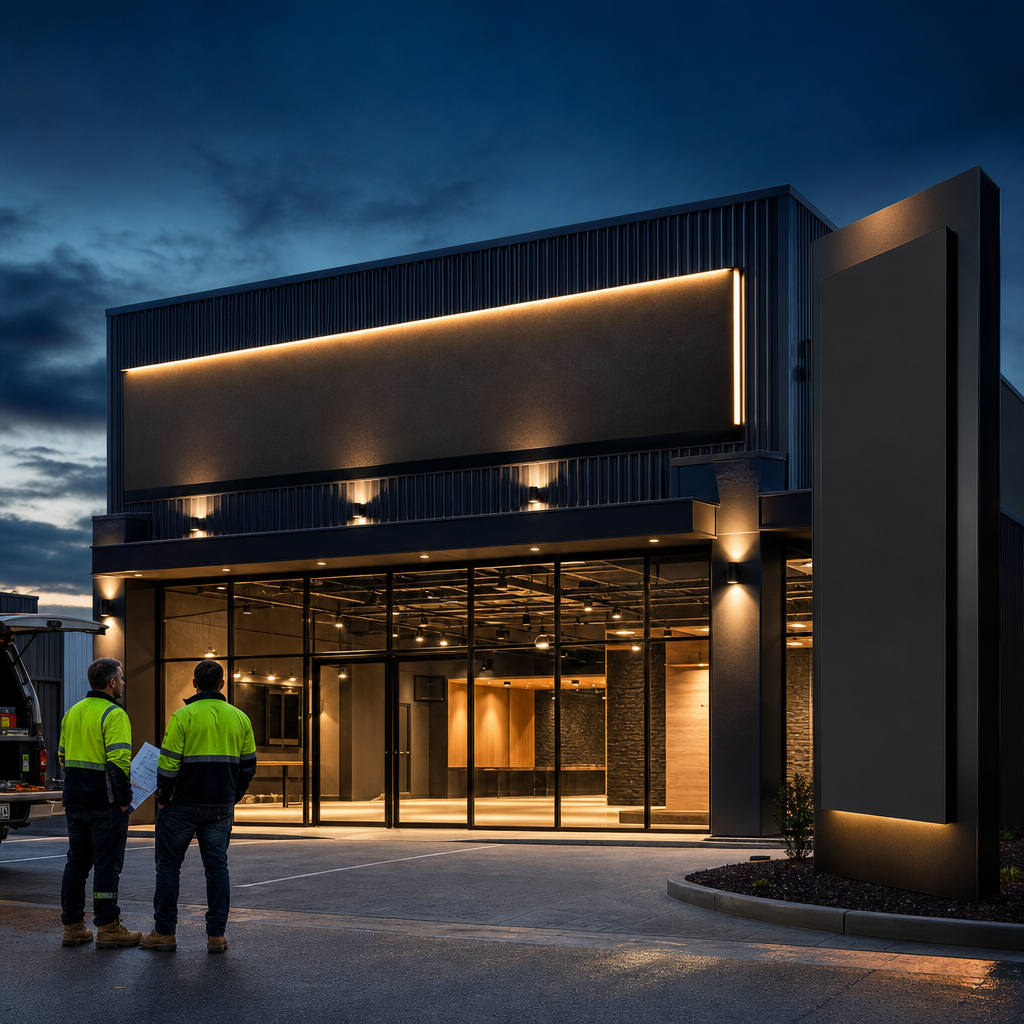
Commercial signage costs depend on sign type, dimensions, materials, illumination, site access, engineering, approvals and installation. There is no reliable universal price per square metre. Australian businesses should compare detailed, like-for-like quotes covering design, manufacture, electrical work, permits, installation, warranties and ongoing maintenance.
A sign is both a marketing asset and a fabricated product attached to a physical site. Its price therefore reflects much more than the printed or illuminated face customers see.
This commercial signage cost guide explains what drives quotations, how sign types compare and where avoidable expenses enter a project. It also provides a practical method for assessing value without relying on misleading headline prices.
Key takeaways
The cheapest quotation is not necessarily the lowest-cost option once approvals, installation, maintenance and replacement are considered. A useful budget begins with the site, visibility objective and expected service conditions, followed by a detailed scope that every supplier can price consistently.
- Sign type and construction method usually affect cost more than graphics alone.
- Dimensions matter, but structural support, access and installation complexity can matter just as much.
- Illuminated signs require electrical components, compliant installation and future maintenance planning.
- Council approval, landlord consent and engineering may sit outside an initial manufacturing quote.
- Material selection should reflect exposure, viewing distance and intended service life.
- Like-for-like quote comparison is more dependable than a generic signage price list.
Ready to make your business impossible to miss?
Design, manufacture and installation, all under one roof in Warana.
Get a Free QuoteCommercial signage cost summary
Commercial signage prices are best compared by relative complexity rather than unsupported national price bands. The table below shows where common sign categories generally sit and identifies the cost elements most likely to move a quotation. Actual pricing still requires drawings, dimensions and a site assessment.
| Sign category | Relative project complexity | Main cost drivers | Common exclusions to check |
|---|---|---|---|
| Printed window graphics | Lower | Film type, artwork preparation, glazing area and access | Removal of existing film, glass preparation and after-hours work |
| Flat wall or fascia panel | Lower to moderate | Panel material, print or vinyl finish, dimensions and mounting method | Wall repairs, access equipment and landlord approval |
| Fabricated lettering | Moderate | Letter depth, material, finish, mounting pattern and installation access | Engineering, wall reinforcement and electrical work |
| Illuminated lettering | Moderate to high | LEDs, power supplies, wiring, returns, access and lighting method | Power connection, timers, permits and future servicing |
| Lightbox signage | Moderate to high | Cabinet construction, face material, illumination and supporting structure | Electrical connection, engineering and access equipment |
| Pylon or freestanding sign | High | Footings, steelwork, engineering, excavation, access and approvals | Service locating, traffic control and ground remediation |
| Digital display | High | Display hardware, enclosure, control system, connectivity and content | Software, content production, data, electrical upgrades and servicing |
| Wayfinding system | Scope dependent | Sign schedule, message hierarchy, quantity, substrates and installation locations | Site audit, naming review and future updates |
What determines commercial signage costs?
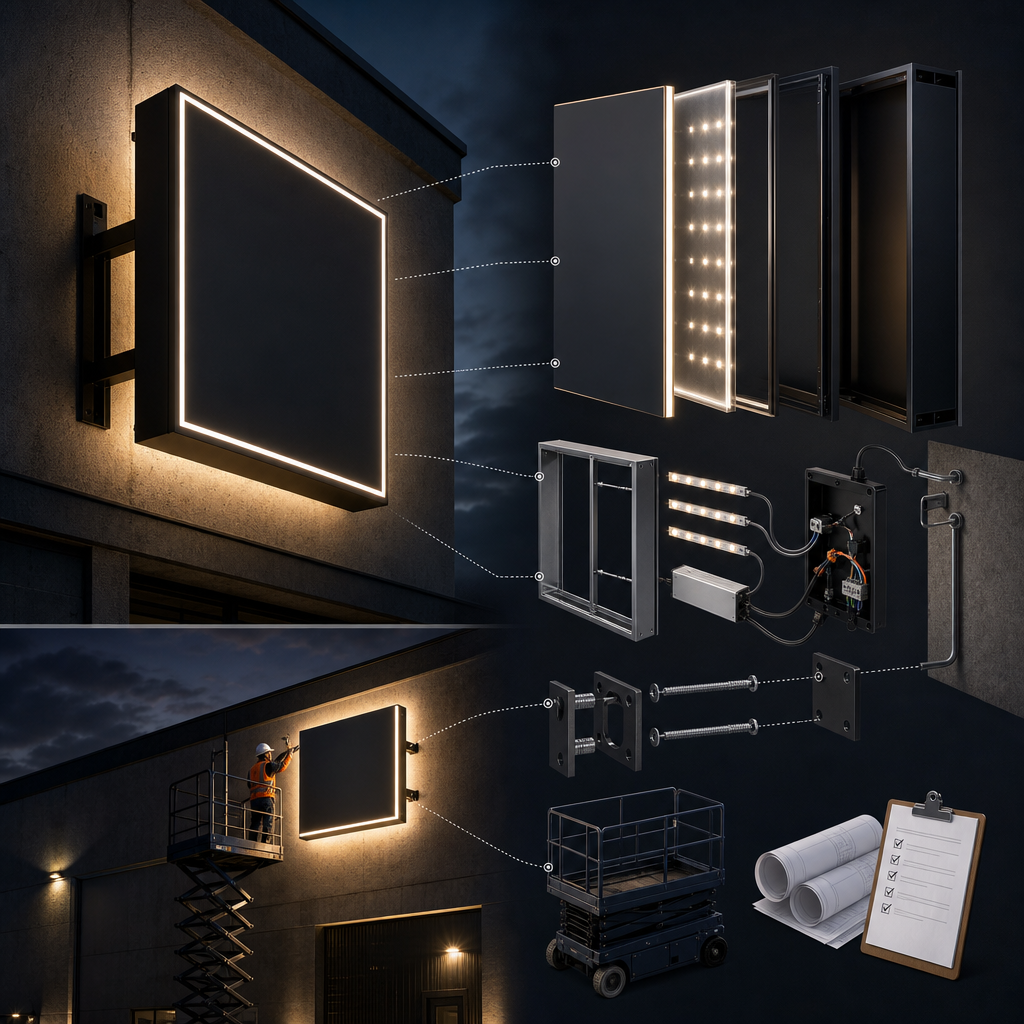
Commercial signage costs are determined by the complete job scope: design, dimensions, fabrication, materials, finishes, illumination, structural requirements, access, approvals and installation. Two signs with similar visible areas can carry very different prices because one may need engineered supports, electrical work or specialised access equipment.
Sign dimensions and structural load
Larger signs require more material, but material area is only part of the calculation. Increasing a sign's dimensions can also change its frame, fixing method, wind loading and transport requirements.
A large panel mounted near ground level may remain straightforward. A smaller sign installed high on a difficult facade may require an elevated work platform, additional labour controls and more complex fixings. This is why a simple price per square metre often fails.
Freestanding signs can require footings, structural steel and engineering documentation. Underground services may affect where excavation is possible. Soil conditions and exposure can also influence the support design.
Site access and installation conditions
Installation costs depend on how safely and efficiently installers can reach the final position. Important variables include building height, awnings, traffic, pedestrian movement, nearby powerlines, restricted loading areas and available working hours.
Safe Work Australia's model Code of Practice for construction work establishes a risk-management framework relevant to many installation activities. A competent sign contractor should assess site hazards rather than treat installation as an afterthought.
After-hours work may reduce disruption but can add labour and access costs. Shopping centres and managed properties may also require inductions, work permits, insurance evidence and coordination with centre management.
Design and artwork readiness
Providing a logo file does not necessarily mean the artwork is production-ready. Fabricators may need vector artwork, colour specifications, scaled elevations, fabrication drawings and mounting layouts.
A rebrand still being developed can create repeated revisions. Finalising the brand hierarchy, wording and sign locations before detailed production design reduces duplicated work. It also gives suppliers a stable scope to quote.
Quantity and repeatability
Multiple identical signs can be more efficient than several unique signs because setup, programming and material ordering can be repeated. However, installation conditions may differ across sites.
A multi-site rollout should separate repeatable manufacturing costs from location-specific costs. Each site may have different approval rules, access restrictions, electrical capacity and facade construction.
How sign type affects the price
The selected sign type changes the manufacturing process, component count and installation method. Printed graphics are generally simpler than fabricated or illuminated structures. Pylon signs and digital displays introduce additional structural, electrical or technical requirements, making the sign category a central budget decision rather than a cosmetic choice.
Fascia panels and wall signs
Flat panels can use aluminium composite material, solid aluminium or other rigid substrates. The panel may carry printed graphics, applied vinyl or dimensional elements.
The supporting wall matters. Fixing to a suitable masonry surface differs from mounting across cladding, uneven facades or concealed structural members. Existing sign removal and patching should be identified before quoting.
Three-dimensional letters and logos
Fabricated letters create depth and stronger shadow lines. Costs change with letter height, depth, material, finish and whether elements are installed individually or mounted to a rail or backing panel.
Individual mounting can produce a cleaner architectural result, but it may require more site labour and accurate drilling templates. A rail can simplify installation and reduce penetrations, although it remains visible.
Illuminated signs and lightboxes
Illumination adds LEDs, power supplies, wiring, access points and electrical installation. Lighting can be face-lit, halo-lit, edge-lit or internal to a cabinet. Each approach creates different fabrication and maintenance requirements.
Ask where power supplies will be located and how they can be serviced. A visually clean design that makes components inaccessible can become expensive when repairs are needed.
Electrical connection must be completed in accordance with applicable Australian requirements. The National Construction Code may also affect aspects of building work, fire safety and attachment, depending on the project.
Pylon and freestanding signs
A pylon sign is a structure, not merely a graphic panel. Its quotation may involve concept design, engineering, excavation, reinforcement, concrete, steel fabrication, cladding, illumination and installation.
Businesses should confirm whether service location, soil information, engineering certification, approval drawings and traffic management are included. These items can materially affect the final project cost.
Digital signage
Digital signage combines physical hardware with software and ongoing operations. The initial scope can include the display, enclosure, mounting system, media player, network connection, electrical supply and commissioning.
Ongoing signage costs may include software subscriptions, connectivity, content creation, component replacement and technical support. Outdoor displays also need appropriate weather protection, brightness, ventilation and security.
Digital is not automatically better than static signage. It makes sense when content changes frequently or scheduling has a clear operational purpose. A static sign can provide better value when the message rarely changes.
How materials influence signage prices and service life
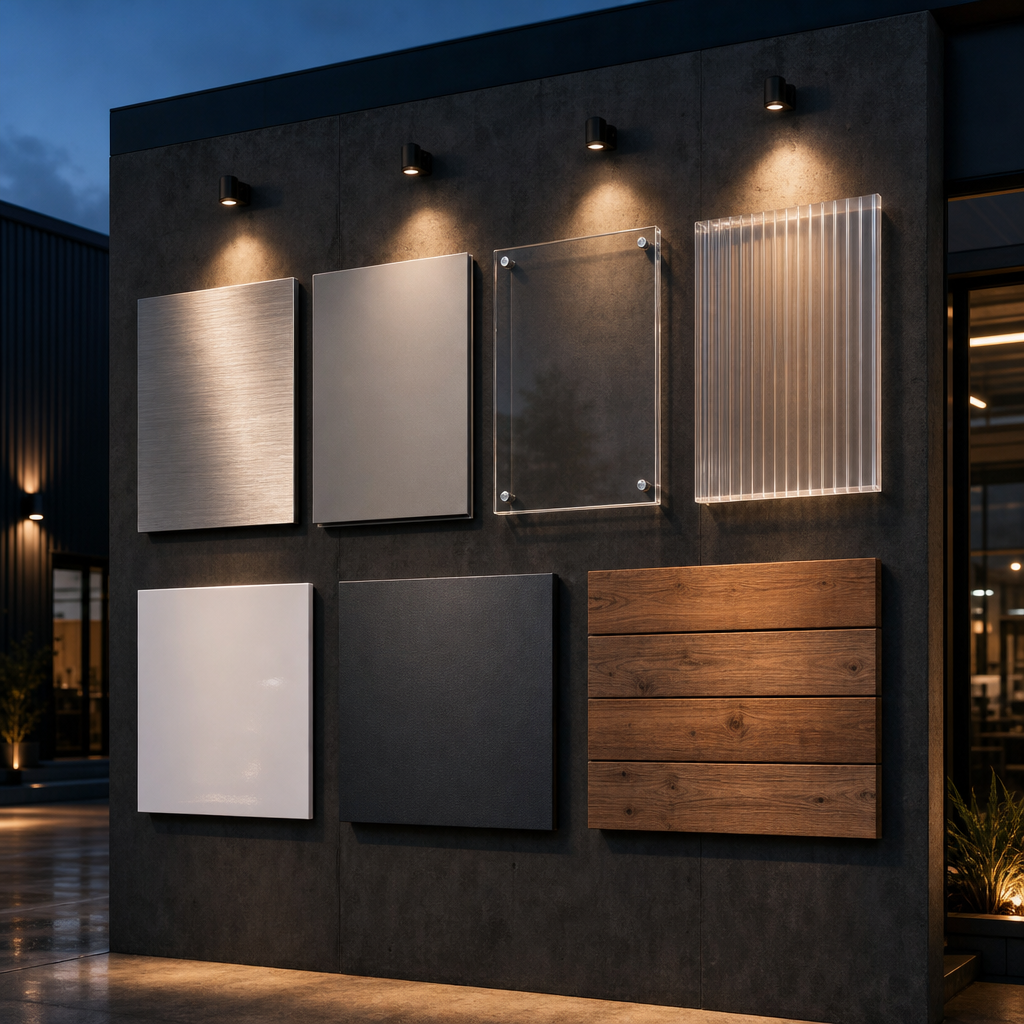
Material choice affects purchase price, appearance, weight, weather resistance, fabrication time and maintenance. The right specification is not automatically the most expensive option. It is the material and finish suited to the sign's exposure, viewing distance, mounting location and expected replacement cycle.
Aluminium and aluminium composite material
Aluminium is widely used because it is relatively light, workable and corrosion resistant when appropriately specified. Solid sheet and fabricated aluminium are common in durable exterior signs and dimensional lettering.
Aluminium composite material consists of outer aluminium skins around a core. It is often used for flat panels and cladding. Product grades and suitability vary, so the specification should reflect the application and relevant building requirements.
Acrylic and polycarbonate
Acrylic provides a clean face for illuminated lettering, lightboxes and dimensional elements. It can be formed, cut and produced in various colours and opacities.
Polycarbonate may be selected where impact resistance is important. The quotation should identify the actual material rather than using a vague description such as "plastic face". Material type, thickness and finish affect both performance and price.
Vinyl films and printed graphics
Vinyl is used for windows, vehicles, wall panels and overlays. Cost differences can reflect adhesive technology, conformability, print system, laminate and intended exposure.
A short promotional application does not need the same specification as a permanent exterior identity sign. Conversely, choosing a temporary film for demanding long-term exposure can lead to lifting, fading or difficult removal.
Steel, timber and specialty finishes
Steel can provide structural strength but requires appropriate corrosion protection. Timber can create a particular architectural appearance, although exterior exposure and ongoing coating maintenance need consideration.
Powder coating, two-pack paint, metallic finishes and custom colour matching add production steps. Ask suppliers to define the finish system and colour reference so quotations remain comparable.
Approvals, engineering and compliance costs
Commercial signs may require landlord consent, planning approval, building approval, engineering or electrical work before installation. Requirements vary by council, property and sign design. Businesses should confirm responsibility for approvals early because excluded documentation, application fees or design changes can alter the budget and programme.
Local planning rules can regulate sign area, height, illumination, movement, location and impact on traffic or nearby properties. Brisbane City Council, for example, maintains specific guidance for advertising devices. Other Australian councils apply their own planning instruments and approval pathways.
Some signs may qualify for an exemption when they satisfy stated conditions. That should not be assumed from another business's project. A compliant sign at one property may need approval at another because zoning, heritage controls, road position or dimensions differ.
Landlord approval is separate from council approval. A lease or centre signage manual may control colours, placement, penetrations and illumination hours. Obtain written consent before manufacture.
Where structural engineering is needed, the engineer requires accurate dimensions, materials and attachment details. Changing the sign after engineering can trigger redesign and further review.
What should a complete signage quote include?
A complete signage quote should define the sign design, dimensions, materials, finishes, illumination, quantity, installation method, site assumptions and exclusions. It should also state whether artwork, approvals, engineering, electrical connection, access equipment, removal, disposal, warranties and GST are included, allowing a genuine like-for-like comparison.
Use the following quote checklist:
- Scaled dimensions and quantity for every sign
- Exact substrate, material thickness and finish
- Print, vinyl, paint or colour-matching specification
- Illumination method and component access
- Fabrication and mounting construction
- Site location and assumed wall or ground condition
- Installation labour and access equipment
- Electrical connection and isolation arrangements
- Engineering and certification responsibilities
- Council, building and landlord approval responsibilities
- Existing sign removal, disposal and surface repairs
- Freight, travel and site induction costs
- Defect, product and installation warranties
- Maintenance access and replacement component availability
- GST treatment
The Australian Taxation Office states that GST is generally charged at ten per cent on most goods and services sold in Australia. Confirm whether each commercial quote is GST-inclusive before comparing totals.
Provisional sums and assumptions deserve particular attention. A quote based on "standard access" is not useful unless standard access is defined. Photographs help, but a site inspection can expose cladding, power, access or fixing issues that photographs miss.
How to get better value from business signage
Better value comes from specifying the communication task before selecting the sign. Prioritise visibility, legibility, durability and service access, then spend where those factors improve performance. Reduce decorative complexity that customers cannot perceive, and avoid under-specifying components that are difficult or expensive to replace later.
Start with the viewing conditions
Record where the audience approaches from, how far away the sign must be read and whether viewers are walking or driving. Check obstructions, competing signs, daylight, night visibility and likely future landscaping.
A beautifully detailed sign can fail if the lettering is too small or the message is crowded. Establish the primary message first. Business name, category and entry direction often matter more than extra promotional copy.
Separate essential and optional scope
Ask the supplier to identify a recommended specification and clearly priced alternatives. Options might include illumination, premium finishes, additional dimensional depth or a different mounting system.
This makes cost reduction deliberate. It is better than asking for an unexplained discount that may result in thinner materials, reduced preparation or omitted services.
Design for maintenance
Confirm how faces, LEDs, power supplies and printed panels can be accessed. Components should be replaceable without dismantling unrelated building elements wherever practical.
Also ask how the finish should be cleaned. Aggressive chemicals or pressure cleaning can damage films, paint and acrylic surfaces. A basic maintenance plan protects appearance and helps identify faults early.
Compare whole-of-project scope
A lower manufacturing quote may exclude installation, engineering, permits or electrical connection. Another supplier may include these tasks. Compare the final installed scope, not a single headline figure.
Marketplace cost guides can provide broad context, but they often combine different locations, installer tasks and project definitions. They should not replace a site-specific commercial quotation.
Price signage by useful visibility, not square metres
The strongest budgeting method is to assess the cost of achieving useful visibility at a specific site, not the cost of covering an area. Sign area has little value if placement, contrast, message hierarchy or night performance is poor. Start with the viewing task, then engineer the simplest durable solution.
This approach changes common purchasing decisions. Consider a hypothetical shop with a wide facade but a narrow pedestrian approach. Covering the entire fascia may add material without improving recognition. Well-positioned lettering near the actual sightline could perform the communication task with less visual clutter.
Now consider a business set back from a busy road. A small, highly detailed wall sign may use premium materials but remain unreadable from passing vehicles. A simpler freestanding sign with fewer words could provide more useful visibility, although foundations and approval may increase its project complexity.
The point is not that smaller or simpler signs always cost less. It is that budget should follow what the audience can notice and read. Before requesting prices, document:
- The main audience and approach direction
- The required viewing position
- The most important message
- Day and night visibility needs
- Physical and planning constraints
- Expected update frequency
- Maintenance access
This creates a better brief and reduces arbitrary quote differences. It also lets a signage contractor challenge unnecessary specifications while protecting the parts that affect performance.
Planning your signage budget and next step
A practical signage budget should include design, manufacture, approvals, engineering, installation, electrical work, site access, removal and maintenance, with contingency for verified site conditions. The next step is a documented site assessment and itemised quotation rather than selecting a product from a generic price list.
Prepare photographs, approximate dimensions, brand files, site address, landlord requirements and your preferred installation timing. Explain what the sign must achieve and where customers approach from. If illumination is required, identify any known power locations.
Sunquest Signs can review the site, intended sign type and installation conditions, then prepare a customised quotation. Ask for included work, exclusions and optional specifications to be clearly separated. That provides a defensible commercial decision instead of an unreliable headline price.
References
The following recognised Australian sources provide guidance relevant to taxation, approvals, construction requirements and installation risk. Local requirements must still be checked for the specific property and proposed sign.
- Australian Taxation Office, "Goods and services tax": https://www.ato.gov.au/businesses-and-organisations/gst-excise-and-indirect-taxes/gst
- Australian Building Codes Board, National Construction Code: https://ncc.abcb.gov.au/
- Safe Work Australia, "Construction work: Code of Practice": https://www.safeworkaustralia.gov.au/doc/model-code-practice-construction-work
- Brisbane City Council, "Advertising devices": https://www.brisbane.qld.gov.au/planning-and-building/do-i-need-approval/business-projects/advertising-devices
- Australian Competition and Consumer Commission, "Environmental claims and greenwashing": https://www.accc.gov.au/business/advertising-and-promotions/environmental-claims
FAQ_SCHEMA_JSON
Talk to a signage expert
Tell us about your project and we'll come back with options and honest advice.
Get in TouchFrequently Asked Questions
How much does commercial signage cost in Australia?
There is no dependable universal price because commercial signs vary in dimensions, materials, construction, illumination, access and approval requirements. Request an itemised quote based on drawings and a site assessment. Generic online figures may exclude installation, engineering, electrical work, removal or permits.
Does a signage quote normally include installation?
Not always. Some quotes cover manufacture only, while others include delivery and installation. Confirm labour, access equipment, fixings, travel, inductions, traffic control and surface repairs. Electrical connection may also be quoted separately from illuminated sign manufacture.
Do business signs need council approval?
Some do, while others may be exempt when they satisfy local conditions. Requirements vary by council, zoning, property and sign type. Check planning rules, building requirements and landlord consent before production rather than assuming approval is unnecessary.
Are illuminated signs expensive to maintain?
Maintenance depends on component quality, operating conditions and service access. Ask how LEDs and power supplies can be reached and replaced. A design with accessible components can reduce service difficulty, while inaccessible wiring or sealed building interfaces may increase future labour.
What information is needed for an accurate signage quote?
Provide the site address, photographs, approximate dimensions, sign locations, brand artwork, material preferences, illumination needs and desired timing. Include landlord or centre requirements where available. A site inspection may still be needed to confirm access, structure, power and fixing conditions.
Signs that set you apart
Over 40 years on the Sunshine Coast. Design, compliance, manufacture and installation handled end to end.
Get a Free Quote