Frequently asked signage questions
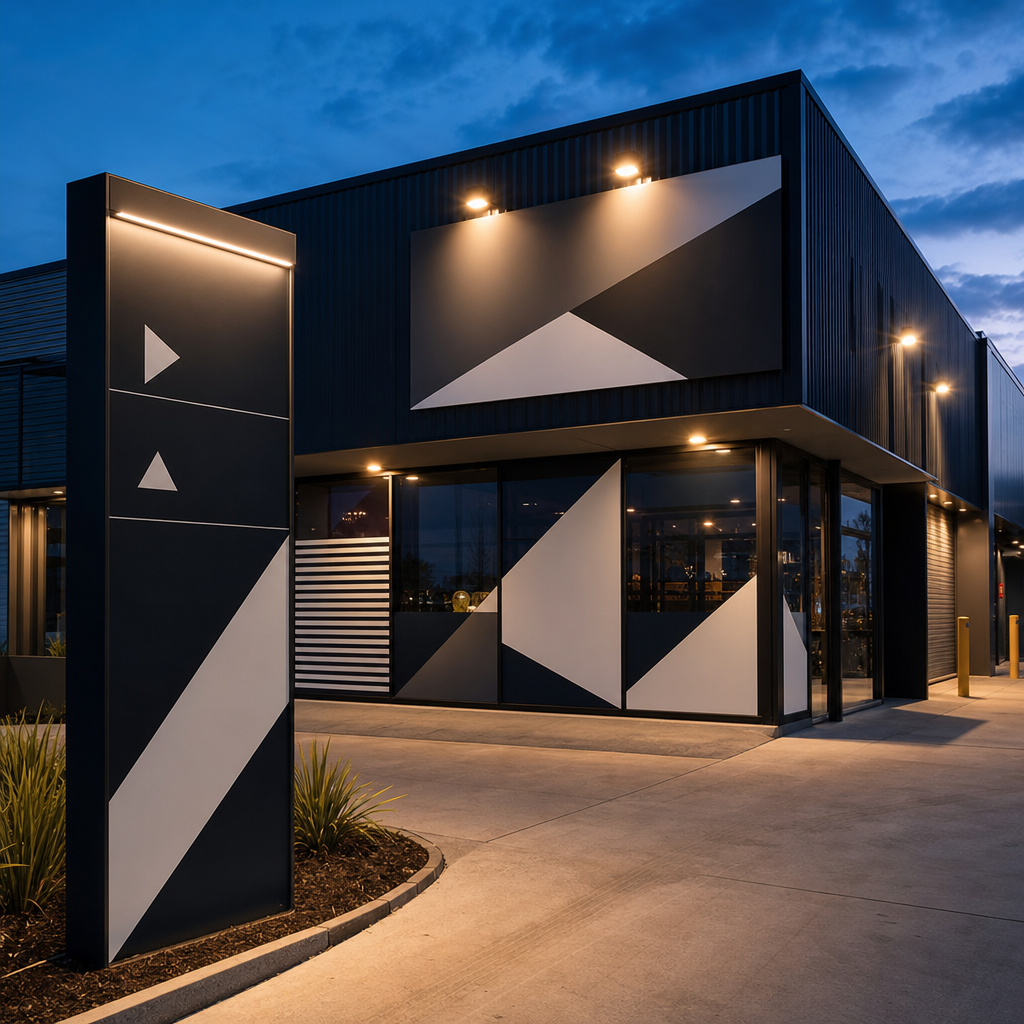
Frequently asked signage questions usually cover cost, timing, materials, artwork, approvals, installation and maintenance. The right answer depends on the sign's purpose, location, viewing conditions and expected lifespan. A reliable signage company should assess those factors before recommending a product, rather than quoting from dimensions alone.
Signage can look simple once it is installed. Behind the finished result are decisions about design, structure, substrates, finishes, access, electrical work, council requirements and safe installation.
This guide explains what Australian businesses should ask before approving a sign. It also shows where cheap specifications create avoidable costs later.
Key takeaways
- Start with the sign's purpose, audience and location, not a preferred material.
- Pricing depends on design, fabrication, access and installation, not dimensions alone.
- Outdoor signs need materials and finishes suited to local exposure conditions.
- Artwork must remain legible at the intended viewing distance and speed.
- Council approval, building requirements and accessibility standards may apply.
- A detailed written quote is more useful than a low headline price with exclusions.
Ready to make your business impossible to miss?
Design, manufacture and installation, all under one roof in Warana.
Get a Free QuoteSummary table
| Question | What affects the answer | What to confirm before approval |
|---|---|---|
| What will it cost? | Size, material, finish, structure, access and installation | Scope, exclusions, electrical work and site costs |
| How long will it take? | Design approval, fabrication, permits, suppliers and site access | Artwork deadline, approval pathway and installation window |
| Which material is best? | Location, exposure, lifespan, appearance and maintenance | Substrate, print method, finish and fixing system |
| Do I need approval? | Sign type, property, council rules and building requirements | Landlord consent, permits and compliance responsibilities |
| Who supplies artwork? | Existing brand files and design complexity | File formats, proofing process and artwork ownership |
| What happens after installation? | Product type, environment and warranty terms | Cleaning, maintenance, defects process and exclusions |
What information should you provide before ordering signage?
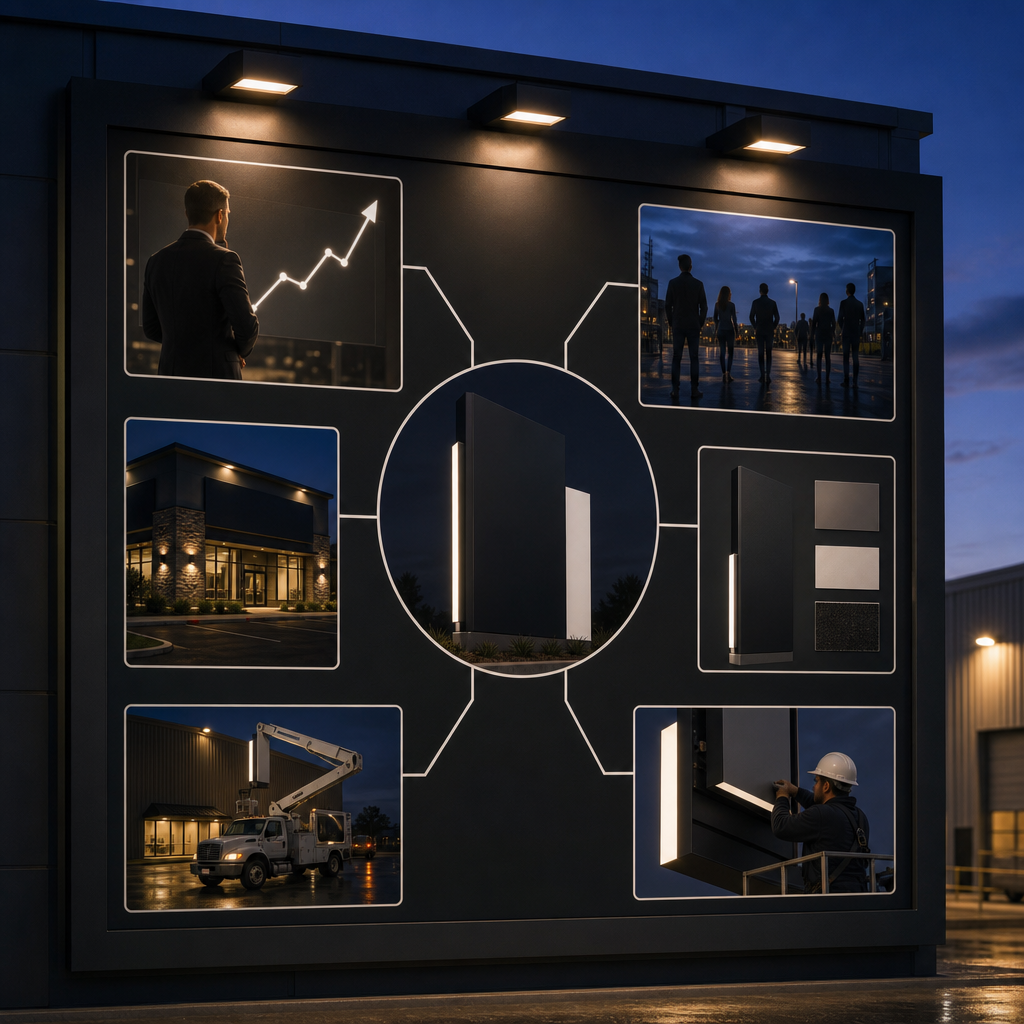
A useful signage brief should explain what the sign must achieve, where it will be installed, who needs to see it and how long it should remain in service. Site photographs, measurements, brand files and access details help the signage company recommend a suitable design, material and installation method.
Begin with the business outcome. A sign might need to identify a tenancy, direct visitors, promote an offer, display safety instructions or make a vehicle recognisable. These are different jobs and should not receive the same specification.
Location changes the brief. Confirm whether the sign will be indoors or outdoors, mounted to a wall, fixed to a freestanding structure, applied to glass or installed on a vehicle. Note any exposure to direct sun, rain, wind, salt air, dust, heat, cleaning chemicals or regular contact.
The audience matters too. A pedestrian reading a reception sign has more time than a driver passing a roadside sign. Directional signage must be understood quickly. Safety signage needs clarity and consistency. Retail signage may need to balance brand character with immediate readability.
Provide the best available brand assets. Vector artwork is generally preferred for logos because it can be scaled without losing definition. Supply brand guidelines where available, including approved colours, typefaces and spacing rules. A low-resolution image copied from a website is rarely suitable for large-format production.
Access information prevents later surprises. Mention stairs, narrow entries, traffic, restricted operating hours, overhead services and surfaces that may require specialist fixings. If the site is leased, confirm who can authorise drilling, electrical connections and permanent changes.
A site inspection may still be needed. Photographs cannot always reveal wall condition, concealed services, accurate fixing points or the safest installation approach.
How much does business signage cost?
Business signage cost depends on the complete specification, including design, materials, fabrication, finishing, structural support, electrical components, access equipment and installation. Two signs with similar dimensions can have very different prices when one uses standard printed panels and the other requires fabricated lettering, illumination or difficult high-level access.
The main cost drivers are:
- Design and artwork: Simple production from approved vector files differs from developing a new sign layout or rebuilding unsuitable artwork.
- Substrate: Paper, self-adhesive film, corflute, rigid composite panels, acrylic and fabricated metal serve different purposes.
- Print and finish: Lamination, protective coatings, contour cutting and colour matching add production steps.
- Fabrication: Three-dimensional letters, folded trays, lightboxes and custom frames require more labour than flat panels.
- Illumination: Power supplies, wiring, internal components and licensed electrical work affect scope.
- Installation: Height, traffic management, difficult access, surface condition and removal of old signage can change the job significantly.
- Approvals: Drawings, engineering information and application work may be required before installation.
Ask for an itemised written quote. It should describe the sign, dimensions, material, finish, installation method and important exclusions. Clarify whether design revisions, removal, disposal, permits, electrical connections, access equipment and surface repairs are included.
The cheapest quote is not necessarily comparable. A lower price may reflect a thinner substrate, a different film, no protective laminate, basic fixings or an installation allowance based on incomplete site information. Compare specifications line by line rather than comparing the final totals alone.
GST should also be clear. Australian business quotes should state whether pricing includes or excludes GST so the approval amount is unambiguous.
How long does signage design, production and installation take?
Signage timing depends on how quickly the design is approved, whether a site inspection is required, the complexity of fabrication, material availability and any permit or access requirements. Straightforward printed signage generally moves through production faster than custom fabricated, illuminated or engineered signs, but every project should receive a confirmed schedule.
A typical workflow includes briefing, site assessment, design, proof approval, production, quality checks and installation. Delays often occur before fabrication because decision-makers have not approved the wording, branding, dimensions or final proof.
Businesses can reduce avoidable delays by providing complete artwork and consolidated feedback. Nominate one person with authority to approve the design. Collect feedback internally before sending it to the designer. Conflicting comments from several stakeholders create extra revisions and increase the risk of an error reaching production.
Permits and landlord approval should be investigated early. Do not wait until the artwork is complete to ask whether the proposed sign is allowed. Approval requirements can affect size, placement, illumination and mounting, which may force a redesign.
Installation timing also depends on site operations. A retail centre may restrict noisy work or require contractor induction. A roadside installation may need traffic controls. Internal signs may need to be fitted outside customer-facing hours. These conditions should be identified before a deadline is promised.
If signage is tied to an opening, event or campaign, work backwards from the required installation date. Treat proof approval as a firm milestone. Production should not begin with unresolved copy or an unapproved logo because correcting a manufactured sign is more expensive than correcting a proof.
Which signage material is best for your application?
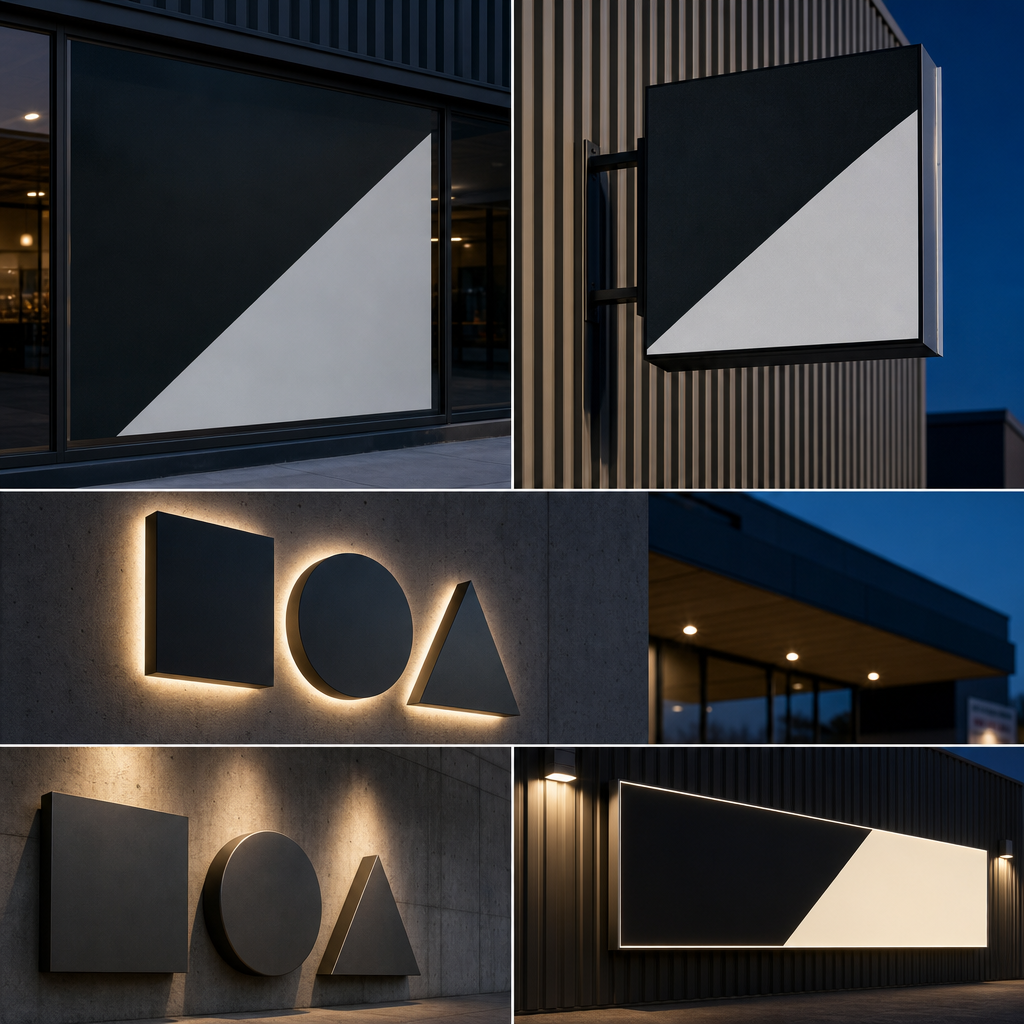
The best signage material is the one suited to the location, lifespan, visual standard and maintenance conditions. There is no universally superior substrate. A short-term promotional panel, permanent building sign, window graphic and vehicle wrap face different stresses, so choosing material by price or appearance alone can produce poor results.
Common options include:
Self-adhesive films
Self-adhesive films can be used for windows, walls, panels and vehicles when the product is compatible with the surface. The correct film depends on whether the application is temporary or permanent, flat or curved, indoor or outdoor, and removable or long term.
Surface preparation matters. Dust, grease, unstable paint and textured finishes can prevent proper adhesion. Fresh paint may also need suitable curing before graphics are applied. Product instructions and surface compatibility should be checked rather than assumed.
Rigid printed panels
Rigid panels suit directional signs, property signs, information boards and many building applications. The substrate should be selected for the environment and fixing method. Lightweight temporary boards are not substitutes for products intended for exposed, permanent installation.
Edges, fixings and support structures deserve the same attention as the printed face. A panel can use an appropriate graphic finish yet still fail if it flexes excessively or is attached to an unsuitable surface.
Acrylic and fabricated lettering
Acrylic panels and dimensional lettering can provide a refined finish for reception areas, shopfronts and building identification. The design needs appropriate spacing, secure mounting and enough contrast against the background.
Fabricated metal signs and letters may be preferred where depth, rigidity or integrated illumination is required. Their specification should account for drainage, access to electrical components and future maintenance.
Illuminated signage
Illuminated signs need more than an attractive daytime design. Consider night-time legibility, nearby properties, electrical access, maintenance and any restrictions on brightness or operating hours. Electrical work must be handled by appropriately licensed trades where required.
The material decision should follow the brief. It should not begin with a catalogue item and then force the business objective around it.
How should signage artwork and design be prepared?
Signage artwork should be designed at the correct proportions, use production-ready brand assets and account for viewing distance, contrast, lighting and installation constraints. The final proof should show exact wording, layout, dimensions, colours and relevant positioning so the client can approve what will actually be manufactured.
Legibility comes before decoration. A sign can match the brand and still fail if the important message is too small, crowded or low contrast. Prioritise the business name, destination or required action. Supporting information should not compete with the main message.
Avoid treating a sign like a brochure. Phone numbers, service lists, web addresses, social handles and promotional copy often get added until nothing has clear priority. If every message is emphasised, no message is emphasised.
Viewing context should guide the layout. Ask:
- Will people view the sign while stationary or moving?
- From which direction will they approach?
- Can vehicles, trees or street furniture obstruct it?
- Will glare or reflections affect the surface?
- Does the sign need to work during daylight, at night or both?
- Is the background controlled, or will surrounding visual clutter compete with it?
Colour should be approved with the production process in mind. Screens emit light, while printed and painted surfaces reflect it. This means an on-screen proof cannot guarantee an exact physical appearance. Brand-critical colour may require specified references, material samples or physical proofs.
Proofreading remains the client's responsibility unless the contract states otherwise. Check names, phone details, spelling, directional arrows, opening information and legal wording. View the proof at high magnification, then review the whole composition. Approval should come from someone authorised to accept both content and appearance.
Do signs require council approval or compliance checks?
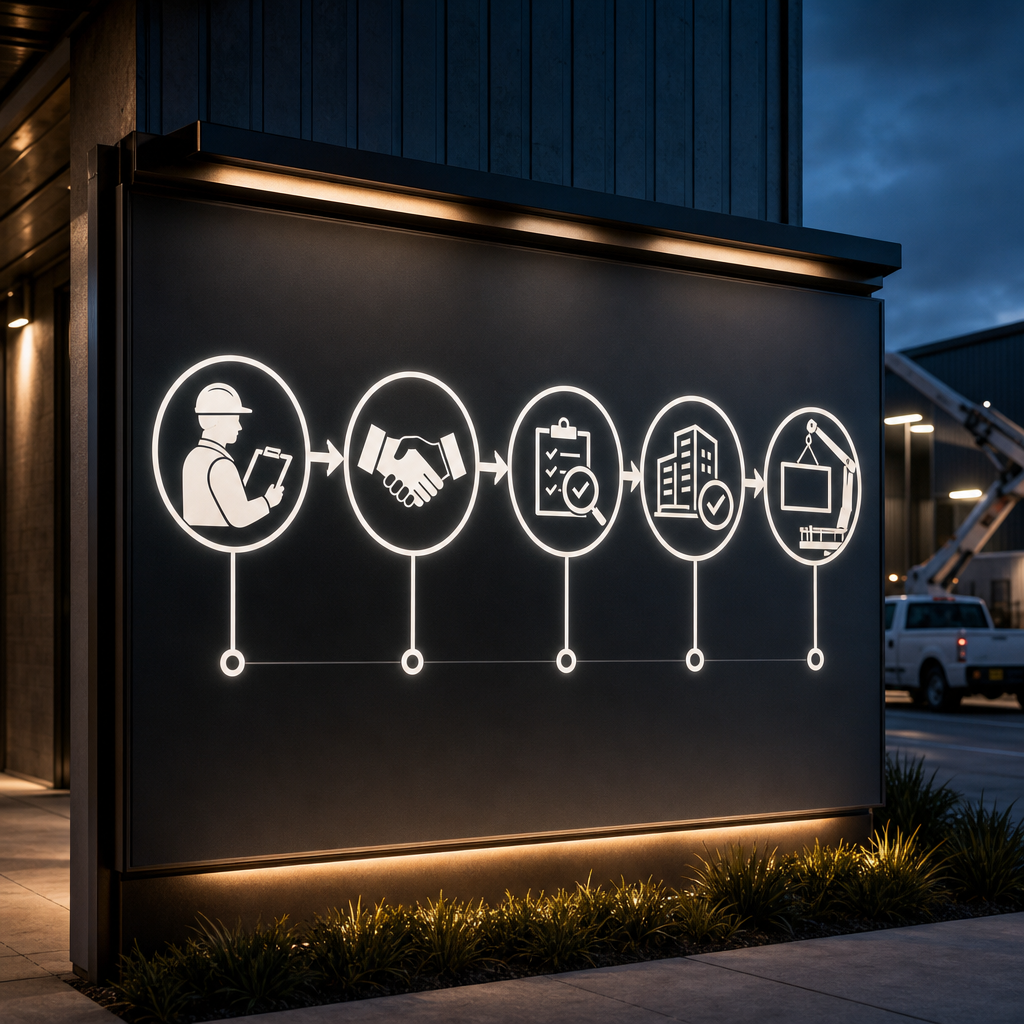
Some signs require council, landlord, building or other approvals before installation, while others may fall within exemptions. Requirements vary by location, property and sign type. Businesses should confirm the applicable rules before manufacture because approval conditions can affect dimensions, placement, illumination, structural design and the method of attachment.
Local councils regulate signage through planning schemes, local laws and application processes. A sign that is acceptable in one council area may not receive the same treatment elsewhere. Heritage controls, road visibility, illuminated advertising and signs extending beyond property boundaries can receive additional scrutiny.
Landlord or centre management approval is separate from council approval. A lease may include a signage manual controlling position, dimensions, materials, colours, illumination and working hours. Written consent should be obtained before permanent work begins.
Building access and safety requirements may also affect the design. The National Construction Code sets requirements for Australian buildings, including provisions relevant to access, egress and certain signs. The Australian Building Codes Board publishes the Code at NCC.
Accessibility should be considered early, particularly for wayfinding, room identification and signs associated with accessible facilities. AS 1428.1, Design for access and mobility, Part 1: General requirements for access, New building work, is a recognised Australian Standard relevant to accessible building design. Confirm the current applicable edition and project requirements with the building certifier or accessibility consultant.
Workplace safety signage may need to follow established categories, layouts and meanings. AS 1319, Safety signs for the occupational environment, is the recognised Australian Standard for safety sign design and use. A branded colour palette should not override a required safety convention.
A signage supplier can identify common approval issues, but it should not make an unsupported promise that approval is unnecessary. Final responsibility needs to be stated clearly in the quote and contract.
What should you expect from installation, maintenance and warranties?
Professional installation should follow an agreed method suited to the sign, structure and site conditions. After installation, the supplier should explain cleaning, maintenance and warranty requirements. The client should know what is covered, what is excluded and who to contact if the sign loosens, fades, delaminates or develops an electrical fault.
Before installation, confirm who will provide site access and whether inductions, permits, isolation procedures or access equipment are required. The installer should verify the mounting location before drilling or making permanent changes. Any discrepancy between approved drawings and actual site conditions should be resolved first.
For illuminated signs, clarify where the signage contractor's scope ends and the electrician's work begins. Power availability should be checked before installation day. Concealed wiring routes, switching and access for future servicing should be considered during design.
Maintenance depends on the product and environment. Use cleaning products recommended for the surface. Abrasive tools and harsh chemicals can damage prints, laminates, acrylic and painted finishes. Dirt should not be allowed to build up around edges, joins, drainage points or electrical components.
A warranty should be read as a set of conditions, not just a headline promise. Check whether it covers materials, workmanship, installation and electrical components. Exclusions may relate to vandalism, impact, building movement, water entering from another source, unsuitable cleaning or changes to the underlying surface.
Australian Consumer Law may provide consumer guarantees regardless of a separate written warranty when the law applies. The Australian Competition and Consumer Commission explains these rights in its consumer guarantees guidance.
Keep the approved artwork, quote, invoices, care instructions and installation photographs. These records help identify the supplied specification and make future repairs, reprints or brand updates easier.
Why the best signage brief starts with a decision, not a product
Sunquest Signs' view is that businesses should not begin by asking for a particular panel, film or illuminated box. They should begin with the decision the audience must make. Once that decision is clear, the correct hierarchy, location, size, material and production method become easier to determine and defend.
Consider a business park with visitors missing the correct tenancy. A larger logo at reception may not solve the actual problem. Visitors might need an earlier directional sign at the vehicle entrance, clearer building identification and confirmation near the parking area.
The product-first approach encourages isolated purchases. The decision-first approach treats signage as a sequence:
- What does the visitor know when arriving?
- What must they notice next?
- Where could uncertainty occur?
- Which message resolves that uncertainty?
- What physical sign can deliver that message in the available environment?
This approach can also prevent over-signing. Adding more signs does not automatically improve navigation. Repeated, inconsistent or competing signs may create extra decisions. A smaller set of signs with clear roles and consistent terminology is often easier to follow.
The same principle applies to retail and promotional signage. Before adding more services or claims, define the action that matters most. It might be entering the premises, recognising the brand, finding parking or asking about a specific offer. Design the hierarchy around that action.
This is the question worth asking a supplier: "What information can we remove without making the sign less useful?" A capable answer reveals whether the recommendation is based on communication and site conditions or simply on selling a larger product.
Frequently asked signage questions
These short answers cover practical questions that commonly arise after the initial signage brief. Exact recommendations still depend on the site, product and intended use. When comparing suppliers, ask each one to state assumptions in writing so differences in materials, installation and warranty scope are visible before you approve the work.
Can a signage company design the artwork for me?
Yes. A signage company can usually create a layout from your logo, wording and brand guidelines. Provide vector logo files and approved brand references where possible. Confirm how many design revisions are included, whether copywriting is included and what artwork files you will receive after the project.
Can an existing sign be updated instead of replaced?
Sometimes. A sound panel, frame or structure may accept new graphics, faces or lettering. The supplier should inspect its condition, dimensions and compatibility first. Reusing a deteriorated substrate can reduce appearance and reliability, while altering an illuminated sign may require changes to internal components or wiring.
Can signage be installed on any wall or window?
No. The surface must suit the adhesive, fixing method and sign weight. Glass type, wall construction, paint condition, texture, waterproofing and concealed services can affect installation. Approval may also be needed from the owner or centre manager before drilling, applying films or making permanent alterations.
Who is responsible for checking spelling and contact details?
The client should carefully check the final proof before approval, unless a contract assigns responsibility differently. Verify names, phone details, addresses, arrows, trading information and mandatory wording. Production should not begin until an authorised person has approved both the content and the layout.
Do vehicle graphics damage paint?
Appropriate vehicle films applied to suitable factory paint should not be treated as a substitute for checking paint condition. Existing damage, repairs, rust, failing clear coat or non-standard paint can affect adhesion and removal. The vehicle should be inspected, cleaned and assessed before application.
How do I get an accurate signage quote?
Provide the sign's purpose, location, approximate dimensions, photographs, artwork, preferred timing and access details. Ask for materials, finishes, installation, exclusions and GST treatment to be stated. For site-dependent work, arrange an inspection rather than relying on an estimate based only on a photograph.
Ready to discuss your signage requirements?
A useful quote starts with a clear brief and an honest assessment of the site. Contact Sunquest Signs through the website contact page to discuss design, materials, production and installation. Include photographs, approximate dimensions and your required outcome so the team can identify the questions that need answering before pricing.
References
- Australian Building Codes Board, National Construction Code
- Australian Competition and Consumer Commission, Consumer rights and guarantees
- IP Australia, Trade marks
- Standards Australia, AS 1319, Safety signs for the occupational environment
- Standards Australia, AS 1428.1, Design for access and mobility, Part 1: General requirements for access, New building work
Talk to a signage expert
Tell us about your project and we'll come back with options and honest advice.
Get in TouchFrequently Asked Questions
Can a signage company design the artwork for me?
Yes. A signage company can usually create a layout from your logo, wording and brand guidelines. Confirm the included revisions, copywriting scope and which artwork files you will receive.
Can an existing sign be updated instead of replaced?
Sometimes. A sound panel, frame or structure may accept new graphics, faces or lettering, but its condition and compatibility should be inspected first.
Can signage be installed on any wall or window?
No. The surface must suit the adhesive, fixing method and sign weight. Wall construction, glass type, paint condition, waterproofing and concealed services can affect installation.
Who is responsible for checking spelling and contact details?
The client should carefully check the final proof unless the contract assigns responsibility differently. Production should begin only after an authorised person approves the content and layout.
Do vehicle graphics damage paint?
Suitable vehicle films require suitable paint. Existing repairs, rust, failing clear coat or non-standard paint can affect application and removal, so the vehicle should be inspected first.
How do I get an accurate signage quote?
Provide the sign's purpose, location, approximate dimensions, photographs, artwork, timing and access details. Ask the supplier to state materials, finishes, installation, exclusions and GST treatment.
Signs that set you apart
Over 40 years on the Sunshine Coast. Design, compliance, manufacture and installation handled end to end.
Get a Free Quote