
Signage regulations and approval guide
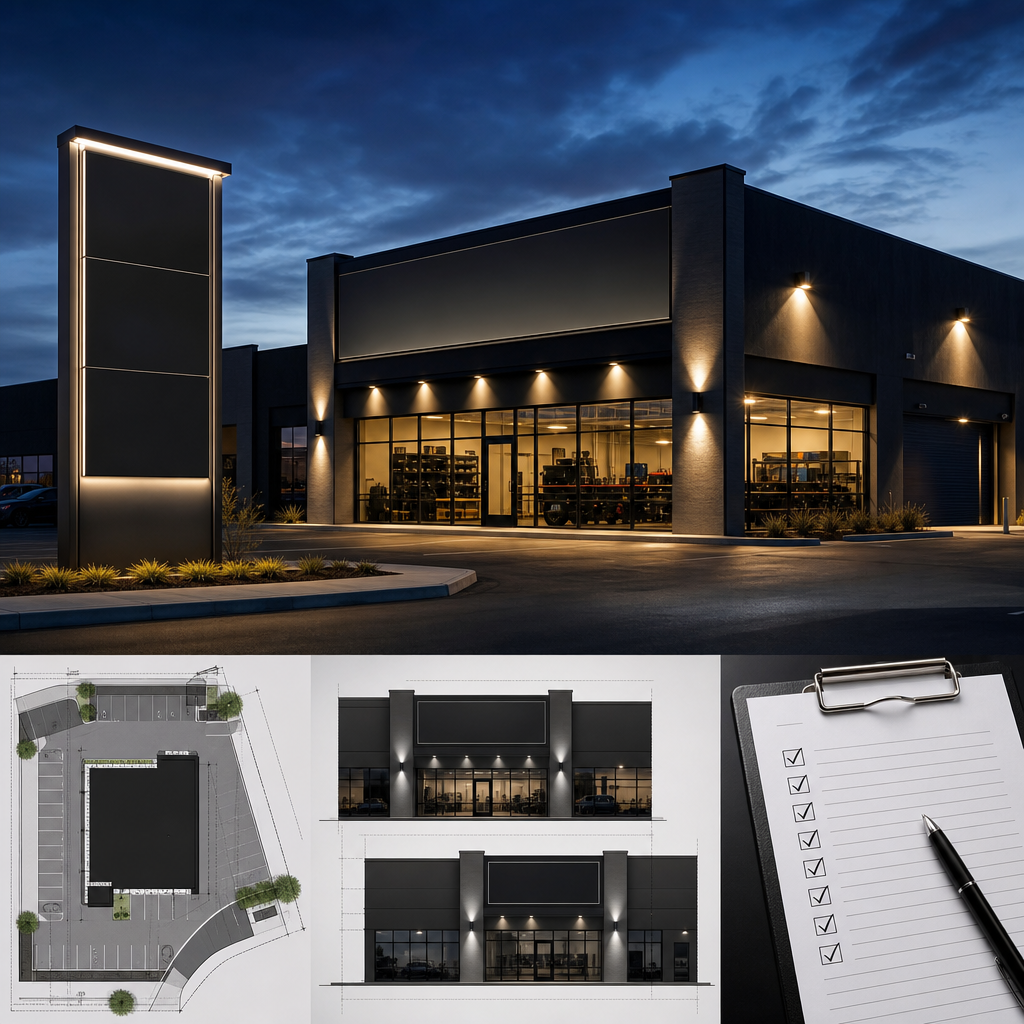
Signage approval in Australia depends on the sign type, size, location, illumination, structure and local planning rules. Before manufacturing or installation, confirm whether you need planning approval, building approval, road authority consent, electrical compliance, landlord permission or body corporate approval. Requirements differ between councils, even for similar signs.
A sign can look straightforward on an artwork proof yet trigger several regulatory requirements. A wall sign may involve planning controls, structural certification and electrical work. A freestanding sign near a major road can also require input from the relevant road authority.
This guide explains how to identify those requirements, prepare an application and avoid paying for signage that cannot legally be installed. It focuses on the Australian regulatory environment, with practical Queensland examples relevant to businesses working with Sunquest Signs.
Key takeaways
Signage compliance starts with the site, not the artwork. The approving authority will consider the property, planning zone, overlays, road environment and installation method alongside the sign itself. Confirming these constraints before final design reduces redesign, delayed installation and enforcement risk.
- Council planning approval and building approval are different processes.
- Exempt signage still needs to satisfy every condition attached to the exemption.
- Illumination, movement, height and proximity to roads can increase scrutiny.
- Landlord permission does not replace government approval.
- Applications need scaled plans, elevations, specifications and installation details.
- Manufacture should begin only after required approvals and final site verification.
Ready to make your business impossible to miss?
Design, manufacture and installation, all under one roof in Warana.
Get a Free QuoteSummary table
The approval pathway depends on what the sign is, where it will be installed and how it is supported. The table below separates the main regulatory layers so business owners can identify which authorities and specialists may need to review a proposal.
| Regulatory layer | What it usually considers | Who may be involved | Practical action |
|---|---|---|---|
| Local planning | Sign type, size, location, illumination, zoning and overlays | Local council or planning authority | Check the planning scheme and advertising device provisions |
| Building and structural compliance | Footings, framing, wind actions, attachment and public safety | Building certifier and structural engineer | Confirm whether the installation constitutes assessable building work |
| Road authority controls | Driver distraction, sightlines, traffic signals and road reserve impacts | State or local road authority | Identify the road controller before finalising placement |
| Electrical compliance | Wiring, power supplies, isolation and weather exposure | Licensed electrical contractor | Design illuminated signage around compliant electrical installation |
| Property approval | Lease conditions, facade rights and common property | Landlord, property manager or body corporate | Obtain written property consent |
| Other controls | Heritage, easements, airports, public land and protected places | Relevant authority or asset owner | Search title, mapping and overlay information early |
What signage regulations can apply in Australia?

Australian signage can be regulated through local planning schemes, state planning legislation, building rules, electrical safety laws, road authority policies and private property agreements. These layers operate separately. Approval from a landlord or council does not automatically satisfy every other obligation associated with the installation.
Local planning and advertising device controls
Local councils usually regulate signs through a planning scheme, local law, advertising device code or a combination of these instruments. Terminology varies. A council may describe signage as an advertising device, advertising sign, business identification sign or third-party advertising device.
Planning controls commonly assess:
- the type and purpose of the sign
- dimensions and total sign area
- placement on the building or site
- height above ground or roof level
- illumination, digital displays and animation
- impacts on heritage character or streetscape appearance
- proximity to residential properties
- obstruction of windows, doors or architectural features
- visibility from roads, intersections and traffic signals
- cumulative visual clutter from existing signs
The Queensland Planning Act 2016 establishes the broader planning framework under which local planning schemes operate. Equivalent state and territory legislation applies elsewhere in Australia.
Building and structural requirements
Planning approval decides whether a sign is acceptable in its location. Building approval considers whether the structure and installation are safe. A substantial pylon sign, awning sign, projecting sign or roof-mounted sign may require assessment by a building certifier.
A certifier or engineer may need information about:
- the supporting structure
- wall or roof attachment points
- footing design
- sign weight and dimensions
- wind actions
- corrosion protection
- access for installation and maintenance
- clearances from property boundaries or other structures
The National Construction Code provides the national technical framework adopted through state and territory legislation. The Australian Building Codes Board publishes the National Construction Code and supporting guidance. The exact approval pathway still depends on the relevant state legislation and the proposed work.
Electrical safety
Illuminated signs require more than a power point near the installation. Wiring, power supplies, isolation, weather protection, access and final connection must be considered during design.
In Queensland, electrical work must comply with the state's electrical safety framework. WorkSafe Queensland provides guidance on electrical safety laws. A licensed electrical contractor should assess the final installation requirements.
Electrical planning should happen before fabrication. Retrofitting power access or isolation after a sign has been built can compromise appearance, access and compliance.
Property and private approvals
Tenants commonly assume lease permission settles the approval question. It does not. A landlord, shopping centre manager or body corporate controls property consent, while government authorities control statutory approval.
Written property approval may address:
- approved fixing locations
- penetrations into walls, roofs or waterproofing systems
- colour and branding guidelines
- electrical supply arrangements
- access times and contractor induction
- reinstatement obligations at the end of a lease
- responsibility for maintenance and removal
Where a facade forms part of common property, body corporate approval may be needed even if the business occupies the tenancy behind it.
How do you check whether a sign needs approval?
Start by identifying the property, sign category and approving authority. Then compare the proposal against the relevant planning scheme, exemption criteria and building requirements. Do not rely on approval given to another business because its sign, tenancy, frontage or approval history may be different.
Confirm the exact site
Approval research needs the correct lot, street address and tenancy location. A corner property may face roads controlled by different authorities. A shopping centre can also contain internal signs, facade signs, freestanding signs and road-facing signs subject to different controls.
Check:
- property boundaries and road reserves
- planning zone
- local and state overlays
- heritage status
- easements and underground services
- whether the building has an existing signage strategy
- whether previous approvals limit future signage
Council mapping can identify many planning constraints, but it may not show every lease, title or structural issue.
Classify the sign correctly
Sign categories are not interchangeable. A fascia sign attached flat to a building can be assessed differently from a projecting sign extending over a footpath. A business identification sign can also face different rules from advertising unrelated to the business operating on the land.
Common categories include:
- wall or fascia signs
- under-awning signs
- above-awning signs
- projecting signs
- window graphics
- freestanding, pole or pylon signs
- roof signs
- digital or electronic signs
- temporary banners and event signs
- directional or wayfinding signs
- vehicle signs
Use the definition in the relevant planning instrument. The everyday description used by the sign industry may not match the legal definition used by the council.
Check every exemption condition
An exemption is conditional permission, not an absence of rules. A sign may avoid a formal planning application only when it meets every stated requirement. If it exceeds a size limit, enters a road reserve or uses prohibited illumination, the exemption may no longer apply.
Document the exemption assessment in writing. Keep the applicable planning provision, site photographs, measurements and final artwork with the project file. This creates a clear record of why formal approval was considered unnecessary.
Ask for written guidance
Council customer service guidance can be useful, but complex proposals may require written planning advice or a formal application. Provide enough information for a meaningful response. A vague question about whether a shop sign needs approval is unlikely to produce a reliable answer.
Include the address, sign type, dimensions, mounting height, illumination method, site plan and elevation. Record the officer's name, date and any reference number supplied. Treat informal advice as guidance rather than a substitute for a statutory decision.
Which signs may be exempt from formal approval?
Some local planning schemes allow low-impact business signs without a formal application when detailed conditions are met. Exemptions vary by council, zone, sign type and location. A sign that is exempt in an industrial area may require assessment in a heritage precinct or residential setting.
Small business identification signs
Councils often provide simpler pathways for signs identifying the business operating on the premises. However, the sign may still need to remain within defined placement, area, height and illumination controls.
Brisbane City Council distinguishes between advertising devices that require approval and those that may not, subject to its planning scheme and local law requirements. Its advertising device approval guidance demonstrates why applicants must check both the sign and the site rather than assume all small business signs are exempt.
Temporary and event signage
Banners, event boards, real estate signs and construction signage may have separate rules. Temporary does not mean unregulated. Councils can restrict how long a sign remains, where it is fixed and whether it obstructs pedestrians or traffic.
Portable signs placed on footpaths can involve public land and pedestrian access requirements. A business should not place an A-frame or similar sign outside its boundary without checking local rules.
Election and referendum signs
Political signs are often regulated through specific local laws, election legislation, road rules or property controls. Requirements can change around election periods and may govern placement, timing, authorisation and removal.
Businesses manufacturing or installing political signage should verify the current rules with the relevant electoral authority, council and road authority. Ordinary commercial signage guidance may not cover the full set of obligations.
Window graphics
Window graphics can appear low risk because they sit inside or against glazing. Planning schemes may still regulate them according to window coverage, illumination, building character or impacts on passive surveillance.
Large opaque graphics can also affect visibility into and out of a tenancy. This matters where a development approval, centre design guide or security strategy expects transparent shopfronts.
What design issues affect signage approval?
Sign design affects approval through scale, location, illumination, movement, structural form and its relationship to the building. A compliant concept should communicate clearly without obscuring architecture, creating road safety concerns or imposing unreasonable light and visual impacts on nearby properties.
Scale and visual dominance
Councils generally assess signs in context. A sign that suits a warehouse frontage may dominate a small heritage shopfront. The relevant question is not whether the logo fits the panel. It is whether the full installation fits the building and planning controls.
Show the entire elevation in application drawings. Cropped artwork can hide the relationship between the sign, roofline, windows, adjoining tenancies and existing advertising.
Illumination and digital displays
Illuminated and digital signs receive closer attention because their effects can extend beyond the property boundary. Authorities may consider brightness, operating behaviour, flashing, animation, dwell behaviour, viewing angle and proximity to homes or roads.
The design team should define:
- whether illumination is internal, external or halo-lit
- where electrical components will be located
- whether brightness can be adjusted
- how content changes will occur
- whether the sign includes movement or flashing
- operating controls and maintenance access
Avoid describing a digital display only by its physical dimensions. The content behaviour forms part of its impact and may be central to the approval assessment.
Road safety and driver distraction
Signs visible from major roads can require assessment beyond local planning controls. Concerns can include obstruction of sightlines, resemblance to traffic control devices, excessive visual complexity and interference with signals.
Queensland's Department of Transport and Main Roads publishes a Roadside Advertising Guide for advertising visible from state-controlled roads. Local roads remain subject to the relevant council's controls.
The sign being located on private land does not remove road safety considerations. Visibility from a controlled road can still trigger referral or assessment requirements.
Accessibility and pedestrian movement
Projecting and freestanding signs should not reduce safe pedestrian clearance or create hazards for people using mobility aids. Footpath signs can also affect prams, delivery access and people with low vision.
Accessibility should be checked during site planning, not after installation. Moving a sign later may alter setbacks, footings, electrical supply and the approved layout.
How should a signage approval application be prepared?

A strong signage application gives the assessor enough information to understand the site, appearance, construction and potential impacts without making assumptions. Plans should be consistent, scaled and specific. Missing dimensions, unclear illumination or conflicting drawings often generate information requests and delay a decision.
Prepare a complete drawing package
The required documents vary, but a practical application package may include:
- a site plan showing boundaries, buildings, roads and sign locations
- building elevations showing the full facade
- sign dimensions and total display area
- mounting height and projection from the building
- photographs of the existing site
- photomontages showing the proposed sign in context
- colours, materials and illumination details
- fixing, framing and footing information
- details of existing signs to remain or be removed
- property owner's consent
Every drawing should describe the same proposal. If the elevation shows one sign size and the engineering drawing shows another, assessment and construction cannot proceed reliably.
Address the planning criteria directly
Do not submit artwork and expect the assessor to build the planning argument. Identify the applicable code or policy and explain how the proposal responds to it.
Where the design does not meet a prescribed outcome, explain the site-specific reason and how impacts are controlled. A smaller setback or unusual placement needs more than a statement that the sign is necessary for visibility.
Coordinate planning and engineering
Detailed engineering too early can waste design effort if the planning authority requires relocation or a smaller sign. Leaving engineering until after manufacture creates the opposite problem.
A sensible sequence is:
- establish the planning envelope
- develop a sign concept within that envelope
- obtain preliminary structural advice where risk is evident
- lodge the planning material
- finalise engineering before manufacture
- verify approved drawings against production files
This sequence may change where an application requires engineering at lodgement. Confirm the authority's document requirements first.
Respond to information requests carefully
If an authority requests more information, answer each item clearly and update every affected drawing. Do not send a revised elevation while leaving the old dimensions in the site plan or specification.
Maintain a revision register. Approved drawings should be identifiable by title, date and revision so the production and installation teams know which version controls the work.
What do signage approvals cost and how long do they take?
Approval costs and assessment times depend on the council, application type, sign complexity and information quality. The total project cost may include application fees, planning advice, drafting, structural engineering, building certification, electrical work, traffic assessment and property consent requirements. Obtain project-specific advice before setting a programme.
Application fees are only part of the cost
A council fee is not the full compliance budget. A freestanding illuminated sign may involve consultants and trades that a basic non-illuminated wall sign does not require.
Allow for potential costs associated with:
- pre-lodgement advice
- planning consultant input
- measured site drawings
- photomontages
- structural engineering
- building certification
- electrical design and connection
- traffic or road safety assessment
- access equipment and traffic control
- searches, title information or asset location
Council fee schedules can change. Check the current fee directly with the authority responsible for the application rather than relying on an old quotation or another site's approval.
Assessment time begins with application quality
An incomplete application can stall while the authority requests missing information. The time needed also depends on whether the proposal complies with accepted criteria, requires public notification or needs referral to another authority.
Build the project programme backwards from the required installation date. Include design development, landlord review, approval, engineering, fabrication, electrical coordination and site access. Do not treat the application date as the manufacturing start date.
Approval is not guaranteed
A lodged application is a request, not permission. Manufacturing before a decision shifts planning risk onto the business. If the authority requires a smaller sign, different position or reduced illumination, already fabricated components may not be reusable.
Quotes and purchase orders should state which party is responsible for approvals, consultants and authority fees. Ambiguity at this stage creates disputes when additional requirements emerge.
What happens after signage approval is issued?
Approval is followed by document checking, certification, manufacture, installation and ongoing maintenance. The approved drawings and conditions must control the delivered sign. A design can become non-compliant if its size, location, illumination, structure or operating behaviour changes during production or installation.
Read every condition
An approval may impose conditions about placement, brightness, operating behaviour, landscaping, maintenance or removal of existing signs. Send the complete decision notice to the designer, fabricator, engineer, electrician and installer where relevant.
Do not rely on a verbal summary. A condition that appears minor can affect wiring, access, content management or the installation programme.
Complete required certification
Where building approval, engineering inspection or electrical work is required, arrange the relevant documents and inspections. Keep engineering drawings, certificates, electrical records, photographs and approvals in the site file.
The property owner or future contractor may need these records for maintenance, alteration or removal.
Verify the site before manufacture
Buildings do not always match old plans or leasing drawings. Conduct a final site measure after approval and before production. Confirm substrate condition, service locations, access, dimensions and fixing points.
If the verified site requires a material change to the approved design, obtain advice before proceeding. Moving a sign or increasing its dimensions can take it outside the approval.
Maintain the sign
Owners and occupiers remain responsible for keeping signage safe and presentable. Loose panels, failed lighting, corrosion and damaged electrical components can create safety risks and undermine the site's appearance.
Maintenance planning should cover safe access, isolation, replacement components and cleaning. Digital signs also need content controls so their operation remains consistent with approval conditions.
Understand enforcement risk
Installing without required approval can lead to complaints, enforcement action, rectification or removal. Retrospective approval may be possible in some circumstances, but it should not be treated as a routine alternative to proper assessment.
The authority can assess the installed sign against the rules that apply, not against the amount already spent. Commercial pressure or completed manufacture does not make a non-compliant sign acceptable.
Why approval should come before final artwork

Our position is simple: approval research belongs before polished artwork. Many signage projects begin with branding and only later test the concept against planning controls. Reversing that sequence lets the regulatory envelope guide scale, placement, illumination and structure before design time and manufacturing money are committed.
This does not mean councils should dictate brand expression. It means the design team should identify the site's non-negotiable constraints early, then develop the strongest sign within them.
A practical pre-design brief should record:
- the legal property and tenancy
- sign categories under the local scheme
- applicable zone and overlays
- exemption criteria
- road authority involvement
- landlord or body corporate requirements
- likely structural and electrical inputs
- existing approvals and signs
- access and maintenance constraints
The useful output is not merely "approval required" or "approval not required". It is a design envelope. That envelope tells the designer where signs can sit, which forms are realistic, what information an application needs and which concepts carry avoidable risk.
Consider a hypothetical retailer proposing a large illuminated fascia sign and digital freestanding display. A site review may show that the fascia concept fits the planning framework, while the digital display creates road safety and illumination concerns. Identifying that difference before detailed artwork allows budget and design effort to focus on the viable option.
This approach also improves quotation clarity. The scope can separate design, approvals, engineering, fabrication, electrical work and installation. Each party knows what is included and which decisions must occur before the next stage.
For project-specific advice, contact Sunquest Signs through the contact page at /contact before approving manufacture or installation.
References
These sources provide recognised regulatory guidance relevant to signage projects in Queensland and Australia. Local requirements remain site-specific, so readers should also consult the current planning scheme, local laws, fee schedules and application guidance published by the council responsible for their property.
- Queensland Government, Planning Act 2016
- Brisbane City Council, Advertising device approval
- Australian Building Codes Board, National Construction Code
- Queensland Department of Transport and Main Roads, Roadside Advertising Guide
- WorkSafe Queensland, Electrical safety laws
Talk to a signage expert
Tell us about your project and we'll come back with options and honest advice.
Get in TouchFrequently Asked Questions
Do I need council approval for a shop sign?
Possibly. Some shop signs are exempt when they meet every condition in the local planning scheme or advertising device rules. Others require planning approval because of their size, position, illumination, sign type or location. Check the property and final design rather than relying on a general exemption.
Does landlord approval mean my sign is legally approved?
No. Landlord or body corporate permission deals with property rights and lease conditions. Council planning approval, building approval, road authority consent and electrical compliance are separate obligations. You may need both private permission and statutory approval before installation.
Can a sign company apply for approval on my behalf?
A sign company can help prepare drawings, specifications and site information, and may coordinate with planners, engineers or certifiers. The application process depends on the authority and project. The property owner's consent may still be required, and specialist advice may be necessary for complex signs.
Do illuminated signs need additional approval?
They can. Illumination may affect planning assessment, nearby properties, road safety and electrical compliance. Applications should explain the lighting method, brightness controls, operating behaviour, electrical components and hours of operation where relevant. A licensed electrical contractor must handle regulated electrical work.
What happens if I install signage without approval?
The council or another authority may investigate, request information, issue enforcement action or require alteration or removal. A retrospective application may not be accepted or approved. The fact that a sign has already been manufactured or installed does not override the applicable rules.
Is building approval the same as signage planning approval?
No. Planning approval considers whether the sign is appropriate for the site and surrounding area. Building approval addresses technical matters such as structure and safety. A project can require either process, both processes or neither, depending on the sign and jurisdiction.
Signs that set you apart
Over 40 years on the Sunshine Coast. Design, compliance, manufacture and installation handled end to end.
Get a Free Quote