Laser Cutting in Maroochydore: Custom Cut Signs, Letters and Panels for Local Trade
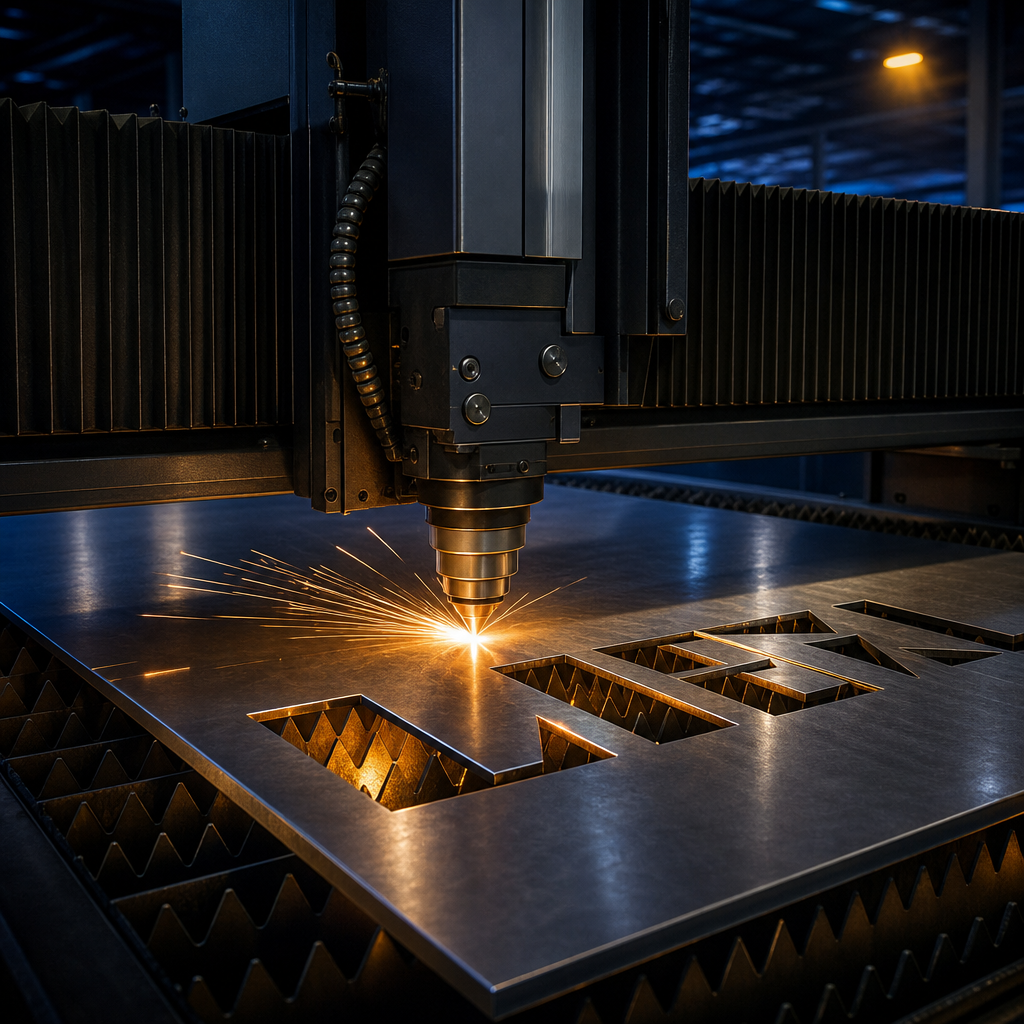
Direct Answer: Laser cutting in Maroochydore delivers precise, repeatable cuts in acrylic, aluminium, stainless steel and timber for shop signage, letters and wayfinding panels. Local fabricators like Sunquest Signs cut from your artwork file, finish the edges, and can powder coat or paint before mounting flush, on standoffs, or as illuminated raised letters.
Maroochydore's trading mix is wider than most people realise. Ocean Street hospitality operators need illuminated letters that survive salt air. Horton Parade and Duporth Avenue professional suites want reception signage that reads as premium. Kunda Park industrial tenants need durable yard and safety signage. And the newer Maroochydore City Centre developments hand tenants a landlord signage manual with strict dimension, font and illumination rules before a single letter gets cut.
This article is written from the fabrication bench, not from a generic city landing page template. It covers what laser cutting actually does better than other cutting methods, which materials hold up on the Sunshine Coast coastline, and what a business owner, shopfitter or property manager needs to have ready before sending artwork through for a quote.
Key Takeaways
- Laser cutting suits fine detail, crisp edges and repeatable multiples, making it the right call for lettering, logos and multi-tenancy fitouts.
- Acrylic, aluminium and stainless steel laser cut cleanly; mild steel and timber need different handling and finishing.
- Coastal exposure near the Maroochy River and beachfront changes material selection, aluminium and stainless generally outperform mild steel.
- Laser cutting and CNC routing solve different problems, thickness, material and finish detail decide which one you need.
- Maroochydore City Centre developments and body corporates often have their own signage criteria that need checking before artwork is finalised.
- Vector-ready artwork with correct stroke widths and letter bridges speeds up quoting and cutting, rough sketches can still be worked from but add time.
Ready to make your business impossible to miss?
Design, manufacture and installation, all under one roof in Warana.
Get a Free QuoteSummary Table: Laser Cutting Materials at a Glance
| Material | Best suited for | Coastal suitability | Typical finish |
|---|---|---|---|
| Acrylic | Illuminated letters, indoor signage, layered logos | Good indoors, fades with direct UV over time outdoors | Polished or flame-polished edge |
| Aluminium | Shop front letters, panels, wayfinding | Strong, resists corrosion well near the coast | Powder coated or brushed |
| Stainless steel | Premium letters, reception signage, standoff panels | Strong, handles salt air with minimal maintenance | Brushed, mirror polished or painted |
| Mild steel | Decorative screens, internal feature panels | Weak, rusts quickly in salt air unless well coated | Powder coated or painted, needs a protective system |
| Timber and composite (ACM) | Reception signage, feature panels, wayfinding | Timber needs indoor or sheltered use, ACM performs well outdoors | Sealed, painted or laminated |
Why Maroochydore Businesses Specify Laser Cutting
Laser cutting wins the job when a design needs crisp edges, fine internal detail and consistent repeats across multiple units. It cuts complex logos, tight radius corners and small text that other methods struggle to reproduce cleanly, especially in thin acrylic and metal sheet.
A laser follows a vector file with a narrow, consistent kerf. That means a logo with fine serifs or a tightly kerned wordmark comes out sharp instead of blobby. Multi-tenancy fitouts, think a row of suites along Duporth Avenue, benefit because every letter set cuts to the same file, so unit three's signage matches unit one's exactly. Franchise operators get the same benefit across sites.
Compare that with hand-cut or router-cut work on fine detail. A router bit has a minimum diameter, so it cannot cut internal corners as tight as a laser beam can. Hand cutting introduces small variations between pieces, fine for a one-off feature but a problem when a body corporate wants twelve identical tenancy signs to match a design manual.
Materials and Thicknesses: What Handles the Coastal Air Near the Maroochy River
Material choice matters more in Maroochydore than in an inland suburb because salt-laden air off the Maroochy River mouth and the beachfront accelerates corrosion on the wrong metal. Acrylic, aluminium and stainless steel laser cut cleanly across a wide thickness range; mild steel and timber need extra thought before they go outdoors.
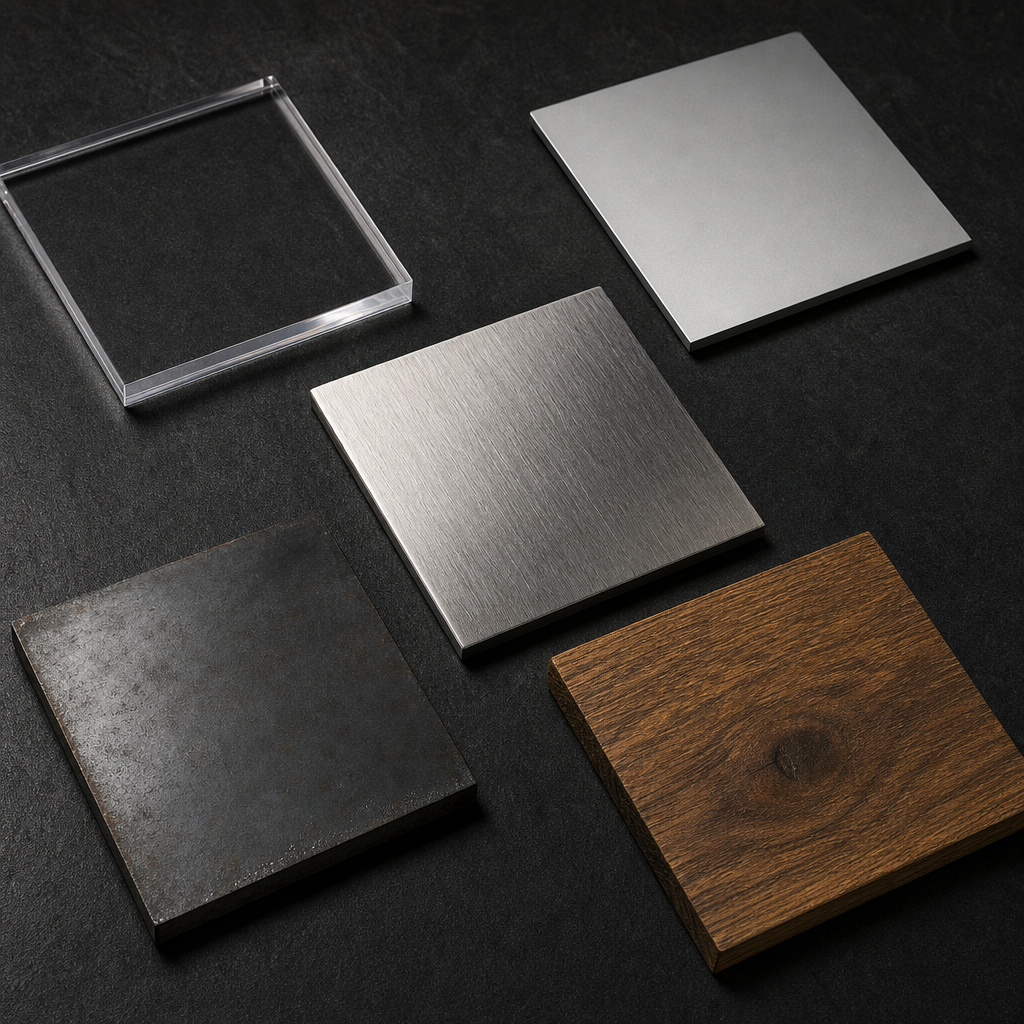
Acrylic laser cuts well from roughly 3mm up to 20mm, and the laser leaves a flame-polished edge that often needs no further finishing, useful for illuminated letters and layered logo panels. It is not the right pick for direct beachfront exposure long term, UV eventually dulls the surface, but it performs well under an awning or indoors.
Aluminium is the workhorse for outdoor shop front letters and panels around Maroochydore. It laser cuts cleanly in sheet form, takes a powder coat finish well, and resists the corrosion that plagues mild steel near the coast. Stainless steel goes a step further for reception signage and premium standoff letters, it laser cuts to a fine edge and can be brushed or mirror polished for a high-end look that suits the professional suites on Horton Parade.
Mild steel is cheaper to buy but a poor default choice for anything facing Ocean Street's salt air unless it gets a proper protective coating system. Left bare or under-coated, it will show surface rust within a season. Timber laser cuts beautifully for reception feature walls and internal wayfinding, but it belongs indoors or under cover, not on an exposed shop front. Aluminium composite panel (ACM) sits between metal and timber, it laser cuts cleanly for flat signage faces and holds up outdoors better than timber, though it is not structural in the way solid metal is.
Laser Cutting vs CNC Routing: Which Is Right for Your Job
Laser cutting suits thin sheet material where fine detail and a clean edge matter most. CNC routing suits thicker material, larger format panels and jobs where the router bit's slightly wider cut path is not a problem. Neither method is universally better, the right call depends on material, thickness and the level of detail in the artwork.
A laser handles acrylic and metal sheet up to roughly 20mm with excellent edge quality and tight internal detail. Push much thicker than that, or move into foam board, thick timber, or large-format substrates, and a CNC router becomes the more practical and often more cost-effective tool. Routing also suits large decorative panels, 3D relief carving and jobs where a wider tool diameter does not matter.
For a Maroochydore business, the decision usually comes down to what is being cut. Fine lettering, layered acrylic logos and small precise components point to laser. Large timber or ACM feature panels, thicker structural signage faces, or big decorative screens often make more sense on a CNC router. Sunquest Signs runs both processes, and a quick look at the artwork usually settles which one applies. For a coastal comparison, the CNC Cutting in Noosa work follows the same logic on the other side of the Sunshine Coast, thicker, larger format jobs lean CNC, fine detail leans laser.
From File to Fitted Sign: Artwork, Tolerances and Finishing
A laser cutting job moves from a vector file to a finished, mounted sign through a fairly consistent sequence: artwork check, cutting, deburring or edge finishing, coating if required, then mounting or installation. Getting the file right at the start avoids delays later.
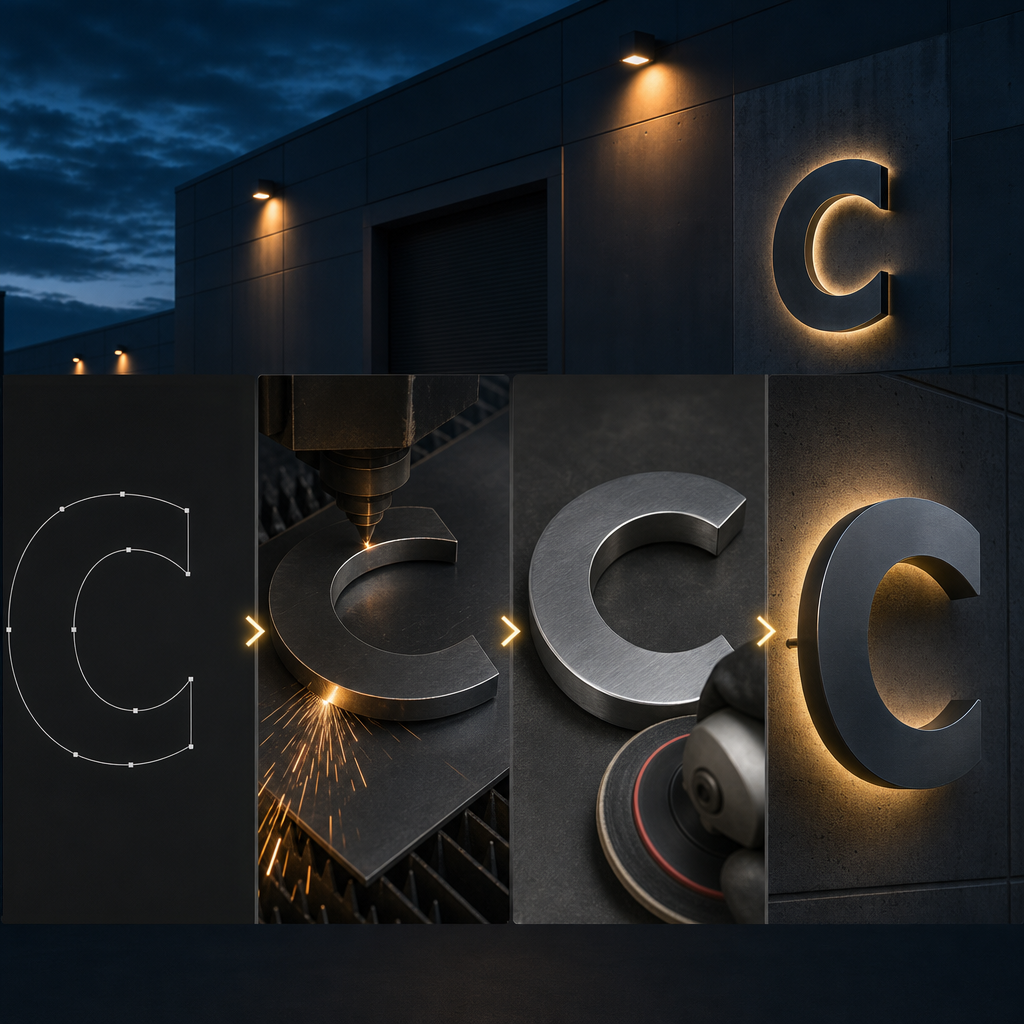
Artwork needs to arrive as, or be converted to, a clean vector file (AI, EPS or vector PDF), not a low-resolution logo pulled off a website. Letters with thin serifs or tight counters (the closed areas inside letters like "o" or "a") sometimes need small bridges added so the cut piece does not fall apart, a fabricator will usually flag this before cutting rather than after. Tolerances on laser cutting are tight, well within what shop front and reception signage needs, but a rough hand sketch still works as a starting point, it just needs to be redrawn as a proper vector file before it goes anywhere near the laser bed.
Once cut, metal edges typically get deburred to remove the sharp micro-edge left by the cutting process. From there, finishing options branch out: powder coating for durable colour on aluminium and steel, brushing or mirror polishing for stainless, paint for a specific colour match, or leaving acrylic as its natural flame-polished edge.
Mounting choices then shape how the finished piece reads on the wall. Flush mounting sits the sign directly against the surface, clean and low-profile, common for reception signage. Standoff mounting holds the piece a few millimetres proud of the wall using metal spacers, adding shadow and depth, popular for premium foyer signage on Duporth Avenue. Raised letter mounting, sometimes with a return (side depth) and internal LED, produces the illuminated fabricated letters seen along Ocean Street shop fronts, similar in principle to LED Channel Letter Signs but built from laser cut faces rather than an extruded channel system.
Where Laser Cut Signage Shows Up Around Maroochydore
Laser cut components turn up across nearly every signage category in Maroochydore, from illuminated shop front letters to reception wayfinding and decorative screens. The common thread is detail and repeatability, jobs where a clean edge and consistent multiples matter more than raw size.
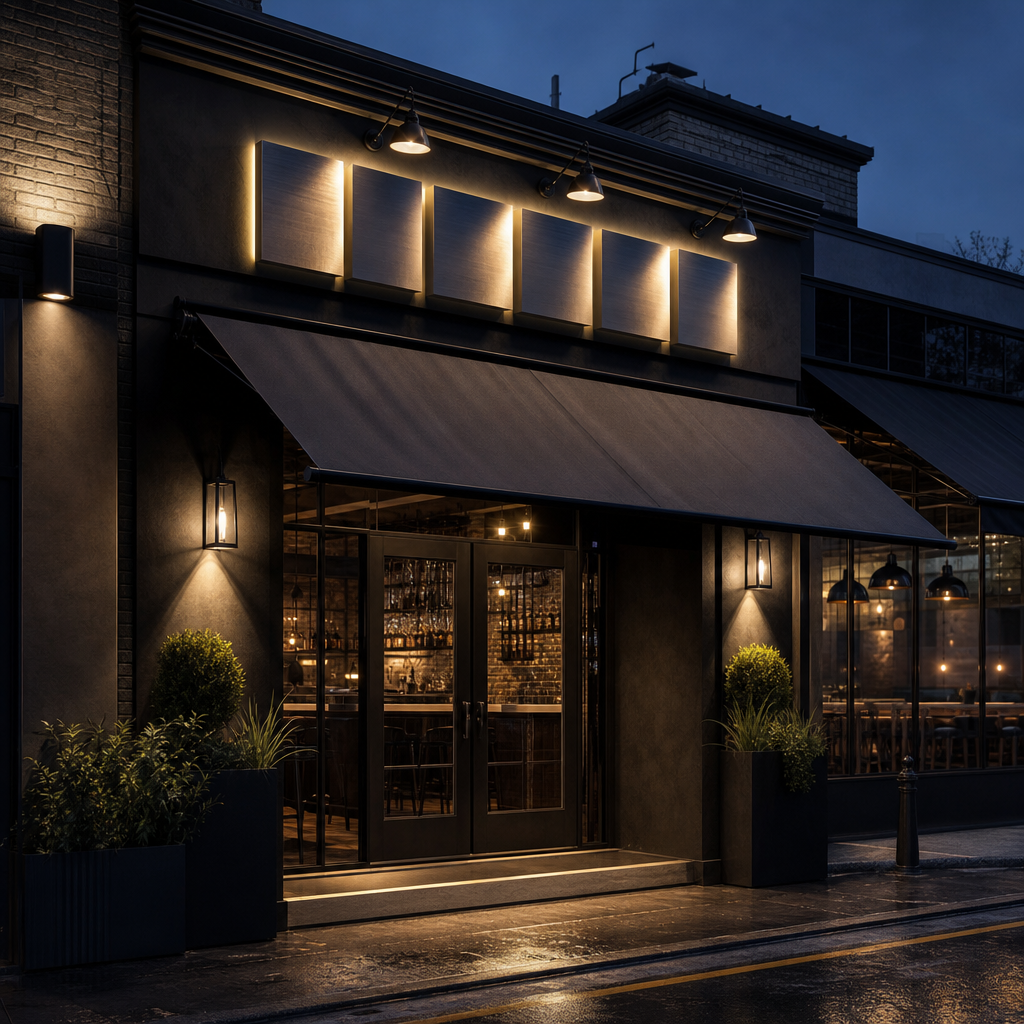
On Ocean Street, hospitality venues lean on laser cut, illuminated fabricated letters for shop front branding, plus laser cut acrylic or metal menu boards and window graphics with fine logo detail. Along Horton Parade and Duporth Avenue, professional suites, medical practices and consultancy offices commission laser cut reception signage, often stainless or aluminium on standoffs, along with matching wayfinding panels through shared foyers.
Kunda Park and the broader Maroochydore industrial precinct use laser cutting for a more functional set of applications: yard identification signage, safety and compliance signage, and branded panels for machinery or vehicle fleets, usually in aluminium or coated steel for durability rather than polish. In the Maroochydore City Centre developments, laser cut letters and panels have to satisfy a landlord's design criteria manual before they get near an approval stamp, tenants there are often working within fixed font, size and illumination rules set by the property manager or body corporate.
Decorative laser cut screens and panels are a smaller but growing category, used as feature walls, dividers or brise soleil-style shading in newer commercial fitouts, where a repeating cut pattern in aluminium or ACM does a job that paint or printed graphics cannot.
Lead Times, Approvals and Council Sign-Off in Maroochydore
Lead times for laser cut signage depend on job complexity, material availability and whether external processes like powder coating are involved, and separately, some sign locations in Maroochydore need council or landlord sign-off before installation. Building both into a project timeline early avoids a finished sign sitting in storage waiting on paperwork.
A simple reception plaque in cut acrylic or aluminium is usually a faster job than a multi-letter illuminated set that needs powder coating sent out and LED assembly on top of the cutting itself. Anything requiring an external finishing step, coating, anodising, or specialist polishing, adds handling time beyond the cutting and mounting stage. It pays to ask for a realistic timeframe at quote stage rather than assume every job moves at the same pace.
Approvals are the part businesses most often underestimate. Sunshine Coast Council administers local laws covering business identification signage, and certain sign types, sizes or locations can require an approval before installation, particularly for anything projecting over a footpath or exceeding standard business signage allowances. Separately, Maroochydore City Centre developments and other multi-tenant buildings typically run their own landlord or body corporate sign criteria, covering permitted fonts, maximum sign area, illumination hours and mounting method, on top of any council requirement. Getting a copy of that criteria document before finalising artwork saves a redesign later.
What the Laser Cutting Sales Pitch Usually Leaves Out
Most signage content treats laser cutting as the obvious best choice for everything, it is not. Laser cutting earns its keep on fine detail and repeatable small-to-mid scale work, but it is regularly over-specified for jobs that would be cheaper and just as good on a CNC router.
Consider a hypothetical fitout on Ocean Street: a cafe wants a run of individually cut stainless steel letters for the shop front, plus an internal timber wayfinding panel pointing to the bathroom and kitchen pass. The letters are a genuine laser job, tight kerning, a brushed finish, standoff mounted for shadow depth. The wayfinding panel, on the other hand, is a single flat piece of timber with routed lettering and no fine internal detail. Cutting that on a laser would add cost for no visible benefit, a CNC router does the same job for less. A fabricator who defaults to laser for everything is either not thinking about the brief or is padding the invoice.
The other point worth being blunt about: coastal corrosion is not a marketing line, it is physics. Mild steel left bare, or under-coated, within cooee of the Maroochy River mouth or the beachfront will show surface rust within a season, sometimes faster if it sits in wind-driven salt spray. Aluminium and stainless steel cost more up front but avoid a callback in twelve months. Businesses on Ocean Street specifically should treat material selection as a durability decision, not just a budget line, because the cost of redoing a sign that has rusted through almost always exceeds the price difference in material at the start.
Ready to Get Your Maroochydore Signage Cut?
If you have a design, a drawing, or even a rough sketch for shop front letters, reception signage or a wayfinding panel, send it through. Sunquest Signs quotes laser cutting jobs across Maroochydore, from Ocean Street hospitality fitouts to Kunda Park industrial signage and Maroochydore City Centre tenancy fitouts. Call the team or submit an enquiry through the website to get artwork checked and a quote back.
References
- Sunshine Coast Council, business signage and local laws guidance: https://www.sunshinecoast.qld.gov.au
- Standards Australia, AS/NZS 2312 Guide to the Protection of Structural Steel Against Atmospheric Corrosion by the Use of Protective Coatings: https://www.standards.org.au
- Business Queensland, outdoor advertising and signage requirements: https://www.business.qld.gov.au
Talk to a signage expert
Tell us about your project and we'll come back with options and honest advice.
Get in TouchFrequently Asked Questions
What materials can be laser cut for signage in Maroochydore?
Acrylic, aluminium, stainless steel, mild steel, timber and composite panel (ACM) can all be laser cut. Acrylic and metal give the cleanest edge finish, timber and mild steel need more thought given coastal exposure near the beachfront and the Maroochy River.
What is the difference between laser cutting and CNC routing for signs?
Laser cutting suits thin sheet material, fine detail and tight internal corners, typically up to around 20mm thickness. CNC routing handles thicker material, larger panels and jobs where the router bit's wider cut path does not affect the design.
Can laser cut letters be illuminated?
Yes. Laser cut acrylic or metal letter faces can be built into illuminated fabricated letters with internal LED, similar in outcome to channel letter signage but built from cut sheet rather than extruded channel.
Do I need council approval for a laser cut shop sign in Maroochydore?
Often, yes. Sunshine Coast Council administers local laws around business identification signage, and certain sizes, locations or projecting signs can require approval. Multi-tenant buildings, including Maroochydore City Centre developments, usually add their own landlord or body corporate sign criteria on top.
How do I prepare artwork for a laser cutting quote?
A clean vector file (AI, EPS or vector PDF) is ideal. A rough sketch or reference photo still works as a starting point, a fabricator can redraw it as a vector file before cutting, though this adds a step to the process.
How long does laser cut signage take to make?
It depends on complexity and whether external finishing like powder coating is involved. Simple single-piece signage moves faster than multi-letter illuminated sets requiring assembly and coating. Confirm a specific timeframe at quote stage.
Related Articles
Sunshine Coast Signage Project Gallery: Real Local Sign Installs by Suburb and Sign Type
Signage in Kawana: Sign Options for Birtinya, Buddina and Warana Businesses, Approvals and Costs
Shop Front Signs in Caloundra: Precinct Styles, Coastal Materials, Council Rules and Costs
Signs that set you apart
Over 40 years on the Sunshine Coast. Design, compliance, manufacture and installation handled end to end.
Get a Free Quote