
Pylon Signs in Toowoomba: Design, Wind Ratings, Council Approvals and Installation
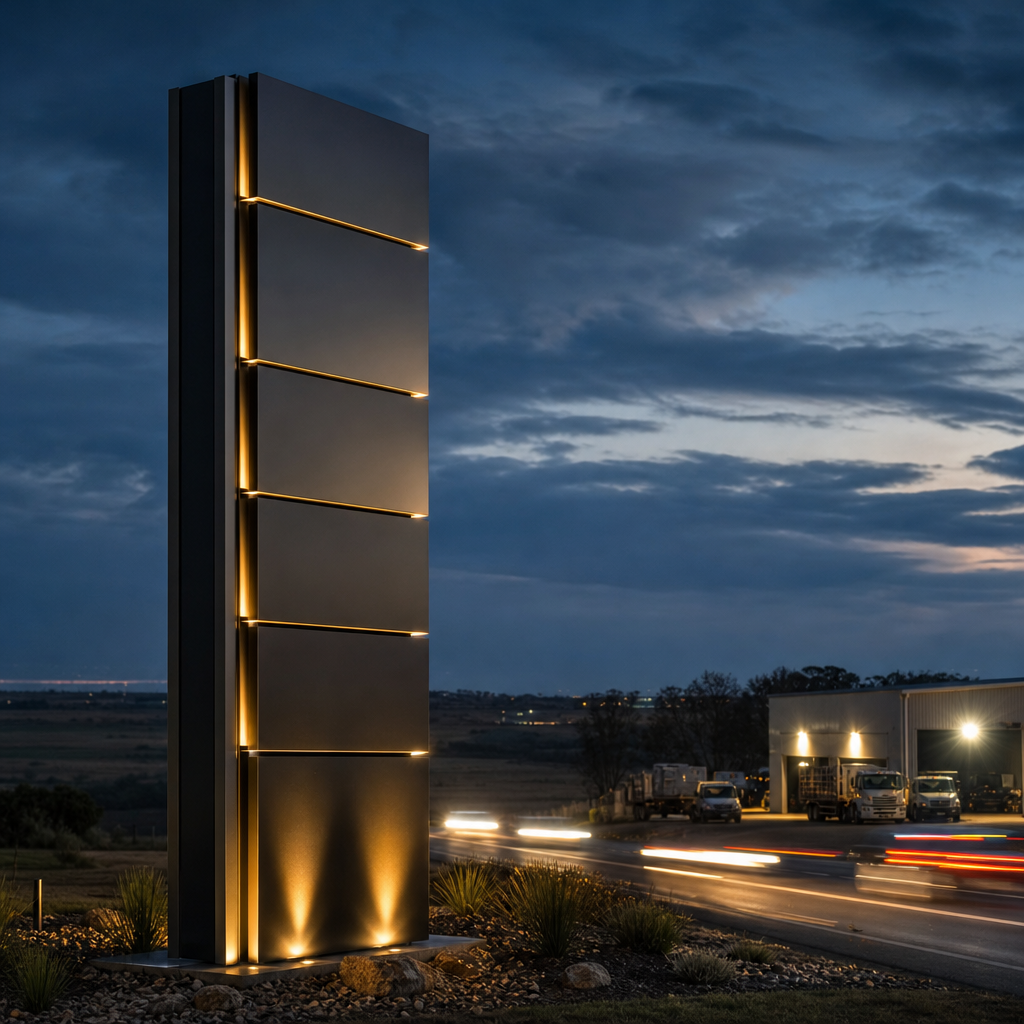
Pylon signs in Toowoomba are tall freestanding signs that lift a business name above traffic, and they must be engineered for range wind loads under AS/NZS 1170.2, built to resist hail, frost and corrosion, and approved by Toowoomba Regional Council, plus the Department of Transport and Main Roads near state-controlled roads.
A pylon is often the first thing a driver sees and the last thing they decide on. On a busy arterial, you have a few seconds to be read, understood and chosen. In Toowoomba, you also have to survive what the Great Dividing Range throws at a steel structure: exposed westerly winds, frost, hail and storm season.
This guide is written for owners and managers of service stations, dealerships, shopping centres, trade businesses, motels, medical centres and agribusinesses across Toowoomba and the Darling Downs. It covers design, engineering, illumination, approvals, the install process and refurbishment, so you can brief a sign maker with confidence.
Key Takeaways
- A pylon sign earns its place where drivers have little time to decide, so height, layout and lettering matter more than artwork detail.
- Toowoomba's exposed range location means wind engineering to AS/NZS 1170.2 and a properly designed footing are not optional extras.
- Hail, frost and corrosion influence face material, drainage, coatings and finish choices.
- LED illumination extends your visibility into the evening and early morning, and suits most commercial frontages.
- Council rules and, near state-controlled roads, Department of Transport and Main Roads (TMR) requirements can shape size, height and position. Check the current rules before you commit to a design.
- An existing pylon with a sound structure can often be given new faces rather than being replaced, subject to an engineering check.
Ready to make your business impossible to miss?
Design, manufacture and installation, all under one roof in Warana.
Get a Free QuoteSummary Table
| Decision | Main question | Toowoomba consideration |
|---|---|---|
| Position and height | Can drivers read it in time? | Approach speed, sightlines, planning scheme limits |
| Panel layout | One brand or several tenants? | Hierarchy, readability, future tenant changes |
| Structure | Will it stand in a storm? | Engineered to the Australian wind loading standard for the actual site |
| Faces | Will they survive hail and sun? | Impact-resistant materials, UV-stable finishes |
| Illumination | Do you trade after dark? | LED lightbox panels, controls, power supply |
| Approvals | Who must approve it? | Council, plus TMR near state-controlled roads |
| Lifecycle | Replace or refurbish? | Structural inspection, new faces, coating repair |
Why pylon signs work in Toowoomba
Pylon signs work in Toowoomba because most trade arrives by car along a handful of major roads. A tall, clear sign tells drivers what you offer early enough to indicate, slow and turn in. Your building may sit behind a car park or other buildings. The pylon solves that.
Toowoomba is a regional hub. Customers come from across the Darling Downs, and many are travelling through rather than living around the corner. That changes the job of a sign. It is less about local familiarity and more about being found by someone who has never been to your site.
The high-exposure frontages are easy to name:
- Ruthven Street and James Street: busy retail and service corridors where competing signs fight for attention.
- The Warrego Highway and the New England Highway: highway frontage where speeds are higher and drivers need more notice.
- Wilsonton, Harristown and Glenvale: industrial and commercial precincts where trade businesses, machinery dealers and suppliers share long, repetitive streetscapes.
In each of these, the pylon does two things. It shows a driver you are there, and it separates you from the business next door. A shopfront sign cannot do that from the road. Pylons suit service stations, car and machinery dealers, shopping centres, motels, medical centres and agribusiness depots, because those customers decide on the move.
Designing a pylon sign for visibility at speed
A readable pylon puts the most important information at the top, uses few words and high contrast, and sits at a height where drivers see it before they must act. The test is simple: can a driver read it at approach speed, in glare, in rain and at dusk?
Height, position and sightlines
Height is a trade-off between visibility and what the planning scheme permits. A taller pylon clears vehicles, trees and neighbouring structures, but it also attracts more wind load and more scrutiny from the assessing authority. The right answer comes from a site survey, not a guess.
Walk the approach in both directions. Note where the sign first becomes visible, what blocks it (trees, power poles, overpasses, other signs) and where drivers must make their turn decision. On a highway frontage, the sign needs to be seen earlier than on a suburban arterial because the driver has less time and more speed.
Panel layout and multi-tenant pylons
Shopping centres, medical centres and business parks usually need more than one name on a pylon. The mistake is giving every tenant equal space. Put the site or centre name at the top, then arrange tenant panels beneath it in a clear order.
Plan for change. Tenants move on, and a pylon that needs a full rebuild every time is a poor investment. Modular panels that slide or fix into a frame let you swap a face without touching the structure. That is cheaper and faster than starting over.
Colour contrast and lettering at speed
Colour contrast does most of the work. Dark lettering on a light panel, or light lettering on a dark panel, reads far better than mid-tone on mid-tone. Brand colours that look fine on a business card can disappear at 80 metres in afternoon sun.
Keep the message short. A name, a logo and one or two key services is usually enough. Choose a clean, bold typeface with open spacing, and avoid thin scripts, long phone numbers and small print. Letters and panel faces that are precision cut also hold crisp edges at distance, which helps readability.
Built for range weather
A Toowoomba pylon has to be engineered for exposed wind, impact from hail, frost cycles and long-term corrosion. That means a calculated structure, a footing designed for the soil, impact-resistant faces and protective coatings, not just a sign that looks solid on the drawing.
Wind loads and AS/NZS 1170.2
AS/NZS 1170.2 is the Australian and New Zealand Standard for wind actions on structures. It sets out how engineers calculate the wind forces a structure must resist. It considers the wind region, terrain category, the shielding from surrounding structures and the topography of the site.
Topography is the part that matters most in Toowoomba. A site on or near a ridge or escarpment can experience wind speed-up compared with flat ground, and the standard accounts for that through its topographic factors. A pylon on an open highway frontage with no shielding sits in a very different position from one tucked between buildings in a city street.
The practical takeaway: wind engineering has to be done for your actual site and your actual sign, using the face area, height and structure type. A generic sign design copied from another location is not an engineering answer. The Bureau of Meteorology publishes climate and severe weather information for the region, and your engineer works from the standard and site conditions rather than guesswork.
Footings and structural steel
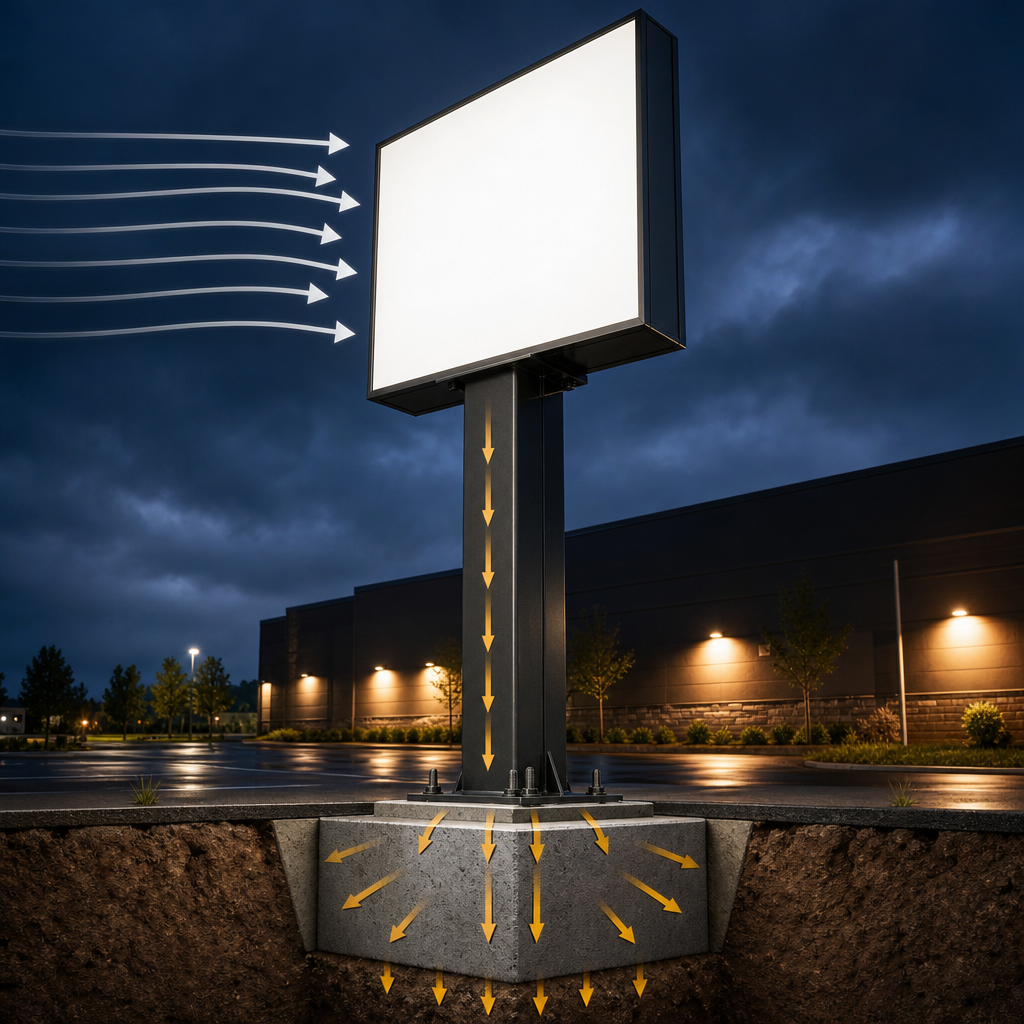
The footing is what keeps the sign upright. It has to resist overturning and the loads transferred from the pylon, and its design depends on the soil at your site. Toowoomba's reactive black soils are well known across the region, so soil conditions are a genuine design input and a geotechnical view may be needed for larger structures.
Structural steel in the column and frame is sized to the calculated loads. Connections, base plates and holding-down bolts are just as important as the column itself. When a pylon fails, it is rarely the face that is the problem. It is usually a footing or connection that was under-designed or poorly built.
Hail-resistant faces
Hail is a real risk in the Darling Downs storm season. Face material makes a difference. Some plastics and thin sheet products can crack or dent under impact, while tougher options such as polycarbonate or properly supported aluminium faces cope better. The right choice depends on the face size, the illumination method and your budget, so ask your sign maker what each material does under impact and sun.
UV stability matters too. A face that fades or yellows within a few seasons looks tired well before the structure does.
Frost, moisture and corrosion protection
Toowoomba's cooler conditions bring frost and temperature swings. In an illuminated pylon, that can drive condensation and moisture, so drainage, sealing and ventilation in the lightbox are part of good design.
For steel, hot-dip galvanising and a quality powder coat or paint system protect against corrosion. This matters at the base of the pylon, where water collects and splashes. Ask what protective system is specified and how cut edges and welds are treated.
Illuminated or non-illuminated pylon faces
Illuminated pylon faces keep your business visible after dark, in storms and during dull winter afternoons. LED lightbox panels are the standard choice for most commercial sites. Non-illuminated faces cost less to run and suit businesses that only trade in daylight and sit under street lighting.
LED lightbox panels light the face from within. They give even, bright illumination and a strong night presence. Modern LED systems are generally more energy efficient and longer lived than older fluorescent systems, and they respond well to timers or photocells, so the sign comes on at dusk and switches off after you close.
Non-illuminated faces rely on reflective or high-contrast surfaces and external light. They suit daytime trade, but they vanish on a dark highway. For a motel, service station, medical centre or any 24-hour or evening operation, illumination is usually worth it.
A few practical points for illuminated pylons in Toowoomba:
- Plan the power supply and conduit route early, because trenching to the base affects site works.
- Choose a lighting system that is serviceable. Access panels and replaceable modules reduce downtime.
- Match the illumination design to local conditions. Check whether the planning scheme or TMR conditions restrict brightness, flashing or moving elements.
For a deeper look at lightbox and channel letter options, Sunquest covers the full illuminated signage range in its illuminated, lightbox and channel letter signs section.
Council and TMR approvals for pylon signs in Toowoomba
Most pylon signs need approval before installation. Toowoomba Regional Council assesses advertising devices under its planning scheme, and signs near state-controlled roads can also trigger Department of Transport and Main Roads requirements. Rules change, so always confirm the current provisions before you finalise a design.
Toowoomba Regional Council
The council's planning scheme contains provisions for advertising devices. These generally deal with matters such as sign type, size, height, location, illumination and impact on amenity and road safety. Requirements can differ by zone, so a pylon in an industrial precinct such as Wilsonton or Glenvale may face different considerations from one in a centre or rural zone.
Do not assume that a sign matching your neighbour's is automatically approvable. Their sign may pre-date the current scheme, or it may have been approved under different circumstances. Check the current planning scheme and speak to council early.
Department of Transport and Main Roads near state-controlled roads
If your frontage is on a state-controlled road, TMR may have a say. The Warrego Highway and the New England Highway are state-controlled corridors, so signs visible from them are likely to attract extra scrutiny focused on driver distraction and safety. TMR publishes guidance on roadside advertising, and you should review it before design is locked in.
How Sunquest helps
Approvals are a process, not a form. Sunquest Signs helps prepare the drawings and engineering documentation that support an application, including elevations, dimensions, siting and structural details. You remain the applicant, and the assessing authorities make the decision. What we can do is make sure the package is clear, complete and technically sound, which avoids avoidable delays.
Check the current Toowoomba Regional Council planning scheme and any TMR requirements for your site before you commit to a design or budget.
From quote to installation
A well-run pylon project follows a clear sequence: site survey, design proofs, engineering, approvals, fabrication, footings and crane installation. Each step reduces risk for the next, which is why skipping the early stages usually costs more later.
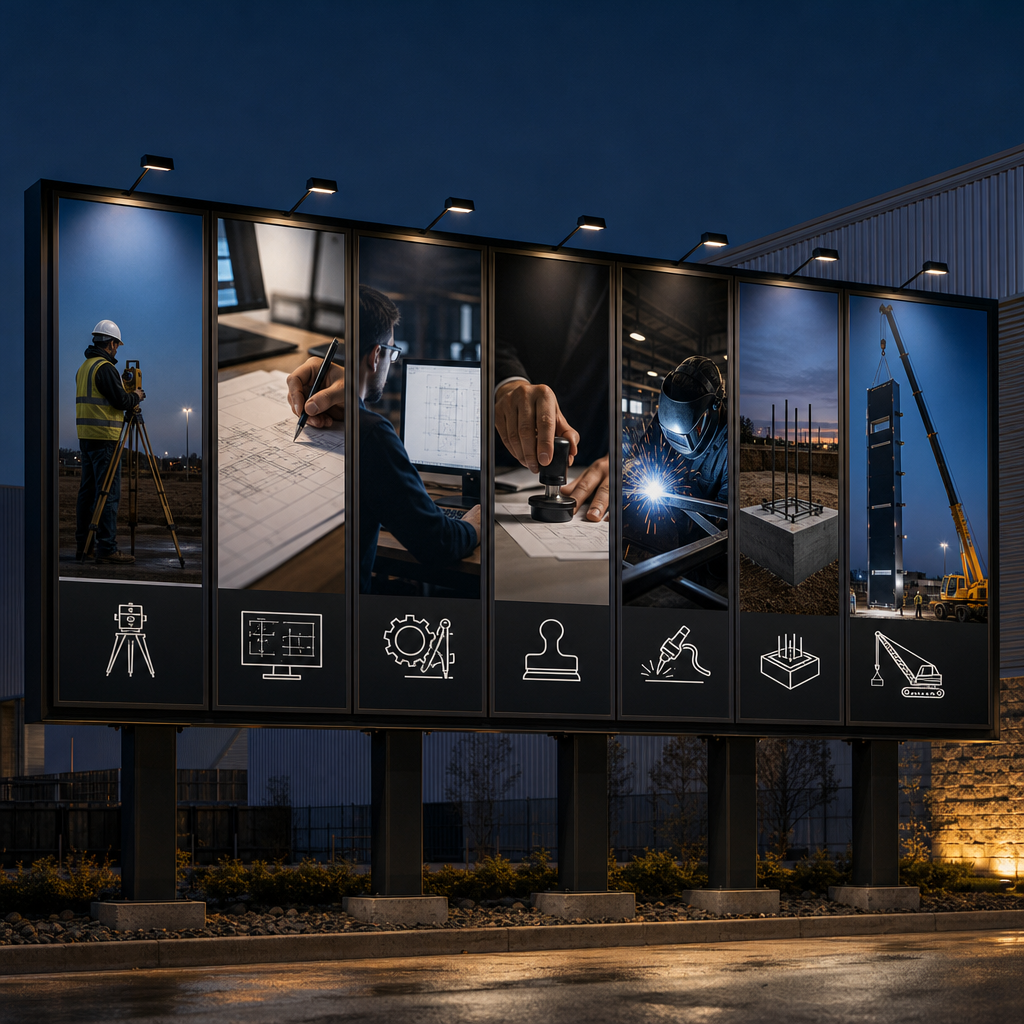
- Site assessment and quote. We look at your frontage, approach roads, services, soil conditions and access for a crane. You tell us what the sign must achieve.
- Design proofs. You see scaled artwork on the proposed structure, including panel layout, colours and illumination, and you approve the design before anything is made.
- Engineering. The structure and footing are designed to suit the site and the wind loads under AS/NZS 1170.2, and the documentation supports your approval application.
- Approvals support. Drawings and engineering are prepared for council and, where relevant, TMR.
- Fabrication. Steel, faces, lightboxes and letters are made, coated and checked before they leave the workshop.
- Footings. Excavation, reinforcement and concrete are completed to the engineering design. Underground services are located and protected first.
- Crane installation. The pylon is lifted, aligned and fixed to the footing, then connected to power and tested if illuminated.
We do not give generic timeframes here, because they depend on approvals, site conditions and the complexity of the sign. We will give you a project-specific schedule once the scope is clear.
Maintaining and refurbishing an existing pylon
Many tired pylons can be brought back by replacing faded or damaged faces and repairing coatings, rather than replacing the whole structure. The key is an inspection of the steel, footing connection and electrical system first. If the structure is sound, new faces give you a fresh sign at a fraction of the work.
Signs of a pylon due for attention include faded or cracked faces, uneven or failed lighting, rust at the base, water inside lightboxes and loose panels. A scheduled inspection after each storm season is sensible in the Darling Downs.
A refurbishment typically covers:
- New faces with updated branding or tenant panels
- LED upgrades in place of ageing lighting
- Rust treatment and recoating of the structure
- Checks on fixings, base plates and electrical connections
Refurbishment is not always the right call. If the footing is questionable, the structure is corroded, or the design no longer meets current wind or planning requirements, replacement is the safer path. Changing the size or height may also trigger a new approval, so check before assuming a like-for-like swap. For letters and faces, custom laser-cut components let us rebuild a pylon's look with precise, consistent results.
Why we specify the engineering before the artwork
My view, after designing signage for many years, is that most pylon problems start when design leads and engineering follows. A business settles on a tall, wide face because it looks good on a mock-up, and only then asks whether it can stand and be approved. In an exposed place like Toowoomba, that order is backwards.
Consider a hypothetical dealership on an open highway frontage. It wants a large double-sided illuminated face at a generous height. On paper it is a striking sign. But a large face area at height on an exposed site produces significant wind load, which drives a heavier column and a bigger footing. The cost and approval profile of the sign changes completely depending on that decision. If you only learn this after the artwork is signed off, you either pay for the structure or redesign the sign.
So we reverse the sequence. We start with the site, the wind exposure and what the planning scheme and TMR are likely to accept. Then we design the largest, clearest face that the site can properly support. The result is usually a sign that is slightly more disciplined than the first sketch, and far more likely to be approved and to still be standing after the next storm season.
The other position I hold firmly is that the lowest quote is rarely comparable. Two quotes for a pylon can look similar on the surface while one includes site-specific engineering, a designed footing and a protective coating system, and the other does not. Ask each supplier what wind standard they engineer to, who certifies it, what the footing is designed for and what the coating system is. If they cannot answer, you are not comparing like with like.
Request a Toowoomba site assessment and quote
If you are planning a new pylon or refreshing an existing one, Sunquest Signs can help with design, engineering, approvals support and installation. Request a site assessment and quote, and we will look at your frontage, the conditions and what the sign needs to achieve. For comparison, Sunquest also builds pylon signs on the Sunshine Coast, and you can browse our outdoor, pylon and structural signs and shopfront and business signs for related options.
References
- Standards Australia. AS/NZS 1170.2: Structural design actions, Part 2: Wind actions. https://www.standards.org.au
- Bureau of Meteorology. Climate and severe weather information for Queensland. http://www.bom.gov.au
- Toowoomba Regional Council. Planning scheme and development information. https://www.tr.qld.gov.au
- Queensland Department of Transport and Main Roads. Roadside advertising information. https://www.tmr.qld.gov.au
Talk to a signage expert
Tell us about your project and we'll come back with options and honest advice.
Get in TouchFrequently Asked Questions
Do I need approval for a pylon sign in Toowoomba?
In most cases, yes. Toowoomba Regional Council assesses advertising devices under its planning scheme, and signs near state-controlled roads such as the Warrego or New England Highway may also involve TMR. Requirements depend on zone, size, height and location, so check the current rules before design is finalised.
What wind rating does a pylon sign need in Toowoomba?
There is no single number for every sign. Wind loads are calculated to AS/NZS 1170.2 using the site's wind region, terrain, shielding and topography, plus the sign's height and face area. An engineer must assess your actual site, particularly if it is exposed or on elevated ground.
Are illuminated pylon signs worth it?
For businesses that trade at night or early morning, such as service stations, motels and medical centres, usually yes. LED lightbox faces keep the sign visible after dark and in poor weather. For daytime-only trade under good street lighting, a non-illuminated face may be enough.
Can an old pylon sign be refurbished instead of replaced?
Often it can. If the structure, footing and connections pass an inspection, new faces, LED upgrades and recoating can refresh the sign. If there is corrosion, footing doubt or a change to size or height, replacement or a new approval may be needed.
Does Sunquest Signs handle the whole pylon project?
Sunquest Signs designs, fabricates and installs pylon signs for Toowoomba sites, and helps prepare the drawings and engineering that support council and TMR applications. You can request a site assessment and quote to scope the full project.
Related Articles
Shop Front Signs on the Sunshine Coast: Types, Coastal Materials, Council Rules and Costs
Pylon Sign Engineering and Installation: Footings, Wind Loads, Certification and What Happens on Site
Pylon Signs in Noosa: Design, Coastal Materials, Council Approvals and Installation
Signs that set you apart
Over 40 years on the Sunshine Coast. Design, compliance, manufacture and installation handled end to end.
Get a Free Quote