
Sign Repair Services
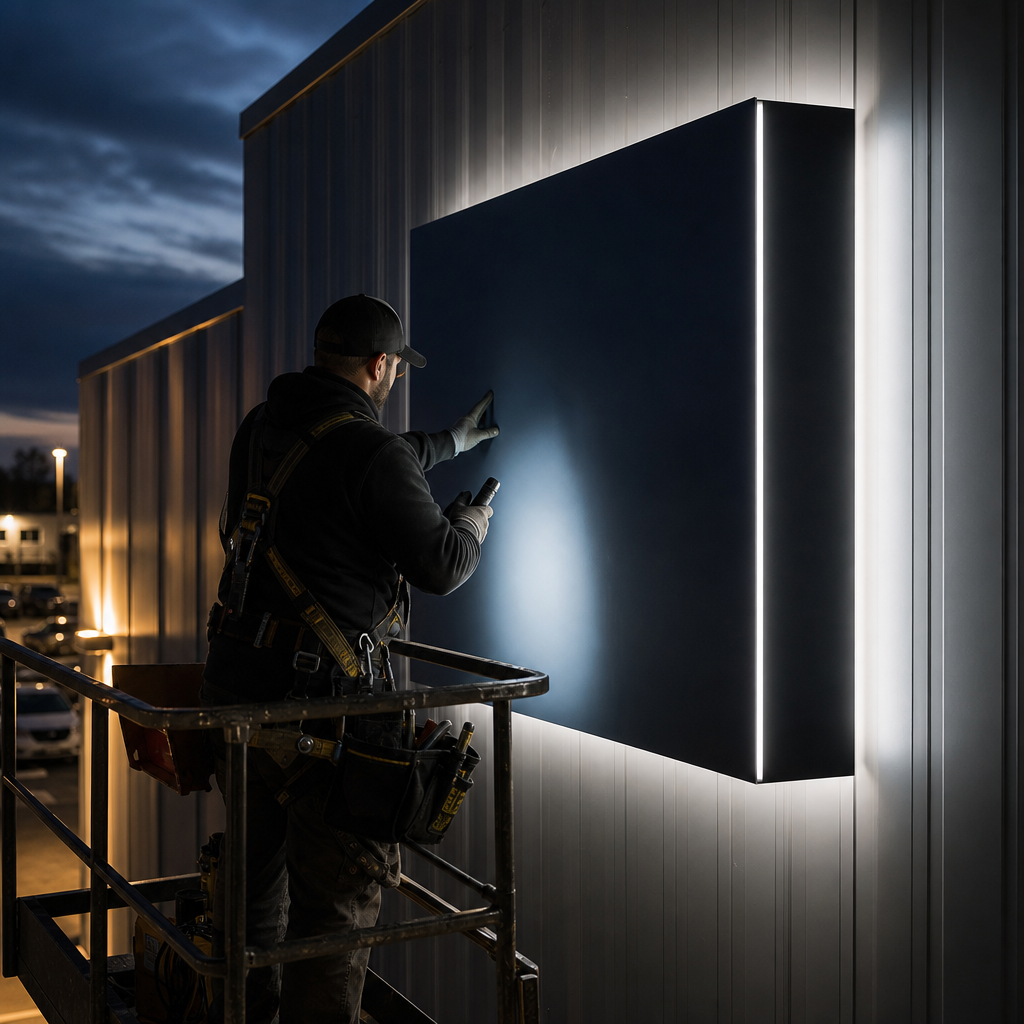
Sign repair services diagnose faults, make damaged signage safe, restore its appearance and repair lighting, fixings, faces, frames or electrical components. A professional service should also identify the cause of the failure, assess compliance risks and explain whether repair, partial replacement or complete replacement offers the best long-term result.
Commercial signs operate in difficult conditions. Heat, rain, wind, ultraviolet exposure, vibration, pests and accidental impact can all damage materials or connections. Small defects can then become safety risks, electrical faults or visible damage to your brand.
This guide explains what professional sign repairs cover, how faults are assessed and when replacement makes more sense. It also provides a practical framework for managing signage across one site or a wider property network in 2026.
Key takeaways
Effective sign repair is not limited to making a sign look presentable again. It requires diagnosis, safe access, suitable materials and attention to the original cause. Businesses should assess safety first, compare repair with replacement and document recurring faults instead of repeatedly treating the same symptom.
- Isolate signs that are loose, unstable, electrically unsafe or at risk of falling.
- Diagnose the cause before replacing visible components.
- Match replacement faces, finishes and illumination to the wider brand system.
- Compare repair cost and expected service life with partial or complete replacement.
- Use planned inspections to identify deterioration before emergency work is required.
- Keep records when managing signs across multiple locations.
Ready to make your business impossible to miss?
Design, manufacture and installation, all under one roof in Warana.
Get a Free QuoteSign repair options at a glance
The right response depends on the fault, sign construction, access requirements and availability of compatible parts. Cosmetic damage may need a straightforward face or finish repair. Structural and electrical faults require a broader assessment because the visible defect may be only one part of the underlying problem.
| Sign condition | Likely response | Main considerations |
|---|---|---|
| Faded or peeling graphics | Replace graphics or the affected face | Colour matching, substrate condition and brand consistency |
| Uneven or failed illumination | Test components and replace faulty parts | Power supply, wiring, moisture entry and access |
| Cracked sign face | Repair or manufacture a replacement face | Material compatibility, visibility and weather sealing |
| Loose sign or damaged frame | Make safe and assess structural components | Fixings, corrosion, wind exposure and supporting structure |
| Water inside an illuminated sign | Isolate if required, dry and trace the entry point | Seals, drainage, electrical damage and recurring leaks |
| Repeated faults or extensive deterioration | Consider partial or complete replacement | Remaining service life, access costs and obsolete components |
What do sign repair services include?
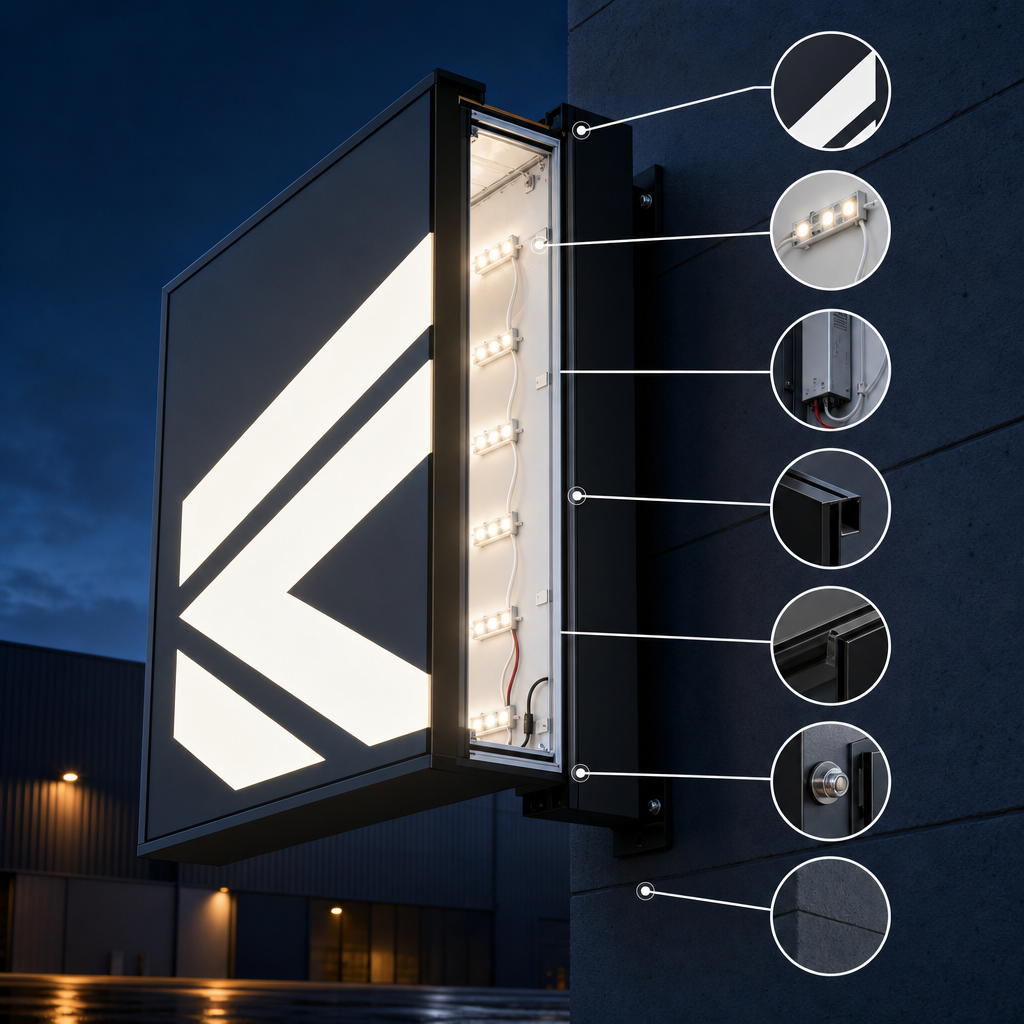
Sign repair services can cover visual, electrical, structural and mounting faults across illuminated and non-illuminated signage. The scope may include diagnosis, access equipment, temporary make-safe work, component replacement, face manufacture, resealing, cleaning, testing and reporting. The exact response should follow an inspection rather than assumptions based on photographs alone.
Cosmetic and brand repairs
A damaged sign affects how customers perceive the organisation behind it. Common visual repairs include replacing faded vinyl, lifting graphics, cracked acrylic, damaged lettering and weathered finishes.
Colour matching needs care. A new panel manufactured from an original colour specification can still look different beside an older, sun-exposed panel. The repairer should assess the complete elevation, not just the damaged section. In some cases, replacing adjacent graphics creates a more consistent result than patching one small area.
Surface preparation also matters. Applying new graphics over contaminated, chalking or degraded material can produce a short-lived repair. The underlying face should be inspected and prepared before any finish is installed.
Illuminated sign repairs
Illuminated sign faults can involve light modules, lamps, power supplies, wiring, timers, sensors, connectors or water entry. Uneven illumination does not automatically mean every light source has failed. Voltage problems, deteriorated connections, poor thermal management and moisture can produce similar symptoms.
A competent repair process tests the system before parts are ordered. It should also check whether available replacement components are compatible with the sign's existing electrical design. Mixing unsuitable components can create inconsistent brightness, heat problems or another failure.
Electrical work must be handled by appropriately qualified and licensed people where required under the relevant state or territory rules. If a sign is sparking, repeatedly tripping protection or showing signs of water near electrical parts, keep people clear and arrange an urgent assessment.
Structural and mounting repairs
Frames, brackets, posts, fasteners and supporting structures can deteriorate through corrosion, movement, wind loading or accidental impact. Loose letters and projecting signs deserve immediate attention because falling components can injure people or damage property.
Repairing only the visible movement is not enough. The assessment should consider the substrate behind the sign, the condition of concealed fixings and whether water has entered the building envelope. A secure sign attached to a deteriorated wall remains a risk.
Sign face and enclosure repairs
Cabinet signs and lightboxes rely on faces, trims, seals and drainage working together. Cracked faces, failed seals and blocked drainage paths can allow contamination or water into the enclosure.
A replacement face must suit the cabinet, fixing method, lighting arrangement and expected exposure. Material thickness, thermal movement and panel size affect performance. Simply cutting a matching shape does not establish that the new panel is suitable.
How can you tell when a sign needs repair?
A sign needs assessment when it becomes loose, difficult to read, inconsistently illuminated, physically damaged or visibly affected by corrosion and water. Warning signs also include buzzing, flickering, heat discolouration, repeated electrical trips and panels moving in the wind. Safety-related symptoms should take priority over appearance or operating convenience.
Look for these signs during routine property checks:
- Letters, panels or trims separating from the main structure
- Rust staining around fixings, seams or posts
- Cracks spreading from drilled holes or panel edges
- Faded graphics that no longer match other brand elements
- Dark sections, flickering or inconsistent illumination
- Water marks, condensation or insects inside an enclosure
- Exposed wiring, damaged conduits or discoloured electrical parts
- Movement, rattling or vibration in ordinary weather
- Vegetation, building work or new fixtures obstructing visibility
A ground-level check cannot reveal every defect. Elevated signs may require access equipment and a close inspection. Photographs are useful for triage and quoting, but they may not show concealed corrosion, failed fixings or internal electrical damage.
Do not wait for complete failure if the sign is mounted over an entrance, footpath, car park or loading area. The consequence of a detached component matters as much as the apparent size of the defect.
What happens during a professional sign repair?

A professional sign repair begins with triage and fault diagnosis, followed by safe access, a defined repair scope and suitable replacement components. The technician should then complete the work, test the sign and record unresolved issues. Complex jobs may require separate electrical, structural or fabrication input before completion.
Triage and make-safe work
The first step is deciding whether the sign presents an immediate risk. This may require isolating power, removing a loose component, restricting access beneath the sign or installing a temporary covering.
A make-safe visit is not always the final repair. Its purpose is to control the immediate risk while the correct materials, access equipment or replacement components are organised.
Inspection and diagnosis
The inspection should distinguish the failed component from the reason it failed. For example, a failed power supply may be the visible problem, while water entry or excessive heat is the underlying cause.
Useful diagnostic records include photographs, component details, measurements, access constraints and notes about the substrate or supporting structure. These records reduce guesswork when parts must be manufactured away from the site.
Repair scope and approval
A clear scope should explain what will be repaired, what will be replaced and what is excluded. It should identify access requirements and any dependencies, such as electrical isolation, traffic control, engineering advice or landlord approval.
If deterioration is discovered after opening the sign, the repairer should document it and seek approval before expanding the work. A vague instruction to fix the sign can produce cost disputes and incomplete outcomes.
Completion and testing
Testing depends on the sign type. Illuminated signage may require electrical checks and observation of the complete lighting pattern. Structural work may require inspection of fixings, brackets and the supporting surface. Face replacement should include checks for fit, sealing, movement and finish quality.
Completion records are especially useful for organisations managing multiple sites. They establish what was changed and help identify patterns across similar signs.
Should you repair or replace a damaged sign?
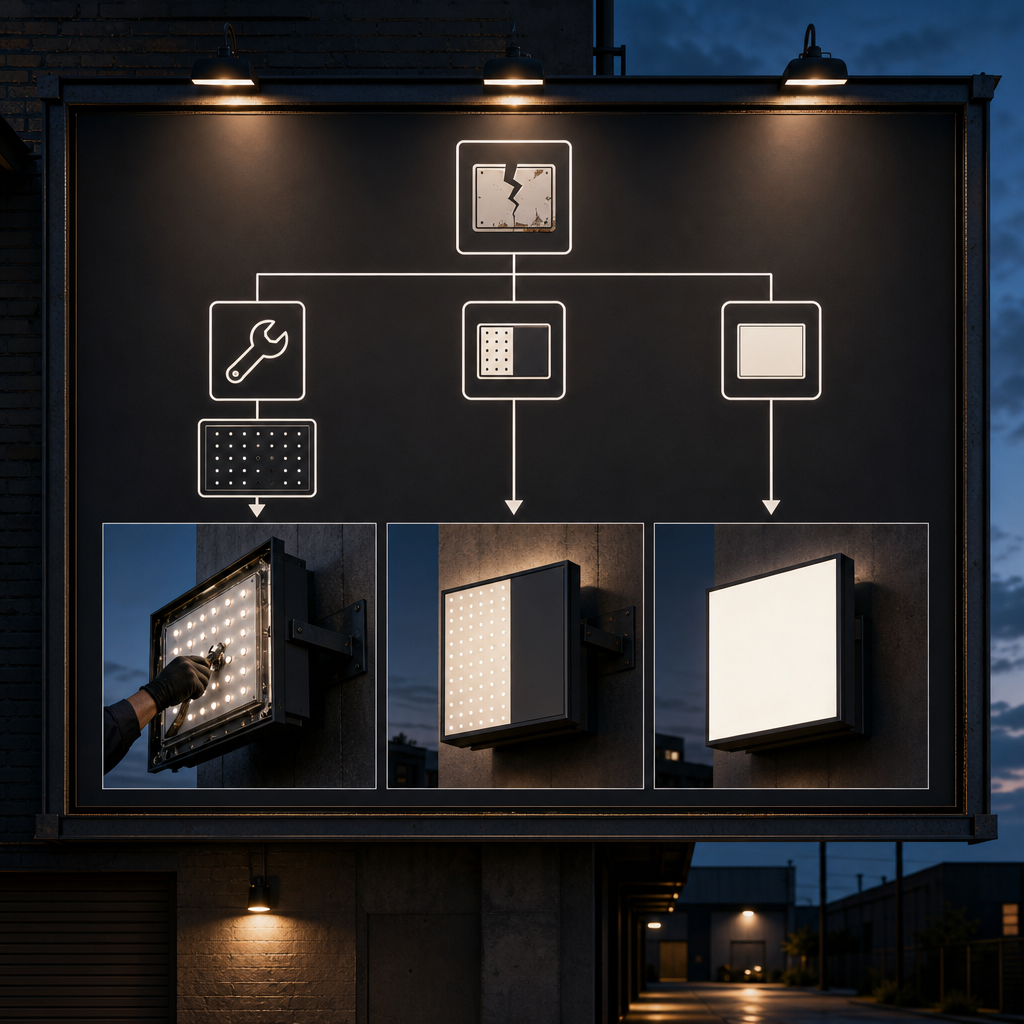
Repair is usually appropriate when damage is localised, compatible parts are available and the remaining structure is sound. Replacement becomes more sensible when deterioration is widespread, faults keep returning, branding has changed or access costs dominate each repair. The decision should compare total future effort, not just today's invoice.
Repair is generally the better option when
- The fault is isolated and its cause can be corrected
- The frame, cabinet or supporting structure remains serviceable
- Matching materials and components are available
- The repaired area will remain visually consistent
- The sign still suits the business, site and current brand
Replacement deserves consideration when
- Corrosion or cracking affects multiple structural areas
- Electrical components are obsolete or incompatible with current replacements
- Water entry has caused broad internal damage
- The same fault has already returned
- Graphics, messaging or identity elements are outdated
- The sign no longer meets the site's visibility or operational needs
- Repeated access and call-out requirements make patch repairs inefficient
Partial replacement can be the best middle ground. A sound structure may support new faces, lettering or an updated illumination system. This approach retains usable components without preserving obsolete or unreliable parts.
The cheapest immediate option is not always the lowest-cost decision. Consider a high sign that requires specialist access. Repeating a minor repair can become inefficient if the ageing system is likely to produce another fault elsewhere.
How do safety and compliance affect sign repairs?
Safety and compliance affect who can perform the work, how the site is controlled and whether the repaired sign remains suitable for its location. Relevant considerations can include electrical licensing, working at height, public exclusion zones, structural adequacy, building requirements, workplace safety duties and limits on obtrusive outdoor lighting.
Safe Work Australia's model WHS laws provide the national framework adopted in most Australian jurisdictions, although local legislation and regulators still matter. Repair planning should address risks to workers, customers, tenants and passers-by.
Electrical repairs should align with applicable legislation and standards, including AS/NZS 3000:2018 where relevant. The work may also require a licensed electrical worker, depending on the task and jurisdiction. Sign companies and property managers should not treat illuminated signage as ordinary low-risk decoration.
The National Construction Code may be relevant where sign work interacts with building elements, access, fire safety or structural requirements. Planning schemes, permits and landlord rules can also affect replacement signs or substantial modifications.
Outdoor lighting should be considered beyond basic visibility. AS/NZS 4282:2019 addresses the control of obtrusive effects of outdoor lighting. A repair that increases brightness or changes light distribution may affect nearby properties, road users or planning conditions.
Safety signage has separate considerations. AS 1319-1994 covers safety signs for the occupational environment. Repaired safety signs must remain legible, correctly positioned and appropriate for the hazard. Matching the appearance of a damaged sign is not enough if its message or placement is no longer suitable.
How does preventative sign maintenance work?
Preventative sign maintenance uses planned visual checks, cleaning, testing and condition records to identify problems before failure. It is most useful for illuminated, elevated or multi-site signage where emergency access is disruptive. Maintenance should be based on sign type, exposure and consequence of failure rather than a generic calendar alone.
A practical maintenance check can cover:
- General cleanliness and readability
- Graphic fading, lifting or surface damage
- Face cracks, loose trims and failed seals
- Corrosion around fixings, frames and supports
- Drainage openings and signs of water entry
- Illumination consistency and control operation
- Visible cable, conduit and enclosure condition
- Vegetation or new obstructions
- Changes to the wall, roof or structure supporting the sign
Maintenance is not a substitute for repair. Cleaning a cracked face or tightening one accessible fastener does not resolve broader deterioration. The value of an inspection comes from acting on its findings and assigning priority according to risk.
For multi-site operators, use consistent defect categories. Separate safety-critical issues from operational faults and cosmetic defects. This helps facilities teams compare sites, approve urgent work and group lower-priority repairs efficiently.
What affects the cost of sign repair services?
Sign repair cost depends on access, fault complexity, sign size, location, required trades, replacement materials and the amount of diagnostic work involved. The visible component may be inexpensive while safe access is difficult. Accurate pricing therefore requires enough information to define both the defect and the conditions around it.
Important cost factors include:
- Height and access method
- Need for traffic or pedestrian management
- Electrical isolation and licensed work
- Custom manufacture of faces, letters or brackets
- Availability of matching or compatible components
- Extent of concealed corrosion or water damage
- Site induction, restricted work hours or tenancy requirements
- Travel and coordination across multiple locations
Provide clear photographs from several angles, approximate dimensions, site access details and a description of the fault. For illuminated signs, explain whether the fault is constant or intermittent. Also note any recent storm, impact, building work or electrical issue.
A low quote based on incomplete information may not be comparable with a scope that includes access, diagnosis, manufacture and testing. Ask what is included, what remains provisional and whether the work addresses the cause or only the failed component.
The best repair strategy starts when the sign is designed
A useful contrarian position is that repairability should be treated as a design requirement, not an afterthought. Signs with accessible components, documented finishes, sensible drainage and replaceable modules are easier to maintain. A slightly simpler construction can outperform a visually elaborate sign that requires major dismantling for every minor fault.
This changes how businesses should evaluate new signage. Purchase price and appearance are only part of the decision. The design team should also ask:
- Can common components be accessed without removing the entire sign?
- Can a damaged face or letter be replaced separately?
- Are drainage and weather seals easy to inspect?
- Are colours, materials and component specifications documented?
- Does the access plan account for future maintenance?
- Will vegetation, parked vehicles or tenant operations block access later?
This lifecycle view also improves repair decisions. If a sign was not designed for maintainability, recurring labour and access requirements may justify redesigning part of it rather than repeating the original construction.
Another overlooked issue is fault data. A single repair record appears administrative. Across a portfolio, those records reveal which sign types, materials and installation details cause repeated work. That knowledge can inform future specifications without relying on guesswork or supplier preference.
How should you choose a sign repair provider?
Choose a provider that can diagnose the complete sign, manage safe access and coordinate the required trades rather than replacing the first visibly failed part. The quote should define scope, exclusions and testing. For branded networks, the provider should also understand colour consistency, documentation and repeatable work across different sites.
Ask potential providers:
- Do you inspect the cause as well as the failed component?
- Can you coordinate fabrication, installation and electrical work?
- How will the area be made safe before the permanent repair?
- What access equipment or site controls are included?
- How will replacement graphics and colours be matched?
- What records will be supplied after completion?
- Will you identify defects outside the approved scope before proceeding?
Be cautious when a provider recommends complete replacement without inspecting the structure, or promises a permanent repair from a distant photograph. Remote information is useful for planning, but concealed conditions often determine the final scope.
A good provider should also be willing to recommend no work when a defect is only superficial and stable. The purpose of assessment is to support an appropriate decision, not automatically maximise the job.
Arrange an assessment with Sunquest Signs
If your sign is damaged, unreliable or no longer presenting the business properly, start with a clear assessment. Sunquest Signs can review the fault, identify practical repair options and explain when replacement is the better decision. For assistance with commercial signage, visit /contact and provide photographs, site details and access information.
Include any immediate safety concerns in your enquiry. If a sign is loose, sparking or at risk of falling, keep people away from the area and arrange urgent professional assistance rather than attempting a temporary repair yourself.
References
These sources provide the Australian regulatory and technical context relevant to sign repair, electrical work, building requirements and outdoor lighting. Standards should be read alongside current legislation, local planning controls and manufacturer instructions. Access to the full text of Australian Standards may require purchase or an authorised subscription.
- Safe Work Australia, Model WHS laws
- Australian Building Codes Board, National Construction Code
- Standards Australia, Standards Catalogue
- Standards Australia and Standards New Zealand, AS/NZS 3000:2018, Electrical installations
- Standards Australia and Standards New Zealand, AS/NZS 4282:2019, Control of the obtrusive effects of outdoor lighting
- Standards Australia, AS 1319-1994, Safety signs for the occupational environment
Talk to a signage expert
Tell us about your project and we'll come back with options and honest advice.
Get in TouchFrequently Asked Questions
Can an illuminated sign be repaired without replacing it?
Yes, many illuminated signs can be repaired by replacing faulty lighting components, power supplies, wiring, faces or seals. The system should first be tested to identify why the failure occurred. Replacement may be preferable if components are obsolete, deterioration is widespread or faults continue to return.
Is a flickering sign dangerous?
Flickering can indicate a failing component, loose connection, incompatible parts or another electrical fault. It should not be ignored, especially if the sign also buzzes, overheats, trips protection or contains water. Arrange inspection by an appropriately qualified provider.
Can faded sign graphics be matched?
New graphics can be matched to documented brand colours, but surrounding materials may have changed through weather exposure. The repairer should assess the complete sign and may recommend replacing adjacent graphics to achieve a consistent result.
How quickly should a damaged sign be repaired?
Loose, unstable or electrically unsafe signs require immediate make-safe action. Cosmetic defects can be scheduled according to brand and operational priorities. Timing also depends on access, custom fabrication and component availability.
Who can repair an electrical sign?
The required qualifications depend on the work and the applicable state or territory legislation. Electrical tasks may need a licensed electrical worker. A sign repair provider should define responsibilities clearly and coordinate appropriately qualified trades.
Is preventative sign maintenance worthwhile?
Preventative maintenance is particularly useful for elevated, illuminated, ageing or multi-site signage. Planned checks can identify loose parts, corrosion, water entry and lighting faults before complete failure, provided findings are documented and followed by corrective work.
Signs that set you apart
Over 40 years on the Sunshine Coast. Design, compliance, manufacture and installation handled end to end.
Get a Free Quote